Wednesday, August 30, 2006

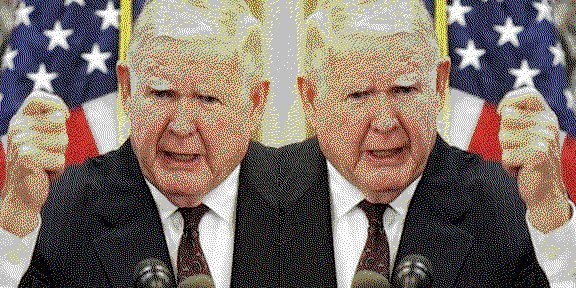
Rumsfeld's speech to American Legion National Convention


In this post we have
1.Keith Olbermann Smacking Down Senile Donald Rumsfeld for the speech to the American Legion
2. Text of that speech.


Address at the 88th Annual American Legion National Convention
As Delivered by Secretary of Defense Donald H. Rumsfeld, Salt Lake City, Utah, Tuesday, August 29, 2006


Thank you so very much. I appreciate that a great deal, that warm welcome. Earlier, a few minutes ago, I had a chance say hello to Senator Bennett and Senator Hatch, both of whom have provided such fine representation for this state and strong support for the Department of Defense and for the men and women in uniform. Members of the congressional delegation, I believe, are here -- Rob Bishop and Christopher Smith. We thank you for being here. The mayor, Mr. Corroon -- thank you. Distinguished guests.

Michael Peterson, if I could sing, I'd sing just like that. (Laughter.) That is very nice. (Applause.)

And to the spirit of youth, young folks, I had a chance before I came him to watch their presentations on television. We appreciate your thoughtfulness and your service.

To the Spirit of Service Awardees, congratulations. It is impressive to note what you're doing while you serve our country in uniform.

My special thanks to you, Tom [American Legion Commander Tom Bock], for your service to the military, to our veterans and to our country. It was a pleasure to meet your wonderful family over there; your son who's flown Chinooks, I guess, in Iraq, is following your proud tradition of military service.

Certainly, our country is grateful to all of you who have children, relatives, serving in our nation's military. They're in our thoughts and prayers, and please tell them that we appreciate all they do for our country.

I also want to thank each of you, members of the American Legion, for the love and the support that you provide for our troops every day. It is important, and it is deeply appreciated.

No one is more proud of these young people than their Commander-in-Chief, and I know that President Bush is looking forward to being with you later this week. It's a privilege to work with a president who is determined to protect our flag. (Applause.) We are fortunate to have a leader of strong resolve at a time of war.

Through all the challenges, he remains the same man who stood atop the rubble in Manhattan with a bullhorn vowing to fight back. The leader who told a grieving nation that we will never forget what was lost. And the President who has worked every day to fulfill his vow to protect the American people and to bring the enemy to justice or to bring justice to the enemy.

Our nation is so fortunate to have the American Legion standing up for all of those who are serving our country at this time of testing.

About a year ago, I participated in the dedication of the World War II Memorial in Washington. My father had served in the Pacific on a carrier during that war. When I looked out in the audience I could see a great many American Legion caps, not surprising, and it was a reminder of the millions who sacrificed for our country, so many of whom did not come home.

And it was also a reminder of all that the American Legionnaires do for our servicemen and servicewomen. Indeed, through nearly nine decades of service, the American Legion continues to find ways to undertake new initiatives that embody the motto: “For God and Country.”

The Department of Defense is proud to be your partner in the Heroes to Hometowns program, which is helping severely wounded veterans with job searches, with their homes, and with other activities to aid in their transition to civilian life.

Your partnership with the America Supports You program helps communities, organizations, and individuals across this nation express their appreciation to our troops and to their families. You can find it at: americasupportsyou.mil, and see all of the things that the compassionate and generous American people are doing; schools, corporations, villages, helping the families and helping the troops.

And on a personal note, I want to commend the American Legion for its sponsorship of the Boy Scouts. I know there are places where Scouting is kind of put down. Well, I was a proud Cub Scout; a Boy Scout; an Explorer Scout; an Eagle Scout; and a Distinguished Eagle Scout; and the Scouts represent, in my view, some of the very best qualities of our country, and they certainly merit our support. (Applause.)

The American Legion -- actually the members of the American Legion -- have achieved a great deal since its founding in the months following World War I, when those small number of folks got together in a hotel room in Europe looking for a way to help some of their fellow veterans who would be coming home soon.

That year -- 1919 -- turned out to be one of the pivotal junctures in modern history with the signing of the Treaty of Versailles, the creation of the League of Nations, a treaty and an organization intended to make future wars unnecessary and obsolete. Indeed, 1919 was the beginning of a period where, over time, a very different set of views would come to dominate public discourse and thinking in the West.

Over the next decades, a sentiment took root that contended that if only the growing threats that had begun to emerge in Europe and Asia could be accommodated, then the carnage and the destruction of then-recent memory of World War I could be avoided.

It was a time when a certain amount of cynicism and moral confusion set in among Western democracies. When those who warned about a coming crisis, the rise of fascism and nazism, they were ridiculed or ignored. Indeed, in the decades before World War II, a great many argued that the fascist threat was exaggerated or that it was someone else's problem. Some nations tried to negotiate a separate peace, even as the enemy made its deadly ambitions crystal clear. It was, as Winston Churchill observed, a bit like feeding a crocodile, hoping it would eat you last.

There was a strange innocence about the world. Someone recently recalled one U.S. senator's reaction in September of 1939 upon hearing that Hitler had invaded Poland to start World War II. He exclaimed:

“Lord, if only I had talked to Hitler, all of this might have been avoided!”

I recount that history because once again we face similar challenges in efforts to confront the rising threat of a new type of fascism. Today -- another enemy, a different kind of enemy -- has made clear its intentions with attacks in places like New York and Washington, D.C., Bali, London, Madrid, Moscow and so many other places. But some seem not to have learned history's lessons.

We need to consider the following questions, I would submit:

* With the growing lethality and the increasing availability of weapons, can we truly afford to believe that somehow, some way, vicious extremists can be appeased?
* Can folks really continue to think that free countries can negotiate a separate peace with terrorists?
* Can we afford the luxury of pretending that the threats today are simply law enforcement problems, like robbing a bank or stealing a car; rather than threats of a fundamentally different nature requiring fundamentally different approaches?
* And can we really afford to return to the destructive view that America, not the enemy, but America, is the source of the world's troubles?

These are central questions of our time, and we must face them honestly.

We hear every day of new plans, new efforts to murder Americans and other free people. Indeed, the plot that was discovered in London that would have killed hundreds -- possibly thousands -- of innocent men, women and children on aircraft flying from London to the United States should remind us that this enemy is serious, lethal, and relentless.

But this is still not well recognized or fully understood. It seems that in some quarters there's more of a focus on dividing our country than acting with unity against the gathering threats.

It's a strange time:

* When a database search of America's leading newspapers turns up literally 10 times as many mentions of one of the soldiers who has been punished for misconduct -- 10 times more -- than the mentions of Sergeant First Class Paul Ray Smith, the first recipient of the Medal of Honor in the Global War on Terror;
* Or when a senior editor at Newsweek disparagingly refers to the brave volunteers in our armed forces -- the Army, the Navy, the Air Force, the Marines, the Coast Guard -- as a "mercenary army;"
* When the former head of CNN accuses the American military of deliberately targeting journalists; and the once CNN Baghdad bureau chief finally admits that as bureau chief in Baghdad, he concealed reports of Saddam Hussein's crimes when he was in charge there so that CNN could keep on reporting selective news;
* And it's a time when Amnesty International refers to the military facility at Guantanamo Bay -- which holds terrorists who have vowed to kill Americans and which is arguably the best run and most scrutinized detention facility in the history of warfare -- as "the gulag of our times." It’s inexcusable. (Applause.)

Those who know the truth need to speak out against these kinds of myths and distortions that are being told about our troops and about our country. America is not what's wrong with the world. (Applause.)

The struggle we are in -- the consequences are too severe -- the struggle too important to have the luxury of returning to that old mentality of “Blame America First.”

One of the most important things the American Legion has done is not only to serve and assist and advocate, as you have done so superbly for so much of the past century, but also to educate and to speak the truth about our country and about the men and women in the military.

Not so long ago, an exhibit -- Enola Gay at the Smithsonian during the 1990s -- seemed to try to rewrite the history of World War II by portraying the United States as somewhat of an aggressor. Fortunately, the American Legion was there to lead the effort to set the record straight. (Applause.)

Your watchdog role is particularly important today in a war that is to a great extent fought in the media on a global stage, a role to not allow the distortions and myths be repeated without challenge so that at the least the second or third draft of history will be more accurate than the first quick allegations we see.

You know from experience personally that in every war there have been mistakes, setbacks, and casualties. War is, as Clemenceau said, “a series of catastrophes that result in victory.”

And in every army, there are occasional bad actors, the ones who dominate the headlines today, who don't live up to the standards of the oath and of our country. But you also know that they are a very, very small percentage of the literally hundreds of thousands of honorable men and women in all theaters in this struggle who are serving our country with humanity, with decency, with professionalism, and with courage in the face of continuous provocation. (Applause.)

And that is important in any long struggle or long war, where any kind of moral or intellectual confusion about who and what is right or wrong, can weaken the ability of free societies to persevere.

Our enemies know this well. They frequently invoke the names of Beirut or Somalia -- places they see as examples of American retreat and American weakness. And as we've seen -- even this month -- in Lebanon, they design attacks and manipulate the media to try to demoralize public opinion. They doctor photographs of casualties. They use civilians as human shields. And then they try to provoke an outcry when civilians are killed in their midst, which of course was their intent.

The good news is that most Americans, though understandably influenced by what they see and read, have good inner gyroscopes. They have good center of gravity. So, I'm confident that over time they will evaluate and reflect on what is happening in this struggle and come to wise conclusions about it.

Iraq, a country that was brutalized by a cruel and dangerous dictatorship, is now traveling the slow, difficult, bumpy, uncertain path to a secure new future under a representative government that will be at peace with its neighbors, rather than a threat to their own people, to their neighbors, or to the world.

As the nature of the threat and the conflict in Iraq has changed over these past several years, so have the tactics and the deployments. But while military tactics have changed and adapted to the realities on the ground -- as they must -- the strategy has not changed, which is to empower the Iraqi people to be able to defend, and govern, and rebuild their own country.

The extremists themselves call Iraq the “epicenter” in the War on Terror. And our troops know how important their mission is.

A soldier who recently volunteered for a second tour in Iraq captured the feeling of many of his peers. In an e-mail to some friends, he wrote the following, and I quote:


“I ask that you never take advantage of the liberties guaranteed by the shedding of free blood, never take for granted the freedoms granted by our Constitution. For those liberties would be merely ink on paper were it not for the sacrifice of generations of Americans who heard the call of duty and responded heart, mind and soul with ‘Yes, I will.’”

Some day that young man very likely will be a member of the American Legion attending a convention like this. I certainly hope so. And I hope he does that and that we all have a chance to meet. And one day a future speaker may reflect back on the time of historic choice, remembering the questions raised as to our country's courage, and dedication, and willingness to persevere in this fight until we prevail.

The question is not whether we can win; it's whether we have the will to persevere to win. I'm convinced that Americans do have that determination and that we have learned the lessons of history, of the folly of trying to turn a blind eye to danger. These are lessons you know well, lessons that your heroism has helped to teach to generations of Americans.

May God bless each of you. May God bless the men and women in uniform, and their families. And may God continue to bless our wonderful country.

Thank you very much. (Applause.)

Tuesday, August 22, 2006

McCain, a staunch defender of the Iraq war, on Tuesday faulted the Bush administration

Reprinted from NewsMax.com

Tuesday, Aug. 22, 2006 1:40 p.m. EDT

Sen. John McCain: Iraq War No 'Day at the Beach'

Republican Sen. John McCain, a staunch defender of the Iraq war, on Tuesday faulted the Bush administration for misleading Americans into believing the conflict would be "some kind of day at the beach."

The potential 2008 presidential candidate, who a day earlier had rejected calls for withdrawing U.S. forces, said the administration had failed to make clear the challenges facing the military.

"I think one of the biggest mistakes we made was underestimating the size of the task and the sacrifices that would be required," McCain said. "Stuff happens, mission accomplished, last throes, a few dead-enders. I'm just more familiar with those statements than anyone else because it grieves me so much that we had not told the American people how tough and difficult this task would be."

Those phrases are closely associated with top members of the Bush administration, including the president.

Bush stood below a banner proclaiming "Mission Accomplished" on May 1, 2003 after the collapse of Saddam Hussein's regime. The war has continued since then, with the death of more than 2,600 members of the U.S. military. Vice President Dick Cheney said last year that the Iraqi insurgency was "in its final throes."

McCain said that talk "has contributed enormously to the frustration that Americans feel today because they were led to believe this could be some kind of day at the beach, which many of us fully understood from the beginning would be a very, very difficult undertaking."

McCain was campaigning for Republican Sen. Mike DeWine, who faces a tough fight in his re-election bid against Democratic challenger Rep. Sherrod Brown. Ohio was decisive in the 2004 presidential election, ensuring Bush's win, and is certain to be critical in 2008.

On Monday, McCain said at an appearance in suburban Cleveland that if U.S. troops announce a specific date to leave Iraq, insurgents will bide their time until they have an opportunity to act without interference.

"The chaos that would ensue would have direct implications for our national security," McCain said.

© 2006 Associated Press.

Friday, August 18, 2006

1997 interview Schwarzkopf & Gates

Former Commander of U.S. forces in the first Gulf War, General H. Norman Schwarzkopf and newly appointed Secretary of Defense Robert Gates in a 1997 interview, defend the decision not to go on into Baghdad and remove Saddam Hussein from power after the first Gulf War in 1991.

Wednesday, August 02, 2006

Staff Sgt. Chris Bain

Staff Sgt. Chris Bain

Reconnaissance and chemical weapons specialist, Army Reserve, Baltimore, Md.

Special to washingtonpost.com
Sunday, March 19, 2006; 12:00 AM

Chris Bain was severely wounded on April 8, 2004, when a small group of insurgents attacked the Al Taji base camp at dusk, just as the convoy he commanded was rolling out on a mission.

He said it was the best and worst day of his four-months in Iraq; hours before being wounded he discovered that his identical twin brother had arrived in Iraq with another Army unit.

Bain underwent physical therapy and reconstructive surgery on a forearm and hand mangled by a mortar that exploded at short range and an elbow that was hit by a bullet. He remains very supportive of the war, was active in President Bush's 2004 reelection campaign and is mulling a run for Congress as a Republican. Bain is married and has three children -- a son, 15, and 6- and 4-year-old daughters.

At the time of his deployment, Bain had been in the military almost 13 years, including eight years of active duty that included deployments to Somalia, Egypt and Korea. Before arriving in Iraq, Bain said his his superiors explained that U.S. troops were seen as the tools of the world's "No. 1 power." Iraqis, he was told, felt "a little threatened" and "don't want to be overrun."

"But at the same time," Bain said he was told, "there are going to be a lot of [Iraqis] that would be happy to have us to secure them."

A typical day in Iraq for Bain included teaching infantry skills, radio operations and tactics, SUCH as how to clear a building and check chemical or radiological activity. "You know you hear all about weapons of mass destruction, WMD. Hey, WMD is anything that could destroy this nation, and eventually the whole world. That could be anything, one big bomb, even IEDs. That's a WMD," he said.

Earlier on the day he was injured, Bain has been on a convoy to Camp Anaconda. He went through a checkpoint at Anaconda and was surprised to see his twin brother there, whom he didn't even know was in the country. "When I ran into my brother, I said [to my men], 'You do what you're going to do. I'm going to stay with my brother all day.'" When Bain left the camp that afternoon, he told his brother he would see him in a few days. His brother replied, "OK bro, no problem."

Bain made it safely back to Al Taji. But then he and his squad were sent back out on another convoy. They were ambushed just inside the compound.

"There were four to six of them. They hit us with small arms, around 5:30 or 6 p.m. The sun was going down. I'm sitting in the back of a truck, sitting there relaxing. I was hearing mortar fire, and I asked if it was all outgoing. It took about 50 seconds for the first round to hit, about 50 meters in front of us. We jumped out, throwing people under cover for protection. I just stayed out there too long, making sure my guys were protected."

Bain said one soldier in his unit suffered a broken arm after Bain picked him up and threw him under the truck to escape enemy fire. "He was crying and crying. I said, 'Sh**, I think I hurt him.'"

A mortar landed three feet in front of Bain's face, ripping his whole left forearm. Then he was shot in the right elbow.

"I can tell you second by second. It comes back to me every day. All's I saw was all the blood. I was under a truck and just gushing. I lost three to three-and-a-half pints. I'm lucky I didn't bleed out. With all the adrenaline and all, I didn't feel my arm. I was crying over my finger."

Bain's ring finger was nearly severed by the mortar blast.

"Everything was like slow motion. I saw a medic. He was going, 'What hurts?' I couldn't hear him but I read his lips, saying 'what hurts?' I said, 'My finger, it's killing me.' He said, 'Your finger? Have you seen your arm?' I said, 'What's wrong with my arm?'"

Bain was taken to Anaconda. His brother didn't know he was injured until two days later. Five days after the attack, Bain was lying in Walter Reed Hospital in Washington, D.C.

Bain was left with nerve damage in his right arm, and he can't feel half of his right hand. With his left hand, he can make a fist, but other than that he can't really do much with it. The end of his pinky finger was reconstructed, and the ring finger was sewn back on.

"I'm not going to get any worse at this point. I'm not going to get any better. And I'm happy with it. My morale is still high. I wanted to go back, but they won't let me. I've also got short term memory problems now. I can't even remember your name. I have to carry a calendar and a note pad with me, and I don't write real good either."

Bain said he dreams about the attack all the time. "I have a hard time going to sleep, and every time I hear something loud, like the 4th of July is the worst holiday for me now. It used to be my favorite."

Tuesday, August 01, 2006

Iraq by the numbers as of July 24th

Jul 26 2006

2,560 US Soldiers Killed, 18,988 Wounded, 126,900 Remain in Iraq

For your quick reading, I've listed key statistics about the Iraq War, taken primarily from data analyzed by various think tanks, including The Brookings Institution's Iraq Index, and from mainstream media sources. Data is presented as of July 24, 2006, except as indicated.

US SPENDING IN IRAQ

Spent & approved to spend in Iraq - $435 billion of US taxpayers' money

Lost & Unaccounted for in Iraq - $9 billion of US taxpayers' money and $549.7 milion in spare parts shipped in 2004 to US contractors

Halliburton Overcharges Classified by the Pentagon as Unreasonable and Unsupported - $1.4 billion

US AND COALITION TROOPS IN IRAQ

Coalition Troops in Iraq - Total 146,900, including 126,900 from the US, 7,200 from the UK, and 11,800 from all other nations (other than Iraq)

US Troop Casualities - 2,560 US troops; 98% male.

90% non-officers; 77% active duty, 14% National Guard; 74% Caucasian, 10% African-American, 11% Latino. 18% killed by non-hostile causes. 53% of US casualties were under 25 years old. 68% were from the US Army

Non-US Troop Casualties - Total 229, with 114 from the UK

US Troops Wounded - 18,988, 20% of which are serious brain or spinal injuries (total excludes psychological injuries)

US Troops with Serious Mental Health Problems 30% of US troops develop serious mental health problems within 3 to 4 months of returning home

US Military Helicopters Downed in Iraq - 51 total, 27 by enemy fire

IRAQI TROOPS, CIVILIANS AND OTHERS IN IRAQ

Private Contractors in Iraq, Working in Support of US Army Troops - 84,105

Journalists killed - 74

Journalists killed by US Forces - 14

Iraqi Military and Police Casualties - 5,031

Iraqi Civilians Killed, Estimated - 48,100 to 98,200

Iraqi Insurgents Killed, Roughly Estimated - 55,000

Non-Iraqi Contractors and Civilian Workers Killed - 401

Non-Iraqi Kidnapped - 287, including 50 killed, 146 released, 3 escaped, 6 rescued and 82 status unknown.

Daily insurgent attacks, Feb 2004 - 14

Daily insurgent attacks, July 2005 - 70

Daily insurgent attacks, July 2006 - 90

Trained Iraqi Troops Needed by July 2006 272,566

Trained Iraqi Troops, Per US Ambassador to Iraq Zalmay Khalilzad in August 2005 - "Not very large."

Trained Iraqi Troops Able to Fight Without Major US Support, as of March 2006 - Zero

QUALITY OF LIFE INDICATORS

Iraqi Unemployment Rate - 27 to 60%, where curfew not in effect

Consumer Price Inflation in 2005 - 20%

Iraqi Children Suffering from Chronic Malnutrition - 25% in May 2006

Percent of professionals who have left Iraq since 2003 - 40%

Iraqi Physicians Before 2003 Invasion - 34,000

Iraqi Physicians Who Have Left Iraq Since 2005 Invasion - 12,000

Iraqi Physicians Murdered Since 2003 Invasion - 2,000

Average Daily Hours Iraqi Homes Have Electricity - 11.8

Average Daily Hours Baghdad Homes Have Electricity - 7.6

Number of Iraqi Homes Connected to Sewer Systems - 37%

Percentage of Iraqi Homes with Access to Piped Water - 78%

Water Treatment Plants Rehabilitated - 22%

Hepatitis Outbreaks - 2002, 100; 2003, 170; 2004, 200.

Children Enrolled in Primary School - 2000, 3.6 million; 2004, 4.3 million

Telephone Subscribers - pre-war, 833,000; April 2006, 7.4 million

RESULTS OF POLL Taken in Iraq in August 2005 by the British Ministry of Defense (Source: Brookings Institute)

Iraqis "strongly opposed to presence of coalition troops - 82%

Iraqis who believe Coalition forces are responsible for any improvement in security - less than 1%

Iraqis who feel less ecure because of the occupation - 67%

Iraqis who do not have confidence in multi-national forces - 72%

Iraqis who rarely have safe, clean water - 71%

Iraqis who never have enough electricity - 47%

Robert Novack's self portrayal in his leaking the CIA agent Valerie Plame Wilson's Idenity

Below is another version of the events surrounding the leaking of a Covert CIA agents name:

Though Robert Novak was not charged with criminal charges, he most likely should have been. As he claims to get revealing testimony from Bill Harlow, "the CIA public information officer who was my CIA source for the column confirming Mrs. Wilson's identity" - he most likely would have also been informed that Mrs. Wilson was covert- a fact appreciated and remarked upon by Special Counsel Fitzgerald:

During his October 28, 2005 press conference about the grand jury's indictment of Libby,

Fitzgerald: Valerie Wilson was a CIA officer. In July 2003, the fact that Valerie Wilson was a CIA officer was classified. Not only was it classified, but it was not widely known outside the intelligence community.
Valerie Wilson's friends, neighbors, college classmates had no idea she had another life.

FITZGERALD: The fact that she was a CIA officer was not well- known, for her protection or for the benefit of all us. It's important that a CIA officer's identity be protected, that it be protected not just for the officer, but for the nation's security.

Valerie Wilson's cover was blown in July 2003. The first sign of that cover being blown was when Mr. Novak published a column on July 14th, 2003.

July 16, 2003, David Corn "started this scandal" when he published the piece "A White House Smear" in The Nation, wherein he wrote:

"This is not only a possible breach of national security; it is a potential violation of law. Under the Intelligence Identities Protection Act of 1982, it is a crime for anyone who has access to classified information to disclose intentionally information identifying a covert agent."
http://www.washingtonpost.com/wp-dyn/content/article/2005/10/28/AR2005102801340.html


Specifically:
According to U.S. Code 50, SEC 421, enacted in 1982, it a felony to knowingly divulge the identity of a covert CIA operative. It carries penalities of 10 years in prison and a $50,000 or both for each offense. 50 U.S.C. 421 Whoever, having or having had authorized access to classified information that identifies a covert agent, intentionally discloses any information identifying such covert agent to any individual not authorized to receive classified information, knowing that the information disclosed so identifies such covert agent and that the United States is taking affirmative measures to conceal such covert agent's intelligence relationship to the United States, shall be fined under title 18 or imprisoned not more than ten years, or both.

the key word being Whoever.


My Role in the Valerie Plame Leak Story
by Robert Novak
07/12/2006


Special Prosecutor Patrick Fitzgerald has informed my attorneys that, after two and one-half years, his investigation of the CIA leak case concerning matters directly relating to me has been concluded. That frees me to reveal my role in the federal inquiry that, at the request of Fitzgerald, I have kept secret.

I have cooperated in the investigation while trying to protect journalistic privileges under the First Amendment and shield sources who have not revealed themselves. I have been subpoenaed by and testified to a federal grand jury. Published reports that I took the Fifth Amendment, made a plea bargain with the prosecutors or was a prosecutorial target were all untrue.

For nearly the entire time of his investigation, Fitzgerald knew -- independent of me -- the identity of the sources I used in my column of July 14, 2003. A federal investigation was triggered when I reported that former Ambassador Joseph Wilson's wife, Valerie Plame Wilson, was employed by the CIA and helped initiate his 2002 mission to Niger. That Fitzgerald did not indict any of these sources may indicate his conclusion that none of them violated the Intelligence Identities Protection Act.


Some journalists have badgered me to disclose my role in the case, even demanding I reveal my sources -- identified in the column as two senior Bush administration officials and an unspecified CIA source. I have promised to discuss my role in the investigation when permitted by the prosecution, and I do so now.

The news broke Sept. 26, 2003, that the Justice Department was investigating the CIA leak case. I contacted my longtime attorney, Lester Hyman, who brought his partner at Swidler Berlin, James Hamilton, into the case. Hamilton urged me not to comment publicly on the case, and I have followed that advice for the most part.

The FBI soon asked to interview me, prompting my first major decision. My attorneys advised me that I had no certain constitutional basis to refuse cooperation if subpoenaed by a grand jury. To do so would make me subject to imprisonment and inevitably result in court decisions that would diminish press freedom, all at heavy personal legal costs.

I was interrogated at the Swidler Berlin offices Oct. 7, 2003, by an FBI inspector and two agents. I had not identified my sources to my attorneys, and I told them I would not reveal them to the FBI. I did disclose how Valerie Wilson's role was reported to me, but the FBI did not press me to disclose my sources.

On Dec. 30, 2003, the Justice Department named Fitzgerald as special prosecutor. An appointment was made for Fitzgerald to interview me at Swidler Berlin on Jan. 14, 2004. The problem facing me was that the special prosecutor had obtained signed waivers from every official who might have given me information about Wilson's wife.

That created a dilemma. I did not believe blanket waivers in any way relieved me of my journalistic responsibility to protect a source. Hamilton told me that I was sure to lose a case in the courts at great expense. Nevertheless, I still felt I could not reveal their names.

However, on Jan. 12, two days before my meeting with Fitzgerald, the special prosecutor informed Hamilton that he would be bringing to the Swidler Berlin offices only two waivers. One was by my principal source in the Valerie Wilson column, a source whose name has not yet been revealed. The other was by presidential adviser Karl Rove, whom I interpret as confirming my primary source's information. In other words, the special prosecutor knew the names of my sources.

When Fitzgerald arrived, he had a third waiver in hand -- from Bill Harlow, the CIA public information officer who was my CIA source for the column confirming Mrs. Wilson's identity. I answered questions using the names of Rove, Harlow and my primary source.

I had a second session with Fitzgerald at Swidler Berlin on Feb. 5, 2004, after which I was subpoenaed to appear before the grand jury. I testified there at the U.S. courthouse in Washington on Feb. 25.

In these four appearances with federal authorities, I declined to answer when the questioning touched on matters beyond the CIA leak case. Neither the FBI nor the special prosecutor pressed me.

I have revealed Rove's name because his attorney has divulged the substance of our conversation, though in a form different from my recollection. I have revealed Harlow's name because he has publicly disclosed his version of our conversation, which also differs from my recollection. My primary source has not come forward to identify himself.

When I testified before the grand jury, I was permitted to read a statement that I had written expressing my discomfort at disclosing confidential conversations with news sources. It should be remembered that the special prosecutor knew their identities and did not learn them from me.

In my sworn testimony, I said what I have contended in my columns and on television: Joe Wilson's wife's role in instituting her husband's mission was revealed to me in the middle of a long interview with an official who I have previously said was not a political gunslinger. After the federal investigation was announced, he told me through a third party that the disclosure was inadvertent on his part.

Following my interview with the primary source, I sought out the second administration official and the CIA spokesman for confirmation. I learned Valerie Plame's name from Joe Wilson's entry in "Who's Who in America."

I considered his wife's role in initiating Wilson's mission, later confirmed by the Senate Intelligence Committee, to be a previously undisclosed part of an important news story. I reported it on that basis. (http://www.humanevents.com/article.php?id=15988)


Posted by Paul Grant (follower of Basho)

War and occupation through the eyes of a child

I found this moving reflection on journal site - it's not about the Iraq war, but rather it is about WWII. In it's beautiful prose style it tells about another facet of war that I'm sure the Bush administration has not thought about - the lasting bad inpression that we leave on future generations of Iraq.

-Paul

Read entire post at http://mparent7777.livejournal.com/9987357.html

War and occupation through the eyes of a child

Juky 4, 2006

The mother of a dear friend of mine, here, in the South of France, was six and living in Bordeaux when the Germans invaded that part of France.

She very recently wrote a moving testimony of her experiences as a child, during the German occupation and the liberation of France.

I translated it in English because, frankly, my first impression upon reading it was: "Is this how we are perceived in Iraq?" and the answer, which breaks my heart, is all too likely, "Yes, it is."


HOW IT WENT DOWN:
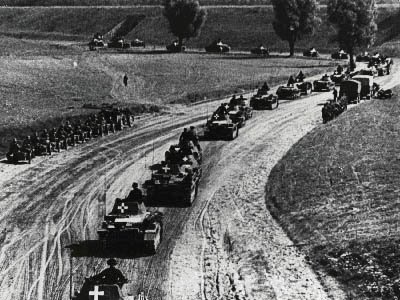
On June 5, the German attack on the Somme River line begins. The French have reorganized their forces, but there is little they can do to stop the Germans. On June 6, the line is breached between Amiens and the coast; eight days later Paris falls to the Germans. The British are evacuating all the troops they can - 30,000 from Cherbourg, 21,000 from Saint Malo, 32,000 from Brest, and almost 60,000 from Saint Nazaire and Nantes. On June 22, French General Huntzinger signs an armistice with Germany. While some fighting continues, the Germans have won - they have crushed three Allied armies and driven a fourth (the British Expeditionary Force) off the continent.

The Allied armies learn they are unprepared for Germany’s blitzkrieg tactics. They have inadequate tanks and antitank weapons; this inadequacy is compounded by poor deployment. The Germans mass their armor into divisions and even armies, while the Allies deploy armor in small units spread across wide fronts. The Allies also learn that it will take a force several orders of magnitude larger than that defeated in France to defeat Germany.

The Blog | Larry Gelbart: Waking Up is Hard to do | The Huffington Post

Waking up is hard to do.

So much harder than it used to be.

So hard to start the day gagging on a body count before breakfast.

So hard looking into the bathroom mirror, still trying to absorb the sight of so many lifeless bodies on the tube at the foot of my bed.

Who am I that I should still have the privilege of brushing my teeth?

After seeing the sight of so many who died while I slept?

Young men.

Mothers.

Five year-olds.

Infants who will never get that far.

Waking up, I delay for as long as I can pressing the remote. I resist having as my first view of yet another day what has become television's test pattern for the 21st century: a bunch of somebody's good guys slaughtering a bunch of somebody else's good guys.

And my guides and usherettes through all the carnage that cable chews on so voraciously: urban anchors in their L.L. Bean's, simultaneously reporting and upstaging file and vile footage of the Red Cross, the Red Crescent, and all of the red blood that threatens to soil my bedspread.

It gets harder and harder, waking up to learn what new leakings have revealed which of our lawmakers have been discovered breaking even more of our laws.

Harder and harder to restart the daily cycle of frustration, of fear and of anger - anger at those who never stop lying about how they have made the world a safer, less fearful place.

Harder and harder to shut out the noise of crashing pensions and the steady drumbeat of corporate criminality.

Harder and harder to accept being humped at the pump.

Even and ever-harder to endure one single day more of the three R's:

Rove.

Rice.

Rumsfeld.

(If you need another R, Richard is what our vice president was called before he chose to become a Dick.)

(Cheap shot? Less troublesome than a bad one - one who aims at a duck and hits a human being; one who aims at Afghanistan and maims the whole of Iraq.)

Hard waking up hoping: if we are lucky maybe some of us will be remembered as the good Germans at this nadir in the history of the late, great United States.

One nation under God?

Excuse me?

God sanctions torture?

God smiles down on signing statements?

Thou shalt not kill - wink, wink?

When asked what he considered the secret to happiness, Tennessee Williams replied: "Insensitivity, l guess."

By that standard, this White House has to be happiest administration ever.

If I thought any of those scumbags had an ounce of pity stowed away in their irremediable, falsely optimistic hearts, I would get down on my knees and beg them to give me back just a tenth of my former peace of mind. I would implore them to give me back my mornings.

If they'll just give me that, I'll take responsibility for the rest of the day.
So hard looking into the bathroom mirror, still trying to absorb the sight of so many lifeless bodies on the tube at the foot of my bed.

Who am I that I should still have the privilege of brushing my teeth?

After seeing the sight of so many who died while I slept?

Young men.

Mothers.

Five year-olds.

Infants who will never get that far.

Waking up, I delay for as long as I can pressing the remote. I resist having as my first view of yet another day what has become television's test pattern for the 21st century: a bunch of somebody's good guys slaughtering a bunch of somebody else's good guys.

And my guides and usherettes through all the carnage that cable chews on so voraciously: urban anchors in their L.L. Bean's, simultaneously reporting and upstaging file and vile footage of the Red Cross, the Red Crescent, and all of the red blood that threatens to soil my bedspread.

It gets harder and harder, waking up to learn what new leakings have revealed which of our lawmakers have been discovered breaking even more of our laws.

Harder and harder to restart the daily"

Sunday, July 23, 2006

Burt Bacharach: To Cher on Operation Helmet


I want to salute Cher, who has all my respect and my love for not only what she has done, but the way she has done it. Her campaign for "Operation Helmet" - done quietly and putting the cause, not herself, out front - is great. She has chosen this issue of trying to eliminate any more of the head and brain injuries our military in Iraq sustains by explosive devices because their helmets aren't good enough to protect them. "Operation Helmet" is a non-profit public service organization that provides our troops with upgrade kits to make their helmets safer.

For some soldiers, it is too late. Some have suffered brain damage and other serious injuries because their U.S. military-issued equipment isn't effective enough to protect our young men and women. Cher tells us the fact that most of these injuries are happening to the Marines because their helmets don't have proper padding. Also, their helmets are often too loose, leaving them vulnerable to even more head injuries. The military is fighting for us, and Cher is fighting for them. It's hard to believe that private citizens need to provide helmet upgrade kits, but it's necessary and being done. Cher's support has brought badly-needed attention to the situation, and every day more soldiers are being equipped with better helmet padding.

Shockingly, the Marine Corps is still studying the "feasibility" of whether this is a good idea. In the meantime, families and friends of those brave Marines are buying padding and sending it to these kids in Iraq while the Marine brass decide whether it is a good idea.

What the hell is this? Cher's support is featured on the web a donation site http://www.operation-helmet.org/ and it is full of useful information. She went before Congress recently to make the case. She called in to C-SPAN, trying to be anonymous to bring attention to the need, not to her celebrity. She donated a lot of money herself. I like the way you discovered the cause and effectively put it out there, Cher. I respect and love you for it.

Over 28,418 helmet upgrades sent

Current backlog
1521+ kits
Note: backlog is based on contributions, not manufacturing.

We have heard from troops in the field that some pad systems are really hard, hot, and/or uncomfortable. Fill out an anonymous survey here

Christmas message

Mailing address:
Dr. Bob Meaders
74 Greenview Street
Montgomery, TX 77356

Electronic mail:
ophelm@operation-helmet.org

Telephone:
936-449-9706 Answered gladly 8AM-5PM CST (sorry, English only)

Reluctantly answered before and after... this is our home phone.

OPERATION HELMET provides helmet upgrade kits free of charge to troops in Iraq and Afghanistan, as well as to those ordered to deploy in the near future. These helmet upgrades do three primary things:

* Protection - Shock-absorbing pads keep the helmet from slapping the skull when hit with blast forces, fragments, or being tumbled along the ground or inside a vehicle. This decreases the chance of brain injury from bombs, RPG's, vehicle accidents, falls, etc.
* Comfort - If it is comfortable, it will stay on troop's head longer and more often.
* Stability - Keeps the helmet firmly on the head and out of the eyes.

The life you save might save another!

Once all troops are provided the blast/impact protecting helmet upgrades, we will utilize residual funds to help other charities providing for rehabilitation and support of our wounded troops and their families. We are researching several charities and will support those we find to be well managed, little or AT LEAST MINIMAL administrative fees and have a proven track record of helping our wounded warriors cope with their injuries and return to either civilian or military life.

We continue to receive requests from the troops IN Iraq and Afghanistan.

A couple of weeks ago we asked folks to Stand By. Turns out to have been premature. While plans are 'afloat' to provide helmet upgrades by the Marines and Air Force, some units are unable to obtain them (MEU's especially), but the Marines say there is no shortage, just supply issues. The end of December is too long a wait for units that may be called on quickly to augment ongoing OIF/OEF combat or threats elsewhere. So we're back, hat in hand, asking people to donate if they can.

11/8/06 Even if a trooper wears their donated helmet upgrade on only ONE patrol/urban combat mission, it may save their future and perhaps life, so let's all get high behind again and help them.


On another note, troops tell us the 'new' Marine-issued pad systems and the newly purchased by the Army, are NOT the Oregon Aero pads we have historically provided. We selected them due to their excellent track record protecting from blast forces as well as 'wearability'. We are told by troops that the new pads are very hard, do not allow the helmet to adjust to their heads, resulting in headaches and discomfort. Some are taking the 'new' pads out and pounding them with a hammer to try and make them softer and more wearable. We don't know what that will do to the protection they provide, but it can't be good. Helmets only work if they are on the head. If troops have to take them off for comfort in the middle of a patrol, that's NOT GOOD. While the 'new' pads meet blast/impact protection test limits, so do NASCAR shock absorbers. Would you wear those in YOUR helmet? The manufacturers CAN and MUST do better by our troops.

We are sticking around to be the proverbial thorn in the foot of the military/industrial complex to get them looking at this issue from a view other than saving money. Our troops deserve the best if we are going to ask them to stand in harm's way in that troubled and dangerous area of the world! Stay tuned.

We are a 100% volunteer, non-partisan, charitable organization headquartered in Houston, Texas with volunteer operations around the country. 99% of all contributions are used to send upgrade kits to our troops! [*] We have one percent overhead which is used to for very limited expenses - it is a labor of love. We have no salaries or payroll.

Operation Helmet, Inc. is a 501-c-3 charity; our EIN is 20-1756585. Donations are tax-deductible

Tuesday, July 04, 2006

Video: Rape Case in Iraq- Update


Back to Complete
War News Index


Rape Case in Iraq- Update

Monday, July 03, 2006

Ex-Soldier Charged in Killing of Iraqi Family

Back to Complete War News Index


Revealed last week and denounced by clerics as showing the “real, ugly face of America”, the case could be particularly damaging to the U.S. image in Iraq’s conservative Muslim society even after several other murder cases in the past few weeks
Ex-Soldier Charged in Killing of Iraqi Family
Coverup Is Alleged; Four Others Implicated

By Josh White
Washington Post Staff Writer
Tuesday, July 4, 2006; A01

A former U.S. Army soldier was charged yesterday with the rape and murder of a young Iraqi woman and the slayings of three of her family members in their home south of Baghdad in March, federal prosecutors said.

Several soldiers allegedly planned the attack over drinks after noticing the woman near the traffic checkpoint they manned in Mahmudiyah, according to a criminal complaint filed in U.S. District Court for the Western District of Kentucky. The soldiers allegedly worked out an elaborate plan to carry out the crime and then cover it up, wearing dark clothes to the home, using an AK-47 assault rifle from the house to kill the family, and allowing authorities to believe that the attack was carried out by insurgents, investigators said.

Former Pfc. Steven D. Green, 21, and other members of 1st Platoon, B Company, 1st Battalion, 502nd Infantry Regiment, allegedly carried out the crimes on March 12. Several soldiers told authorities that Green killed all four people and that he and another soldier raped the young woman.

The plan worked, at least until soldiers began discussing the incident last month while they were going through stress counseling after two other members of their platoon were captured at a checkpoint and beheaded by insurgents. Army officials began investigating the day after hearing about the events in Mahmudiyah.

Green, who was honorably discharged from the Army for an unspecified "personality disorder" before U.S. officials were aware of the alleged crimes, was arrested Friday at his grandmother's house in Marion, N.C., on a federal warrant. Four other soldiers who have been implicated in the attack but were not named in the federal court documents remain in Iraq. None has been charged.

Cecilia Oseguera, a federal public defender who represented Green at an initial hearing yesterday in Charlotte, said that Green has not yet entered a plea and that he is incarcerated awaiting a preliminary hearing on July 10. She declined to comment further.

The case is the fifth in recent weeks in which U.S. troops have been accused of killing civilians in Iraq, a spate of incidents that has drawn attention to the way U.S. forces operate in what is often a complex and confusing battlefield. The rape and murder allegations against Green, however, detail a crime that appears to have had little if anything to do with the prosecution of the war itself.

Federal prosecutors are pursuing four charges of murder and one charge of rape against Green, said Marisa Ford, chief of the criminal division for the U.S. attorney's office in the Western District of Kentucky. In a rare move, the Justice Department is pursuing the charges because Green is no longer in military service.

The case was filed in Kentucky because it is the home district for the 101st Airborne Division, of which the 502nd Infantry Regiment is a part. If convicted, Green could face the death penalty.

According to an affidavit by FBI Special Agent Gregor J. Ahlers, the crimes appeared carefully crafted. Soldiers told Army investigators that Green and another soldier discussed raping the woman and had previously been to her residence, about 200 yards from their traffic checkpoint. Before leaving for the house, they also said, Green and two others drank alcohol and changed into dark clothes.

One soldier was left at the checkpoint to man the radio, while four others headed to the home, armed with three M4 rifles and a shotgun, according to the document. With one soldier guarding the door, the three others entered. Green covered his face with a brown T-shirt, grabbed an AK-47 rifle from the house and herded an adult couple and a young girl -- who authorities estimated was 5 years old -- into a bedroom. Green then shot them, according to authorities.

"Green came to the bedroom door and told everyone, 'I just killed them, all are dead,' " Ahlers wrote. Green and another soldier then allegedly raped the other daughter before Green shot her two or three times in the head with the AK-47. Military officials estimated her age at 20, although neighbors and hospital officials in Iraq said she was 15. She apparently was set on fire in an attempt to hide the crime.

Neighbors identified the young woman as Abeer Qasim Hamza. They said she had expressed concerns about the U.S. troops to her mother in the days before her death because the soldiers made advances toward her. According to death certificates viewed over the weekend, also killed in the attack were Fakhriyah Taha Muhsin, 34; Qasim Hamza Raheem, 45; and Hadeel Qasim Hamza, 7. Army officials could not confirm the names of the dead yesterday.

Soldiers told investigators that Green and others returned to the Army checkpoint with blood on their clothes, which they later burned. Green told one of the soldiers to throw the AK-47 into a canal.

According to the criminal complaint, Iraqis notified the U.S. soldiers of the killings and reported that the house was on fire on the afternoon of March 12. A soldier who allegedly was in the house during the crime was one of those who later responded to the scene. Army investigators have 15 photographs of the bodies, taken to record what was believed at the time to be an insurgent attack.

Green, who grew up in Midland, Tex., joined the Army after receiving his GED, and later went to Fort Benning, Ga., for infantry training, according to his family. He graduated in June 2005, and family members joined him at the ceremony.

"It was such a proud day," Green's uncle, Greg Simolke, said in an interview last night. "He had found direction in his life, something important and something that he really wanted to do. He was talking about making the military his career and was ready to go to Iraq. He thought it was a good thing to be serving his country."

Last week, Green traveled to Arlington National Cemetery for the funeral of a member of his platoon who was killed in an insurgent attack south of Baghdad, Simolke said. It was during that attack that two other soldiers were captured by insurgents and later beheaded.

Green, traveling by car, stopped in North Carolina to visit relatives on his way to and from Arlington. Simolke talked with Green and did not notice anything unusual, and the topic of the war did not come up often, the uncle said. Simolke said he was unfamiliar with the details of Green's discharge and knew nothing about the alleged crimes.

"When he was here for this visit, he seemed like the same old Steve," Simolke said. "I don't understand what happens in a war, so I don't know how these things happen."

Mahmudiyah Mayor Mouyad Fadhil Saif said in a telephone interview that Lt. Col. Thomas Kunk, who commands the 1st Battalion, 502nd Infantry Regiment, told him during a meeting yesterday that "a homicide was committed here" and that U.S. military leaders would offer an official apology when the investigation is complete.

Kunk also told the mayor that U.S. officials would ask relatives of the victims where the bodies were buried so they could be exhumed for a forensic analysis. Saif said he advised Kunk to respect the family's wishes and those of local religious authorities about whether digging up the bodies was appropriate.

Maj. Jose Garcia, a spokesman for the brigade to which the 502nd is attached, confirmed that Kunk met with the mayor but declined to comment on what was discussed.

Retired Maj. Gen. John Batiste, who commanded the Army's 1st Infantry Division in Iraq, said yesterday that the most important thing is how the military responds.

"The military is a reflection of society, and because of that there is always a percentage of soldiers, Marines, airmen and sailors who get it terribly wrong," Batiste said. "I also think the people of Iraq respect the U.S. military and will keep that in perspective. They'll appreciate the way we investigate and hold people accountable."

An Army official said yesterday that Green's discharge for a personality disorder does not necessarily indicate a mental disorder. Such a notation can be used to document willful disobedience or a personality that does not mesh well with military life.

Staff writer Jonathan Finer in Baghdad and researcher Julie Tate contributed to this report.

© 2006 The Washington Post Company

Wednesday, June 28, 2006

Army wives get phone death threats from Iraq

Army wives get phone death threats from Iraq
By Sean Rayment, Defence Correspondent


Wives and family members of soldiers fighting in Iraq have received telephone calls, believed to include death threats, from insurgents, according to military documents seen by The Sunday Telegraph.

The "nuisance" calls have been made with increasing frequency over the past few weeks after insurgents managed to obtain home numbers from soldiers' mobile telephones.

The growing number of calls has led to an investigation by the Royal Military Police, which has issued a warning to all soldiers in Iraq to take great care when using mobile telephones to call home.

The extent of the problem emerged in a restricted Army document issued to soldiers of the London Regiment, a Territorial Army unit, which has soldiers from its ranks serving in Iraq.

The document warns soldiers preparing to take part in operations that insurgents in southern Iraq have managed to obtain the home telephone numbers of soldiers by using electronic intercept devices to hack into mobile phone systems.

It is understood that the threats range from claims that a husband or son is dead or will be killed fighting in Iraq, to verbal abuse. Many of those who have received calls say that they were made by people with a poor command of English or with a Middle Eastern accent.


The military document states that there have been "many instances in the last weeks of relatives and friends of personnel serving abroad on operations getting nuisance phone calls" from Iraq.

It adds: "Investigations indicate that the 'callers' of these nuisance calls have acquired the numbers from personnel using their own mobiles to phone. This is fairly easy using today's technology. It makes no difference whether the mobile is of UK origin or sourced abroad.

The MoD is keen to establish the extent of these nuisance calls, to determine whether there is a pattern to them. All ranks are to be aware of the possibility of receiving nuisance calls if using mobiles to phone home."

Since the start of the war in Iraq, a number of high profile soldiers are believed to have received death threats from opponents of the war.

Cpl Mark Byles, who won the Military Cross in 2004 after leading members of the 1st Bn of the Princess of Wales's Royal Regiment in a bayonet charge, received a death threat after his story appeared in the press. Abu Baker Mansha was later sentenced to eight years imprisonment for plotting to kill the soldier.

The Ministry of Defence confirmed that families of soldiers serving in Iraq had received "nuisance calls", including people calling the homes of soldiers from Iraq then hanging up.

The spokesman said: "We would not describe this as sinister. We have no evidence of anyone receiving any death threats."

That was it. I found it odd that he DID NOT say "Yeah, I should talk to her parents." Also, in aftermath I now REALLY see that he was only concerned for himself.

G.I. Says Song About Killing Iraqis a Joke (vdeo & Lyrics)

A Marine corporal who sang in a homemade video about killing members of an Iraqi family said Wednesday that the song was a joke and was not intended to offend anyone.

Cpl. Joshua Belile, 23, said the video was his way of "blowing off steam to a bunch of Marines and soldiers."

"It doesn't take a whole lot of common sense to realize it was a joke," he said.


In "Hadji Girl," a four-minute video circulated on the Internet, Belile tells a cheering audience about a Marine who falls in love with an Iraqi woman and goes home with her. Family members shoot the woman and then confront him with automatic weapons, prompting him to retaliate.

Belile's performance was filmed while he was stationed in Iraq and was posted anonymously on the YouTube Web site, but was later removed. Belile learned of the posting after returning from his deployment in March. He is now assigned to Light/Attack Helicopter Squadron 167 at Marine Corps Air Station New River, adjacent to Camp Lejeune.

"I'm a very nonpolitical person. I know that sounds very strange coming from a Marine," Belile told The Associated Press in a telephone interview. "I know about me and my little world. I write music and I sing music. I never intended to hurt anyone's feelings."

Marine Corps officials said Tuesday that Belile had not violated military law. He could face administrative action, which can include informal counseling, they said.

Belile said in a statement Tuesday that he plans to release a professionally recorded version of the song within a few weeks.

The Council on American-Islamic Relations, which brought Belile's video to the attention of the Pentagon, cautioned against a release, spokesman Ibrahim Hooper said Wednesday.

"It's a free country, but I don't know that it's the wisest choice. I would hope he would seek the advice of levelheaded friends and family and just put this sordid episode to a rest," Hooper said.

Belile has said the video was not related to allegations that Marines killed two dozen unarmed civilians last year in Haditha, Iraq.


Lyrics:

The Marine Can Sing Too.
Lyrics;
We were out in the sands of Iraq
And we were under attack
Well I didn't know where to go

First thing that I could see
Was everybody's favorite Burger King
So I threw open the door and I hit the floor

Then suddenly to my surprise
I looked up and I saw her eyes
I knew it was love at first sight

And she said "Durka Durka Mohammed Jihad"
"Shurpa Shurpa Bach Allah"
Hajji Girl I can't understand what you say

And she said "Durka Durka Mohammed Jihad"
"Shurpa Shurpa Bach Allah"
Hajji Girl I love you anyway

Then she said she wanted me to see
She wanted me to come meet her family
But I couldn't figure out how to say no
CAUSE I DON'T SPEAK ARABIC SO.....

She took me down an old dirt trail
And pulled up to a side shanty
Threw open the door and hit the floor

Cause her brother and her father shouted
"Durka durka Mohammed jihad"
"Shurpa Shurpa Bach Allah"
They pulled out their AK's so I could see

And they said "Durka Durka Mohammed Jihad"
"Shurpa Shurpa Bach Allah"
So I grabbed her little sister and put her in front of me!

As the bullets began to fly
The blood sprayed from between her eyes
And then I laughed maniacally

Then I jumped behind the TV
And I locked and loaded my M16
I blew those mother fuckers to eternity

And I said "Durka Durka Mohammed Jihad"
"Shurpa Shurpa Bach Allah"
Should've known they were fuckin' with a Marine

Tuesday, June 06, 2006

Looking at empty Boots


Combat boots, Iraqi shoes form an emotional exhibit

Pat Whitney
Courier Staff Writer

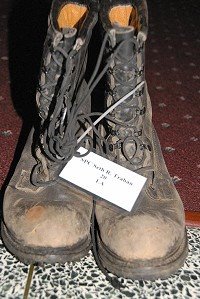
Hanover College custodian Anna Denton looked through lines of combat boots at the Eyes Wide Open exhibit on display at the college this week.

“My friend’s son’s boots are here somewhere,” she said, checking the tags tied to boot strings.

It was a sad and anxious search, she added, not only because her friend lost her son, but also because Denton’s son is in Iraq.

The exhibit is part of a larger national exhibit that has been touring cities throughout the country. Locally, 300 pairs of empty boots and Iraqi civilian shoes will challenge students and others within the community who visit the exhibit to take a closer look at the human cost of war.

At the Hanover College exhibit, combat boots represent National Guard soldiers who have fallen in the Iraq War. Dozens of civilian shoes, also part of the exhibit, memorialize Iraqi civilian casualties.

“The exhibit displays the pain caused by war in a very special way,” said freshman Emily Leatherbury, a member of People for Peace who brought the exhibit to Hanover College after being moved by the exhibit when it was in Louisville.

Leatherbury pointed out that many students, including herself, have not experienced war or its pain.

“The Open exhibit brings the pain of war down to a level we can all understand,” she said. “The exhibit makes the death of the soldiers and civilians more personal, because their shoes are something they wear every day. To see the shoes stand without the person makes a powerful statement about what war does to people.”

The exhibit can be viewed at Lynn Hall from 3-7 p.m. today and from noon to 6 p.m. Saturday and Sunday.

The local Eyes Wide Open exhibit coincides with an exhibit at the National Mall in Washington, D.C., where the balance of the 3,000 boots and shoes that make up the national exhibit are on display.

The Washington exhibit will also feature the unveiling of a new memorial creating a space to reflect the overwhelming enormity of the loss of Iraqi lives. Through words and pictures, visitors to the Washington exhibit will be asked to imagine what life would be like if this war were happening on U.S. soil.

At today’s Eyes Wide Open Advocacy Day celebration in Washington, the American Friends Service Committee and Friends Committee on National Legislation will be sponsoring training and encouraging people to share their experiences with the human cost of war with their Congressional representatives.

“I do not think it (the exhibit) will necessarily change local opinion on the war,” Leatherbury said. “But I do believe it will force people to recognize the tragedy so many have encountered because of the war in Iraq and war itself. I think after seeing the exhibit, people will look on war with more of an understanding and nearness — rather than feeling separated or disconnected.”

Monday, May 29, 2006

Just peace

We need to stop.
Just stop.
Stop for a moment...
Before anybody
Says or does anything
That may hurt anyone else.
We need to be silent.
Just silent.
Silent for a moment...
Before we forever lose
The blessing of songs
That grow in our hearts.
We need to notice.
Just notice.
Notice for a moment...
Before the future slips away
Into ashes and dust of humility.
Stop, be silent, and notice...
In so many ways, we are the same.
Our differences are unique treasures.
We have, we are, a mosaic of gifts
To nurture, to offer, to accept.
We need to be.
Just be.
Be for a moment...
Kind and gentle, innocent and trusting,
Like children and lambs,
Never judging or vengeful
Like the judging and vengeful.
And now, let us pray,
Differently, yet together,
Before there is no earth, no life,
No chance for peace.

Sometimes the most important messages come from the most unlikely places. Mattie J.T. Stepanek, a 13-year-old boy, made a difference before he died with his Heartsongs poetry. He continues to impact the world through Just Peace. This poet, best-selling author, peace activist, and prominent voice for the Muscular Dystrophy Association fervently believed in and promoted world peace not just as a concept, but as a reality.

Mattie was working on Just Peace with Jimmy Carter when he died in June 2004. His mother, Jeni, who edited the material and wrote a preface for the book is publishing it at her son's request. Just Peace explores Mattie's concept of the world and all people as a unique mosaic of gifts. War and injustice shatter the mosaic, which can only be made whole again by planning and actively pursuing peace. The young visionary's essays, poetry, and photographs appear throughout the book. Jimmy Carter has written a special foreword and forthword for the book.

Just as important to the book and enlightening to the reader are Mattie's many correspondences. Central to these are his personal e-mails to and from former president Jimmy Carter, Mattie's peace "hero" and role model. The Nobel Peace Prize winner met Mattie, considered him an angel, messenger, and hero in his own right, and was genuinely affected by Mattie's passion and drive. Just Peace is an intimate portrait of a president, a young man of hope, and peace itself.

A portion of the proceeds from Just Peace will be donated to the MDA Mattie Fund designated for medical research to help find treatments and cures for childhood neuromuscular diseases.


In his eulogy, Former President Jimmy Carter told the congregation that throughout his long and varied public life, which has included shaking millions of hands, traveling to more than 120 countries and knowing "kings and queens, presidents and prime ministers," Mattie was "the most extraordinary person" he has ever known.


BREITBART.COM - Emotional Bush says US must finish military campaign in Iraq

Emotional Bush says US must finish military campaign in Iraq
May 29 1:44 PM US/Eastern

President George W. Bush again vowed to complete US military missions around the world as the United States honoured its war dead with the American toll in Iraq closing on 2,500.

Tears welled in the US president's eyes as he gave his latest annual speech at Arlington National Cemetery, just a few days after admitting that he had some regrets about the Iraq conflict and that it had caused "consternation" in America.

"I'm in awe of the men and women who sacrifice for the freedom of the United States of America," Bush said to loud applause from an audience that included Defence Secretary Donald Rumsfeld and US military chiefs.

"Our nation mourns the loss of our men and women in uniform. We will honour them by completing the mission for which they gave their lives, by defeating the terrorists, by advancing the cause of liberty and by laying the foundation of peace for a generation of young Americans," Bush added.

The US death toll in Iraq is now about 2,470 and has increased by more than 800 since the president's last Memorial Day wreath-laying at Arlington Cemetery, in the Washington suburbs. Almost 300 US soldiers have died in Afghanistan.

There are the remains of about 296,000 US soldiers, mainly from the two World Wars and the Vietnam and Korean conflicts, at Arlington.

"In this place where valor sleeps, we are reminded why America has always gone to war reluctantly, because we know the costs of war," said Bush.

"We have seen those costs in the war on terror we fight today. These grounds are the final resting place for more than 270 men and women who have given their lives in freedom's cause since the attacks of September 11, 2001."

The Iraq war is becoming increasingly unpopular and has become a major drag on the president's approval ratings which now hover around 30 percent. Polls indicate an overwhelming majority of Americans oppose the war.

On Saturday, Bush compared the "war against terror" to the Cold War struggle against communism.

But last week, after a summit with war ally Prime Minister Tony Blair of Britain, Bush spoke of "setbacks and missteps" in the Iraq campaign, said that the Abu Ghraib prison scandal had been the biggest mistake in Iraq and that he regretted some of his rhetoric in the war on terror, such as his "Bring 'em on" taunt to Iraqi insurgents.

He called it the "kind of tough talk that sent the wrong signal to people."

.

Tears welled in the US president's eyes as he gave his latest annual speech at Arlington National Cemetery, just a few days after admitting that he had some regrets about the Iraq conflict and that it had caused 'consternation' in America.

'I'm in awe of the men and women who sacrifice for the freedom of the United States of America,' Bush said to loud applause from an audience that included Defence Secretary Donald Rumsfeld and US military chiefs.

'Our nation mourns the loss of our men and women in uniform. We will honour them by completing the mission for which they gave their lives, by defeating the terrorists, by advancing the cause of liberty and by laying the foundation of peace for a generation of young Americans,' Bush added.

The US death toll in Iraq is now about 2,470 and has increased by more than 800 since the president's last Memorial Day wreath-laying at Arlington Cemetery, in the Washington suburbs. Almost 300 US soldiers have died in Afghanistan.

There"

Sunday, May 28, 2006

Coalition War Dead

At least 2703 Coalition forces have been killed in Operation Iraqi Freedom.
2480 from US , 112 from UK , 30 from Italy , 18 from Ukraine , 17 from Poland , 13 from Bulgaria , 11 from Spain , 3 from Denmark , 3 from Slovakia , 2 from Thailand , 2 from Estonia , 2 from El Salvador , 2 from Netherlands , 2 from Australia , 2 from Romania , 1 from Latvia , 1 from Hungary , 1 from Kazakhistan , 1 from Fiji .

Tuesday, May 23, 2006

Nobel literature laureate Guenter Grass slammed the United States


Nobel laureate Grass slams U.S. for 'systematic' and 'merciless' crimes

(AP) - BERLIN-German Nobel literature laureate Guenter Grass slammed the United States Tuesday for what he described as "crimes" and other actions that only encourage terrorism and strengthen dictatorial regimes.

Speaking at the opening of the 72nd International PEN congress in Berlin, Grass sharply criticized the United States over the war in Iraq.

"The war that they wanted and that ignored the laws of the civilized world encourages terror and has no end," said Grass, 78. He added that "the crimes of the U.S.A. ... are systematic, constant, infamous and merciless."

He also criticized the U.S. administration for its approach to countries such as Syria, North Korea and Iran, describing it as "a policy that could not be dumber or more dangerous."

"Dictatorships - and there is no shortage of choice - are labeled rogue states, which as a rule strengthens the countries that are boastfully threatened with military strikes," Grass said.

Grass, a prominent left-wing figure in Germany, is respected as the voice of the post-World War II generation who has untiringly warned his compatriots to remain vigilant against racism and war. He also has long been a critic of U.S. policy.

The German playwright and novelist was awarded the Nobel Prize for literature in 1999.

His comments were greeted with a standing ovation.


Thursday, May 18, 2006

"Caught the scene on video which was obtained by Time magazine"


Did Marines killed Iraqis 'in cold blood' ?

Citing ongoing investigation, Marines mum

From Jamie McIntyre
CNN
WASHINGTON (CNN) -- A decorated Marine colonel turned anti-war congressman said Wednesday that Marines killed at least 30 innocent Iraqi civilians "in cold blood" in Haditha in November, suggesting the attack is twice as bad as originally reported.

Rep. John Murtha, D-Pennsylvania, told reporters Wednesday that he got his information from U.S. commanders, who said the investigation will show that the Marines deliberately killed the civilians.

The U.S. Marine Corps has declined to comment on the report, which initially stated that 15 were killed.

"There was no firefight. There was no IED that killed these innocent people. Our troops overreacted because of the pressure on them, and they killed innocent civilians in cold blood," Murtha said. (Watch Murtha level accusations against the Marines -- 1:58)

Murtha, who was decorated for his service in Vietnam, said the death toll may be more than twice as high as originally reported.

"They actually went into the houses and killed women and children," the congressman said.

Citing an ongoing investigation, the Marine Corps said, "Any comment at this time would be inappropriate and could undermine the investigatory and possible legal process."

The Iraqi civilians were killed while troops from the 3rd Battalion, 1st Marines were looking for insurgents who planted a roadside bomb that killed a member of their unit.

At first, the Marines said the civilians were killed by a roadside bomb. Later, they suggested the victims may have been caught in a firefight.

An Iraqi human rights group, Hammurabi Human Rights Association, caught the scene on video, which was obtained by Time magazine. A criminal investigation ensued.

Time Warner is the parent company of Time magazine and CNN.

Last month, the battalion commander and two company commanders were relieved of their commands and reassigned to staff jobs at Camp Pendleton in California.

Sources close to the investigation said it is too soon to say whether anyone will face criminal charges, but key aspects of the original Marine account have not checked out.

Murtha supported the invasion of Iraq in 2003, but last November, he distanced himself from the Bush administration and called for the withdrawal of U.S. troops because of what he called "a flawed policy wrapped in illusion."


Find this article at:
http://www.cnn.com/2006/WORLD/meast/05/18/murtha.marines/index.html?section=cnn_topstories

amazon quicklinker

Favorites linker

google adds