United Nations Special Rapporteur on Torture Manfred Nowak has accused US President Barack Obama of violating international law for not bringing CIA torture agents to court.
Obama open to torture memos probe, prosecution
WASHINGTON (AP) — Widening an explosive debate on torture, President Barack Obama on Tuesday opened the possibility of prosecution for Bush-era lawyers who authorized brutal interrogation of terror suspects and suggested Congress might order a full investigation.
Less than a week after declaring it was time for the nation to move on rather than "laying blame for the past," Obama found himself describing what might be done next to investigate what he called the loss of "our moral bearings."
His comments all but ensured that the vexing issue of detainee interrogation during the Bush administration will live on well into the new president's term. Obama, who severely criticized the harsh techniques during the campaign, is feeling pressure from his party's liberal wing to come down hard on the subject. At the same time, Republicans including former Vice President Dick Cheney are insisting the methods helped protect the nation and are assailing Obama for revealing Justice Department memos detailing them.
Answering a reporter's question Tuesday, Obama said it would be up to his attorney general to determine whether "those who formulated those legal decisions" behind the interrogation methods should be prosecuted. The methods, described in Bush-era memos Obama released last Thursday, included such grim and demeaning tactics as slamming detainees against walls and subjecting them to simulated drowning.
He said anew that CIA operatives who did the interrogating should not be charged with crimes because they thought they were following the law.
The three men facing the most scrutiny are former Justice Department officials Jay Bybee, John Yoo and Steven Bradbury. Bybee is currently a judge on the 9th U.S. Circuit Court of Appeals. Yoo is a professor at the University of California-Berkeley.
It might be argued that the officials were simply doing their jobs, providing legal advice for the Bush administration. However, John Strait, a law professor at Seattle University said, "I think there are a slew of potential charges."
Those could include conspiracy to commit felonies, including torture, he suggested.
Bybee also could face impeachment in Congress if lawmakers were so inclined.
A federal investigation into the memos is being conducted by the Justice Department's Office of Professional Responsibility, which usually limits itself to examining the ethical behavior of employees but whose work in rare cases leads to criminal investigations.
The chairmen of the Senate and House Judiciary committees said Tuesday they want to move ahead with previously proposed, independent commissions to examine George W. Bush's national security policies.
Sen. Patrick Leahy, D-Vt., who has referred to his proposed panel as a "Truth Commission," said, "I agree with President Obama: An examination into these Bush-Cheney era national security policies must be nonpartisan. ... Unfortunately, Republicans have shown no interest in a nonpartisan review."
Rep. John Conyers, D-Mich., has proposed separate hearings by his committee in addition to an independent commission.
Over the past weekend, White House chief of staff Rahm Emanuel said in a television interview the administration did not support prosecutions for "those who devised policy." White House aides say he was referring to CIA superiors who ordered the interrogations, not the Justice Department officials who wrote the legal memos allowing them.
Yet it was unclear exactly whom Obama meant in opening the door to potential prosecutions of those who "formulated the legal decisions." Press Secretary Robert Gibbs was asked if the president meant the lawyers who declared the interrogation methods legal, or the policymakers who ordered, them or both.
"I don't know the answer to that," Gibbs said during a briefing in which he was peppered with questions about the president's words. Later, he added: "The parsing of some of this is better done through a filter of the rule of law and done at the Justice Department and not done here at the White House."
National Intelligence Director Dennis Blair, Obama's top intelligence advisers, told personnel in an April 16 letter that the interrogations had resulted in "high-value information" as well as a "deeper understanding" of al-Qaida.
However, with the public release of his letter, Blair issued a statement Tuesday night saying that while the information gained was valuable in some instances, there was no way to know if that information could have been obtained in other ways.
"The bottom line is these techniques have hurt our image around the world, the damage they have done to our interests far outweighed whatever benefit they gave us, and they are not essential to our national security," Blair said.
A number of Republicans, including former Vice President Cheney and former top intelligence officials, say Obama has undermined national security with his release of the memos on the matter. On the other side, some Democratic lawmakers, human rights groups and liberal advocates want to see punishment for those involved in sanctioning brutal interrogations — the kind they say amount to torture and have damaged U.S. standing around the world.
Showing posts with label Barack Obama. Show all posts
Showing posts with label Barack Obama. Show all posts
Thursday, April 23, 2009


Sunday, February 01, 2009
P.W. Singer with Jon Stewert discuss : Wired for War
 Video Below
Peter W. Singer is a Senior Fellow at the Brookings Institution where he is Director of the 21st Century Defense Initiative. Singer served as coordinator of the Defense Policy Task Force for Barack Obama's 2008 presidential campaign.
At 34 years old, Dr. Singer was the youngest scholar named a Senior Fellow in the ninety-year history of Brookings. He is considered one of the world’s leading experts on changes in 21st century warfare and has written for many of the world's major media and journals, including the Boston Globe, L.A. Times, New York Times, Washington Post, Foreign Affairs, Current History, Survival, International Security, Parameters, Weltpolitik, and the World Policy Journal. He has been quoted in every major U.S. newspaper and news magazine and delivered talks at venues ranging from the U.S. Congress and Pentagon to more than 40 universities around the world.
And last week he was interviewed by Jon Stewert of the Daily Show (on Comedy Central) about his new book:
Wired for War: The Robotics Revolution and Conflict in the 21st Century" (Penguin, 2009) is Singer's latest book. It explores what happens when science fiction starts to play out on modern day battlefields, as robots start to be used more and more in war. For the book research, Singer interviewed hundreds of robot scientists, science fiction writers, soldiers, insurgents, politicians, lawyers, journalists, and human rights activists from around the world. Even before publication, the work had already been featured in the video game "Metal Gear Solid 4: Guns of the Patriots", as well as in presentations to audiences as diverse as the U.S. Army War College, Air Force Institute of Technology and the National Student Leadership Conference. Singer's 2009 book tour will take him to the opening of the TED conference, and presentations at 25 venues around the country.
His other books include:
"Corporate Warriors"
His first book Corporate Warriors: The Rise of the Privatized Military Industry (Cornell University Press, 2003) was the first to explore the new industry of private companies providing military services for hire, an issue that soon became important with the use and abuse of these companies in Iraq. [2] The book, originally planned for a 500 copy print run, has sold over 40,000 copies, gone through three print runs and a paperback version, as well as being translated into Japanese, Korean, Urdu, and Italian. It was named best book of the year by the American Political Science Association, among the top five international affairs books of the year by the Gelber Prize, and a “top ten summer read” by Businessweek. It is now in the assigned texts at venues ranging from Yale Law School to the Army War College.
"In the years that followed, Singer was feted as one of the only knowledgeable experts on the subject who would speak to the press (PMFs loving their secrecy, almost as a matter of course), but was also threatened with assault, lawsuits, and even death by people who would have preferred he kept everything he learned to himself. Also, Iraq—just a gleam in a neo-con’s eye back when Singer was writing the book—happened.
Singer adds a Chapter: “The Lessons of Iraq.”
Five years into the Iraq War, Cornell Press has republished Corporate Warriors, which would have been a welcome thing even if they hadn’t done anything to the book besides fix a few typos. But fortunately, Singer has gone back and added a terse but heavy-hitting afterword on what has transpired since the book’s original publication: “The Lessons of Iraq.” When Singer first wrote Corporate Warriors he was trying partially to start a debate on the good and bad aspects of the PMF phenomenon, but mostly just trying to shed light and analysis on an incredibly secretive field that had been little studied. By the time he revisited the subject for this new edition, the situation appears to have grown to include an even larger part of the American military infrastructure, and with almost just as little reflection as there was before the first missile hit Baghdad.
For all the alarms that Singer raises about this issue, though, he’s no Chicken Little. The idea of hiring mercenaries to fight our wars may rankle many Americans (particularly those of a liberal disposition), but Singer scrupulously explains that the 19th and 20th century tradition of nation-states waging war with vast armies of conscripted or volunteer citizens is actually an aberration in the history of warfare, not the norm. For much of human history, warfare was in fact more likely to be waged by small of units of professionals who hired themselves out to the highest bidder. One of the reasons was that many governments didn’t have the means or ability to maintain large standing armies of men who could take the time to master the intricacies of warfare."http://www.popmatters.com/pm/review/corporate-warriors-by-p-w-singer
Children at War
Dr. Singer’s next book, Children at War (Pantheon, 2005), explored the rise of another new force in modern warfare, child soldier groups. Dr. Singer’s “fascinating” (New York Post) and “landmark” (Newsweek) work was the first book to comprehensively explore the compelling and tragic rise of child soldier groups and was recognized by the 2006 Robert F. Kennedy Memorial Book of the Year Award. His commentary on the issue was featured in a variety of venues ranging from National Public Radio and Fox News to Defense News and People magazine. Dr. Singer has served as a consultant on the issue to the U.S. Marine Corps and Congress, and the recommendations in his book resulted in changes in the UN peacekeeping training program. An accompanying A&E/History Channel documentary entitled Child Warriors was broadcast in 2008.
His site: www.pwsinger.com/
Wednesday, January 21, 2009
Barack Obama, Day One Meeting to discuss Iraq Poilicy
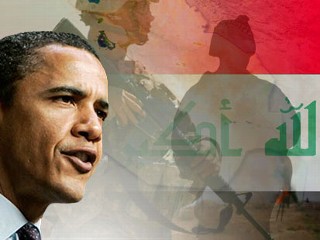
Top of the Agenda:
Reporting from Washington -- President Obama will discuss U.S. military involvement in Iraq with his senior national security team this afternoon, a critical first meeting as the new administration reshapes the Pentagon's war strategy.
"Running up to the inauguration, the president made clear this is one of the important items on his agenda," said Bryan Whitman, the Pentagon spokesman. "This is a logical first step for a new president that wants to speak to the people most directly responsibility for managing and executing the wars."
"Running up to the inauguration, the president made clear this is one of the important items on his agenda," said Bryan Whitman, the Pentagon spokesman. "This is a logical first step for a new president that wants to speak to the people most directly responsibility for managing and executing the wars."
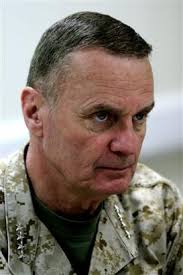 and Defense Secretary Robert M. Gates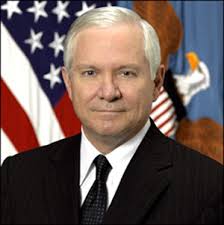
along with Adm. Michael G. Mullen, the chairman of the Joint Chiefs of Staff,
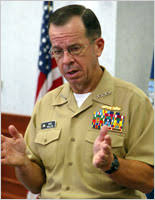
and Gen. David H. Petraeus, the head of U.S. forces in the Middle East.
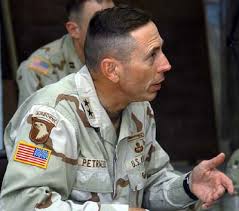
In addition, Gen. Raymond T. Odierno, the top commander in Iraq, will participate by video teleconference.

At the meeting, expected to begin around 4 p.m. Eastern time, Obama could order a change in war policy and direct the military to speed up its withdrawals.
But some officials believe it is more likely that the president will ask the Defense Department take some time to draft new plans for his approval. Military officials said that will give them a chance to reconcile commanders' current plans with the wishes of the new president.
http://www.latimes.com/news/nationworld/nation/la-na-obama-security22-2009jan22,0,1363695.story
Tuesday, August 26, 2008
Watch for Obama to explain his agenda of global militarism Thursday

As President George w. Bush labeled himself as a War President, so too will his successor be aptly titled when they become the Commander and Chief.
No one doubts Senator McCain when he predicts that we will be in Iraq for a long time, that he, as President, wouldn't act to change that.
But Senator Barack Obama, who ran as the `anti Iraq War candidate' because he didn't vote to allow the President to have `war powers' as his opponent Senator Hillary Clinton did is no dove. His recent comments actually expose his hawkish tendency, as well presented in this article written a week ago.
Expect some tough `military edged' talk from Obama when he gives his speach ath the convention Thursday night.
On eve of Democratic convention, Obama advances agenda of global militarism
By Bill Van Auken
20 August 2008
Speaking before an audience of 3,000 members of the Veterans of Foreign Wars, Democratic presidential candidate Senator Barack Obama defended his patriotism while attacking his Republican rival for being squeamish about launching unilateral military attacks against Pakistan.
Obama’s speech Tuesday in Orlando, Florida followed an appearance Monday before the same convention by Republican candidate Senator John McCain, who delivered a right-wing diatribe portraying the Democrat as a political opportunist and virtual traitor for his policy on the war in Iraq.

McCain charged Obama with having “tried to prevent funding for the troops who carried out the surge.” He continued: “Not content to merely predict failure in Iraq, my opponent tried to legislate failure.”
In his response, Obama spoke not as an opponent of war, but rather as an advocate of a superior strategy for pursuing US interests by military means.
He chided McCain for “talking tough without acting tough and smart,” while outlining a policy agenda that includes a continuation of the occupation of Iraq—albeit on a reduced basis—an escalation of the war in Afghanistan and its extension across the border into Pakistan. Finally, he put forward a policy of confrontation with Russia in the Caucasus that dovetails fully with the positions taken by the McCain campaign and the Bush administration itself.
Obama began his speech by declaring that America confronted a “defining moment in our history,” a conjuncture that he indicated had been reached owing to a series of events involving the ongoing or potential use of American military force.
“We are in the midst of two wars,” he said. “The terrorists who attacked us on 9/11 are still at large. Russia has invaded the sovereign nation of Georgia. Iran is pursuing nuclear weapons.”
Obama objected to McCain’s charge that he had shifted his position on Iraq, arguing that he had been consistent from the start. Referring to his initial opposition to the 2003 invasion, the Democratic candidate stressed that he was not opposed to aggressive wars in general, but that he viewed the war in Iraq as a miscalculation. He insisted instead that “our first priority had to be finishing the fight” in Afghanistan.
While suggesting that the “costly strategic errors” involved in the Iraq war had not been erased by the supposed successes of the military “surge” which sent 30,000 additional American troops into the country, Obama nonetheless praised the operation.
Obama Praised the Surge
He hailed General David Petraeus and Ambassador Ryan Crocker, who oversaw the military escalation, as “outstanding Americans,” while attributing the “lowering” of “the level of violence” in Iraq to “the outstanding efforts of our military, the increasing capability of Iraq’s Security Forces, the ceasefire of Shiite militias, and the decision taken by Sunni tribes to take the fight to Al Qaeda.” He concluded, “Those are the facts, and all Americans welcome them.”
There are other “facts,” however, which millions of Americans recognize as both criminal and shameful. The suppression of Iraqi resistance to foreign occupation, which is neither complete nor permanent, has been achieved through the killing of well over a million civilians and the turning of millions more into refugees. The US war and occupation have essentially destroyed Iraq as a functioning society.
Yet for Obama, the catastrophe produced by a war aimed at seizing control of Iraq’s oil reserves is the fault not of Washington, but of the Iraqis themselves.
“We have lost over a thousand American lives and spent hundreds of billions of dollars since the surge began, but Iraq’s leaders still haven’t made hard compromises or substantial investments in rebuilding their country,” declared the Democratic candidate. “And while we pay a heavy price in Iraq—and Americans pay record prices at the pump—Iraq’s government is sitting on a $79 billion dollar budget surplus from windfall oil profits.”
“Iraqi inaction threatens the progress we’ve made and creates an opening for Iran and the ‘special groups’ it supports,” he continued. “It’s time to press the Iraqis to take responsibility for their future. The best way to do that is a responsible redeployment of our combat brigades, carried out in close consultation with commanders on the ground.”
In other words, Obama is not advocating an end to a predatory war, but rather its reconfiguration in a manner designed to pressure the regime in Baghdad into acceding more fully to US demands.
As he spelled out, this “responsible redeployment” will not mean an end to the US occupation. While vowing to remove US “combat brigades” from Iraq over the course of his first year-and-a-half in office—extending their presence well into 2010—Obama made it clear that many other troops would remain.
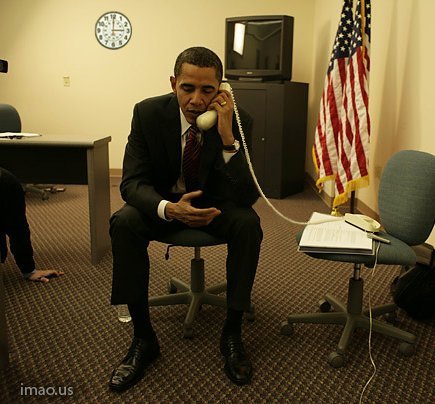
“After this redeployment, we’ll keep a residual force to target remnants of Al Qaeda, to protect our service members and diplomats, and to train Iraq’s Security Forces if the Iraqis make political progress,” he said. Such a force would inevitably consist of tens of thousands of American soldiers and Marines.
Moreover, he explained, the purpose of this reduction in the American “footprint” in Iraq would not be to curtail the global role of American militarism, but rather to facilitate its exercise elsewhere.
The partial withdrawal from Iraq, he said, would allow Washington to “strengthen our military, and to finish the fight against Al Qaeda and the Taliban in Afghanistan and the border region of Pakistan.”
Describing Afghanistan as the “central front in the war on terrorism,” Obama continued: “This is a war that we have to win. And as commander-in-chief, I will have no greater priority than taking out these terrorists who threaten America and finishing the job against the Taliban.”
Obama’s attempt to sell the US intervention in Afghanistan as some kind of “good war” being waged against the perpetrators of 9/11is as grotesque a lie as the ones used by the Bush administration to justify the war in Iraq. US and NATO forces are waging a brutal campaign that is claiming an escalating toll of civilian casualties as they fight popular resistance to the US-led occupation from the predominantly Pashtun population on both sides of the porous Afghan-Pakistani border. “Taking out these terrorists who threaten America” means a savage military campaign against this population.
He called for throwing two more US combat brigades into the colonial-style war against the people of Afghanistan.
The Democratic candidate’s call for a shift in the relative weight of US military power from Iraq to Afghanistan has emerged as the consensus position within the predominant layers of the American foreign policy establishment.
A so-called “terrorism index” published Monday by Foreign Policy magazine and the Center for American Progress, based on a survey of “foreign policy experts” (US security officials, intelligence operatives and academics), found that 69 percent support shifting US forces from Iraq to Afghanistan and 80 percent believe that Washington has devoted too much attention to Iraq and not enough to Afghanistan.
Underlying this orientation is a concern not with combating “terrorism,” but rather with US strategic interests. Central Asia, with its extensive oil and natural gas reserves, has emerged as a region of critical importance. In the wake of the Soviet Union’s dissolution, Washington has attempted to assert its hegemony in Central Asia in opposition to both Russia and China. The attacks of September 11 provided the pretext for a military intervention that had been planned long beforehand.
Obama and his threats to Pakistan
Obama went on to attack McCain from the right, accusing him of reticence about “bombing our ally” in Pakistan.
“So for all of his talk about following Osama bin Laden to the Gates of Hell, Senator McCain refused to join my call to take out bin Laden across the Afghan border,” he said. “Instead, he spent years backing a dictator in Pakistan who failed to serve the interests of his own people.”
The McCain campaign issued a statement pointing out that in the Democratic primary debates last year, Obama voiced his own support for US collaboration with Pakistan’s military strongman, Pervez Musharraf, who was forced to resign Monday.
“We have to work with Musharraf, because the biggest threat to American security right now is in the northwest provinces of Pakistan,” Obama said in the debate. He added, “We should continue to give him military aid contingent on him doing something about that.”
On the Russian Front
Finally, on Georgia, Obama stressed his unity with his Republican rival, declaring, “Senator McCain and I both strongly support the people of Georgia.”
The Washington Post reported Monday that “Some Democrats have been pleading with Obama to use McCain’s tough response to the Russian invasion of Georgia to paint him as a trigger-happy interventionist who would risk bringing a war-weary nation into military conflict in regions where the United States has no interest.”
Instead, Obama tried to outdo the Republican candidate in terms of menacing rhetoric. He regurgitated the war propaganda about “Russian atrocities,” while repeating the administration’s mantra that “Georgia’s territorial integrity must be respected,” a euphemism for supporting the attempt by the regime in Tbilisi to militarily conquer the autonomous territories of South Ossetia and Abkhazia. He also voiced his support for Georgia, a former Soviet republic, being “integrated” into the NATO military alliance, a policy that has dramatically heightened US-Russian tensions.
Obama included a tribute to Senator Joseph Biden (Democrat of Delaware)—reportedly a leading contender for the vice-presidential nomination—who had just returned from a trip to Georgia, and went on to cast the conflict in bellicose, Cold War terms.
The candidate concluded by warning Moscow that its actions in the Caucasus would “have consequences.”
With less than a week to go until the Democrats officially nominate Obama at their convention in Denver, and with barely two-and-a-half months until the election, the candidate’s speech underscores a stark political reality confronting the American people. Once again this November, the two-party system will offer no means of expressing the massive popular opposition to war, but rather an empty choice between two big business candidates who are committed to the expanded use of militarism in pursuit of US corporate and financial interests.
Saturday, March 22, 2008
Obama military adviser : We will be in Iraq for a century -hopefully.

Gen. Tony McPeak a Barack Obama military adviser Gen. Tony McPeak (who yesterday accused Bill Clinton of using McCarthyistic tactics) might be advising Mr. Obama that long term plans in Iraq are the way to go.
From an interview with Gen. McPeak:
Is Iraq the last country we confront in the Middle East?
Who wants to volunteer to get cross-ways with us? We’ll be there a century, hopefully. If it works right.
I’ll tell you one thing we should not hope for (is) a democratic Iraq. When I hear the president talking about democracy, the last thing we should want is an election in Iraq. We’re not very popular. So I don’t think we’ll see any open elections in Iraq for a long time.
Hopefully over time they can be brought along like Japan and Germany — Japan and Germany were relatively easy, I think, and South Korea.
He aslo said: "So maybe we ought to start grading presidential candidates for an IQ. Although it's hard to see why anybody that's very smart would want to run."
**
Maybe the presidential candidates should be checking the messages their advisers are pushing.
Tuesday, February 27, 2007
Video: Barack Obama Interview in :2002: Against Iraq
A flashback of Democratic Presidential hopeful Barack Obama.
Subscribe to:
Posts (Atom)


 Posts
Posts


