Showing posts with label Shiite vs. Sunni. Show all posts

Saturday, January 31, 2009

Iraq Election Day Peacefull and Inclusive

Prime Minister of Iraq Nouri Maliki cast his vote.

"A new dawn, God willing," said Sabah Bashir Hassan, known as Abu Talib, who leads thousands of former insurgents and others in the Popular Committees, the name here for the U.S.-backed Sunni militia that fought the insurgent group al-Qaeda in Iraq.

"To me, the elections represent the point between darkness and light," the Sunni leader said. "Everybody wants to turn a page on the past. We're turning a new page over today."

Iraqis vote in provincial elections under tight security. The vote is seen as a test for the nation's stability as the U.S. weighs dialing down its troop presence here.

US President Barack Obama has congratulated Iraqis for holding a largely peaceful vote for provincial councils across the country.

He called the elections "an important step forward" for Iraqi self-determination.

Mr Obama urged the newly elected councils to "get seated, select new governors, and begin work on behalf of the Iraqi people who elected them".


The elections were held in 14 of the country's 18 provinces, with more than 14,000 candidates competing for just 440 seats.

There was no voting in the three provinces of the semi-autonomous Kurdish region of the north and the ballot was postponed in oil-rich Kirkuk province.

There was a strong turn-out in Sunni areas, which boycotted the last polls.

The first nationwide vote in four years is seen as a test of stability before a general election due later this year.

Displaced Kurds Demanded Vote
Hundreds of Iraqi Kurds stormed an electoral commission office in northeast Iraq on Saturday claiming they were displaced residents of Khanaqin and demanding to vote, an official said.

“The Kurds entered the election commission office and asked to vote because they said they were people displaced by Saddam Hussein,” an official from the electoral commission told AFP.

The issue was resolved when those holding identification from Khanaqin were allowed to vote in the provincial elections that were held on Saturday, the official added.

During Saddam’s reign tens of thousands of Kurds were forced to relocate to the Kurd regions in northern Iraq, as part of the dictator’s Arabisation plans.

Many of those 16,000 residents have returned in the wake of the 2003 US-invasion which deposed Saddam, renewing tensions and sparking rival territorial claims between Kurds and Arab Shiites.

The town of Khanaqin in northeast Diyala province is near the border with Iran and holds sizeable oil reserves.

The local Kurdish political leadership has called for Khanaqin to join the adjoining autonomous Kurdish region in northern Iraq

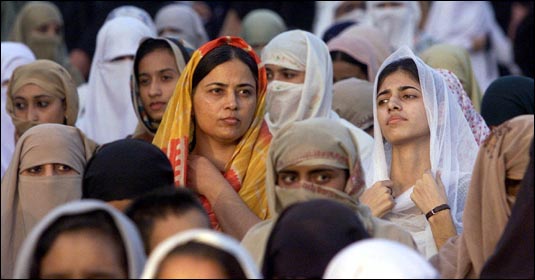
Four thousand women are running for office in Iraq

BAGHDAD, Iraq (CNN) -- Four thousand women are running for office in Iraq's provincial elections Saturday, and many of them will be guaranteed seats under an electoral quota system.

Iraqi women show off their ink-stained fingers after voting Saturday in Baghdad.

Iraqi women show off their ink-stained fingers after voting Saturday in Baghdad.

Regardless of the votes their candidates receive, parties are required to give every third seat to a woman, according to a report this week from the International Crisis Group.

The ultimate share of seats held by women will depend on the distribution of votes among parties, the report said.

Some women candidates say these elections -- only the second provincial elections since the fall of Saddam Hussein -- are a chance to improve their standing in Iraqi society.

Nibras al-Mamuri is a secular female candidate who argues that fundamentalists have taken over the country. She says it was the 2005 elections that brought them into power and tarnished Islam's image in Iraq.

Al-Mamuri, who is running for the Baghdad provincial council, says it's time for a change. Video

"Although a woman's role in the Arab world is mainly that of a mother and child bearer," she said, "I want to prove that women are just as capable as men when it comes to challenging

At first, al-Mamuri said, she thought just participating in the elections as a woman was enough. But now, she says she is running to win in order to defy men who believe a woman's place is in the home.

"I've entered a battlefield where women have to prove they are competent," she said. "I have to forget about fear."

In recent years, Iraqi women have been targeted by extremists for a variety of reasons -- from not covering their hair to entering the political arena.

Under Hussein, Iraq was one of the more secular Arab countries, but the 2003 U.S. invasion unleashed extremist militias. Now, many activists say women have been forced back to the Dark Ages, forced to be submissive, anonymous and fully veiled.

Al-Mamuri said she believes Saturday's vote can help women improve their position in society.

"An Iraqi woman can be an equal. She can participate in change," she told CNN.

The image of a woman posing a public and direct challenge to fundamentalists and their beliefs was not seen in the 2005 vote.

advertisement

"Iraqi women form the core of society," said Rissala Khalid, another female candidate in Baghdad.

Passing out her campaign card, Khalid told young women that she will fight for their rights, and told young men that she will try to provide jobs for Iraq's largely unemployed youth.

references:
http://baghdadbureau.blogs.nytimes.com/2009/01/31/kirkuk-the-province-that-couldnt-vote/?partner=rss
http://www.cnn.com/2009/WORLD/meast/01/31/iraq.women/index.html
http://news.bbc.co.uk/2/hi/middle_east/7863342.stm
http://www.khaleejtimes.com/DisplayArticleNew.asp?col=&section=middleeast&xfile=data/middleeast/2009/January/middleeast_January603.xml

Tuesday, August 26, 2008

Shi ite Prime Minister Maliki wants US out for his ani-Sunni agenda


In the following Opinion article we are informed that as Prime Minister Maliki is about to re-continue his religious based persecution of the Sunni's.

This comes just after he demands for a time table for an actual US pullout:

BAGHDAD -- Iraqi Prime Minister Nouri Maliki said Monday that an agreement on the future of U.S. forces in Iraq must include a firm withdrawal date and that Iraq wants them out of the country by the end of 2011.

It was the first time Maliki explicitly demanded a fixed deadline for the departure of all U.S. troops from Iraq. His words appeared to rule out the presence of any U.S. military advisors, special forces and air support after the withdrawal date.


The answer to the question- can't they all just get along seems clearly- no. History has shown us that these religious groups cannot co-exist without the threat of force (such as Saddam provided, and now we the US provide. In the name of keeping the peace since overthrowing Saddam we have killed and tortured many more than he did in a shorter amount of time.)


Opinion
Baghdad's misguided crackdown on the Sons of Iraq
Prime Minister Maliki's Shiite-dominated government risks security gains by taking on U.S.-backed Sunni forces.
By Shawn Brimley and Colin Kahl
August 26, 2008


There is a gathering storm on Iraq's horizon. Over the last several weeks, its central government has embarked on what appears to be an effort to arrest, drive away or otherwise intimidate tens of thousands of Sunni security volunteers -- the so-called Sons of Iraq -- whose contributions have been crucial to recent security gains. After returning from a trip to Iraq last month at the invitation of Army Gen. David H. Petraeus, the U.S. commander in Iraq, we are convinced that if Iraqi Prime Minister Nouri Maliki and his advisors persist in this sectarian agenda, the country may spiral back into chaos.

Much of Iraq's dramatic security progress can be traced to a series of decisions made by Sunni tribal leaders in late 2006 to turn against Al Qaeda in Iraq and cooperate with American forces in Anbar province. These leaders, outraged by Al Qaeda's brutality against their people, approached the U.S. military with an offer it couldn't refuse: Enter into an alliance with the tribes, and they would turn their weapons against Al Qaeda rather than American troops.

Throughout 2007, U.S. commanders capitalized on this Sunni movement, the so-called Awakening, to create an expanding network of alliances with Sunni tribes and former insurgents that helped turn the tide and drive Al Qaeda in Iraq to near extinction. There are now about 100,000 armed Sons of Iraq, each paid $300 a month by U.S. forces to provide security in local neighborhoods throughout the country. In recognition of the key role the Awakening played in security improvements, President Bush met with several Sunni tribal leaders during his trip to Anbar last September, and Petraeus, who cites the program as a critical factor explaining the decline in violence, has promised to "not walk away from them."


But Iraq's predominantly Shiite central government seems intent on doing precisely that. Maliki and his advisors never really accepted the Sunni Awakening, and they remain convinced that the movement is simply a way for Sunni insurgents to buy time to restart a campaign of violence or to infiltrate the state's security apparatus. In 2007, with Iraq's government weak and its military not yet ready to take the lead in operations, the Maliki government acquiesced to the U.S.-led initiative and grudgingly agreed to integrate 20% of the Sons of Iraq into the Iraqi security forces. Now, a newly confident Maliki government is edging away from this commitment.

During our trip, a common theme among U.S. military commanders, intelligence officers, diplomats and Iraqi political leaders we spoke with was the growing hubris of Maliki and his closest advisors. Recent government successes in Basra, Sadr City and Mosul seem to have convinced Maliki's inner circle that Iraq's army does not need American help as much as it used to. A newly emboldened prime minister is now moving out aggressively against his adversaries, including the Sons of Iraq.

Plans to integrate these Sunni fighters into Iraq's security forces or provide them with civilian employment have been consistently "slow rolled." While Maliki has committed to incorporate 20% of the 100,000 Sons of Iraq members under U.S. contract into Iraq's army or police forces by the end of this year, only a small fraction have actually been hired. When asked if the Iraqi government had created stumbling blocks to integrating the Sons of Iraq, Petraeus said in a recent interview, "That certainly has been the case."

It gets worse. Over the last several weeks, Iraqi army units and special operations forces (which report directly to Maliki) have arrested Sons of Iraq leaders, dismantled checkpoints and otherwise harassed local security volunteers in Diyala province and greater Baghdad. There are reportedly plans to detain hundreds of Sons of Iraq members in the coming weeks. "These people are like cancer, and we must remove them," an Iraqi army general in Abu Ghraib, a Baghdad suburb, told a reporter last week. Another Iraqi commander in Baghdad confided, "We cannot stand them, and we detained many of them recently," before telling that reporter of plans to instigate a major crackdown as early as November.

We talked to a number of tribal and Sons of Iraq leaders during our trip. When asked what would happen if the Maliki government did not keep its word and integrate or otherwise accommodate their members, one leader was blunt: "There will be trouble."

It is obvious where this road might end. The last time tens of thousands of armed Sunni men were humiliated in Iraq -- by disbanding the Baath Party and Iraqi army in May 2003 -- an insurgency began, costing thousands of U.S. lives and throwing Iraq into chaos. Yet Maliki and his advisors risk provoking Iraq's Sunni community into another round of violence.

The rising tensions in Iraq reveal a weakness in U.S. strategy and the Bush administration's approach to the war: the unconditional nature of our support to Maliki's government.

The "surge" strategy in Iraq, as described by President Bush in January 2007, rested on the belief that tamping down violence would provide a window of opportunity that Iraq's leaders would use to pursue political reconciliation. But this has not occurred, despite the dramatic security improvements. Indeed, if the problem in 2006 and 2007 was Maliki's weakness and inability to pursue reconciliation in the midst of a civil war, the issue in 2008 is his overconfidence and unwillingness to entertain any real accommodation with his political adversaries. America's blank check to the Iraqi government feeds this hubris.

U.S. strategy must be reengineered to exploit our diminished but still significant leverage. Despite recent military successes, the Iraqi security forces remain critically dependent on U.S. air power, logistical support, intelligence and training. The United States must make continued security assistance conditional on Maliki carrying through on his commitments to integrate and gainfully employ the Sons of Iraq.

The security gains in Iraq have been remarkable, but U.S. leaders in Washington need to do whatever is necessary to prevent this threatening storm from sweeping away all that has been achieved at great cost and sacrifice.

Shawn Brimley is a fellow at the Center for a New American Security. Colin Kahl is a senior fellow at CNAS and an assistant professor at Georgetown University's Edmund A. Walsh School of Foreign Service.

Friday, January 04, 2008

New Amnisty bill in Iraq proposed while Sunni leader held


Adnan al-Dulaimi case

Iraqi media reported that a number of politicians would ask parliament to strip Adnan al-Dulaimi, the head of a mainly Sunni party, of his parliamentary immunity.

A joint force of the Iraqi police and multinational forces recently found a cache of weapons in al-Dulaimi's house and investigations reportedly revealed the involvement of al-Dulaimi's son in the killings of civilians.

After the incident, Iraqi authorities transferred al-Dulaimi from his residence to the Rashid Hotel inside Baghdad's Green Zone to keep him under monitoring.

Al-Dulaimi's house was similarly raided last year and weapons were found inside it, but the matter was later settled after a meeting between him and US officials.

Qoutes of Adnan al-Dulaimi


* "Our participation in this so-called national unity government is weak and marginalized and our ministers have no authority to serve Iraq or its people."[1]

* "When you are forgotten and suffer psychological pressure you tend to go back to religion and appeal to God to end your ordeal, added to that the desire to take revenge on those who illegally threw you in jail, you tend to be a soft target for extremists."

* "In every meeting I have with US officials I repeat my appeal to them to take into consideration that they cannot keep people in prison indefinitely without charges.

* "It is just not right and gains them nothing but increasing extremists who spend their days in detention looking forward to one thing, which is to be released one day and to take their revenge."

* "They keep reassuring me that they would take action but they never did. They release [a] few dozens and the next day arrest hundreds."

* "There are now around 17,000 Iraqi detainees in Buka camp in the south. Most of them are innocent people. They get arrested and thrown in jail for months and years without charges and without trial, and while in prison they are approached by al-Qaeda people."

Amnesty bill


The Iraqi government took a small step towards national reconciliation by sending a draft amnesty bill to the parliament speaker.

The bill, drafted by the Shia-dominated government, falls far short of Sunni demands, however. It covers less than a quarter of those held in Iraqi prisons, and none of those held by the American military.

Sunni parliamentarians have argued that most prisoners are charged with terrorist crimes, rendering it ineffective.

Some also fear referring the bill to parliament will actually delay prisoner releases.

Ali al-Dabbagh, the government's spokesman, said the draft bill would exclude those imprisoned for a variety of crimes ranging from terrorism, kidnapping and rape to antiquities smuggling, adultery and homosexuality.

It also excludes senior figures of the former Baath government.

If passed in its current form, the bill could see some 5,000 prisoners released, al-Dabbagh said. The Iraqi government has about 20,000 people in custody, while the US military holds about 25,000.

Sunday, July 08, 2007

Al-Qaeda threatens war against Iran


The leader of an al-Qaeda umbrella group in Iraq, who was thought to have been killed by US forces, has threatened to wage war against Iran unless it stops supporting Shias in Iraq within two months.

Abu Omar al-Baghdadi, head of the Islamic State in Iraq, said his Sunni fighters have been preparing to wage a battle against Shia-dominated Iran.

Al-Baghdadi made the announcement in an audiotape that was posted on a web site commonly used by armed groups.

The 50-minute audiotape, which was released on Sunday, could not be independently verified.

US forces had earlier claimed to have killed al-Baghdadi.

Major General William Caldwell, the commander of the multinational force in Iraq, told a press conference in Baghdad that US forces had killed Muharib Abdulatif al-Juburi on May 1.

Brigadier General Abdel Karim Khalaf, operations director at the Iraqi interior minister, told state television that al-Juburi was also known as Abu Omar al-Baghdadi.

Audiotape

"We are giving the Persians, and especially the rulers of Iran, a two-month period to end all kinds of support for the Iraqi Shia government and to stop direct and indirect intervention ... otherwise a severe war is waiting for you," al-Baghdadi said.

Iraq's Shia-led government is backed by the US but closely allied to Iran.

The United States accuses Iran of arming and financing Shia militias in Iraq, charges Tehran denies.

In the recording, al-Baghdadi also gave Sunnis and Arab countries doing business in Iran or with Iranians a two-month deadline to cease their ties.

"We advise and warn every Sunni businessman inside Iran or in Arab countries especially in the Gulf not to take partnership with any Shia Iranian businessman, this is part of the two-month period," he said.

Al-Baghdadi said his group was responsible for two suicide truck bomb attacks in May in Iraq's northern Kurdish region. He said the attacks in Irbil and Makhmur showed the "Islamic jihad" was progressing in the Kurdish areas.

What this means:

That Al-Qaeda, at least in Iraq is Sunni.

The Sunni's are continually battling against militant Shiite groups in Northern Iraq.

The Government of Iraq is lead by a Shiite.

The Government of Iran is Shiite and has been sending weapons into Iraq to help the Shiites.

Bush has openly condemned the Iraqi Sunni:

"The enemy in Iraq is a combination of rejectionists, Saddamists and terrorists. The rejectionists are by far the largest group. These are ordinary Iraqis, mostly Sunni Arabs, who miss the privileged status they had under the regime of Saddam Hussein -- and they reject an Iraq in which they are no longer the dominant group."


The US claims to be `partners' with Iraq's current Shiite led government - however

US funding Al Qaeda Sunni Terroist.


Other Links:

http://english.aljazeera.net/NR/exeres/D1B901E0-A9E5-4D3A-937B-7B5262BBE82C.htm


Bombs Explode & Accusations Fly : US - Iran War Ratchets Up a Few Notches.


Saturday, June 09, 2007

Video: US funds Terrorist indirectly :: Negropante knew


Negropante knew- plus he might be the one planning it.


John Negropante is a career diplomat.

In early January 2007, President George W. Bush nominated John Negroponte to be deputy secretary of state, the number two position at the State Department behind Condoleezza Rice. The move amounted to a demotion for Negroponte, who since 2005 was director of national intelligence (DNI), a Cabinet post created by Congress after 9/11 to improve coordination between the country's various intelligence agencies. (Negroponte was a career Foreign Service diplomat who has also served as ambassador to Iraq and the United Nations during the Bush presidency.) The previous deputy secretary of state, Robert Zoellick, stepped down in mid-2006 to take up a post at Goldman Sachs. Rice reportedly had difficulty finding a replacement, which according to a Los Angeles Times editorial was rumored to be because “her choices have either declined to sign up for a stint likely to be best remembered for the debacle in Iraq or have been vetoed as too liberal by the White House” (January 5, 2007). Negroponte was apparently “the only person acceptable to both Rice and [Vice President Dick] Cheney.


After 9/11 Negropante qas our ambassador to the UN:

The fear and passionate patriotism that followed the 9/11 attacks likely spared Negroponte from an intense grilling in his Senate confirmation hearings for his UN ambassadorship, which had already stalled for several months due to the Senate's request for documents. At the UN he led the Bush administration's drive for war, and tried to persuade the Mexican and Chilean governments to recall their UN ambassadors when they did not agree to support the planned invasion. According to news reports, Negroponte authorized wiretaps and other audio surveillance of both allies and critics at the UN in the run-up to the Security Council vote and the invasion (see COHA Memorandum to the Press 04.20, April 27, 2004; CounterPunch, June 9, 2004; and “Nomination of John Negroponte,” Congressional Record, September 14, 2001).

In Honduras:

During Negroponte's tenure as anbassador to Honduras, US military aid to Honduras grew from $4 million to $77.4 million; the US launched a covert war against Nicaragua and mined its harbors, and the US trained Honduran military to support the Contras.

John Negroponte worked closely with General Alvarez, Chief of the Armed Forces in Honduras, to enable the training of Honduran soldiers in psychological warfare, sabotage, and many types of human rights violations, including torture and kidnapping. Honduran and Salvadoran military were sent to the School of the Americas to receive training in counter-insurgency directed against people of their own country. The CIA created the infamous Honduran Intelligence Battalion 3-16 that was responsible for the murder of many Sandinistas. General Luis Alonso Discua Elvir, a graduate of the School of the Americas, was a founder and commander of Battalion 3-16. In 1982, the US negotiated access to airfields in Honduras and established a regional military training center for Central American forces, principally directed at improving fighting forces of the Salvadoran military.

In 1994, the Honduran Rights Commission outlined the torture and disappearance of at least 184 political opponents.

It also specifically accused John Negroponte of a number of human rights violations.

**
This is a man who should probably be in jail instead of a high ranking position in our government. But the Bush plan of un-stabalizing the Shiite power base needs someone who is not afraid of playing dirty.


Saturday, March 31, 2007

Iraq War Video: Streets of Baghdad

While Senator John McCain believes that there are parts of Baghdad where an American can take a leisurely stroll, the citizens of Baghdad don't feel safe themselves.

Dahr Jamail brings you a report from the streets of Baghdad, where death squads are terrorizing civilians. Also, this segment on the growing GI resistance movement.

Friday, March 09, 2007

Maliki Stops Cooperating with the British


Prime Minister Maliki Suspends Cooperation With UK Forces as Fallout From Sunday's Basra Raid Continues.

Prime Minister Nuri al-Maliki plans to suspend cooperation with British forces in southern Iraq until the completion of an investigation into the Sunday raid on Basra's police headquarters, according to statements made by Minister of State for National Assembly Affairs Safa al-Din Mohammed al-Safi and reported on Alsumeria TV.

Alsumeria also reported that Maliki may file an official complaint with the UN Security Council if the investigation reveals any wrongdoing.

Maliki has called the operation by British and Iraqi forces an "illegal and irresponsible" act and an invasion of Iraq's sovereignty. According to the BBC, the conflict in Basra between the Iraqi government and British forces is part of a larger nationwide pattern. "This is not the first time, even in recent weeks, that British troops have had to carry out such "unlawful and irresponsible acts" - that is go into

The Other Side of the Story:
Raid on Iraq agency finds 30 prisoners

Some appear tortured, raising questions on Shiite leadership

08:28 AM CST on Friday, March 9, 2007

The New York Times

BAGHDAD, Iraq – Iraqi forces and British troops stormed the offices of an Iraqi government intelligence agency in the southern city of Basra on Sunday, and British officials said they discovered about 30 prisoners, some showing signs of torture.

The raid appeared to catch Iraq's central government by surprise and raised new questions about the rule of law in the Shiite-dominated south, where less than two weeks ago Britain announced plans for a significant reduction in its forces because of improved stability.

News of the Basra raid, with its resonant themes of torture and sectarian-driven conflict, overshadowed the next stage of the intensified security plan in Baghdad, where more than 1,100 U.S. and Iraqi soldiers moved into the Shiite enclave of Sadr City, a stronghold of Iraq's largest Shiite militia. The soldiers met no resistance in what the Americans called the biggest test of the security plan.

Prime Minister Nouri al-Maliki, who derives major support from Shiite political groups, condemned the raid in Basra. He said nothing about the evidence of torture.

"The prime minister has ordered an immediate investigation into the incident of breaking into the security compound in Basra and stressed the need to punish those who have carried out this illegal and irresponsible act," said the full text of a statement issued late Sunday by his office.


It remained unclear why he sought to aggressively pursue the raiding force rather than the accusations of prisoner abuse. Efforts to reach officials in his office were unsuccessful.

The discovery of prisoners in the Basra offices, which the British described as the headquarters of Iraq's government intelligence agency, echoed other recent cases in which U.S. or British forces stumbled on a government-run detention center that held people showing signs of torture.

As recently as December, a combined force of British and Iraqi troops assaulted a police station in Basra and rescued 127 prisoners from fetid conditions. Some of the prisoners had been tortured.

The most significant case involved a secret Baghdad prison run by the Shiite-controlled Interior Ministry, known as Site 4, where more than 1,400 prisoners were discovered in cramped, squalid conditions, and some had been subjected to systematic abuse.

Mr. al-Maliki has been under considerable pressure, particularly from U.S. officials and Sunni Arab leaders, to rid the country's Shiite-run security and intelligence forces of militia influence and human rights abuses. U.S. officials have warned Iraqi leaders that they might curtail aid to the Interior Ministry, which runs the country's police forces, if officials who commit "gross violations of human rights" are not held accountable.

The Interior Ministry, dominated by Shiites, has long been accused by Sunnis of complicity in torture and killings.

The identities of the Basra detainees were unclear, and a spokesman for the British military command in Basra, Maj. David Gell, said he could not provide any further information. Reuters news agency said the detainees included a woman and two children.

The raid in Basra came as the British command is planning a reduction of up to 1,600 of its 7,200 troops, a decision governed by the British government's assessment that Iraqi forces are strong enough to manage the security of the region on their own.

In announcing the reduction Feb. 22, British Prime Minister Tony Blair said that while the Basra area remained dangerous, British troops faced far less violence than Americans farther north and that "the next chapter in Basra's history can be written by Iraqis."

It was unclear whether the raid would lead to a re-evaluation of Mr. Blair's assessment. Maj. Gell would not comment on that question in a telephone interview early today. Maj. Gell said the intelligence agency office was raided after an early investigation led to the capture of five suspected bomb- makers and evidence that pointed to possible violations at the agency's offices. "Evidence of significant criminal activity, such as torture, was found," he said.

ALSO TODAY IN THE WAR


Elsewhere, the U.S. command said Sunday that one Marine and one sailor were killed Friday while conducting a combat mission in Anbar province. Another Marine was killed on Saturday, also while on a combat mission in Anbar.

U.S. soldiers in Baghdad raided a mosque on Sunday and captured three suspected insurgents hiding inside, according to the U.S. military.

In the western Baghdad neighborhood of al-Jameaa, authorities discovered the bodies of eight Shiite pilgrims who were apparently on their way to a holy city south of the capital to celebrate an Islamic holiday this weekend. The bodies were handcuffed and had bullet holes in their heads, according to an official at Yarmouk Hospital.

In Hillah, a bomb killed four other Shiite pilgrims – three women and a child – on their way to Karbala, one of the southern holy cities. The bomb was apparently targeting an American convoy but missed, according to an official at the Interior Ministry. Two others were wounded in the attack.

Nuri al-Maliki

• Born in the mid-1950s in Hindiya, south of the Shiite holy city of Karbala
• Joined Dawa Party, the main Shiite opposition to Saddam Hussein
• Fled Iraq and changed his first name in 1980 after being sentenced to death for Dawa membership
• Lived in Iran and Syria, where he directed activists inside Iraq
• Returned to Iraq after Saddam Hussein's regime fell, and was elected to parliament in January 2005
• Helped purge Hussein loyalists from the military and government after the war as member of De-Baathification Commission
• Negotiated with Sunnis and Kurds over Iraq's postwar constitution
• Has a son and three daughters

Source: CNN, Associated Press

Thursday, March 01, 2007

US funding Al Qaeda Sunni Terroist.

It has been reported by the New York Times that the US is funding terrorist Sunni cells with ties to Al Qaeda.

This is FEBRUARY 26, 2007 KEITH OLBERMANN takes a look at the issues.


Wednesday, February 21, 2007

Private Militias and Missing Cleric Continue to Plague Peace in Iraq


Sunnis Accuse US of Delaying Sadr City Crackdown

Political pressure has mounted on U.S. forces in Iraq to crack down on Sadr City, the Baghdad neighborhood that harbors the Shiite militia loyal to radical anti-American cleric Muqtada al-Sadr. For their part, American commanders appear reluctant to take that step, reportedly concerned about stirring up a hornet's nest in a neighborhood of more than 2 million Shiites.

Once known as Saddam City, then as Al Thawr, the district is one of the poorest in Baghdad. Unemployment is rampant. Homes are in disrepair. It is also a haven for criminals released from Iraqi prisons by Saddam shortly before the start of Operation Iraqi Freedom. In 2003 the city was unofficially renamed to Sadr City. Named for the Imam Mohammed Sadr, an Iraqi religious leader killed by Saddam Hussein. His son, the troublesome Muqtada al-Sadr, is a powerful political leader in the city and in the country as a whole. He bases his legitimacy upon his relationship to his father, and gains much of his support through the popularity of his father. He commands as many allies in the Iraqi Parliament as any single party; and his armed followers permeate Iraq’s security forces, control the streets throughout eastern Baghdad and the Shiite south, and fill the ranks of many of the death squads that terrorize the country’s Sunni minority.

Shiites against Shiites

The predominantly Shiite south has been fairly peaceful. The stability of Iraq's government depends on a tenuous peace between Mr. Sadr, who controls one of the largest voting blocs in parliament, and Abdul Aziz al-Hakim, who leads the Badr militia and the country’s largest Shiite party, the Supreme Council for the Islamic Revolution in Iraq. A generations-long feud between their families has carried over into a personal and political rivalry between the men, and their militias have periodically clashed.

The local governor is a former Mahdi Army commander. But the police chief is a former Badr Organization member, and many of his policemen pledge loyalty to that militia. This might partly explain why American commanders are reluctant to go into Sadr city with Iraqi police and military who may be seen enemies by the Mahdi Army. The Mahdi army has shown several times in the past that they are a force to be reckoned with. Last year the Mahdi army southeastern city of Amara destroyed police stations and seized control of entire neighborhoods, in apparent retaliation for the arrest of one of their fighters. Then as soon as negotiations were underway for the man's release the city was returned to the Iraqi military,


Where is Moqtada al-Sadr?


Followers of radical Shi'ite cleric Moqtada al-Sadr insist their leader is still in Iraq, disputing claims by US officials that he has fled to Iran to avoid a new offensive against militants.

Four Sadr aides said he was still in the country, with some indicating he was in Najaf but had reduced public appearances for "security reasons." "He is now in Iraq," Nassar al-Rubaei, head of the Sadrist bloc in Iraq's parliament. The conflicting reports come after Iraq announced it is closing its borders with Iran and Syria and lengthening a night curfew in Baghdad to try to curb relentless violence in Baghdad.

The ABC News network reported al-Sadr had fled to Iran because of fears he might be targeted by US bombing raids. Two anonymous US officials repeated these assertions to Reuters. In a report on CNN, administration officials said Sadr's departure may have been prompted by Bush's plan to add 21,500 troops in Iraq to help the Baghdad crackdown. (Reuters, Feb. 14)

This may be part of an effort to show al-Sadr as an Iranian agent—which would be right in line with the recent claims that Iran is supplying explosives to the Iraq insurgents. The reason the the US attacked Afghanistan was because they refused (as though they had the power) to hand over Osama Bin Laden. Afghanistan therefore was found guilty of harboring a terrorist, and subject to punishment by the US military. The same case might be made about al-Sadr and Iran giving more legitimacy to the predicted US attack on Iran.

Fattah al-Sheikh, a Sadrist official in Baghdad, accused the U.S. of trying to besmirch Sadr's reputation as an independent Iraqi leader by implying that he is an agent of Iran, thereby giving U.S. forces an excuse to capture or kill him in accordance with President Bush's new policy authorizing American troops to hunt down Iranian agents operating in Iraq.

Fattah al-Sheikh promised that Sadr would deliver prayers this Friday to prove that he is still in Iraq.

"They want to harm the Sadr movement by suggesting that Moqtada al-Sadr is being paid by Iran, and then, under the pretext of him being an agent and a collaborator with Iran, which is impossible . . . they want to hunt him down," he said.

Moqtada al-Sadr has had a warrant out for his arrest in the past, and US forces have, again in the past, declared that they would capture him dead or alive. His strong political influence and his militia have kept him safe so far. US authorities have at thew beginning of this February tried to negotiate with Mr. Sadr but his officials declined the offer saying Al-Sadr does not want the US to be in Iraq, or to do any negotiations representing the interest of the Iraqi nation.

Sadr has not been seen in public since mid-January, when U.S. forces netted some 400 of his followers in a series of raids, including one of his top aides. He told the Italian daily newspaper La Repubblica that he feared for his life, had moved his family to a "safe place" and moved constantly to evade assassination.


US is not shaking in their boots:

The US & Iraqi forces may not as of yet be going door to door in Sadr city as they have been in other parts of Baghdad, instead they are running special raids to decrease the power of the Mehdi army.

About 600 fighters and 16 leaders of the radical Shia militia, the Mehdi Army, have been captured by security forces in Iraq, the US military says. The statement said 52 operations had been conducted in 45 days targeting the militia, which is loyal to Najaf-based cleric Moqtada Sadr. A spokesman for the movement would not confirm the numbers detained, but he said they were now seeing Iraqi and US raids almost every day.

The military said five of the Mehdi Army leaders were detained in the pro-Sadr bastion, Sadr City. One senior figure was killed in a raid.

"The detainees are responsible for attacks against the government of Iraq, Iraqi citizens and coalition forces," the US military said. "Criminal activities by these individuals propagated instability within Iraq and their removal from the social structure is a critical start to providing the Iraqi populace with a safe and stable environment." I


The Sunni Position:


The US & Iraqi force have recently detained 33 Sunni "extremist cell leaders" in Baghdad, a statement said. "They were "responsible for foreign fighter facilitation, car bomb facilitation, and propaganda operations".

The Sunni's are continually battling against militant Shiite groups in Northern Iraq.

A previous US/Iraqi security plan launched last summer, faltered in part because the Shiite-led government refused to authorize the deployment of U.S. forces in Shiite areas dominated by the Mahdi Army.

"We would have members of the Council of Representatives who would call directly down to Iraqi commanders, police, army and give them directions that they would not conduct operations in certain areas [and] if they did arrest somebody, that they would release that person." said military spokesman Maj. Gen. William Caldwell.

The Sunni's fear the same type of favoritism for the Shiites in the current security crackdown.

President Bush showed his bias at a speech on 11/30/05 at Annapolis:

"The enemy in Iraq is a combination of rejectionists, Saddamists and terrorists. The rejectionists are by far the largest group. These are ordinary Iraqis, mostly Sunni Arabs, who miss the privileged status they had under the regime of Saddam Hussein -- and they reject an Iraq in which they are no longer the dominant group."


Other Notes:

Cindy Sheehans son died in Sadr City


On April 4, the Mahdi Army ambushed a U.S. Army patrol in Sadr City, killing eight American soldiers. This sparked urban fighting between the Mahdi Army and units of the 1st Brigade Combat team 1st Cavalry Division that lasted until June. Casey Sheehan, the anti-war activist Cindy Sheehan's son, was killed in Sadr City during the fighting.


Casey Sheehan was in Iraq only two weeks when he was killed while driving a Humvee just outside of southern Baghdad during the uprising there. He was one of eight soldiers killed by Shiite militia firing small arms and rocket-propelled grenades in an early morning ambush of the convoy. He was 24 years old at the time (April, 2004). Sheehan was a member of the 82nd Field Artillery of the 1st Cavalry Division out of Fort Hood, Texas.

Monday, February 19, 2007

Bombs Explode & Accusations Fly : US - Iran War Ratchets Up a Few Notches.

1. Two Bombings occurred in Iran

a Second bomb attack ripped through the city of the Iranian town of Zahedan Friday night, a day after another explosion involving an attack on a bus owned by the local Islamic Revolutionary Guard Corps. No one was injured in the second bombing bombing

``The explosion left no casualties or injuries and didn't cause damages,'' Hasan Ali Nouri, governor of Zahedan, was quoted as saying by IRNA. The Fars news agency said that the blast was a ``sound bomb explosion'' - a device that creates a loud boom but that usually does not cause casualties.

The first bombing, the attack on the bus happening last Wednesday, however was tragic.It killed about 18 people and wounded 31 others.

Footage of the attack on Iran’s Arabic-language station Al-Alam showed that the bus had been blown away to a twisted frame of wreckage by the explosion, and witnesses said the attackers shot at the bus from their car to force it to stop, before stopping the explosives-laden vehicle in the path of the bus, and then evacuated the scene of the attack before the bomb exploded. The bomb is believed to have been detonated by remote control

The official Islamic Republic News Agency said police and insurgents briefly clashed after the explosion at a school in Zahedan late Friday. No one was in the school at the time of the blast.

2. Accusations that the bombs came from US

Shortly after the attacks occurred on Wednesday, Iranian officials accused Britain and the United States of interfering in the country’s affairs and supporting ethnic minority rebels operating at the country’s sensitive border areas, holding the two states, known for their long history of arming and aiding armed groups in the region to implement their political agendas, responsible for the attacks.


Citing “informed source”, Fars news agency reported on Saturday that the explosive devices and arsenals used in the recent wave of explosions that hit the southeastern Iranian city of Zahedan starting Wednesday came from the United States. The Fars report said that documents, photographs and film footage, showed that the explosives and arsenals used in the attacks were American.

Relevant documents, photographs and film footage, which show that the explosives and arsenals used in the attack were American, would soon be made public, an "informed source" was quoted as saying.

Asked to elaborate on the documents proving involvement of the US and Britain in recent incidents in Iran's Sistan and Balouchestan province, he said, "The weapons that the terrorists have used are US and British made. Moreover, the arrested terrorist agents have confessed that they have been trained by English-speaking people."

So far a total of 65 suspects in addition to the three people responsible for the bomb attack have been arrested, the official IRNA news agency reported Thursday, quoting Brigadier General Mohammad Gaffari, a senior police officer in Sistan-Baluchestan province.

The official invited representatives of the United Nations, Human Rights watch and other international bodies to dispatch envoys to Iran to observe the available documents and proofs substantiating involvement of the Untied States and Britain in the recent terrorist attacks, including the blast and shootout on Wednesday.

Iranian intelligence minister Gholam Hossein Mohseni Ejeie said last week that Tehran had identified 100 spies working for the United States and Israel in border areas of the Islamic republic.

3. The basic reality is that Jundallah (Allah's Brigade) is fighting for the rights of impoverished Sunnis under Iran's Shiite government


Zahedan, a dusty and tense border city,the place of the latest attacks, is the capital of Sistan-Baluchestan province that borders both Afghanistan and Pakistan. The province has a substantial Baluch community, a minority Sunni Muslim group. It has long been plagued by lawlessness. The area is a key crossing point for opium from Afghanistan and often sees clashes between police and drug gangs. Afghan bandits in March year last year shot dead 22 people traveling between Zahedan and the neighboring border city of Zabol. Earlier this year, four members of the Iranian security forces were killed in the city when armed men opened fire on their vehicle. In December, a car bomb exploded in Zahedan, killing one person.

Recently it has been hit by a string of attacks and kidnappings blamed on a Sunni group called Jundallah (Allah's Brigade). Jundallah has reportedly claimed responsibility for the Wednesday attack. Jundallah, a shadowy Sunni militant group, is reported to have several plots for assassinating Sunni and tribal leaders to sow discord and foment conflicts between the Shiite and Sunni citizens in Sistan-Baluchestan province.

Jundallah, believed by some to have links to al-Qaida, has waged a low-level insurgency in the area and is led by Abdulmalak Rigi, a member of Iran's ethnic Baluchi minority, a community that is Sunni Muslim and also can be found in Pakistan and Afghanistan. Rigi has said his group is fighting for the rights of impoverished Sunnis under Iran's Shiite government.

Hossein Ali Shahriari, a deputy representing Zahedan in parliament, blasted the Iran police and military for failing to take appropriate security measures, the ISNA agency reported.

"Why does our diplomatic apparatus does not seriously confront the Pakistani government for harboring bandits and regime's enemies? Why do security, military, and police officials not take a more serious action?

"I have no choice but to take my plea to the supreme leader (Ayatollah Ali Khamenei) and ask his eminence to ask the officials to make every effort to restore security," he said.

4. US & Britain are accused not only of sirring up unrest between the Shiites and Sunni in Iran - but also in Iraq

Director General for the political affairs of Sistan and Balouchestan governorate Soltan-Ali Mir said that the US and Britain are behind the recent terrorist attacks in the city of Zahedan, adding, "Washington and London are facing serious challenges as their interests in the Middle-East region have been endangered. Since the Islamic Republic is the main center of anti-US struggles, they are seeking to trouble Iran through a series of challenges, including terrorist attacks and unrests."

"The US and Britain, which allege to be pioneers in the campaign against terrorism, are themselves actually defending the terrorists, training them and providing them with the needed media and financial supports and facilities," he added.

Soltan-Ali Mir further pointed out that the US and Britain intend to create a series of incidents in his province similar to what they have already done in Iraq.

"They intend to kill the Shiites and leave the footsteps at the door of the Sunnis or vice versa. Some of the arrested confessed that they had plans to assassinate religious and tribal leaders of the Sunnis and put the blame on the Shiites in a bid to foment ethnic and religious conflicts," he stated.

Soltan-Ali Mir does not offer speculations why the US and Britain would want this type of unrest, which is claiming the lives of their soldiers currently occupying Iraq.

5. US accuses Iran of providing weapons for militants in Iraq

Reports have said that Qods Force has taken an active role in Iraq since September 2002, when they allegedly began building pro-Iranian militant groups in anticipation of the US led invasion of Iraq in early 2003. Since then they have been accused of providing training and financial support to cleric Moqtada al-Sadr's Mahdi Army

A New York Times report on February 9, 2007, said that US intelligence has confirmed that Qods Force has provided Shia militants in Iraq with Iranian made explosively formed penetrators (EFP), which have been called the most effective improvised explosive device used against American troops.[33] Many of these have been brought into Iraq at night at the border crossing at Mehran. Two days later US military commanders in Iraq gave a briefing to reporters, in which they displayed EFPs with what they said are Iranian serial numbers. According to them, these devices have killed over 170 Americans in Iraq.[34] President Bush himself reaffirmed the information several days later.[35] Despite this, some members of the US military and intelligence community are unsure if Iranian leaders are actually behind the delivery of weapons.[36]

These claims were denied by senior Iranian leaders. "They condemn us for making problems in Iraq, but they don't have any documentary proof," Iran Foreign Ministry spokesman Mohammad Ali Hossaini told reporters. "Lots of this evidence is fake, artificial. For example, when they wanted to start a war in Iraq, they made plenty of evidence that there were lots of weapons in Iraq, though the investigators of the International Atomic Energy Agency said they couldn't find any weapons in Iraq," he said. "Right now they're using weapons [with certain markings], but it doesn't prove where these weapons came from.[37]

6. Nuclear showdown coming between US & Iran


Although Washington has said that it wants the nuclear standoff resolved through diplomacy, it has never ruled out military action to thwart Iran's atomic drive.
These accusations come amid rising tensions between Iran and the West over the Iranian nuclear program, which the United States alleges is cover for a weapons drive.

Iran, however, insists that its nuclear program is purely aimed at generating energy.

7. US already building up military outside Iran

Despite Bush’s insistence that he doesn’t plan to open another battle front in the Middle East, war drums against the Islamic Republic appear to be beating more loudly these days.

The New York Times is currently reporting that the United States and Britain has moved additional warships and strike aircraft into the Persian Gulf region to be within striking range of Iran. Senior U.S. officers told the paper that the increase in naval power should not be viewed as preparations for any offensive strike against Iran. But they acknowledged that the ability to hit Iran Has been increased.

8. Meanwhile Iran launches war games

TEHRAN: Iran’s ideological army, the elite Revolutionary Guards, launched three days of war games on Monday with a succession of missile tests aimed at improving defensive capabilities.

The “Power Manoeuvre” exercises involving 3,000 units of the elite force in 16 of Iran’s 30 provinces come at a time of mounting tension with the United States over Iran’s nuclear programme and allegations it is arming militias in Iraq.

“With the firing of short-, medium- and long-range missiles by the Revolutionary Guards, ‘Power Manoeuvre’ has started,” the state news agency IRNA reported. It is the latest show of force by Iran’s elite military in the face of Washington’s increasingly tough rhetoric although US officials have been at pains to deny speculation of a planned military strike.

IRNA said a total of 750 missiles and canon munitions would be fired during the exercises, being staged less than two weeks after similar manoeuvres by the Guards’ air force and naval units.

Exercise spokesman General Nilforoushan told state television the war games were aimed at “upgrading the capabilities and readiness of defence of the military forces as well as the deployment of munitions and forces in the early hours of a war”.

Posted by Paul Grant (follower of Basho)

Saturday, February 10, 2007

Commentary: Theaters of the absurd

I think this Editorial covers the here and now well.
It deals with the new Iran war threat. It points out that that Bush and Blair and Chirac are lame ducks. He touches on Afghanistan and the problem with trusting the Taliban. What does all this mean? It means that Bush has two failed wars and time left to try for a third time. No doubt, Iran's comments against Israel (and denying the Holocaust) are unacceptable. But, as President Bush's ideas and policies are not popular with the American public - it is possible that a natural change in power in Iran could occur bringing us a more reasonable international player. The populace of Iran is young and progressive and I think from what I read not negative to Western style progress(although against American imperialism.) paul (follower of Basho)


War with Iran is a bad idea. War in general is a bad idea. Innovation rather than weapons is where both our countries should be spending our capital.


By ARNAUD DE BORCHGRAVE
UPI Editor at Large
WASHINGTON, Feb. 8 (UPI) -- Iran's man at the United Nations since 2002, Javad Zarif, spoke with Washington think tankers and pundits for two hours. It was a virtuoso diplomatic performance, albeit off the record, and by satellite (as he is not allowed to travel beyond a 25-mile radius from Manhattan), which won him sustained applause from his American interlocutors. Time for a regional security conference, he wrote in The New York Times Feb. 8, and for all, including Iran, "to learn from past mistakes."

Iran wasn't trying to keep the United States bogged down in Iraq. It would seem we've done a pretty good job of doing that ourselves. Of course, Iran is ready to dialogue with the United States on any subject, San Francisco State PhD Zariv assured his audience. Almost at the same time, Secretary of State Condoleezza Rice was telling the House Foreign Affairs Committee, "We're ready to talk to them, but they don't want to talk to us."

Across the Atlantic, France's dead duck President Chirac, with three months left after 12 years at the Elysee Palace, said we should all try to live with a nuclear bomb or two in Iran's arsenal. After all, mused Chirac, if the mullahs were to drop one bomb on Israel, Tehran would be vaporized next day by the United States. Small comfort to the Israelis, already paranoid about president Mahmoud Ahmadinejad's pronouncements they see as limbering up for a second Holocaust. Next day Chirac said fuhgeddaboudit, he didn't really mean it. Yet this kind of appeasement is widely reflected in both "old" and "new" Europe.

Chirac's Prime Minister Dominique de Villepin, a poor third in the presidential sweepstakes, labeled America's decision to "surge" in Baghdad "absurd." The "idea of saying that foreign troops will leave when Iraq is democratic is something that will never happen."

Across the channel, Tony Blair, another dead duck, was keeping his fingers crossed president Bush won't try to lasso him into retaliatory punitive raids on Iran for its interference against coalition forces in Iraq. Britain's tactical area of responsibility in southern Iraq is now mostly under Iranian control through Iraqi surrogates. One of Iran's former Revolutionary Guard commanders, now an accredited diplomat, is reported to have bragged, "We took Basra with seven mullahs and a sound truck."

The much-vaunted series of Iraqi elections, frequently confused with democracy, produced a spectacular breakthrough for axis-of-evilers. Jamal Jafaar Mohammed, a man sentenced to death in Kuwait for the 1983 bombings of the U.S. and French embassies, now sits in parliament as a member of Prime Minister Nuri al-Maliki's Shiite-dominated ruling coalition. He enjoys parliamentary immunity, i.e., cannot be unseated.

Some former ministers from the two previous short-lived governments have already bought pricey real estate in London's upscale West End. Congress is still trying to figure out what happened to the $12 billion in $100 bills that was trucked in with U.S. invasion forces for emergency petty cash. Congressional investigators believe both anti-U.S. insurgents and U.S. surrogates benefited from these ambulatory ATM facilities that dispensed bundles of new bills from Iraqi assets frozen in the United States during Saddam's reign.

In Italy, Foreign Minister Massimo D'Alema, a former Communist, was twisting Prime Minister Romano Prodi's arm to set a date certain for the withdrawal of 1,800 Italian troops from the NATO command in Afghanistan. France was pulling out its contingent while Germany wouldn't let its troops move out of a quiescent zone in the north.

German Chancellor Angela Merkel, raised in Communist East Germany, still can't really speak her own mind, as she is compelled to please/appease her coalition partner, the anti-U.S. Social Democrats.

The Taliban took advantage of the disarray in coalition ranks to seize control of Musa Qala, a town in Helmand province. This was a town where British-led forces had struck a deal with tribal elders after months of heavy fighting to pull out if the Taliban were also kept out. How anyone could believe Taliban would respect its part of the bargain is a monument to western naiveté. Yet British officials hailed it as a model for future deals.

Unless NATO can see the Afghan mission through to a successful conclusion and then reinvent itself as a global security system, it will become strategically irrelevant. And the omens aren't good.

In Washington, Egyptian Foreign Minister Ahmed Abulgeit was asked about the Baghdad surge of U.S. troops. Over an early breakfast, he told a clutch of pundits, it was essential to eradicate the two principal Shiite militias -- the Mahdi Army and the Badr brigades -- "with brute force if necessary," irrespective of casualties.

When told this was not in the cards, the Egyptian statesman responded, "then you might as well go home." He was deliberately exaggerating to emphasize his main point: abandoning Iraq to its own devices would have devastating consequences throughout the region -- and beyond. Shiite vs. Sunni would be on a bloody rampage throughout the Middle East, Pakistan, India and Southeast Asia, next to which the three regional civil wars (Iraq, Lebanon, Palestine) augured by Jordan's King Abdullah would be neighborhood rumbles.

Even without two wars that may soon morph into a third, the new defense budget, at $481 billion, will be an increase of 62 percent over 2001 expenditure. This was plus 11 percent over last year. That's more than all the nations of the world put together. Add to that, Iraq, Afghanistan and the global war on terror, which have cost thus far $662 billion. The Baghdad "surge" alone is budgeted at $5.6 billion. Those who predicted a $1 trillion war appear to be on target. But the economy is booming. So President Bush must be doing something right.

At a farewell reception at Blair House for the retiring chief of protocol, Don Ensenat, who was President Bush's Yale roommate, the president shook hands with Washington Life Magazine's Soroush Shehabi. "I'm the grandson of one of the late Shah's ministers," said Soroush, "and I simply want to say one U.S. bomb on Iran and the regime we all despise will remain in power for another 20 or 30 years and 70 million Iranians will become radicalized."

"I know," President Bush answered.

"But does Vice President Cheney know?" asked Soroush.

President Bush chuckled and walked away.

Wednesday, October 18, 2006

Can You Tell a Sunni From a Shiite? - New York Times


Back to Complete 
War News Index


October 17, 2006
Op-Ed Contributor

Can You Tell a Sunni From a Shiite?

Washington

FOR the past several months, I’ve been wrapping up lengthy interviews with Washington counterterrorism officials with a fundamental question: “Do you know the difference between a Sunni and a Shiite?”

A “gotcha” question? Perhaps. But if knowing your enemy is the most basic rule of war, I don’t think it’s out of bounds. And as I quickly explain to my subjects, I’m not looking for theological explanations, just the basics: Who’s on what side today, and what does each want?

After all, wouldn’t British counterterrorism officials responsible for Northern Ireland know the difference between Catholics and Protestants? In a remotely similar but far more lethal vein, the 1,400-year Sunni-Shiite rivalry is playing out in the streets of Baghdad, raising the specter of a breakup of Iraq into antagonistic states, one backed by Shiite Iran and the other by Saudi Arabia and other Sunni states.

A complete collapse in Iraq could provide a haven for Al Qaeda operatives within striking distance of Israel, even Europe. And the nature of the threat from Iran, a potential nuclear power with protégés in the Gulf states, northern Saudi Arabia, Lebanon and the Palestinian territories, is entirely different from that of Al Qaeda. It seems silly to have to argue that officials responsible for counterterrorism should be able to recognize opportunities for pitting these rivals against each other.

But so far, most American officials I’ve interviewed don’t have a clue. That includes not just intelligence and law enforcement officials, but also members of Congress who have important roles overseeing our spy agencies. How can they do their jobs without knowing the basics?

My curiosity about our policymakers’ grasp of Islam’s two major branches was piqued in 2005, when Jon Stewart and other TV comedians made hash out of depositions, taken in a whistleblower case, in which top F.B.I. officials drew blanks when asked basic questions about Islam. One of the bemused officials was Gary Bald, then the bureau’s counterterrorism chief. Such expertise, Mr. Bald maintained, wasn’t as important as being a good manager.

A few months later, I asked the F.B.I.’s spokesman, John Miller, about Mr. Bald’s comments. “A leader needs to drive the organization forward,” Mr. Miller told me. “If he is the executive in a counterterrorism operation in the post-9/11 world, he does not need to memorize the collected statements of Osama bin Laden, or be able to read Urdu to be effective. ... Playing ‘Islamic Trivial Pursuit’ was a cheap shot for the lawyers and a cheaper shot for the journalist. It’s just a gimmick.”

Of course, I hadn’t asked about reading Urdu or Mr. bin Laden’s writings.

A few weeks ago, I took the F.B.I.’s temperature again. At the end of a long interview, I asked Willie Hulon, chief of the bureau’s new national security branch, whether he thought that it was important for a man in his position to know the difference between Sunnis and Shiites. “Yes, sure, it’s right to know the difference,” he said. “It’s important to know who your targets are.”

That was a big advance over 2005. So next I asked him if he could tell me the difference. He was flummoxed. “The basics goes back to their beliefs and who they were following,” he said. “And the conflicts between the Sunnis and the Shia and the difference between who they were following.”

O.K., I asked, trying to help, what about today? Which one is Iran — Sunni or Shiite? He thought for a second. “Iran and Hezbollah,” I prompted. “Which are they?”

He took a stab: “Sunni.”

Wrong.

Al Qaeda? “Sunni.”

Right.

AND to his credit, Mr. Hulon, a distinguished agent who is up nights worrying about Al Qaeda while we safely sleep, did at least know that the vicious struggle between Islam’s Abel and Cain was driving Iraq into civil war. But then we pay him to know things like that, the same as some members of Congress.

Take Representative Terry Everett, a seven-term Alabama Republican who is vice chairman of the House intelligence subcommittee on technical and tactical intelligence.

“Do you know the difference between a Sunni and a Shiite?” I asked him a few weeks ago.

Mr. Everett responded with a low chuckle. He thought for a moment: “One’s in one location, another’s in another location. No, to be honest with you, I don’t know. I thought it was differences in their religion, different families or something.”

To his credit, he asked me to explain the differences. I told him briefly about the schism that developed after the death of the Prophet Muhammad, and how Iraq and Iran are majority Shiite nations while the rest of the Muslim world is mostly Sunni. “Now that you’ve explained it to me,” he replied, “what occurs to me is that it makes what we’re doing over there extremely difficult, not only in Iraq but that whole area.”

Representative Jo Ann Davis, a Virginia Republican who heads a House intelligence subcommittee charged with overseeing the C.I.A.’s performance in recruiting Islamic spies and analyzing information, was similarly dumbfounded when I asked her if she knew the difference between Sunnis and Shiites.

“Do I?” she asked me. A look of concentration came over her face. “You know, I should.” She took a stab at it: “It’s a difference in their fundamental religious beliefs. The Sunni are more radical than the Shia. Or vice versa. But I think it’s the Sunnis who’re more radical than the Shia.”

Did she know which branch Al Qaeda’s leaders follow?

“Al Qaeda is the one that’s most radical, so I think they’re Sunni,” she replied. “I may be wrong, but I think that’s right.”

Did she think that it was important, I asked, for members of Congress charged with oversight of the intelligence agencies, to know the answer to such questions, so they can cut through officials’ puffery when they came up to the Hill?

“Oh, I think it’s very important,” said Ms. Davis, “because Al Qaeda’s whole reason for being is based on their beliefs. And you’ve got to understand, and to know your enemy.”

It’s not all so grimly humorous. Some agency officials and members of Congress have easily handled my “gotcha” question. But as I keep asking it around Capitol Hill and the agencies, I get more and more blank stares. Too many officials in charge of the war on terrorism just don’t care to learn much, if anything, about the enemy we’re fighting. And that’s enough to keep anybody up at night.

Jeff Stein is the national security editor at Congressional Quarterly.


Sunnis constitute the vast majority of the world's Muslims. They believe that the first four supreme religious leaders, or caliphs, were the rightful successors of the Prophet Mohammed. Sunni Islam draws its name from its identification with the importance of the Sunnah, which literally means "the path." The Sunnah is the example set by the life of the prophet Mohammed. The written document based on the teachings and practices of Mohammed, known as the Hadith, serves as a supplement to the Koran.


Understanding Islam

Sunnism is divided into four legal schools: Hanifi, Maliki, Shafi and Hanbali. These four Islamic schools of jurisprudence were established centuries ago as a way of interpreting the Koran and the Hadith.

While most Sunnis fall within the mainstream of Islam, two particular minority Sunni orientations have moved into the spotlight due to the conflict in Afghanistan.

Click on the names Wahhabism and Deobandism to learn more about them.


Shi'a Islam, also Shi'ite Islam, Shiite or Shi'ism (Arabic: شيعة, translit: ShÄ«‘ah) is the second largest denomination of the religion based on Islam. Shi'a Muslims adhere to what they consider to be the teachings of the Islamic prophet Muhammad and the religious guidance of his family whom they refer to as the Ahlul Bayt. Thus, Shi'as consider the first three ruling Sunni caliphs a historic occurrence and not something attached to faith. The singular/adjective form is ShÄ«’Ä« (شيعي.) and refers to a follower of the Household of Muhammad and of Ali ibn Abi Talib (Imam Ali) in particular.

Shi'a Muslims believe that specific persons from Muhammad's family (the Imams) were the best source of knowledge about the Qur'an, Islam, and Emulation (the best-qualified teachers of Islam after Muhammad), and the most trusted carriers and protectors of Muhammad's Sunnah (traditions).

In particular, Shi'a Muslims recognize the succession of Ali (Muhammad's cousin, son-in-law, the first young man to accept Islam — second person only to Muhammad's wife Khadija —and the male head of the Ahl al-Bayt or "people of the [Prophet's] house") as opposed to that of the caliphate recognized by Sunni Muslims. Shi’a Muslims believe that Ali was appointed successor by Muhammad's direct order on many occasions, and that he is therefore the rightful leader of the Muslim faith pursuant to the Prophet's wishes.

This difference between following either the Ahl al-Bayt (Muhammad's family) or the Caliph Abu Bakr has shaped Shi’ah and non-Shi’ah views on some of the Qur'an, the Hadith (narrations from the prophet) and other areas by extension. For instance, the collection of Hadith venerated by Shi'a Muslims is centered around narrations by members of the Ahl al-Bayt, while some Hadith by narrators not belonging to the Ahl al-Bayt are not included (those of Abu Huraira, for example).

Regardless of the dispute about the Caliphate, Shi'as recognize the authority of the Shi'a Imam (also called Khalifa Ilahi) as a religious authority, though different sects within Shi'a Islam dispute the rightful succession of this Imam and the current rightful successor (Twelvers, Ismalis, and Zaydīs, for instance)

amazon quicklinker

Favorites linker

google adds