Showing posts with label Iraq Surge. Show all posts

Saturday, September 06, 2008

Bush spying on Iraq? Administration declines to comment.

BAGHDAD — The Iraqi government reacted with concern and dismay on Friday to allegations that American officials spied on Prime Minister Nuri Kamal al-Maliki, and warned that it could affect negotiations over the continuing American troop presence in the country.

The claims about espionage against senior Iraqi government figures appear in Bob Woodward’s book “The War Within: A Secret White House History, 2006-2008,” The Washington Post reported Friday.


Ali al-Dabbagh, a government spokesman, said Mr. Maliki’s government would seek explanations and assurances about the conduct of the C.I.A. and other intelligence agencies.

“If it is a fact, it reflects that there is no trust and it reflects also that the institutions in the United States are used to spying on their friends and their enemies in the same way,” he said. “If it is true, it casts a shadow on the future relations with such institutions.”

Haidar al-Abadi, a member of Mr. Maliki’s Dawa Party and a senior adviser to the prime minister, said that he preferred to wait until the American government answered the accusation officially. But he added, “If it is true, we will demand guarantees that this will not happen again.”

He also indicated that the concerns may run deep enough for Iraqi negotiators to seek guarantees in the continuing discussions to frame a long-term security agreement governing the continuing presence of American troops in Iraq
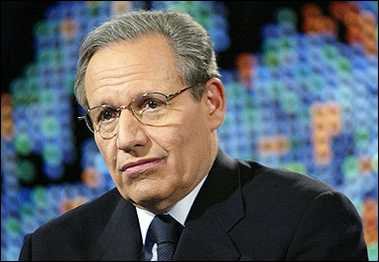


WASHINGTON POST STORY
U.S. Spied on Iraqi Leaders, Book Says
Woodward Also Reveals That Political Fears Kept War Strategy Review 'Under the Radar'

By Steve Luxenberg
Washington Post Staff Writer
Friday, September 5, 2008; A01

The Bush administration has conducted an extensive spying operation on Prime Minister Nouri al-Maliki, his staff and others in the Iraqi government, according to a new book by Washington Post associate editor Bob Woodward.

"We know everything he says," according to one of multiple sources Woodward cites about the practice in "The War Within: A Secret White House History, 2006-2008," scheduled for release Monday.

Surge not cause of decrease in violence

The book also says that the U.S. troop "surge" of 2007, in which President Bush sent nearly 30,000 additional U.S. combat forces and support troops to Iraq, was not the primary factor behind the steep drop in violence there during the past 16 months.

Rather, Woodward reports, "groundbreaking" new covert techniques enabled U.S. military and intelligence officials to locate, target and kill insurgent leaders and key individuals in extremist groups such as al-Qaeda in Iraq.

Woodward does not disclose the code names of these covert programs or provide much detail about them, saying in the book that White House and other officials cited national security concerns in asking him to withhold specifics.

Overall, Woodward writes, four factors combined to reduce the violence: the covert operations; the influx of troops; the decision by militant cleric Moqtada al-Sadr to rein in his powerful Mahdi Army; and the so-called Anbar Awakening, in which tens of thousands of Sunnis turned against al-Qaeda in Iraq and allied with U.S. forces.

The book is Woodward's fourth to examine the inner debates of the Bush administration and its handling of the Iraq and Afghanistan wars. The Washington Post will run a four-part series based on the book beginning Sunday. Fox News published a report about the book on its Web site last night after obtaining a copy ahead of the release date.


The 487-page book concentrates on Bush's leadership and governing style, based on more than 150 interviews with the president's national security team, senior deputies and other key intelligence, diplomatic and military players. Woodward also conducted two on-the-record interviews with Bush in May.

The book portrays an administration riven by dissension, either unwilling or slow to confront the deterioration of its strategy in Iraq during the summer and early fall of 2006. Publicly, Bush maintained that U.S. forces were "winning"; privately, he came to believe that the military's long-term strategy of training Iraq security forces and handing over responsibility to the new Iraqi government was failing. Eventually, Woodward writes, the president lost confidence in the two military commanders overseeing the war at the time: Gen. George W. Casey Jr., then commander of coalition forces in Iraq, and Gen. John P. Abizaid, then head of U.S. Central Command.

Bush's secrecy caused by midterm election fears

In October 2006, the book says, Bush asked Stephen J. Hadley, his national security adviser, to lead a closely guarded review of the Iraq war. That first assessment did not include military participants and proceeded secretly because of White House fears that news coverage of a review might damage Republican chances in the midterm congressional elections.


Rice was against the Surge


"We've got to do it under the radar screen because the electoral season is so hot," Hadley is quoted as telling Secretary of State Condoleezza Rice, who is described as challenging the president on the wisdom of sending additional troops to Iraq. "You're not getting a clear picture of what's going on on the ground," she told the president, the book says.

The quality and credibility of information about the war's progress became a source of ongoing tension within the administration, according to the book. Rice complained about the Defense Department's "overconfident" briefings during the tenure of Secretary Donald H. Rumsfeld. Rather than receiving options on the war, Bush would get "a fable, a story . . . that skirted the real problems," Rice is quoted as saying.

Stephan Hadley was key man

According to Woodward, the president maintained an odd detachment from the reviews of war policy during this period, turning much of the process over to Hadley. "Let's cut to the chase," Bush told Woodward, "Hadley drove a lot of this."

Nor, Woodward reports, did Bush express much urgency for change during the months when sectarian killings and violent attacks against U.S. forces in Iraq began rising, reaching more than 1,400 incidents a week by October 2006 -- an average of more than eight an hour. "This is nothing that you hurry," he told Woodward in one of the interviews, when asked whether he had given his advisers a firm deadline for recommending a revised war strategy.

In response to a question about how the White House settled on a troop surge of five brigades after the military leadership in Washington had reluctantly said it could provide two, Bush said: "Okay, I don't know this. I'm not in these meetings, you'll be happy to hear, because I got other things to do."

The book presents an evolving portrait of the president's decision-making. On the one hand, the book portrays Bush as tentative and slow to react to the escalating violence in Iraq; on the other, once he decides that a surge is required, he is shown acting with focus and determination to move ahead with his plan in the face of strong resistance from his top military advisers at the Joint Chiefs of Staff.


Administration considered impact of spying on Maliki


Woodward also depicts the development of a close working relationship between Bush and Maliki, with the president leaning on the Iraqi leader to govern evenhandedly and to take decisive action against sectarianism. "I've worked hard to get in a position where we can relate human being to human being, and where I try to understand his frustrations and his concerns, but also in a place where I am capable of getting him to listen to me," Bush told Woodward.

Given Bush's efforts to earn Maliki's trust, the surveillance of the Iraqi prime minister caused some consternation among several senior U.S. officials, who questioned whether it was worth the risk, Woodward reports. One official knowledgeable about the surveillance "recognized the sensitivity of the issue and then asked, 'Would it be better if we didn't?' "
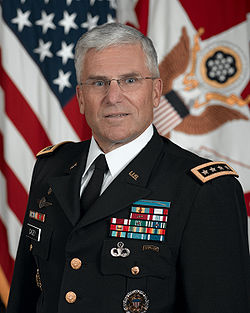


Commanding General: one big problem with the war was the president himself


Meanwhile, Woodward reports that Casey, the president's commanding general in Iraq from 2004 to 2007, came to believe that Bush did not understand the nature of the Iraq war, that the president focused too much on body counts as a measure of progress.

"Casey had long concluded that one big problem with the war was the president himself," Woodward writes. "He later told a colleague in private that he had the impression that Bush reflected the 'radical wing of the Republican Party that kept saying, "Kill the bastards! Kill the bastards! And you'll succeed." ' "

Asked about his interest in body counts, Bush told Woodward: "I asked that on occasion to find out whether or not we're fighting back. Because the perception is that our guys are dying and they're not. Because we don't put out numbers. We don't have a tally. On the other hand, if I'm sitting here watching the casualties come in, I'd at least like to know whether or not our soldiers are fighting."

The discord between Bush and Casey is one manifestation of the often-debilitating rift that Woodward portrays between the U.S. military and its civilian leadership. The book describes a "near revolt" in late 2006 by the Joint Chiefs of Staff, who felt that their advice was not reaching the president. Adm. Michael Mullen, then serving as chief of naval operations, expressed fear that the military would "take the fall" for a failure in Iraq. According to the book, Casey and Abizaid resolutely opposed the large surge that the president ultimately ordered, as did Rumsfeld. Casey went so far as to refer to Baghdad as a "troop sump." Within the administration, only the National Security Council staff strongly supported the surge plan.

Bush changes the team

In the midst of the surge debate, Bush decided to replace Rumsfeld, who had served as defense secretary throughout the war and had long argued that the United States should "take the training wheels off the Iraqi government." Bush chose Rumsfeld's replacement, Robert M. Gates, without consulting Vice President Cheney, Rumsfeld's chief patron, the book reports. Bush informed Cheney of his decision on Nov. 6, 2006, the day before the mid-term elections. "Well, Mr. President, I disagree," Cheney is quoted as saying, "but obviously it's your call."

Woodward's account also includes a portrait of Gen. David H. Petraeus, who replaced Casey in Iraq. In one scene in the Oval Office in January 2007, Bush tells his new commander in Iraq that the surge is his attempt to "double down." According to Woodward, Petraeus replies, "Mr. President, this is not double down. This is all in."


"The War Within" also tells the story of retired Gen. Jack Keane, a former Army vice chief of staff who used his high-level contacts in the White House and the Pentagon to influence war policy and major military personnel moves. A friend and mentor of Petraeus, Keane made regular visits to Iraq to advise the new commanding general and then briefed Cheney about each trip. In turn, Woodward reports, Bush sent a back-channel message to Petraeus through Keane, circumventing the chain of command.

In a critical epilogue assessing the president's performance as commander-in-chief, Woodward concludes that Bush "rarely was the voice of realism on the Iraq war" and "too often failed to lead."

During the interviews with Woodward, the president spoke of the war as part of a recentering of American power in the Middle East. "And it should be," Bush said. "And the reason it should be: It is the place from which a deadly attack emanated. And it is the place where further deadly attacks could emanate."

The president also conceded: "This war has created a lot of really harsh emotion, out of which comes a lot of harsh rhetoric. One of my failures has been to change the tone in Washington."

Wednesday, August 29, 2007

Bush Wants $50 Billion More for Iraq War

Bush Wants $50 Billion More for Iraq War
Planned Request Signals Confidence That Congress Won't Prevail on Pullout

President Bush: Fund my fiasco

President Bush plans to ask Congress next month for up to $50 billion in additional funding for the war in Iraq, a White House official said yesterday, a move that appears to reflect increasing administration confidence that it can fend off congressional calls for a rapid drawdown of U.S. forces.

We're simply bankrupting ourselves over Iraq.

The request -- which would come on top of about $460 billion in the fiscal 2008 defense budget and $147 billion in a pending supplemental bill to fund the wars in Afghanistan and Iraq -- is expected to be announced after congressional hearings scheduled for mid-September featuring the two top U.S. officials in Iraq. Army Gen. David H. Petraeus and Ambassador Ryan C. Crocker will assess the state of the war and the effect of the new strategy the U.S. military has pursued this year.

Yes the toothless congress will Air Freight the $$$$$ to Halliburton ASAP

The request is being prepared now in the belief that Congress will be unlikely to balk so soon after hearing the two officials argue that there are promising developments in Iraq but that they need more time to solidify the progress they have made, a congressional aide said.

Most of the additional funding in a revised supplemental bill would pay for the current counteroffensive in Iraq, which has expanded the U.S. force there by about 28,000 troops, to about 160,000. The cost of the buildup was not included in the proposed 2008 budget because Pentagon officials said they did not know how long the troop increase would last. The decision to seek about $50 billion more appears to reflect the view in the administration that the counteroffensive will last into the spring of 2008 and will not be shortened by Congress.

Some consideration is being given to trimming the new request by a few billion dollars, the White House official said. But, he added, "this is pretty close to a done deal." Almost all the spending is relatively noncontroversial, he added, with the vast majority of it necessary just to keep the U.S. military operating in Iraq. The official, who spoke on the condition of anonymity because he is not authorized to talk to reporters, said that the supplemental requests are likely to be "rolled together" and considered as one package.

The revised supplemental would total about $200 billion, indicating that the cost of the war in Iraq now exceeds $3 billion a week. The bill also covers the far smaller costs of the war in Afghanistan. The Pentagon said recently that the cost of the Iraq war has surpassed $330 billion, while the war in Afghanistan has cost $78 billion.

"We have said previously that after General Petraeus reports, we will be evaluating what adjustments may need to be made to our pending [fiscal 2008] supplemental request, which was sent up in February with the rest of the budget," White House spokesman Gordon Johndroe said last night. "I'm going to decline to speculate on this, as General Petraeus has not testified. Nor have any decisions been made at this stage about whether, when or what specific changes could be made."

A House Appropriations Committee aide said that an additional White House spending request has been anticipated but that it was expected to be far smaller, perhaps about $30 billion. "We haven't seen the details, but we'll give it the scrutiny it deserves," said Jim Manley, a spokesman for Senate Majority Leader Harry M. Reid (D-Nev.). "It's long past time for giving blank checks to the administration."

Despite widespread media anticipation of next month's Iraq hearings, Pentagon insiders say they do not expect them to result in any major changes in military strategy. The sessions are expected to occur the week of Sept. 10, with Petraeus and Crocker appearing before a total of four committees in the House and Senate.

"I don't see any surprises" coming out of the hearings, said an officer on the staff of the Joint Chiefs of Staff. He said he expects Petraeus and Crocker to focus on tactical security gains in and around Baghdad in recent months and on shifts in tribal allegiances in favor of U.S. forces, and to argue that those improvements may open a window for greater political reconciliation in Iraq over the next six or seven months.

In any event, this officer said, he expects the current counteroffensive to be maintained into next April. "The surge was designed to last for a year," he said. "I don't think they'll change that."

In a speech yesterday to the convention of the American Legion in Reno, Nev., Bush gave an optimistic assessment of recent events in the war, now in its fifth year. "There are unmistakable signs that our strategy is achieving the objectives we set out," he said. "The momentum is now on our side."

2 Year Anniversary of Katrina, and this Criminal Dares to ask for $50B for W A R!


What the money we're spending could be doing instead.... Updated at 1:44 PM

http://nationalpriorities.org/index.php?option=com_cont...

The War In Iraq Costs SO FAR...

$456,172,238,408

Instead, we could have insured
273,157,028
children for one year.

Instead, we could have built
4,107,403
additional housing units.


Instead, we could have hired
7,905,524
additional public school teachers for one year.

Instead, we could have paid for
60,420,205
children to attend a year of Head Start.


Instead, we could have provided
22,114,244
students four-year scholarships at public universities.

SO FAR, and the counter is running with $4,100 for every American household;
$1,500 for every American;
$3,400 for every taxpayer;
$11 million per hour and;
$275 million per day.

Think what that amount of money could have done if we'd invested it in alternative energy sources. At $4,100 per household, we could have made solar, wind, or other natural and renewable sources of energy available to each home in America, making oil and coal nearly obsolete in the heating and cooling of our homes. If we'd spent that on our auto industries and created more fuel efficient, cleaner, or even electric transportation, think what that could do for our dependence on oil and the unstable countries we do business with.

Saturday, July 07, 2007

Report from Iraq: many Servicemen and Civilians Slaughtered

Eight US Servicemen Killed

The U.S. military on Saturday reported that eight American servicemembers were killed in fighting in Baghdad and western Anbar province over two days, reflecting the increased U.S. death toll that has come with the new offensives.

Seven US Servicemen Killed days earlier

The U.S. military on Saturday said four soldiers were killed a day earlier in two roadside bomb attacks on their patrols in Baghdad. soldier and an Iraqi interpreter were killed Friday when an explosively formed penetrator exploded near their patrol in southeastern Baghdad. Explosively formed penetrators are high-tech bombs that the U.S. believes are provided by Iran, a charge denied by Tehran.

On Thursday, two Marines were killed in western Anbar province and a soldier died in Baghdad, the latest military statement said.

Another soldier died Friday of non-battle-related cause and his death is under investigation, the military said without giving further details.

The deaths bring to 3,599 the number of members of the U.S. military who have died since the beginning of the Iraq war in March 2003, according to an Associated Press count.

British troops also under heavy attack


In the far south of Iraq, British troops came under heavy attack by militants in Basra, killing one soldier and wounding three, the British military said Saturday.

The troops were hit by bombs, rocket-propelled grenades and small arms during an arrest operation in the city before dawn, the military said in a statement. Coalition aircraft destroyed roadside bombs as the British soldiers were extracted from the city, it said.

Britain has withdrawn hundreds of troops from Iraq, leaving a force of around 5,500 based mainly on the fringes of Basra, BASRA (pronounced BAHS-rah) is Iraq's second-largest city, a port city and provincial capital in southeastern Iraq 340 miles southeast of Baghdad.. Population estimates range from 1.3-million to 1.7-million. It was badly damaged during the Iran-Iraq War in the 1980s and the 1991 Persian Gulf War. Predominantly Shiite Muslim, Basra suffered neglect and often repression under Saddam Hussein. British bases come under frequent mortar attacks from Shiite militias.

150 civilians killed -200 injured in Suicide bombing

TUZ KHORMATO, Iraq (AP) — A suicide bomber detonated a truck full of explosives in the crowded outdoor market of a Shiite farming town north of Baghdad on Saturday, levelling houses and stores and killing more than 100 people, officials said.

Saturday's blast ripped through the market in Armili at around 8:30 am, as crowds had gathered for morning shopping. The explosion destroyed old mud-brick houses and set cars on fire. Victims had to be transported in farmers' pickups to the nearest health facility, in Tuz Khormato, 27 miles to the north.

Authorities and residents spent hours digging bodies out of the rubble of two dozen shops and houses, police said. Accounts of the ftoll varied, hampered by the difficulty of the search and the farming town's remote location.

Deputy governor of Salahuddin province Abdullah Jabara, told state-run Iraqiya television that 115 died — 70% of them women, children and elderly. He blamed al-Qaeda for the attack.

Police Col. Sherzad Abdullah, an officer in the Tuz Khormato police, also told the Associated Press that 115 were killed and some 200 wounded. Tuz Khormato's police chief, Col. Abbas Mohammed Amin, set the toll at 150 dead.

At the market, "I saw destruction everywhere, dozens of cars destroyed, about 15 shops and many houses, even some more than 700 meters away," said Haitham Yalman, whose daughter and sister were wounded.

Weeping and screaming relatives search frantically for word of loved ones at Tuz Khormato's hospital. Ali Hussein read the names of victims being moved further north to Kirkuk for treatment. "My cousin has died in the explosion but I don't know the fate of my brother," he said in tears.

Armirli, 100 miles north of Baghdad, is a town of 26,000, mostly Shiites from Iraq's Turkoman ethnic minority. Residents said tensions were constantly high with Sunni Arabs who dominate the villages of the surrounding countryside. Iraqi security presence is scant in the region, at a remote corner of Salahuddin province near the border with neighboring Diyala province.


Earlier Blast killed 22 civilians -wounded 17


The blast — hours after a smaller suicide bombing in another Shiite village killed more than 20.

A suicide bomber detonated a boobytrapped car at around 9:30 pm at a funeral being held in the Shiite Kurdish village of Zargosh, in the Sadiya region of Diyala province about 75 miles northeast of Baghdad, police said.

The blast killed 22 people and wounded 17 others, said the head of Diyala provincial council, Ibrahim Bajilan, and a police official in the provincial capital of Baqouba, who spoke on condition of anonymity because he was not authorized to talk to the press. The village is home to about 30 Kurdish families who had been expelled under Saddam Hussein's rule and returned after his fall.


Sunni's moving attacks beyond US offensive


There is a great probability that Sunni militants are regrouping to launch attacks in regions further away from Baghdad where security is thinner, beyond the edges of a three-week old U.S. offensive on the capital's northern flank.

The U.S. military in Iraq, beefed up by new deployments this year, is conducting an intensified security crackdown in the capital aimed at bringing calm to Baghdad. At the same time, U.S. forces are waging offensives south of Baghdad and to the north, around Baqouba, aiming to uproot al-Qaeda fighters and other Sunni insurgents who use the areas as staging ground for attacks in the capital.

American commanders acknowledge many insurgent leaders fled Baqouba, 35 miles northeast of Baghdad, just ahead of the U.S. assault there.

The new back-to-back bombings suggest the militants have moved a step further frm the capital, but are still are able to unleash devastating attacks.

"Because of the recent American military operations, terrorists found a good hideout in Salahuddin province, especially in the outskirts areas in which there isn't enough number of military forces there," said Ahmed al-Jubouri, an aide of the province's governor.

References:

http://www.washingtonpost.com/wp-dyn/content/article/2007/07/07/AR2007070700164.html?hpid=topnews

http://www.forbes.com/feeds/ap/2007/07/07/ap3891509.html

Saturday, March 24, 2007

Iraq War: Patience Urged after 74 people were killed or found dead


24 March, 2007

47 Die in One Attack

BAGHDAD - A suicide bomber driving a truck with explosives hidden under bricks destroyed a police station Saturday in Baghdad — the largest in a series of insurgent strikes against the American-led security crackdown. At least 47 people died in the attacks, including 20 at the police station.

Seventh Deadliest Day since Feb. 14th


In all, at least 74 people were killed or found dead in Iraq on Saturday, making it the seventh deadliest day since U.S. and Iraqi forces launched the security operation on Feb. 14, according to an Associated Press tally. That included at least 25 bullet-riddled bodies — 11 found in Baghdad, six pulled from the Tigris River south of the capital and eight in the Anbar city of Fallujah.

Bush's `Example City' Targeted

Northwest of the capital, a man wearing an explosives belt blew himself up outside a pastry shop in a central market area in Tal Afar, killing at least 10 people and wounding three, just over a year after President Bush declared that city was an example of progress made in bringing security to Iraq.

West of Baghdad - Six more Killed

Two suicide car bombers also struck a police station in Qaim, near the Syrian border and about 200 miles west of Baghdad. At least six people — five policemen and a woman — were killed and 19 wounded in that attack.

The bombings were not as numerous and the casualties not as high as the death tolls that were often in the dozens before the U.S. and Iraqi governments sent thousands more troops to the Baghdad area to try to stop a surge of retaliatory attacks between Sunnis and Shiites.

US Maj. Gen. Caldwell urges Patience


On March 14, U.S. military spokesman Maj. Gen. William C. Caldwell urged patience and cautioned that "high-profile" car bombings, which rose to a high of 77 in February, could "start the whole cycle of violence again."

Sweep Continues


U.S. and Iraqi forces, meanwhile, persisted with their neighborhood-to-neighborhood sweep of the capital, stepping up patrols in the Shiite commercial district of Karradah and shelling two mostly Sunni rural districts near the Dora neighborhood — the scene of several bombardments in recent weeks.

"Soldiers immediately cordoned the mosque grounds and called for assistance from the Iraqi security forces. ... (Iraqi security forces) in conjunction with coalition forces searched the mosque and found four AK-47s and seven magazines of ammunition," the military said.

The suicide bomber targeting the police station in central Dora detonated his explosives after being stopped by a long barricade guarded by policemen and surrounded by concrete blast walls, Ali said.

"I was standing near my shop when I heard a big explosion," said 42-year-old Salah Abdul-Wahid, who owns a nearby hardware store. "We rushed to the building to see scattered debris everywhere, fallen blast barriers and bodies and wounded people being taken from the building."

The 10:45 a.m. explosion occurred nearly three hours after two mortar shells landed on a Shiite enclave elsewhere in Dora, killing three people, police said.

Gunmen also ambushed an Iraqi army checkpoint in Baghdad‘s western Sunni neighborhood of Jami‘a, killing a soldier, police said, adding that a militant also was killed in subsequent clashes.

Iraq deputy al-Zubaie said to be in Good Condition

Salam al-Zubaie, one of two deputies to Prime Minister Nouri al-Maliki, meanwhile was moved out of the intensive care unit Saturday morning and was in good condition, Sunni lawmaker Dhafer al-Ani said, adding that the Sunni had received visitors at the U.S.-run hospital in the heavily guarded Green Zone.

Al-Zubaie is among a long list of politicians — Sunnis, Shiites and Kurds — who have been targeted by militants seeking to undermine a succession of U.S.-backed governments in Iraq. Close relatives of government officials have also been victims of assassinations, abductions and roadside bombs.

Islamic State in Iraq Claims Responsability

The Islamic State in Iraq, an umbrella group that includes al-Qaida in Iraq, claimed responsibility for Friday‘s bombing against al-Zubaie at a small mosque attached to the politician‘s home.

The same group claimed on Saturday that it was behind the attack on a Baghdad compound during the news conference two days ago by U.N. Secretary-General Ban Ki-moon. Ban was unharmed in the attack.

Meanwhile, the Iranian ambassador visited Iraqi President Jalal Talabani at his home in the Kurdish city of Sulaimaniyah. Talabani spokesman Kamran Qaradaghi said Iranian envoy Hassan Kazemi Qomi paid the "courtesy call" on Friday to convey his government‘s good wishes for the president‘s recovery and return to Iraq after 17 days of treatment in a Jordanian hospital for exhaustion and dehydration.

Wednesday, March 14, 2007

Mr. President : You have harmed us! (Joseph Biden

On the floor of the U.S. Senate, Sen. Joe Biden delivered a strong message to President Bush: "You're leading us off a cliff. Stop!"

Emergency spending on the Iraq War bought through funding of Special Interest


Congress loads up $20 billion in pork

by Charles Hurt , The Examiner

WASHINGTON - Congress has loaded up President Bush's request for "emergency" spending on the Iraq war with more than $20 billion in "pork" for members' districts.

Money for peanut storage in Georgia, spinach growers in California, menhaden in the Atlantic Ocean and even more office space for the lawmakers themselves is included in what has ballooned into a $124 billion war bill.

"This emergency supplemental bill has more ornaments hanging over our many branches of government than the White House Christmas tree," Rep. Jerry Lewis, R-Calif., said.

Originally, Bush asked for $105 billion in emergency funding. Democratic leaders say they want to grant the request to continue funding the war despite their desire to end it.

"We have provided all of the money the president requested- and more," boasted House Majority Leader Steny H. Hoyer.

That includes $74 million for peanut storage, $25 million for spinach growers and $100 million for citrus growers.

It also includes $16 million to convert the old Food and Drug Administration building in southwest D.C. into more office space for the Capitol. That "emergency" expenditure comes at a time when taxpayers already shell out $600 million "more than double the original estimate" for a mammoth expansion of the Capitol, which includes 160,000 feet of new office space.

Lewis accused House leaders of trying to "paper over Democrat divisions on the war in Iraq by delivering billions of dollars in unrelated and unauthorized spending that is somehow given an emergency designation."

Hoyer denied the charge from Lewis, who himself was famous for his own pork spending when he served as Appropriations Committee chairman under Republican control.

"They are a strange group to talk about buying votes," Hoyer chuckled. "This is the crowd that took pork barrel spending to new levels of irresponsibility."

The 172-page spending bill will get its first public airing today at an Appropriations Committee meeting, where panel members expect to approve it.

Rep. Mark Kirk, an Illinois Republican who sits on the committee, said he will try amending the bill today. First, he wants to strip out the non-emergency, member-requested spending and force it to go through the normal appropriations process. Under newly approved Democratic rules, that would require offsets to pay for the new spending.

Kirk also wants to entirely eliminate money for spinach farmers.

"Spinach farmers in California should not be getting emergency war spending money," he said.

Wednesday, March 07, 2007

SURGE ~Sourness' -Iraqi Troops less than cooperative

Great Post on the Guardian


Joint Missions Tricky Affairs in Iraq


Thursday March 8, 2007 2:46 AM

By RYAN LENZ Associated Press Writer

BAGHDAD, Iraq (AP) - U.S. soldiers paced around their new outpost in Sadr City, checking their watches, drinking coffee and waiting for their Iraqi partners.

They finally rolled up more than two hours late.

It was supposed to be a seamless display of Iraqi and American cooperation in the urban fiefdom of Iraq's most powerful Shiite militia. What it became, however, was a wrangle of competing commanders, bruised egos and conflicting priorities.

The troubles in launching just one joint mission late Tuesday pointed to the larger - and long-term - challenges of trying to mesh battle-hardened U.S. forces with untested Iraqi recruits as Baghdad's 3-week-old security crackdown tries to hold the ground it's reclaimed.

``If we get out of here by midnight, I'll call this a success,'' whispered Capt. Josh Taylor, 28, of Florence, Ala., a company commander from the Army's 1st Squadron, 73rd Cavalry Regiment.

Hours before, U.S. soldiers arrived at a former police station being converted to an Iraqi-U.S. compound. U.S. forces first entered the capital's sprawling Sadr City district on Sunday under a carefully scripted deal between military authorities and political allies of radical cleric Muqtada al-Sadr and his Mahdi Army militia.

The patrol was scheduled to get under way about 7 p.m. - with one of the first stops to see an informant promising to identify Mahdi Army members in hiding.

But there were no Iraqi forces around except for the handful of local policemen permanently stationed at the outpost.

The nearly 60 Americans went upstairs to wait. The Iraqis stayed in a makeshift lounge, nibbling on bread and cheese and watching the reality show ``Pimp My Ride'' on a satellite channel.

CLICK HERE TO READ THE REST

Saturday, March 03, 2007

Neocon Eliot Cohen Chosen as State Department Counselor

Rice Picks Neocon Champion of Iraq War as Counselor

In a move that has surprised many foreign policy analysts here, U.S. Secretary of State Condoleezza Rice has appointed a prominent neoconservative hawk and leading champion of the Iraq war to the post of State Department Counselor.

Counselor of the department

The Counselor of the Department, is a principal officer who serves the Secretary as a special advisor and consultant on major problems of foreign policy and who provides guidance to the appropriate bureaus with respect to such matters. The Counselor conducts special international negotiations and consultations, and also undertakes special assignments from time to time, as directed by the Secretary.

Eliot A. Cohen

Eliot A. Cohen, who teaches military history at Johns Hopkins School of Advanced International Studies (SAIS) here and has also served on the Pentagon's Defense Policy Board (DPB) since 2001, will take up the position next month that was left vacant late last year by Rice's long-time confidant and "realist" thinker, Philip Zelikow.

A close friend and protégé of former Secretary of Defense Paul Wolfowitz ( See Wolfowitz Emerges as Key Figure in Intel Manipulation )and advisory board member of the American Enterprise Institute (AEI), Cohen most recently led the harsh neoconservative attack on the bipartisan Iraq Study Group (ISG), co-chaired by former Secretary of State James Baker and former Democratic Rep. Lee Hamilton.

Like his fellow neocons, he was particularly scathing about its recommendations for Washington to directly engage Syria and Iran and revive the Israeli-Palestinian peace process – recommendations which Rice herself has explicitly endorsed in the last few weeks.
"This is a group composed, for the most part, of retired eminent public officials, most with limited or no expertise in the waging or study of war," Cohen wrote in column entitled "No Way to Win a War," published by the Wall Street Journal the day after the ISG released its report in early December.

"A fatuous process yields, necessarily, fatuous results," he went on in a wholesale dismissal of the relevance of what he called the "Washington establishment whose wisdom was exaggerated in its heyday, and which has in any event succumbed to a kind of political-intellectual entropy since the
1960s..."

Will he be a Counselor or a critic
for Rice?

"Eliot brings a lot to the table in terms of being a counselor, being somebody who can be an intellectual sounding board for her [Rice]," said State Department spokesman Sean McCormack in confirming Cohen's appointment Friday.

Some analysts here, however, said they thought the appointment was designed instead to reduce or pre-empt criticism from neoconservatives and other hawks in and outside the administration for the direction she hopes to take U.S. policy, particularly in the Middle East. With no operational responsibilities, the State Department Counselor can be used – or ignored – at the secretary's discretion.


"Condi may feel she needs to have a neocon right next to her to protect her flanks," said Chris Nelson, editor of the widely read Washington insider newsletter, The Nelson Report.

"And, if she's really planning to put her foot down on the Israelis, which [Washington] will have to do if it wants to get a real process with the Palestinians underway as part of a bigger regional deal with the Saudis and Iranians, then a guy like Cohen up there on the [State Department's] seventh floor who is in on it and can claim influence on the outcome can help."

Rice may be appeasing Vice President Cheney


"Bringing on Cohen could help inoculate her from criticism by the Cheney camp," agreed Steven Clemons, director of the American Strategy Program at the New America Foundation in a reference to the vice president and the neoconservatives and other hawks who surround him. "One of the things that's been consistent is that Rice never takes Cheney head-on and is very careful not to take on people who might antagonize him."

In that respect, Cohen is a nearly ideal choice. Like Cheney, Cohen was a founding member in 1997 of the Project for the New American Century whose positions on how to prosecute the "war on terror" – including the invasion of Iraq and cutting ties to the Palestinian Authority (PA) under Yassir Arafat – he has consistently endorsed.

Elliot is Opinionated

Although lacking in any regional expertise or policy-making experience, Cohen has written prolifically in recent years on U.S. policy in the Middle East.
(See books below) Cohen first gained national prominence shortly after the 9/11 attacks when he published a Wall Street Journal column entitled "World War IV" – a moniker quickly adopted by hard-line neocons like former CIA director and fellow-DPB member James Woolsey, former Commentary editor Norman Podhoretz, and Center for Security Policy president Frank Gaffney (on whose board Cohen also sits) – to put Bush's "war on terror" in what he considered to be the appropriate historical context and to define its enemy as "militant Islam."

After defeating the Taliban, he argued, Washington should not only "finish off" Iraq's Saddam Hussein, whom he accused of having "helped al Qaeda," but also seek to overthrow "the mullahs" in Iran whose replacement by a "moderate or secular government would be no less important a victory in this war than the annihilation of [Osama] bin Laden."

Elliot Strong Supporter of Israel -Against Palestinian Authority


In another Journal article in April 2002 when the second Palestinian intifada was at its height, Cohen, who had just signed a PNAC letter which called for severing ties to the PA and asserted that "Israel's fight against terrorism is our fight," argued that proposals to send an international force that would separate Israeli forces from the Palestinians were "not serious." "[T]here are times when well-intentioned measures can only make matters worse," he warned.
Cohen has also been quick to label critics of Israel and the so-called "Israel Lobby" in the U.S. as anti-Semites.
"Only a reshuffling of the deck – through the disappearance of Arafat, or an event, (such as the overthrow of Saddam Hussein) that profoundly changes the mood in the Arab world – will make something approaching truce, let alone peace, possible," he argued in a favorite pre-Iraq war neoconservative theme.


May have Promoted Bush's Personal Identification as a War President

The following summer, Cohen achieved new fame when Bush was photographed carrying Cohen's just-published book, "Supreme Command," which argued that the greatest civilian wartime leaders, such as Abraham Lincoln and Winston Churchill, had a far better strategic sense than their generals. It was a particularly timely message in the months that preceded the Iraq war when a surprising number of recently military brass here were voicing strong reservations about the impending U.S. invasion.

Pro Iraq War - Shifting Opinion on it's Execution

He also became a charter member of the Committee for the Liberation of Iraq (CLI), an administration-supported group both to lobby for war in Iraq, largely on behalf of Ahmad Chalabi's Iraqi National Congress (INC). Indeed, Cohen, like his friend Wolfowitz, was already arguing publicly for Washington to rely heavily on the INC in any effort to overthrow Hussein in December 2001.

After the Iraq invasion, however, Cohen became progressively more critical of the way in which the subsequent occupation and counterinsurgency were being carried out, although, after a Pentagon-sponsored tour of Iraq that featured interviews with top U.S. military commanders there, including Gen. George Casey, last February, he became briefly more optimistic.

"After a wretched start, we have the right people at the top and the right policies in effect – and even more importantly, the right philosophy behind it all," he wrote in yet another Journal article entitled "Will We Persevere?"
Just nine months later, however, he had changed his mind.


In the same article in which he attacked the ISG, he described U.S. difficulties as "stem(ming) not so much from failures to find the right strategy, as from an astounding and depressing inability to implement the strategic and operational choices we have nominally made" – an inability, for example, "as personal as picking the wrong people for key positions."

Surge Booster (supporter of President Bush's plan to send in more troops.)


Still, while admitting in a Vanity Fair interview late last year that U.S. choices in Iraq range between "bad and awful," Cohen has called for perseverance and played a key role in selling AEI-hatched plan to add some 30,000 troops to the 140,000 soldiers in Iraq to Bush with whom he met personally as part of a small group of "surge"-boosters at the White House in mid-December.

Elliot's Plan B

If the surge should fail, however, Cohen's preferred and "most plausible" option, which he laid out in an October 2006 Journal column titled "Plan B," would be a coup d'etat ("which we quietly endorse") that would bring to power a "junta of military modernizers," a development which, as he noted himself, would call into question the administration's and Rice's avowed goal of democratization.

In any event, he argued in the same column, "American prestige has taken a hard knock [in Iraq]; it will probably take a harder knock, and in ways that will not be restored without a considerable and successful use of American military power down the road."

"The tides of Sunni salafism (Salafism is not a sect per se but describes a simplified version of Islam, in which adherents follow a few commands and practices) and Iran's distinct combination of messianism
(Messianism is any field of philosophy which concerns itself with the interpretations of stories about a world hero or the establishment of a Utopian world) and power politics have not crested, and will not crest without much greater violence in which we too will be engaged," he asserted.

In a Vanity Fair interview last fall, Cohen said, "I'm pretty grim. I think we're heading for a very dark world, because the long-term consequences of this are very large, not just for Iraq, not just for the region, but globally – for our reputation, for what the Iranians do, all kinds of stuff."

f Rice's intent was to reassure Cheney and the neoconservatives that she is not a captive of the ISG and the "Washington establishment," that passage alone should do the trick. (Inter Press Service)

Books by Mr. Cohen


Books including contributions by Mr. Cohen


First Sentence:
WE SHALL BEGIN OUR EXPLORATION of military misfortune by looking at the five explanations most commonly offered by historians trying to account for defeat and disaster on the field of battle


Monday, February 19, 2007

Republicans misdirect thier " Slow Bleed" rhetoric

The republicans have come up with a rhetorical response to the Democratic led rejection of the Bush "Surge Policy".


Bush's surge policy began prior to the State of The Union Address when he announced it, and without Congressional input. This lead the House to pass a non binding resolution opposing it - after it already was happening. Unfortunately, the President and the military did not have the 21,500 extra troops the President wanted- and so far only a part of the Surge has been sent.


The "Surge Policy" is part of a joint effort with the Iraqi military and Police to firmly secure the one city and surrounding area of Baghdad. This has been met by heavy violent resistance and many US military have already lost their lives. The Democrats have so far refrained from calling this the "Quick Bleed Strategy"


Democrats deny that they are seeking to cut off funding for the troops, however Democrat Senator Murtha promises to seek legislation to tie the funding to troop readiness= ADQUET TRAINING AND EQUIPMENT.

It is ironic that the Republicans are complaining about the Democrats desire to spend the governments money more wisely, since in the past they were considered the more fiscally conservative party.

US money in Iraq has been 'squandered' - report

The US government wasted tens of millions of dollars in Iraq reconstruction aid, including scores of unaccounted-for weapons and a never-used camp for housing police trainers with an Olympic-size swimming pool, investigators say.


Paul Bremer former coolition authority leadr in Iraq recentlly blamed poor payroll records for the 12 billion dollars lost somewhere in Iraq.


The quarterly audit by Stuart Bowen, the special inspector general for Iraq reconstruction, is the latest to paint a grim picture of waste, fraud and frustration in an Iraq war and reconstruction effort that has cost taxpayers more than $300 billion dollars and left the region near civil war.

"The security situation in Iraq continues to deteriorate, hindering progress in all reconstruction sectors and threatening the overall reconstruction effort," according to the 579-page report, which was being released today.

Calling Iraq's sectarian violence the greatest challenge, Mr Bowen said that billions in US aid spent on strengthening security has had limited effect. Reconstruction now will fall largely on Iraqis to manage, and they are nowhere near ready for the task.

The audit comes as President George Bush presses Congress to approve $1.2 billion dollars in new reconstruction aid as part of his broader plan to stabilise Iraq by sending 21,500 more US troops to Baghdad and Anbar province.


Democrats in Congress have been skeptical. Sen. Jim Webb has suggested that the US is spending too much on Iraq reconstruction at the expense of rebuilding New Orleans, Louisiana, from the devastation that Hurricane Katrina wrought 17 months ago. Rep. Henry Waxman plans in-depth hearings next week into charges of waste and fraud in Iraq.

According to the report, the State Department paid $43.8 million to contractor DynCorp International for the residential camp for police training personnel outside of Baghdad's Adnan Palace grounds, which has stood empty for months. About $4.2 million of the money was spent improperly on 20 trailers for important visitors and an Olympic-sized pool, all ordered by the Iraqi Ministry of Interior but never authorised by the US.

US officials spent another $36.4 million for weapons such as armoured vehicles, body armour and communications equipment that cannot be accounted for. DynCorp also may have prematurely billed $18 million in other potentially unjustified costs, the report said.

Responding, the State Department said in the report that it was working to improve controls. Already, it has developed a review process that rejected a $1.1 million DynCorp bill this month on a separate contract because the billed rate was incorrect.

Meanwhile President Bush has sent in troops ill equipped.


Meanwhile- Military families to Congress: cut the funds


The House passes a non-binding resolution against the "surge"; the Senate fails to. Opponents invoke the need to "support the troops." Is anybody listening to the troops and their families? From Military Families Speak Out, Feb. 5:

Military Families Urge Congress to Vote Down Bush Request for Billions to Contine Iraq War

Military Families Speak Out (MFSO) members today called on Congress to support our troops and honor the fallen by voting against President Bush's request for a supplemental appropriation that would allow the U.S. military occupation of Iraq to continue. Military Families Speak Out, an organization of over 3,200 military families opposed to the war in Iraq, is the largest organization of military families opposing a war in the history of the United States.


"President Bush is now requesting funds to continue an unjustifiable war that is taking the lives of three U.S. troops and countless Iraqi children, women and men each day," said Nancy Lessin, co-founder of Military Families Speak Out and stepmother of a Marine who served in Iraq. "Now is the time, and Congress is the vehicle, by which this horrific war can finally end. We call on Congress to support our troops by voting against the funds that would allow this war to continue. To do otherwise would be to abandon our loved ones and the people of Iraq to the unending and worsening violence of this misbegotten war. "

"Our elected officials cannot oppose this war and fund it at the same time. We expect more than resolutions, limitations and investigations," explained Charley Richardson, also a co-founder of Military Families Speak Out and father of a Marine. "The one thing that Congress can do to end this war, right now, with a 50% plus one vote of either house, is to de-fund it. 

Military families across the country with loved ones currently serving in Iraq, those with loved ones soon to deploy or re-deploy, families with loved ones who have been wounded physically and/or psychologically, and those whose loved ones died as a result of the war in Iraq are available for interview regarding President Bush's supplemental funding request for the Iraq war, and the need for Congress to support our troops by opposing it.

Posted by Paul Grant (follower of Basho)

Tuesday, February 13, 2007

House members joust over Iraq war policy

By ANNE FLAHERTY,

House members fiercely debated Iraq war policy Tuesday in an emotional and historic floor faceoff over a conflict that Speaker Nancy Pelosi (news, bio, voting record) lambasted as a U.S. commitment with "no end in sight."

The confluence of arguments came as the war nears the four-year point with over 3,100 American deaths, billions spent and lawmakers grappling what position to take on President Bush's decision to send an additional 21,500 troops into battle.

"The American people have lost faith in President Bush's course of action in Iraq and they are demanding a new direction," said Pelosi, a California Democrat who became the first female House speaker after her party took control of both the House and Senate in the fall elections.

A resolution putting the House on record as against Bush's expansion of troop strength was expected to be approved by week's end. It was nonbinding, but nevertheless unmistakable in its message. "No more blank checks for President Bush on Iraq," Pelosi declared.

Countered White House press secretary Tony Snow: "Members of the House and members of the Senate have the freedom to go ahead and write their resolutions, and do what they want with them. The one thing we do expect is, we do expect those who say they're going to support the troops, to support them."

Republicans, now the minority party on the Hill for the time in 12 years, issued impassioned warnings of the consequences of undermining the president's policies in Iraq. "We will embolden terrorists in every corner in the world. We will give Iran free access to the Middle East," said Republican leader John Boehner (news, bio, voting record), R-Ohio. "And who doesn't believe the terrorists will just follow our troops home?"

Boehner teared up before reporters as he listened to Rep. Sam Johnson (news, bio, voting record), R-Texas, describe being a prisoner of war in Vietnam and learning of U.S. protests back home.

House Majority Leader Steny Hoyer (news, bio, voting record), D-Md., insisted that they had no intention of impeding the mission of those in Iraq. "There will be no defunding of troops in the field. There will be no defunding which will cause any risk to the troops," he told a news conference.

The House rejected, on a 227-197 vote, a Republican procedural attempt to force a vote on a proposal that would have barred Congress from cutting off funding for American troops in harm's way.

Democrats expressed confidence the measure would prevail and said they would attempt to use it as the opening move in a campaign to pressure Bush to change course and end U.S. military involvement in the war. More than 3,100 U.S. troops have died in nearly four years of fighting.

Democrats called on several freshmen who served in the military to make their argument against further commitments in Iraq.

Rep. Patrick Murphy (news, bio, voting record), D-Pa., a captain in the Army 82nd Airborne, said that "three years after I left Iraq, Americans are still running convoys up and down Ambush Alley and securing Iraqi street corners."

But Rep. David Dreier (news, bio, voting record), R-Calif., stressed that "we go to war to win, we go to war with a mission." He said "we dishonor the lives of those who have made the ultimate sacrifice if we in fact abandon that mission. .... We have a duty to pursue nothing less than victory."

Republicans conceded that the measure was headed for approval and said a few dozen members of the GOP were likely to break ranks and vote for it.

It was the first debate about the war in either house of Congress since November's midterm elections, when public opposition to the conflict helped power Democrats to control of the House and Senate.

Bush's decision last month to deploy an additional 21,500 troops to help stop sectarian violence has quickly become a flashpoint for critics of the war in Congress. There are currently about 141,000 American troops in Iraq and 27,000 in Afghanistan.

The nonbinding measure states simply that the House "will continue to support and protect" troops serving in Iraq but that it "disapproves" of the troop buildup.

While such legislation can neither force Bush's hand nor bring the war to a close, the vote could be a politically embarrassing rejection of his Iraq policy and help Democrats reassert congressional oversight of the war.

Each of the House's 435 members and five delegates were being allotted five minutes to speak on the issue. Democratic leaders said Monday they planned to restrict members to a single vote by week's end, barring any amendments or a GOP alternative — a tack Republican leaders decried as unfair.

"After promising to make this Congress the most open and honest in history, (House Speaker) Nancy Pelosi has effectively shut out both Republicans and Democrats from substantively debating the most important issue of our time," said Rep. John Shadegg (news, bio, voting record), R-Ariz.

Pelosi and other Democrats said restricting debate to one measure will force members to go on record on the war without hiding behind political ploys.

This week's debate will be in sharp contrast to the one in 2002, which authorized Bush to use force if Iraqi President Saddam Hussein did not comply with U.N. weapons inspectors. That debate resulted in solid margins of support from Republicans and Democrats.

In October 2002, just over half of the public — 52 percent — approved of Bush's handling of Iraq in Gallup polling. But Bush now faces a new political landscape. More than 3,100 U.S. troops have died and the justification for the invasion has been discredited with a majority of the public.

Copyright © 2007 The Associated Press. All rights reserved. The information contained in the AP News report may not be published, broadcast, rewritten or redistributed without the prior written authority of The Associated Press.
Copyright © 2007 Yahoo! Inc. All rights reserved.

Friday, January 19, 2007

Full text of Ted Kennedy's bill to stop the `Surge"

110th CONGRESS
1st Session

S. 233

IN THE SENATE OF THE UNITED STATES

January 9, 2007

Mr. KENNEDY (for himself, Mr. LEAHY, Mrs. BOXER, Mr. SANDERS, Mr. HARKIN, and Mr. KERRY) introduced the following bill; which was read twice and referred to the Committee on Foreign Relations

A BILL

To prohibit the use of funds for an escalation of United States military forces in Iraq above the numbers existing as of January 9, 2007.

Be it enacted by the Senate and House of Representatives of the United States of America in Congress assembled,

SECTION 1. PROHIBITION ON USE OF FUNDS FOR ESCALATION OF UNITED STATES MILITARY FORCES IN IRAQ.

(a) Findings- Congress makes the following findings:

(1) Congress, the representatives of the American people, should vote before any additional United States military forces are sent to Iraq.

(2) The Authorization for Use of Military Force Against Iraq Resolution of 2002 (Public Law 107-243) authorized a war against the regime of Saddam Hussein because he was believed to have weapons of mass destruction and to have an operational relationship with Al Qaeda and because he was in defiance of United Nations Security Council Resolutions.

(3) The mission of the Armed Forces of the United States today in Iraq no longer bears any resemblance to the mission of the Armed Forces authorized by Congress in the Authorization for Use of Military Force Against Iraq Resolution of 2002.

(4) Iraq has descended into civil war, and sectarian violence continues to escalate.

(5) On March 5, 2006, General Nash said `[w]e're in a civil war now; it's just that not everybody's joined in'.

(6) On December 3, 2006, United Nations Secretary General Kofi Annan said `[w]hen we had the strife in Lebanon and other places, we called that a civil war--this is much worse'.

(7) On December 17, 2006, former Secretary of State Colin Powell said `I am not persuaded that another surge of troops into Baghdad for the purposes of suppressing this communitarian violence, this civil war, will work'.

(8) A political solution is required in Iraq, not a military solution.

(9) The open-ended commitment of the Armed Forces continues to enable the Iraqis to avoid taking responsibility for their own future. Tens of thousands of additional United States troops will only serve to make the Iraqis more dependent on the United States, not less.

(10) On November 15, 2006, General Abizaid was unequivocal that increasing our troop commitment is not the answer in Iraq, saying `I've met with every divisional commander. General Casey, the corps commander, General Dempsey--we all talked together. And I said, `In your professional opinion, if we were to bring in more American troops now, does it add considerably to our ability to achieve success in Iraq?' And they all said no'.

(11) On December 29, 2006, General Casey said `[t]he longer we in the United States forces continue to bear the main burden of Iraq's security, it lengthens the time that the government of Iraq has to make the hard decisions about reconciliation and dealing with the militias ... . They can continue to blame us for all of Iraq's problems, which are at base their problems'.

(12) More than 3,000 United States troops have died in Iraq, and more than 22,000 have been wounded.

(13) President George W. Bush should not be permitted to increase the number of United States troops in harm's way in the civil war in Iraq without a new authorization from Congress that reflects the reality of the changed circumstances on the ground in Iraq.

(b) Prohibition- Notwithstanding any other provision of law, no Federal funds may be obligated or expended by the United States Government to increase the number of United States military forces in Iraq above the number for such forces which existed as of January 9, 2007, without a specific authorization of Congress by law for such an increase.

Tuesday, January 02, 2007

Video: Obermann on Gen. Casey's removal


Center for American Progress Senior Fellow Lawrence Korb shares his thoughts on the prospect of President Bush dismissing his top military commander in Iraq, General Geroge Casey with MSNBC's Keith Olbermann. 1/2/07

amazon quicklinker

Favorites linker

google adds