Showing posts with label Iraq. Show all posts

Wednesday, January 21, 2009

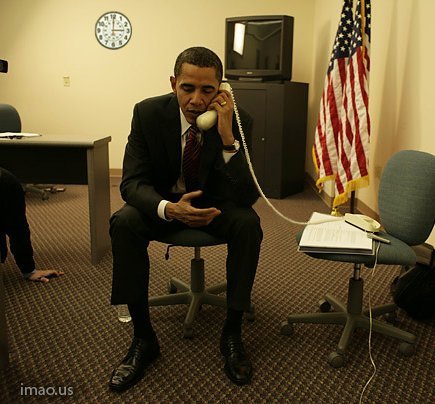
Barack Obama, Day One Meeting to discuss Iraq Poilicy


Top of the Agenda:

Reporting from Washington -- President Obama will discuss U.S. military involvement in Iraq with his senior national security team this afternoon, a critical first meeting as the new administration reshapes the Pentagon's war strategy.

"Running up to the inauguration, the president made clear this is one of the important items on his agenda," said Bryan Whitman, the Pentagon spokesman. "This is a logical first step for a new president that wants to speak to the people most directly responsibility for managing and executing the wars."

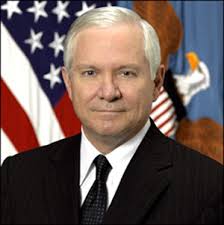
Obama is scheduled to meet with White House National Security Advisor James L. Jones and Defense Secretary Robert M. Gates

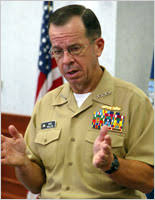
along with Adm. Michael G. Mullen, the chairman of the Joint Chiefs of Staff,


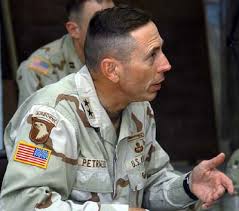
and Gen. David H. Petraeus, the head of U.S. forces in the Middle East.

In addition, Gen. Raymond T. Odierno, the top commander in Iraq, will participate by video teleconference.


At the meeting, expected to begin around 4 p.m. Eastern time, Obama could order a change in war policy and direct the military to speed up its withdrawals.

But some officials believe it is more likely that the president will ask the Defense Department take some time to draft new plans for his approval. Military officials said that will give them a chance to reconcile commanders' current plans with the wishes of the new president.

http://www.latimes.com/news/nationworld/nation/la-na-obama-security22-2009jan22,0,1363695.story

Saturday, November 01, 2008

The Syrian Border Crisis


The Syrian Border Crisis

Background

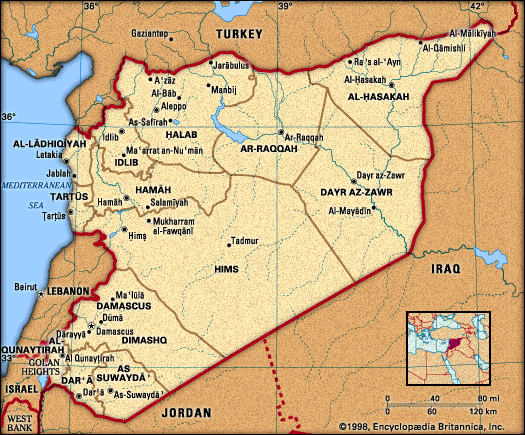
On October 26th 2008 the United States had an air strike on the Syrian border city of Abu Kamal. According to the United States, the attack killed an al-Qaeda leader responsible for smuggling combatants over the border.

Surprise to Syria, especially after talks with Rice

Secretary of State Condoleezza Rice met in New York with her Syrian counterpart, Walid Moalem, in the highest-level talks between the two nations since 2005. "She sat with us and said the United States wants to engage with Syria, wants to re-evaluate its relationship," Syria's ambassador to Washington, Imad Moustapha, told NEWSWEEK. "And suddenly this raid happens out of the blue."

General Petraeus wanted to talk prior with Syria but White House held him back

A senior military officer told NEWSWEEK that the United States conveyed its message about Abu Ghadiyah to Syria through other countries in the region beginning early this year. Simultaneously, said the officer, who did not want to be named discussing sensitive issues, Petraeus requested permission from the Pentagon to travel to Damascus and meet directly with Syrian leaders. According to the officer, though, "so far the answer has been 'Not yet. Now is not the time'." All three agencies declined requests for comment.
Both Syria and Iraq ( and North Korea) denounced the attacks

Syria condemned the US intervention and demanded an apology from Washington. Damascus also sent extra troops to the border region. Iraq equally condemned the US attack, but it also said Syria should take stronger measures against organizations that aim to harm Iraqis.

North Korea has denounced the United States for its recent deadly raid inside Syria.

The North's Foreign Ministry says the attack was "an unpardonable inhuman criminal act as it is ... state terrorism committed under the pretext of 'anti-terrorism war.'"

The real questions as proposed by
What is the tactical benefit of killing him and maybe taking out this particular safe house—to what extent will the act shock or foil the enemy, or cut down the flow of foreign fighters and arms? On the other hand, what is the strategic cost of violating international law, alienating the regional powers, and impeding a political settlement of the war in Iraq?

The intelligence isn't in yet, but early indications are that the first answer is "Not much" and the second is "Quite a lot."

Shuffling Troops

Iraq sends police to guard Syrian border
Iraq is sending police reinforcements to the border with Syria. The rapid reaction force is aimed at preventing al-Qaeda combatants from penetrating Iraq.

Meanwhile the Syrians are moving away from that border

The Syrian TV station Dunia reported Thursday that the country is reducing its troops and dismantling guard posts on its border with Iraq. The move came in response to a deadly U.S. cross-border raid Sunday that targeted an al-Qaida in Iraq figure who operated a network that smuggled fighters into Iraq. Meanwhile, tens of thousands of Syrians protested the raid Thursday in Damascus, and hundreds of Syrian riot police formed a protective ring around the closed U.S. Embassy. But the flag-waving crowds dispersed peacefully after a couple of hours.

The Syrians are beefing up borders with Lebanon


The Syrian Army has deployed more troops along Lebanon's northern border, according to Lebanese Army sources, amid claims that Damascus is redoubling efforts to "combat smuggling."

Reports that Damascus was beefing up its troop strength along the Lebanese border coincide with unconfirmed reports by the private Syrian Dunia satellite TV network that Syrian border patrol forces were being withdrawn from the notoriously porous border with Iraq. Dunia TV showed pictures of what it claimed were Syrian forces being withdrawn from the Iraqi border.

Iraq was getting along with Syria

Iraqi President Jalal Talabani also told President Bush just last month that Syria was no longer much of a problem.


Syria has asked Iraq for "clarifications" over the recent raid inside Syrian territory.


Deputy Syrian Foreign Minister Faisal al Miqdad indicated, this morning, that Syria has asked Iraq for "clarifications" over the recent raid inside Syrian territory. He says we are going to re-examine what's going on with Iraq in light of the official responses we're getting from the Iraqi side, following our requests to the United Nations for clarifications from Iraq.


Syrians say the Oct. 26 U.S. commando raid across its border targeting a Qaeda smuggler came as a surprise, ruining what appeared to be a thaw in relations between the two countries. Just two months ago, Secretary of State Condoleezza Rice met in New York with her Syrian counterpart, Walid Moalem, in the highest-level talks between the two nations since 2005. "She sat with us and said the United States wants to engage with Syria, wants to re-evaluate its relationship," Syria's ambassador to Washington, Imad Moustapha, told NEWSWEEK. "And suddenly this raid happens out of the blue."

But government documents and a recent comment by Commander of U.S. Central Command Gen. David Petraeus suggest the United States had been signaling its frustration with Syria over border issues for some time. Counterterrorism sources say troops taking part in the raid killed a senior Qaeda operative known as Abu Ghadiyah, who allegedly helped smuggle scores of fighters into Iraq for suicide attacks and other operations. Three weeks ago at a meeting of the Association of the U.S. Army, Petraeus said the Abu Ghadiyah problem had been raised often with Damascus. "We have communicated that to them through interlocutors," he said, describing Abu Ghadiyah as a "major foreign fighter facilitator" operating in Syria with "varying degrees of freedom at different times."


Syria has ordered the closure of the American School and the US cultural centre in Damascus


Ref:
Cooperation Hits a Snag
By Dan Ephron and Mark Hosenball | NEWSWEEK

Tuesday, August 26, 2008

Watch for Obama to explain his agenda of global militarism Thursday


As President George w. Bush labeled himself as a War President, so too will his successor be aptly titled when they become the Commander and Chief.

No one doubts Senator McCain when he predicts that we will be in Iraq for a long time, that he, as President, wouldn't act to change that.

But Senator Barack Obama, who ran as the `anti Iraq War candidate' because he didn't vote to allow the President to have `war powers' as his opponent Senator Hillary Clinton did is no dove. His recent comments actually expose his hawkish tendency, as well presented in this article written a week ago.

Expect some tough `military edged' talk from Obama when he gives his speach ath the convention Thursday night.


On eve of Democratic convention, Obama advances agenda of global militarism
By Bill Van Auken
20 August 2008

Speaking before an audience of 3,000 members of the Veterans of Foreign Wars, Democratic presidential candidate Senator Barack Obama defended his patriotism while attacking his Republican rival for being squeamish about launching unilateral military attacks against Pakistan.

Obama’s speech Tuesday in Orlando, Florida followed an appearance Monday before the same convention by Republican candidate Senator John McCain, who delivered a right-wing diatribe portraying the Democrat as a political opportunist and virtual traitor for his policy on the war in Iraq.


McCain charged Obama with having “tried to prevent funding for the troops who carried out the surge.” He continued: “Not content to merely predict failure in Iraq, my opponent tried to legislate failure.”

In his response, Obama spoke not as an opponent of war, but rather as an advocate of a superior strategy for pursuing US interests by military means.


He chided McCain for “talking tough without acting tough and smart,” while outlining a policy agenda that includes a continuation of the occupation of Iraq—albeit on a reduced basis—an escalation of the war in Afghanistan and its extension across the border into Pakistan. Finally, he put forward a policy of confrontation with Russia in the Caucasus that dovetails fully with the positions taken by the McCain campaign and the Bush administration itself.

Obama began his speech by declaring that America confronted a “defining moment in our history,” a conjuncture that he indicated had been reached owing to a series of events involving the ongoing or potential use of American military force.

“We are in the midst of two wars,” he said. “The terrorists who attacked us on 9/11 are still at large. Russia has invaded the sovereign nation of Georgia. Iran is pursuing nuclear weapons.”

Obama objected to McCain’s charge that he had shifted his position on Iraq, arguing that he had been consistent from the start. Referring to his initial opposition to the 2003 invasion, the Democratic candidate stressed that he was not opposed to aggressive wars in general, but that he viewed the war in Iraq as a miscalculation. He insisted instead that “our first priority had to be finishing the fight” in Afghanistan.

While suggesting that the “costly strategic errors” involved in the Iraq war had not been erased by the supposed successes of the military “surge” which sent 30,000 additional American troops into the country, Obama nonetheless praised the operation.

Obama Praised the Surge

He hailed General David Petraeus and Ambassador Ryan Crocker, who oversaw the military escalation, as “outstanding Americans,” while attributing the “lowering” of “the level of violence” in Iraq to “the outstanding efforts of our military, the increasing capability of Iraq’s Security Forces, the ceasefire of Shiite militias, and the decision taken by Sunni tribes to take the fight to Al Qaeda.” He concluded, “Those are the facts, and all Americans welcome them.”

There are other “facts,” however, which millions of Americans recognize as both criminal and shameful. The suppression of Iraqi resistance to foreign occupation, which is neither complete nor permanent, has been achieved through the killing of well over a million civilians and the turning of millions more into refugees. The US war and occupation have essentially destroyed Iraq as a functioning society.

Yet for Obama, the catastrophe produced by a war aimed at seizing control of Iraq’s oil reserves is the fault not of Washington, but of the Iraqis themselves.

“We have lost over a thousand American lives and spent hundreds of billions of dollars since the surge began, but Iraq’s leaders still haven’t made hard compromises or substantial investments in rebuilding their country,” declared the Democratic candidate. “And while we pay a heavy price in Iraq—and Americans pay record prices at the pump—Iraq’s government is sitting on a $79 billion dollar budget surplus from windfall oil profits.”

“Iraqi inaction threatens the progress we’ve made and creates an opening for Iran and the ‘special groups’ it supports,” he continued. “It’s time to press the Iraqis to take responsibility for their future. The best way to do that is a responsible redeployment of our combat brigades, carried out in close consultation with commanders on the ground.”

In other words, Obama is not advocating an end to a predatory war, but rather its reconfiguration in a manner designed to pressure the regime in Baghdad into acceding more fully to US demands.

As he spelled out, this “responsible redeployment” will not mean an end to the US occupation. While vowing to remove US “combat brigades” from Iraq over the course of his first year-and-a-half in office—extending their presence well into 2010—Obama made it clear that many other troops would remain.


“After this redeployment, we’ll keep a residual force to target remnants of Al Qaeda, to protect our service members and diplomats, and to train Iraq’s Security Forces if the Iraqis make political progress,” he said. Such a force would inevitably consist of tens of thousands of American soldiers and Marines.

Moreover, he explained, the purpose of this reduction in the American “footprint” in Iraq would not be to curtail the global role of American militarism, but rather to facilitate its exercise elsewhere.

The partial withdrawal from Iraq, he said, would allow Washington to “strengthen our military, and to finish the fight against Al Qaeda and the Taliban in Afghanistan and the border region of Pakistan.”

Describing Afghanistan as the “central front in the war on terrorism,” Obama continued: “This is a war that we have to win. And as commander-in-chief, I will have no greater priority than taking out these terrorists who threaten America and finishing the job against the Taliban.”

Obama’s attempt to sell the US intervention in Afghanistan as some kind of “good war” being waged against the perpetrators of 9/11is as grotesque a lie as the ones used by the Bush administration to justify the war in Iraq. US and NATO forces are waging a brutal campaign that is claiming an escalating toll of civilian casualties as they fight popular resistance to the US-led occupation from the predominantly Pashtun population on both sides of the porous Afghan-Pakistani border. “Taking out these terrorists who threaten America” means a savage military campaign against this population.

He called for throwing two more US combat brigades into the colonial-style war against the people of Afghanistan.

The Democratic candidate’s call for a shift in the relative weight of US military power from Iraq to Afghanistan has emerged as the consensus position within the predominant layers of the American foreign policy establishment.

A so-called “terrorism index” published Monday by Foreign Policy magazine and the Center for American Progress, based on a survey of “foreign policy experts” (US security officials, intelligence operatives and academics), found that 69 percent support shifting US forces from Iraq to Afghanistan and 80 percent believe that Washington has devoted too much attention to Iraq and not enough to Afghanistan.

Underlying this orientation is a concern not with combating “terrorism,” but rather with US strategic interests. Central Asia, with its extensive oil and natural gas reserves, has emerged as a region of critical importance. In the wake of the Soviet Union’s dissolution, Washington has attempted to assert its hegemony in Central Asia in opposition to both Russia and China. The attacks of September 11 provided the pretext for a military intervention that had been planned long beforehand.

Obama and his threats to Pakistan


Obama went on to attack McCain from the right, accusing him of reticence about “bombing our ally” in Pakistan.

“So for all of his talk about following Osama bin Laden to the Gates of Hell, Senator McCain refused to join my call to take out bin Laden across the Afghan border,” he said. “Instead, he spent years backing a dictator in Pakistan who failed to serve the interests of his own people.”

The McCain campaign issued a statement pointing out that in the Democratic primary debates last year, Obama voiced his own support for US collaboration with Pakistan’s military strongman, Pervez Musharraf, who was forced to resign Monday.

“We have to work with Musharraf, because the biggest threat to American security right now is in the northwest provinces of Pakistan,” Obama said in the debate. He added, “We should continue to give him military aid contingent on him doing something about that.”

On the Russian Front

Finally, on Georgia, Obama stressed his unity with his Republican rival, declaring, “Senator McCain and I both strongly support the people of Georgia.”

The Washington Post reported Monday that “Some Democrats have been pleading with Obama to use McCain’s tough response to the Russian invasion of Georgia to paint him as a trigger-happy interventionist who would risk bringing a war-weary nation into military conflict in regions where the United States has no interest.”

Instead, Obama tried to outdo the Republican candidate in terms of menacing rhetoric. He regurgitated the war propaganda about “Russian atrocities,” while repeating the administration’s mantra that “Georgia’s territorial integrity must be respected,” a euphemism for supporting the attempt by the regime in Tbilisi to militarily conquer the autonomous territories of South Ossetia and Abkhazia. He also voiced his support for Georgia, a former Soviet republic, being “integrated” into the NATO military alliance, a policy that has dramatically heightened US-Russian tensions.

Obama included a tribute to Senator Joseph Biden (Democrat of Delaware)—reportedly a leading contender for the vice-presidential nomination—who had just returned from a trip to Georgia, and went on to cast the conflict in bellicose, Cold War terms.

The candidate concluded by warning Moscow that its actions in the Caucasus would “have consequences.”

With less than a week to go until the Democrats officially nominate Obama at their convention in Denver, and with barely two-and-a-half months until the election, the candidate’s speech underscores a stark political reality confronting the American people. Once again this November, the two-party system will offer no means of expressing the massive popular opposition to war, but rather an empty choice between two big business candidates who are committed to the expanded use of militarism in pursuit of US corporate and financial interests.

Monday, January 28, 2008

CBS's Bob Schieffer remind the nation : There is a War going on !!

We interrupt American politics to ask this question: Does anyone remember the war in Iraq?

Bravo Bob!

By The Way, Candidates, There's A War On

CBS Weekly commentary by CBS Evening News chief Washington correspondent and Face the Nation host Bob Schieffer.


We ask because there hasn't been much to jog your memory on the campaign trail.

The threat of recession has blown Iraq off television and the front pages. In South Carolina, a poll of Democrats showed the economy overwhelmingly outweighed the war as the most important issue.

That's given the candidates a virtual pass on Iraq.

Until John McCain accused Mitt Romney yesterday of favoring a timetable for withdrawing American forces there, a charge Romney vehemently denies, Republicans hardly mentioned the war.

That would force them to mention George Bush and frankly, they'd rather talk about Ronald Reagan.

Nor do Democrats bring it up. The surge of troops the President sent there last year reduced the violence and that raises questions about the Democrats' previous demands for an immediate American drawdown.

Yet, the war goes on. Last week, 38 Iraqis died and hundreds were injured as a massive bomb went off in the town of Mosul. The Iraqi president promised to "do something," neglecting to mention he had been urged to "do something" in Mosul for months BEFORE the bomb went off.

For the record: While the Iraqis have been trying to get their act together, the war has claimed 4,094 American military and civilian lives and left more than 29,000 wounded.

Iraq may be off the front pages, but it is not over. The candidates and the rest of us would do well to remember that.

Monday, June 18, 2007

Indipendent Study: Iraq now a leading " Failed State "


"No question, 2006 was a lousy year for Iraq.” It was an odd statement to come from a U.S. President George W. Bush, but few would disagree. Today Iraq (and Sudan) topped an independent ranking of the world's leading failed states released on Monday by Foreign Policy magazine and the Fund for Peace.

The annual Failed States Index ranked 177 countries according to 12 social, economic,
political and military indicators based on data from thousands of publicly available sources. The world’s weakest states aren’t just a danger to themselves. They can threaten the progress and stability of countries half a world away.

Iraq and Afghanistan, the two main fronts in the global war on terror, both suffered over the past year. Their experiences show that billions of dollars in development and security aid may be futile unless accompanied by a functioning government, trustworthy leaders, and realistic plans to keep the peace and develop the economy. Just as there are many paths to success, there are many paths to failure for states on the edge. (1)


Looking Back: 2003

The Fund for Peace first report on Iraq, covered the first six months of the post-war period from April to September 2003, concluded that the U.S.-led invasion precipitated the collapse of the Iraqi state, which had been deteriorating for years. (During these years the US had set up harsh trade restrictions on Iraq)

The second report concludes that instead of addressing the fundamental requirements of rebuilding the state, post-war policies undertaken by the Coalition Provisional Authority (CPA) focused on completing the process of regime change, with an emphasis on de-Ba'athification, physical infrastructure reconstruction and incremental political transformation.


In the six months reviewed in this report, Iraq descended into what may be described as a failed state syndrome, a condition in which a number of trends reinforced each other to produce spiraling conflict that the country has little or no independent capacity to stop. A year after the invasion, Iraq is as shattered as it was the day that Saddam Hussein was overthrown, the main difference being that organized militias and terrorist groups have gained a foothold they did not have before. (2)


Looking Back 2005

Suzanne Nossel in the Blog Democracy Arsenal (http://www.democracyarsenal.org/) wrote in 2005 what some of the outcomes of Iraq becoming a failed state. How prophetic she has turned out to be.

Some of the casualties if Iraq becomes a failed state:


1. The fate of the Iraqi people
– The Iraqi people will be left with a state that’s vulnerable to rampant violence, possible civil war and economic ruin. Those that believe that virtually anything is better than life under Saddam may face a Baathist resurgence.

2. Stability in the Middle East – Chaos in Iraq will bleed over to the wider region. Iraq’s neighbors can be expected to react opportunistically to the void, meddling in Iraqi affairs to serve their own interests, and very likely entering into violent conflict with one another.

3. Attitudes toward the U.S. in the Middle East
– The U.S.’s image in the Middle East has gone from bad to worse in much of the Middle East as a result of the Iraq war. If the result of our efforts leaves the Iraqi people worse off, all the resentment over the perceived unilateralism of the Iraq invasion and the distortions of fact over WMD will harden into even deeper bitterness.

4. The fight against terrorism – Everyone from President Bush to al Qaeda #2 Ayman al Zawahri has declared the Iraqi insurgency the primary front of the fight against terrorism. If Iraq winds up a failed state, it will represent a territory terrorists have conquered and can claim. In addition to offering terrorists safe harbor to operate, the resources of the Iraqi state – oil, military, communications infrastructure, and funds – may fuel terrorist purposes.

5. Fight Against WMD, especially in Iran - Iranian influence is already on the rise in a chaotic Iraq; if Iraq fails, the role of the mullahs will only grow. As illustrated by Ahmadinejad's election, the Iraq war has already undercut the support we used to enjoy among moderate Iranians sick of their repressive regime. If Iraq becomes a failed state and U.S. influence in the Middle East correspondingly diminishes, the pressure on Iran to accede to American demands in relation to its nuclear program will further weaken. Chinese and Russian economic ties to Iran will pose increasingly powerful buffers against counter-proliferation efforts. Its hard to imagine Kim Jong Il won't find some way of scoring points off this as well; he's already benefitted from the consensus that a military response to N. Korea's nuclear program is off the table.

6. American credibility - Let's face it: a failed state in Iraq will alter perceptions of American power the world over. Iraq is the most ambitious and important U.S. foreign policy undertaking in a generation. Despite all the rifts, the U.S. has been united in its determination that Iraq not become a failed state. For the U.S. to mount a massive effort to prevent that outcome, only to witness it anyway has to call into question the credibility of American power.

7. Prospects for democracy in the Middle East
– The Bush Administration has often described how the creation of a stable and democratic Iraq would prompt liberalization throughout the Middle East. While this is true in theory, so is the opposite. The failure of Iraq’s democratic experiment will be a mortal blow, weakening moderates in Saudi Arabia, Egypt, Lebanon, the Palestinian territories and elsewhere and reinforcing the notion that democracy cannot succeed in the region.

8. Americans’ willingness to use military forc
e - Iraq as a failed state is likely to herald an era of deep reservations among the U.S. public regarding the use of force - - a kind of post-Vietnam, post-Mogadishu hangover. While this Administration has made the prospect of greater circumspection in the use of force very attractive, a level of public skepticism that makes it impossible to intervene to prevent genocide or stop live conflicts from further spreading could result in more Rwandas and Bosnias.

9. Military morale
- Military morale has already been damaged by a conflict that put our troops at risk without adequate preparation or equipment, that has disrupted families and livelihoods through long extensions in tours of duty. The unexpected difficulties confronted on the battlefield have provoked a crisis of confidence in Pentagon leadership. Despite their frustration, those who have served want to be sure that their sacrifices result in an Iraq that's better off. If, after all this, Iraq devolves into a failed state the blow to the military will be brutal.


10. Today’s definition of a superpower - The combined impact of Iraq's emergence as a failed state on America's image, military, credibility influence in the Middle East, and on our battles against terrorism and WMD will be profound. In both bilateral and multi-lateral relations, most countries' dealings with the U.S. are predicated on the idea that we are capable of accomplishing whatever we set out to do. That notion is so well understood that we rarely have to prove it. The prevalence of this belief has made it immeasurably easier to rally others behind our causes, thwart opposition and work our will. While failure in Iraq won't change that overnight, it will open a question about what superpowerdom means in an era of terrorism and insurgency.


======
Posted by Paul Grant (follower of Basho)

Notes:

Foreign Policy magazine is published by the Carnegie Endowment for International Peace, a Washington-based think tank. The Fund for Peace is an independent research group devoted to preventing and resolving conflicts.

Lots of information and links about the concept of `failed state' at Wikepedia :http://en.wikipedia.org/wiki/Failed_state

1. http://www.foreignpolicy.com/story/cms.php?story_id=3865&page=0&fpsrc=ealert071505fbbcbcbc4673476

2. http://www.fundforpeace.org/publications/reports/iraq-rep02.php

3. http://www.democracyarsenal.org/2005/08/top_10_list_10_.html

Tuesday, June 05, 2007

Vet Escapes Punishment for Protesting War

KANSAS CITY, Mo. — A military panel has recommended a general discharge for an Iraq war veteran who wore his uniform during a war protest and later responded with an obscenity to a superior who told him he might have violated military rules.


There is no way for Iraq to achieve rule of law with a foreign military imposing martial law


Marine Cpl. Adam Kokesh participated in the protest in March, clad in a uniform that had his name tag and other insignia removed. After he was identified in a photo caption in The Washington Post, a superior officer sent him a letter saying he might have violated a rule prohibiting troops from wearing uniforms without authorization.

After a hearing Monday before an administrative separation board at the Marine Corps Mobilization Command, the panel decided not to recommend an other-than-honorable discharge, choosing instead the general discharge.

"This is a nonpunitive discharge," said Col. Patrick McCarthy, chief of staff for the mobilization command. "The most stringent discharge that could have been received is other than honorable, and the board chose to raise that up to a general discharge."


If the recommendation is approved, Kokesh would not lose any military benefits, McCarthy said. Brig. Gen. Darrell L. Moore, one of two officers who received an e-mail from Kokesh that contained an obscenity, likely will decide whether to go along with the board's recommendation.

Kokesh is a member of the Individual Ready Reserve, which consists mainly of those who have left active duty but still have time remaining on their eight-year military obligations. His service is due to end June 18, but the Marine Corps is seeking to let him go two weeks early with a less-than-honorable discharge.

That could cut some of his health benefits and force him to repay about $10,800 he received to obtain his undergraduate degree on the GI Bill.

His attorneys said Kokesh was not subject to military rules during the protest because he was not on active duty. They said the protest was a theatrical performance, which meant wearing a uniform was a not a violation of military rules.

The military considered it a political event, at which personnel are not allowed to wear their uniforms without authorization.

Kokesh said he might appeal the board's ruling on principle.

"Frankly, I'm very disappointed with this decision and I'm very disappointed with the board members who made it," he said. "I do not think it was in the Marine Corps spirit to take the easy road or to not take a stand. In the words of Dante, the hottest layers of hell are reserved for those who in times of moral crisis maintain their neutrality, and I think that's what happened here today."

Marine Capt. Jeremy Sibert said in closing arguments that military personnel can be punished if their civilian behavior "directly affects the performance of military duties and is service-related." He said Kokesh's actions could affect how people view the Marine Corps and discourage recruits.

"A lot of us believe in this uniform. At some point, Cpl. Kokesh decided he was above that," he said.

Kokesh's attorney Lt. Joseph Melaragno maintained that the military was violating Kokesh's free speech rights. "(Sibert) argues we're sending a bad message," Melaragno said. "I say we need that in society. The easiest thing for individuals to do is get complacent with the war."

Kokesh was honorably discharged after a combat tour in Iraq.

The Marines' first witness, Maj. John R. Whyte, testified Monday he was the officer who wrote Kokesh the e-mail informing him the Marines were investigating the possible uniform violation.

After the Marine Corps told Kokesh it was investigating, he sent an e-mail to officials that included an obscenity.

Kokesh was a reservist in an artillery unit when he became disillusioned with the war during his first tour. He said he believes there is no way for Iraq to achieve rule of law with a foreign military imposing martial law.

Sunday, May 13, 2007

We support our troops - not the mission.

IN MY OPINION- If the US military were to ask for volunteers to help in the search for the missing soldiers in Iraq - more than a million would sign up to do so. Those same capable, heroic people though- would not answer a call to serve in the US presence (occupation) of Iraq.

We support our troops - not the mission.

4,000 Search For Missing US Soldiers

New York Times | May 13, 2007 10:41 PM

About 4,000 American ground troops, supported by surveillance aircraft, attack helicopters and spy satellites, swept towns and farmland south of Baghdad on Sunday, searching for three American soldiers who disappeared Saturday after their patrol was ambushed, military officials said.

The Islamic State of Iraq, an umbrella insurgent group that includes Al Qaeda in Mesopotamia, said it had captured the three missing Americans and claimed responsibility for the attack, which killed four other American soldiers and an Iraqi Army soldier. The group offered no proof for its claims.

John McCain's thoughts on Iraq


Republican Presidential hopeful Senator John McCain on the Sunday Talk show with Tim Russert takes hit after hit about Iraq, but still stays on the side of the Bush Administration AGAINST the will of the American people and the government of Iraq, sadly.

MR. TIM RUSSERT: Our issues this Sunday: Our Meet the Candidates 2008 series continues, an exclusive interview with Republican John McCain. He represented Arizona in the U.S. House for four years, for the past twenty years in the U.S. Senate where he now serves as the ranking member on the Armed Services Committee. He ran unsuccessfully for the Republican nomination for president in 2000. This morning John McCain joins us for the full hour on MEET THE PRESS.

Senator McCain, welcome back to MEET THE PRESS.

SEN. JOHN McCAIN (R-AZ): You didn't have to say unsuccessful; everybody knows that.

MR. RUSSERT: Well, all part of the history. Let's go right to it--Iraq.

SEN. McCAIN: Mm-hmm.

MR. RUSSERT: We've been talking to voters across the country, our NBC/Wall Street Journal poll: Is victory in Iraq still possible? Thirty-six percent say victory's possible; 55 percent say victory not possible. And look at this, senator. Was the war--was the war--was it a mistake to send troops? Fifty- eight percent say yes, a mistake; 40 percent say no. Are you surprised at those numbers?

SEN. McCAIN: Not too. Particularly on the issue of the second question, when we have experienced the enormous difficulties and sacrifice that have been part of this conflict that, certainly, you can understand that. Americans are frustrated, and they're saddened our failures in this conflict. My point is, and I'm sure we'll get into it, and that is we have a chance of success, and I don't think that a lot of Americans are as fully aware as they should be of the consequences of failure in Iraq.

MR. RUSSERT: When you were speaking in 2005, the American Enterprise Institute, you said this...

MR. RUSSERT: "If we can't retain the support of the American people, we will have lost this war as soundly as if our forces were defeated on the battlefield." Haven't they lost the support of the American people?

SEN. McCAIN: I think if we can show the American people some successes in Iraq and continue and expand on some of the successes we've already experienced in Anbar province and some neighborhoods in Baghdad, that I think Americans would--and if we do a better job, and that's people like me, of explaining the consequences of failure.

The consequences of failure, Tim, are that there would be chaos in the region. There's three--two million Sunni in Baghdad. The Iranians would continue to increase their influence, the Saudis would have to help the Sunni, the Kurds would want independence, the Turks will never stand for it. Some people say partition. You'd have to partition bedrooms in Baghdad because Sunni and Shia are, are married. This, this is a very, very difficult situation, but the consequences of failure, in my view, are unlike the Vietnam war where we could leave and come home and it was over, that these people will try to follow us home and the region will erupt to a point where we may have to come back or we will be compating-- combating what is now, to a large degree, al-Qaeda, although certainly other--many other factors of sectarian violence, in the region.

MR. RUSSERT: In hindsight, was it a good idea to go into Iraq?

SEN. McCAIN: You know, in hindsight, if we had exploited the initial success, which was shock and awe, and we succeeded, and we had done the right things after that, all of us would be applauding what we did. We didn't. It was terribly mismanaged. It was--I went over there very shortly after the initial victory and came back convinced that we didn't have enough troops on the ground, we were making the wrong decisions, and that Secretary Rumsfeld was badly mismanaging the conflict. And I spoke about it and complained for years. So, if we had succeeded and done the right thing after the initial military success, then all of us would be very happy that one of the most terrible, cruel dictators in history was removed from power. Now, because of our failures, obviously we have paid a very heavy price in American blood and treasure and a great sacrifice.

MR. RUSSERT: So it was a good idea to go in?

SEN. McCAIN: I think at the time, given the information we had. Every intelligence agency in the world, not just U.S., believed that Saddam Hussein had weapons of mass destruction. He had acquired and used them before. There was no doubt that he was going to acquire and use them if he could. The sanctions were breaking down. The Oil for Food scandal was in the billions of dollars. And, of course, at the time, given the information we had--hindsight is 20/20. If we'd have known we were going to experience the failures we experienced, obviously it would give us all pause. Yet the information and the knowledge and the situation at the time, I think that it was certainly justified.

MR. RUSSERT: The Pentagon's Quarterly Report, the director of the CIA, the director of the Defense Intelligence Agency, all have said that sectarian violence is the problem. In fact, the--General Maples said that al-Qaeda accounts for only a small fraction of the insurgent violence.


SEN. McCAIN: You know the...

MR. RUSSERT: Who's our enemy?

SEN. McCAIN: Well, first of all, General Petraeus, the general on the ground, does not agree with that. Al-Qaeda is exploiting these sectarian differences. They are trying to orchestrate attacks on both Sunni and Shia, but--in order to spark this and increase this sectarian violence that's going on. Al-Qaeda is playing significantly. Now, are there problems with sectarian violence? Of course there is. Is there other problems, such as in Anbar Province where Sunnis are now combatting al-Qaeda? Are al-Qaeda being shoved out of Baghdad into areas outside of Baghdad? Yes. And are there problems in those areas?

Look, this is long and hard and difficult, and I've said it for a long time. And it's no last throes, it's no mission accomplished, it's no few dead-enders. It's long and hard and tough. We are experiencing some successes. Do we have to experience more? Yes. But to do what the Democrats want to do, and that's set a date for withdrawal, even those who opposed the war from the beginning don't think that that would lead to anything but an enormously challenging situation as a result.

MR. RUSSERT: But, senator, the Iraqi parliament, a majority of the Iraqi parliament, has signed a petition asking for a date certain for withdrawal of American troops. If the Iraqi parliament wants it, a majority in the Congress want it...

SEN. McCAIN: Mm-hmm.

MR. RUSSERT: ...then why do you stand there and say, "No, you can't have it"?

SEN. McCAIN: Because it's my job to give my best estimate to the American people, no matter what the political calculations may be, as to what's the best in our nation's national security interest. Young men and women are risking their lives as we speak in, in, in Iraq. And I know that they will be in greater harm's way if we withdraw from Iraq, as we keep debating over and over and over again. And I know what's best, in my mind, in my experience, in my knowledge, in my inspiration, as to what's best for this country. So political calculations such as polls, I understand that if the American people don't continue to support this effort that we will be forced to withdraw. But it's also my obligation to tell the American people and my constituents in Arizona that I represent, what the consequences of failure will be; and I believe they will be catastrophic.

MR. RUSSERT: But the duly elected people's bodies, the U.S. Congress and the Iraqi parliament, say they want a troop withdrawal. That's more than a poll. Isn't that the voice of the people?


SEN. McCAIN: Well, the--as far as the Iraqi parliament is concerned, the Iraqi government obviously doesn't feel that way, their--the representatives in their government. Second of all, there is some, a certain amount of domestic political calculations involved there in what the Iraqi, quote, "parliament" said. The Iraqi parliament has their ability to, to voice their views, and I respect them. And I, as I say, I--I'll repeat again, I understand how democracies work. I saw it in Vietnam. I saw it in Vietnam. And I saw it in Vietnam, the predictions, that everything would be a worker's paradise in, in Vietnam if we left. And thousands were executed and millions went to re-education camps. So I, I believe that, that the consequences of failure, and particularly sitting on the large reserves of oil they have, particularly considering the influence of al-Qaeda is concerned, you will see enormous destabilization in the region, and that's my duty. That's my obligation. It's not my privilege. And political calculations should not enter into any information or position that I take on, on a, on an issue of national security.

MR. RUSSERT: The Iraqi parliament says they want to take a two-month vacation while our men and women shed their blood.

SEN. McCAIN: I am, I am unalterably opposed to it. One of the real difficulties we face in this conflict, obviously, is whether the Maliki government will act as an inclusive government, and whether the Maliki government will do the things that are necessary to be done. And I'm very concerned about it. All of us are very concerned about it. This government has to pass the oil revenue sharing law. This government has to pass de-Baathification. They have to declare elections in the provinces so that Sunni, who now want to take part in the electoral process, can have their representatives.

MR. RUSSERT: They've had four years to do this.

SEN. McCAIN: They have had this time, and they have done some things. It took us about 100 and some years before we had a bloody civil war to decide the future of our country. This is a fledgling democracy. I'm not, I'm not making excuses for it, but they have not been in this business before. And yet that does not change the fact that, in my view, unless they act, it could jeopardize what is already in jeopardy.

MR. RUSSERT: Would you be in favor of a referendum amongst the Iraqi people to make a decision as to whether U.S. troops should stay or leave?


SEN. McCAIN: No, no more than I should--would have a referendum in the United States of America as to whether Iraqi troops should leave, or whether we should be in or out of NATO, or any other issue. The Iraqi government is an elected government, and they are functioning. And so why we would need a, quote, "referendum" is no more necessary in this country as in that one. Does the Maliki government have to act more effectively, more inclusively? Absolutely they do, and it's of great concern, and I think it's one of the great vulnerabilities as we try to move forward and succeed there. Now, what's success? Economic, political and social progress, which can only be obtained in an environment of security. Neighborhoods in Baghdad are safer. They're not safe, but they are safer than they were before. And the government has to function more effectively, and then the Iraqi military and police take over those responsibilities as we gradually withdraw. That's the recipe for success.

MR. RUSSERT: The Iraqi army, over 120 battalions.

SEN. McCAIN: Yep.

MR. RUSSERT: There are only 10 battalions--10! That's 6,000 soldiers...

SEN. McCAIN: Mm-hmm. Mm-hmm.

MR. RUSSERT: ...that are independently working separate and apart from Americans. How can it be, after four years, the Iraqis only have 6,000 soldiers operating independently?

SEN. McCAIN: Well, two things. One, because the war was so badly mismanaged. The--Secretary Rumsfeld claimed that there was, at one point, I believe, 175,000 trained, and they obviously fell apart. There's a difference, though, between those who can, can perform, quote, "independently," and those that can perform effectively alongside U.S. troops in Baghdad and around the country. There are--there are Iraqi units that still probably can't stand up on their own, but they can operate effectively alongside U.S. military. The key to it is, will we be able to train more who can operate independently on their own? We have a ways to go. But we, again, with this new strategy--and it is a strategy, not a surge--we have been able to see significant improvement. Enough improvement? Probably not. But at least we're seeing some progress. And our commanders on the ground are saying that the Iraqi military is functioning far more effectively, effective, and we are seeing progress there.

MR. RUSSERT: Jim Miklaszewski, our Pentagon correspondent, reports that he's being told by senior military officials that, come April, we do not have the troops to continue to send to Iraq in the rotation that we've been--that's been ongoing. We simply don't have them.

SEN. McCAIN: Come next April.

MR. RUSSERT: That's correct.

SEN. McCAIN: We are increasing the size of the Army and Marine Corps. Another one of the great failings when we began this was not increasing the size of the Army and Marine Corps. I've said for years that we need to dramatically increase them, particularly in certain specialties. I hope that the increased recruitment that we are experiencing now will give us an opportunity to increase those numbers. I also hope that we can see some signs of success in this challenge that we are facing.

MR. RUSSERT: General Petraeus said this: "Any student of history recognizes there's no military solution to a problem like that in Iraq, to the insurgency of Iraq."

SEN. McCAIN: And, you know, I've had many conversations with General Petraeus and I don't want to put words in his mouth, but he'll also tell you that history shows us, any student of history will tell, you that in--if--unless you have an environment of security for the people to try to live normal lives, and the economic, politically--political and social environment is able to grow and flourish, then you are doomed to failure. So, when you say it's all we--it's all up to the Iraqis, that's like saying a neighborhood that's been taken over by gangs, it's up to the people in the neighborhood. We have to do whatever we can to provide them with an environment in which they can exist and begin to lead normal lives. We are showing some success. The, the strategy before was, "Go kill people." It was the old search-and-destroy. "Go kill people and go back to your base." We've now got 53 or more outposts in Baghdad where Iraqi and American military are 24/7. There are some progress being made, and General Petraeus will say that, too. Enough? We'll see.

MR. RUSSERT: It's been more than four years.

SEN. McCAIN: I know.

MR. RUSSERT: And the American people are saying, "Why are we shedding our blood, and they're taking vacations as a parliament?" They don't have independent soldiers and battalions up and running. Our "National Intelligence Estimate" "outlines increasingly perilous situation in which the United States has little control" "strong possibility of further deterioration, according to sources familiar with the document.

"It couches glimmers of optimism in deep uncertainty about whether the Iraqi leaders will be able to transcend sectarian interests," "fight against extremists, establish effective national institutions and end rampant corruption."

That's our own intelligence agency...

SEN. McCAIN: Yes.

MR. RUSSERT: ...four years out.

SEN. McCAIN: Yes, and these same intelligence agencies gave us some very bad intelligence about four years ago, as well, as you might--as you might recall. But the fact, the fact is, this is long, hard difficult. And we talk about these present challenges that we face. We don't talk a lot about what happens if we fail, and I think that that's got to be part of any national discussion that we have. And the consequences of failure are chaos, genocide and, when you--when--and I'm sure you will ask this at some point, what's plan B? My, my, my question to those who say, "Let's set a date for withdrawal," what's your plan B? And the fact is, if we spent time on plan A, we, we, and give it a chance to succeed, I think would be a useful way of spending our time.

MR. RUSSERT: But under your plan, you're strongly suggesting we're going to be there for the next 10 years at least in order to secure and stabilize that country.


SEN. McCAIN: I am suggesting that we will have--hopefully reach a situation where American troops will not be on the front lines, where--and, by the way, that will not be immediately--where American troops are able to withdraw. We've had troops in South Korea for 60 years, and Americans are, are very satisfied with that situation. The key to it is, is the Iraqi military and police taking over these responsibilities. And that is, I believe, the ultimate way we're going to know whether we can reduce American casualties and they take over the responsibilities for, for governing their own country and militarily attacking and resisting al-Qaeda and other sectarian violence which will be there for a long, long time.

MR. RUSSERT: And we're going to be there for a long time.

SEN. McCAIN: But if it is--if it is--if it is only in a role that is of support and American casualties are minimal, then I think it's probably worth the investment. If the level of casualties stays where it is and we do not have success, then we know that that will be a, a condition that we cannot stand for.

MR. RUSSERT: By when?

SEN. McCAIN: I don't have a date. I think that the important thing is whether we assess as we move along. Everybody talks about--some people talk about April or May--August. Some people talk about September. The fact is that we've got to be showing progress along the way, and we will be--have plenty of time to assess that.

Look, Tim, I understand you, you are voicing the frustration that Americans feel. We've only got four of the five brigades over there now. We have just begun this new strategy. It is barely beginning, and I think it ought to be given a chance to succeed or fail. And for us to, to go for two months of funding after we voted time and time again. The president, the president has vetoed, and we continue to, to try to micromanage this war, and, and if you want us out of there, then cut off the funding and bring them home tomorrow.

MR. RUSSERT: Let me show you the kinds of things that are often said when soldiers are overseas, like this: "There's no reason for the United States to remain. The American people want them home. I believe the majority of Congress wants them home. Our continued military presence allows another situation to rise, which could then lead to the wounding, killing or capture of American fighting men and women. We should do all in our power to avoid that. What should be the criteria is our immediate, orderly withdrawal. And if we do not do that and other Americans die then I" "say that the responsibilities for that lie with the Congress who did not exercise their authority under the Constitution. For us to get into nation-building, law and order, etc., I think, is a tragic and terrible mistake."

You hear those kinds of words, right?

SEN. McCAIN: Sure I do. Americans are frustrated and saddened by the enormous sacrifice we've made and the gross mismanagement of the war. Now, my response to that statement is and what happens after we leave? Listen to all of the experts who will tell you that we can have a situation in the region which will, in, in the long run, entail far greater casualties, far greater dislocation, far greater threats to our national security than trying to give this an opportunity to succeed. That's what the--my response to that heartfelt statement is.

MR. RUSSERT: Well, those are your words from 1993 about Somalia.

SEN. McCAIN: Mm-hmm.

MR. RUSSERT: And that's the kind of thing we're hearing about Iraq.

SEN. McCAIN: Mm-hmm.

MR. RUSSERT: You felt that way about Somalia when you saw no end in sight.

SEN. McCAIN: Yes, I did, and...

MR. RUSSERT: And many Americans now are echoing your words about Iraq, because they see no end in sight.

SEN. McCAIN: Well, if you compare--want to compare Somalia to what's at stake in Iraq, please feel free to do so. I don't see any comparison except that there was chaos in the streets of Mogadishu, and this now is got to do with vital national security interests. I also said that we should get out of Beirut when we did, because a, a presence of a few Marines in a barracks was not going to, in any way, significantly impact what was going on in Lebanon. And I was right, and a lot of young Marines died because we--of the way that we put a presence in there without any chance of success.

MR. RUSSERT: You say we're making progress. You've been on this program talking about Iraq. In 2003...

SEN. McCAIN: Mm-hmm.
Story continues below ↓advertisement
Click Here

MR. RUSSERT: ...you said, "I believe we've achieved significant goals"; 2005, we view it as, as "hopeful," we're making "progress"; 2006, we're on the "right track," "I want to emphasize again" the "good things happening"; we're "showing signs of success" in 2007. It's upbeat, upbeat, upbeat.

SEN. McCAIN: I think...

MR. RUSSERT: And yet the reality is quite different than that kind of optimistic message.

SEN. McCAIN: You know, Tim, I think it would be fair also to put the statements that I made when I came back from Iraq that said it was a failed policy, that we had to have more troops on the ground, that we were not carrying out the right kind of effort at training and equipping the Iraqis, that the Iraqi government wasn't--so it might be fair to flash some of those statements up, including the long speech I gave, after I came back from Iraq, to the Council on Foreign Relations, where I said if we pursue this failed policy, we will fail in Iraq. So I think that that might balance it out a bit. Do I think we had, we had made some progress? Yes. And do I think that we have had some significant setbacks? Yes. We-- both is--are the case.

MR. RUSSERT: You made a lot of news back in April when you went to Iraq. You went on a radio show and said never--had a news conference, "never been able to go out in the city as I was today." And then later these photographs were released, where we saw--(clears throat) excuse me--John McCain in the marketplace, surrounded, wearing a flack jacket. The next day the papers said that, "A day after members of an American congressional delegation led by Senator John McCain pointed to their brief visit" in "Baghdad's central Market as evidence that the new security plan for the city was working, the merchants were incredulous about" "Americans' conclusions. `What are they talking about?'" "the owner of an electrical supply shop said. `The security procedures were abnormal.' The delegation arrived at the market" "more than 100 soldiers in armored humvees--the equivalent of an entire company," "attack helicopters circled overhead, a senior" "military official in Baghdad said. The soldiers redirected traffic from the area" "restricted access to the American." "The congressmen wore bulletproof vests" through the hour-long visit. `They paralyzed the market when they came,'" "`This was only for the media.'"

SEN. McCAIN: Well, I don't...

MR. RUSSERT: Wasn't that...

SEN. McCAIN: ...I don't know who Mr. Faiyad is, and I'm sorry that I didn't see him. I talked with many, many of the merchants. We stayed there for more, more than an hour. That same place was not a functioning market a short time before. A bomb had gone off in that area and killed many, many people. There, there was a group of people that I talked to, as I traveled--walked around that, that shopping area for over an hour who said, "I'm glad to see you. Things are better." They--some--a guy came and complained about a sniper that, that they'd had problems with, and the police chief we talked to about that.

My point is the neighborhoods are safer. They are not safe. That's why we have to continue what we're doing. We have a new strategy that, that can succeed. I was glad to walk through that market. I will go walk through a market as often as I can. It was not allowed to go through a market a short time before that.

MR. RUSSERT: But, senator, you had an armed escort.

SEN. McCAIN: I had an armed escort because, because that's what General Petraeus thought we ought to have. I was glad to go outside of Baghdad and have over an hour opportunity to talk to the people that I talked to. Now, they are very different from the people that, that you are quoting here and others. They said, "I'm glad to see you. Things are better here. We have, we have seen improvement." That's what I was told, and that's what the other two members of Congress were told when we were there. You can find a lot of difference of opinion if you want to, but I believe that it's important for me to go out and meet those people if I can and be around them. I didn't call for the kind of, quote, "protection" that was around me. But I am not afraid, and I'm glad to go any place that I can to talk to the people of Iraq and tell them of my commitment to see that they have a free, democratic government where they don't have to face the bombs going off and the suicide bombers and the--and can start leading normal lives. And I'll do that every chance I get.

MR. RUSSERT: But the military felt you needed that protection, and the number of suicide bombers has gone up since the surge began.

SEN. McCAIN: The military--the suicide bombers have gone up because they know that this is probably the most effective way publicitywise. It's not the most effective way if you're talking about winning a conflict. Suicide bombers are the most difficult of any to counter, people who are willing to take their own lives in order to take others'. You can ask the Israelis; I think they'll tell you that. They have literally sealed their borders, and yet suicide bombers get across. And again, is this long and hard and difficult? Is that market safe? No, but it's safer than it was before. And that, in my view, is the key to whether we will succeed or fail or not. And I'll be glad to go back to that market with or without military protection and, and humvees, etc. But the fact is, I walked through narrow streets. I didn't have people all around me. I don't know what, what--where they get their information, but I was glad to walk around and talk to people and have contact with them and tell them that I, as an American, will do everything I can to let them lead the normal lives which are God-given rights to everybody on earth.

MR. RUSSERT: There seems to be a real erosion in support of the war amongst Republicans.

SEN. McCAIN: Yeah.

MR. RUSSERT: Eleven Republican congressmen met with the president. One said "My district is prepared for defeat if that's what you are going to say, Mr. President."

SEN. McCAIN: Mm-hmm.

MR. RUSSERT: The leader of the Republicans in the Senate, Mitch McConnell, "condemned the Iraqi government for its failure to resolve security and political problems more expeditiously and predicted that, unless the current troop surge succeeds, U.S. policy will be changed by year's end either by" the president or by "congressional action."

SEN. McCAIN: Well, first of all, I share his, his dismay, and we've discussed it already about the Iraqi government's failure to act effectively. When I was over there, I met with Iraqi government officials and told them how important it is for them to act as a inclusive government, and, and I believe that they certainly are having messages sent. I hope that they are receiving them. And again, I understand the lack of patience on the part of the American people. And we're getting a little circular here in how sad and, and frustrated they are.

MR. RUSSERT: But these are the Republicans. They're, they're--Mitch McConnell's saying that they're ready to move this year, Republicans in Congress, against the war unless the surge shows success relatively quickly.

SEN. McCAIN: Look, I think, I think by the end of this year we will see some signs of success, how significant those will be. But if every Republican is against it, if every Republican calls for withdrawal, I will do what my conscience, my knowledge, my--I know what war is. I know how evil these people are. I know what war, war and peace is about. And I know the consequences, from my study of history and knowledge and background, the consequences of failure. So if I'm the last man standing, I have an obligation to do what my conscience and my knowledge and my background and everything I've known through my well-experienced life is best for this country. And I will not change from that, from that position. But I also understand what public opinion does and what democracies do. But that doesn't mean that I change my views and my positions and blowing in the, in the direction of which the political winds are blowing.

MR. RUSSERT: In 2000 you lost the Republican nomination to George Bush. Would it be ironic that you lost the 2000 nomination because you embraced George Bush's Iraq war policy?


SEN. McCAIN: Life isn't fair
. I did not embrace the policy for a number of years. I was one of the severest critics. But life isn't fair. But I--I've had a wonderful opportunity to serve this country. I have been the--I am the luckiest guy you will ever have on this program. I've been honored to serve. And I will continue to serve in some capacity until I am unable to do so.


Wednesday, April 18, 2007

WARNING BRUTAL IMAGES :: Day of Carnage in Iraq Bombing after Bombing after Bombing


Death and Destruction as Bush tries to keep financing his failed invasion.

BAGHDAD, Iraq (CNN) -- An Iraqi army brigade commander was arrested Wednesday night after a string of bombings that killed nearly 200 people around Baghdad, most of them in a single attack at a central marketplace, Prime Minister Nuri al-Maliki's office announced.

Explosion at the Sadriya market

The explosion at the Sadriya market, one of the Iraqi capital's oldest and busiest venues, killed 140 people and wounded about 150, an Iraqi Interior Ministry official told CNN. A statement from al-Maliki's office said the brigade commander was removed because of "the weakness of security measures put in place to protect civilians in Sadriya."

The marketplace attack was the worst of at least six bombings across Baghdad -- a particularly bloody day in a city wracked by sectarian warfare and a U.S.-Iraqi crackdown against insurgents. It was the worst bombing in the Iraqi capital since the 4-year-old war began, topping the February toll of 130 dead in a bombing in the same marketplace. (Watch as death toll climbs after attacks in Iraq Video)


The marketplace is filled with streets and alleyways that crisscross one another. The time of the attack -- about 4 p.m. (8 a.m. ET) -- is generally busy, with vendors selling electronics, produce, clothing and other items.

The arrested officer, whose name was not immediately released, was in command of the 2nd Brigade of the Iraqi army's 2nd Division, and will face an investigative committee looking into the bombings.

In all, bombings around the capital killed 198 people, the Interior Ministry reported.

Also an Iraqi Army checkpoint bombing killed 35


In addition to the Sadriya attack, a suicide car bombing killed 35 people and wounded 55 near an Iraqi Army checkpoint at one of the entrances to Sadr City.

Also in the Iraqi Karrada district bombing killed 11


Another bomb blast in central Baghdad's Karrada district killed 11 people and wounded 13, while bombs targeting police patrols in southern and southwestern Baghdad killed six police officers and two civilians, while wounding 14 people.

Also in the Iraqi Rusafi Square bombing killed 4

Another four civilians were killed when a bomb planted in a minibus detonated in Rusafi Square, a busy intersection in central Baghdad, the Iraqi Interior Ministry reported. Nine people were wounded.

Transfer of Security of Mayasan Province


The attacks occurred the same day British commanders transferred security control over the southern province of Maysan to Iraqi troops, a sign that Iraq is taking another step toward self-reliance. But the Baghdad blasts reflects the stiff challenges posed by what has been a resilient insurgency.


In Washington, Adm. William Fallon, the chief of U.S. forces in the Middle East, told a congressional committee that while he sees optimistic developments in Iraq, "there is hardly a week that goes by, certainly almost a day that doesn't go by without some major event that also causes us to lose ground."

Fallon told the House Armed Services Committee in Washington that the Baghdad security crackdown "is really the Iraqi leadership's major and potentially last opportunity to really take this ball forward."

"It's imperative, from my view, that they act on it," he said.


Not Clear if attacks were linked

It is not clear whether Wednesday's attacks were linked, since many insurgent groups operate across Baghdad at any point in time. But most of the attacks targeted Shiite areas, and the market and checkpoint attacks, happened in areas where the Mehdi Army -- the militia of anti-American Shiite cleric Muqtada al-Sadr -- holds sway.

The Sadr City checkpoint bombing occurred at one of the new checkpoints set up for new crackdown in the capital.

Transfer of security in Maysan province

The Sadr City checkpoint bombing occurred at one of the new checkpoints set up in a new crackdown in the capital.

Meanwhile, the U.S. military was on the move against insurgents. Coalition raids in and around the Iraqi cities of Baghdad, Falluja, Taji, and Mosul on Wednesday led to the killing of six insurgents and the detention of more than 40 others, the U.S. military said.

One US Troop also dies from Non-Battle Injury


A Task Force Marine soldier died in Baghdad on Tuesday of "non-battle injuries, the U.S. military said Wednesday.

Farther south in Maysan province, officials boasted that the transfer of security -- in what has been a relatively quiet district -- "demonstrates another step towards a stable and secure Iraq."

But Maysan isn't a sectarian flashpoint. It is a largely rural stretch located in the Shiite heartland in the south bordering Iran.

A statement from U.S. Ambassador to Iraq Ryan Crocker, British Ambassador Dominic Asquith, and U.S. Gen. David Petraeus said, "Maysan is the fourth of 18 provinces to be transitioned and this reflects Iraq's continued steps toward a capability to govern and protect itself and its citizens as a sovereign nation."

CNN's Jomana Karadsheh, Arwa Damon, Mohammed Tawfeeq, and Carolina Sanchez contributed to this report.

Sunday, April 08, 2007

Iran bars Iraq PM from its air space

Iran bars Iraq PM from its air space

By Ahmed Rasheed

Iran refused to allow a plane carrying Iraqi Prime Minister Nuri al-Maliki on a trip to Asia to cross its air space overnight, a senior adviser to the Iraqi leader said on Sunday.

Sadiq al-Rikabi, who is accompanying Maliki on the trip to Japan and South Korea, said the prime minister's plane entered Iranian air space at about 8:30 p.m. on Saturday.

"Suddenly the Iranian aviation authorities ordered the pilot to go back," Rikabi said.

"We were obliged to fly to Dubai where we stayed for more than three hours to file a new (flight) plan," he said by telephone from Bangkok, where the plane was just about to depart for Tokyo.

Rikabi said it was unclear why Iran had barred Maliki's plane from crossing its territory.

Asked about the reports, Iranian Foreign Ministry spokesman Mohammad Ali Hosseini implied Maliki's plane may have faced an issue over permission to fly across Iran but said it was not an unusual problem.

"Permission for Maliki's flight is a normal issue. All flights need permission," he told a weekly news conference in Tehran, without giving further details.

Iraq's U.S.-backed government has often had to tread a delicate path in trying to maintain good relations with both Iran, its neighbor to the east, and the United States.

Maliki, a Shi'ite, visited Tehran last September to urge Iran not to interfere in Iraq. President Jalal Talabani, a Kurd, made an official trip to Tehran in November.

Washington accuses Shi'ite Iran of stoking violence in Iraq and in January detained five men it says were linked to Iran's Revolutionary Guards and backing militants. Iran insists they are diplomats, wants them freed and has requested access.

Iraq's foreign minister said last week the Iraqi government was trying to secure the release of the five Iranians, who were detained by U.S. forces during a raid on an Iranian government office in the northern Iraqi city of Arbil on January 11.

An Iranian diplomat freed two months after being kidnapped in Baghdad by gunmen wearing Iraqi army uniforms has said he was tortured by U.S. forces while in captivity, Iran's Fars News Agency reported on Saturday.

Iran has previously blamed the U.S. military for his abduction but U.S. officials had denied any role. On Saturday the U.S. military again denied playing any part in kidnapping the diplomat, or in his alleged torture. Iraq has said it did not know who had snatched the diplomat.

Maliki is seeking support for rebuilding his war-devastated country on the trip to Japan and South Korea.

(Additional reporting by Tehran bureau)

Saturday, March 31, 2007

Iraq War Video: Through the lens: funerals for troops killed in Iraq

Short video of AP photographers who have covered the funerals of service members killed in Iraq share their images, and their thoughts, for an asap video presentation. By Jaime Holguin

Tuesday, March 27, 2007

Iraq sues US pharmaceutical giants for past HIV-contaminated blood


by Assad AbboudMon Mar 26, 10:31 PM ET

Iraqi AIDS patients plan to sue French and US pharmaceutical giants for millions of dollars compensation after being infected by HIV-contaminated blood shipments in a massive 1980s health scandal.

Of 238 Iraqis infected with the AIDS virus involved in this scandal,199 have died. These AIDS cases in Iraq are the result of blood imported from France for transfusions in the 1980s by the Saddam regime. The French companies that supplied the blood have offered to compensate the victims' families with the paltry amount of $5,000 to $25,000 per person. The Iraqi health ministry has rejected the offer.

The Iraqi Red Crescent Society says the blood was bought by the Saddam Hussein regime from Austria and France to treat child haemophiliacs with a hereditary bleeding disease.

Another 39 infected patients are fast facing the same fate in a country where AIDS represents the ultimate social stigma, and patients have neither the means nor the opportunity to purchase adequate, up-to-date medication.

Now the IRCS is demanding 238 million dollars in damages from French company Sanofi-Aventis, which acquired firm Merieux after it sold contaminated blood-clotting agents to the Iraqi health ministry, and US-based Baxter International, in which Austrian outfit Immuno AG has since been incorporated.

"We are now asking for 238 million dollars, i.e. one million dollars for each victim," for loss of life and the nightmares they endured, said IRCS head Said Ismail Haqi. A Baghdad court is to begin looking into the case on April 8.

Haqi said the Iraqis rejected an out-of-court settlement offer from Sanofi-Aventis of between only 5,000 to 25,000 dollars per patient, an amount he slammed as "humiliating."

"This is not enough for treatment. Only 5,000? Is this what a patient is worth because he is Iraqi?" Haqi said.

In 1996, four drug companies, including Baxter, agreed to pay 640 million dollars to up to 6,000 American haemophiliacs who contracted AIDS through their blood products before HIV was scientifically identified as a virus.

When contacted by AFP in Paris, Sanofi-Aventis declined to comment while a spokesman for Baxter was unable to confirm that the company had received a copy of the complaint and was therefore not in a position to comment.

"Two to three people die every year for lack of medicine. Entire families were doomed because a member was suffering from AIDS. Families of the victims have been living in tragic conditions for a quarter of a century," Haqi said.

As children began to fall ill in the mid-1980s, the Iraqi government ordered the victims into brutal hospital isolation, ignorantly believing that HIV was a virus that could spread like tuberculosis.

Hanan Abdul Karim, a doctor in her mid-30s, still weeps at the memory of her brother Diaa, who died aged 16 after being separated from his family for eight years in a hospital room which even nurses were too frightened to enter.

"My brother was eight when the government took him from school into the Tuwaitha hospital," just south of Baghdad, some distance from the family home in the Shiite shrine city of Karbala.

"It was practically a detention camp. He used to get his food handed through the window," she said. So great is the stigma of AIDS, that no one ever married her or her five sisters.

The family was allowed to see but never approach Diaa once a month for eight years. Even in death, they were barred from saying their final goodbye.

"They put his body in a steel box and wouldn't let us open it. They warned us not to talk about it. Just imagine what it means for a child to suffer from AIDS in Iraq," she said.

By 1986, the IRCS says 186 Iraqi children were infected with HIV, some of whom later infected husbands and wives through sex after marriage.

"One died a few months ago after his wife died too. They were unaware they were patients and some married unknowing they had the symptoms," Haqi said.

He says the victims and their families have been betrayed. In 2000, the Saddam regime filed a politically motivated suit for 30 million dollars against Merieux just to keep them quiet but it never had a hope.

The then and current Iraqi health ministries flatly deny any outbreak of AIDS in the country. Only the IRCS is brave enough to take the case.

Khalid Ali Jaber, who lost five haemophiliac sons to AIDS between 1986 and 1996, refused to talk about his experiences.

"I signed an undertaking not to talk about the reason of the disease. I had to move house four times so people wouldn't find out."

"The majority of Iraqis are ignorant about this disease. People refused to eat during the wakes I held for my sons believing that AIDS could be transferred through the mouth," he added.

http://news.yahoo.com/s/afp/iraqfranceaustriaushealthaids&printer=1;_ylt=AvAPQbVa_WeZfq8zrQIFMTKKOrgF

amazon quicklinker

Favorites linker

google adds