Showing posts with label Basra. Show all posts

Wednesday, January 21, 2009

In Iraq Basara attempt at becoming autonomous Failed

BAGHDAD, Iraq (CNN) -- A drive to boost the political and economic power of Iraq's oil-rich southern province of Basra has failed, Iraqi election officials said Wednesday.

An Iraqi security patrols a water way in Basra.

An Iraqi security patrols a water way in Basra.

A petition campaign that would have paved the way for a referendum asking voters to make Basra an autonomous region did not garner enough signatures, the Independent Electoral High Commission said.

We now have a quantitative indicator of the true level of popular support: it is somewhere between the 2 per cent of the electorate that turned in the first 30,000 plus signatures required to get the initiative going and the 10 per cent of the electorate that the federalists were unable to mobilise between 15 December 2008 and 15 January 2009.

The idea of an autonomous region in southern Iraq reflects the challenges of restoring political stability and balancing competing interests in Iraq among the war-torn country's many diverse constituencies.

Under the country's constitution, one or more of Iraq's 18 provinces may form federal regions. At present, the three-province Kurdish region is the only such region in the country.
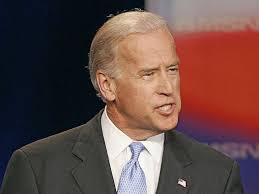
Called for by Vice President Biden in 2004:

The Biden & co plan for federal partition in 2004-5 recognized Iraq civil war for what it was, notable in itself. It accepted US responsibility for putting a mitigating structure in place. 'Fence the sectarian militias in homelands, while safeguarding secular and sectarian blending in the Baghdad belt.' It was an attempt to avert a disaster like Lebanon, Palestine or Bosnia. Hoped for quid pro quo protection of Christian, Turkomen, Persian or imbedded minorities within each partition was bound to be limited, with conflict on the Kurd borderlands evident before we blew our way into Baghdad.

Our feckless six year war of occupation instead saw the destruction of Sunni cities, Baghdad belt chaos and a civil war that killed hundreds of thousands, and displaced 4 millions. The civil war especially impacted the skilled urban middle class that any occupation plan should have protected in place. The occupying force failed to protect even our own translators and informants.

No one can know if early federal partition could have reduced the scope of the Iraq calamity. But Biden should be excused for pointing to constitutional federal provisions during the 2006 melt-down, and the 2007 mission reset that we call 'the surge'.

The barrier to forming any of the 3 'stans' at this time seems to be that no one is able or trusted by Kurd or Sunni to redraw regional boundaries. Shiite and Sunni Arabs remain deeply (lethally) divided within their sectarian communities.

BASARA's return to normalcy after Millitias taken out

There has been a tug of war between the central government and local powers. In the face of a push by regional officials for more autonomy, Iraqi Prime Minister Nuri al-Maliki backs a stronger federal government and wants changes in the constitution to bolster its power.

"The existence of a strong central federal government that is able to preserve the country's unity is not detrimental to the provinces; they will have more support and money to bring about achievements, develop the economy and increase services," al-Maliki said in remarks to crowds Wednesday in Najaf.

Federal region status would give Basra the same legal power as the Kurdistan in northern Iraq.

Basra officials backing federal region status hoped it would have boosted the amount of oil income staying in the region.

Basran politician Wail Abd al-Latif started the drive last month that would give voters the opportunity to make the Shiite-dominated province a federal region. Wail Abd al-Latif, the chief protagonist of the campaign to transform Basra into a standalone federal region, has told Iraqi radio that his project has failed. Abd al-Latif is already talking about the possibility of re-launching his scheme at some future juncture, and his comments echo statements to the press by another supporter of the project,

The month-long petition drive -- which began December 15 and ended January 19 -- needed the signatures of at least 10 percent of the registered voters in the province.

Officials said 135,707 signatures were required but only 32,448 signatures were collected before the deadline.

Another idea for an autonomous region had emerged from the Islamic Supreme Council of Iraq, one of the parties in the ruling United Iraq Alliance. It is looking at a nine-province federal region in the south.

Basra is the only Iraqi province that borders a body of water -- the Shatt al Arab waterway near the Persian Gulf. The province also borders Kuwait and Iran. Cities in the province include Basra city, Umm Qasr and Zubayr.

Freed last year from the grip of militias, Basra has emerged as the main battleground for rival Shiites in elections for control of the oil-rich south — a race that will test the power of religious parties and the influence of neighboring Iran.

The Jan. 31 ballot, in which voters across the country will choose ruling provincial councils, will be the first since U.S.-backed Iraqi forces wrested control of Basra from Shiite militias and criminal gangs.

American officials will be watching the outcome for any sign that the militias might return in Iraq's second largest city of about 2 million people, located only a few miles from the Iranian border.

More than 1,000 candidates have entered the race for Basra's 35 council seats, filling the city's dusty and traffic-choked streets with campaign posters and flyers that give the city a festive look. The outcome will help shape the political future of the southern Shiite heartland ahead of national elections expected by year's end.

Basra has been relatively quiet since last year's military crackdown, which ended three years of Shiite militia rule, rampant crime and turmoil. Today, thousands of national police and army soldiers patrol its streets.

At the commercial heart of the city, the soldiers and policemen rub shoulders with the thousands of residents who throng stores until late into the night. With militiamen off the streets, women are out in public again — some unaccompanied by male chaperons and wearing makeup.

Music CDs and DVDs of Western and Egyptian films are back in the stores. Those items were once banned by militias; merchants who defied the gunmen risked death.

The battle for Basra is now being fought politically, with Shiite religious parties more divided than ever following their emergence as Iraq's dominant political force after the ouster of Saddam Hussein's Sunni-led regime in 2003.

Chief among the competitors in Basra are the Supreme Islamic Iraqi Council, the country's largest Shiite party and Iran's main ally in Iraq, and Fadhila, a smaller religious group that has controlled local government since the last provincial elections in January 2005.

Also in the mix are followers of radical Shiite leader Muqtada al-Sadr, whose influence in Basra significantly diminished after last year's crackdown. Al-Sadr, who lives in exile in Iran, is supporting two lists of candidates running as independents.

The Dawa Party of Prime Minister Nouri al-Maliki is also in the race.

Al-Maliki's popularity soared here after he took on the militias. He is at odds with the Supreme Council over distribution of power between provinces and the central government.

No single party is expected to win a majority of seats. But Fadhila and the Supreme Council, which is allied with al-Maliki in the national government and has been a reliable U.S. ally despite its ties to Iran, are expected to top the winners.

That will likely push them into deals with smaller parties to form a majority.

However, some in Basra predict the two biggest parties will suffer from a voter backlash against religious parties, which many urban Shiites believe have failed to provide public services and jobs.

Still, secular politician Hamed al-Dhalmi believes the religious parties have the money for their candidates to succeed. The Supreme Council can also use its ties to Grand Ayatollah Ali al-Sistani, Iraq's top Shiite cleric, to win votes among Basra's poor Shiites.

"Religious parties are flush with cash, while nonreligious parties hope to take advantage of the popular disillusionment with the religious parties," said al-Dhalmi, a member of Basra's provincial council and a linguistics professor.

"No one knows who will win, but one thing is certain, the political map here will change."

For the parties, the stakes are high.

Basra and the surrounding province contain 70 percent of Iraq's proven oil reserves of 115 billion barrels. The province also includes the country's only outlet to the sea — the Umm Qasr port on the Persian Gulf.

"We are not ready to give up Basra and we are hopeful it will remain in our hands," said Aqeel al-Fereij, a senior Fadhila member of the outgoing Basra provincial council.

The Supreme Council is equally determined to win control of Basra after four years of Fadhila domination.

"Without wanting to sound too confident or too ambitious, we will not be happy with less than the majority that places us in a decision-making position," said Furat al-Sharaa, a local Supreme Council leader and a candidate.

Basra's proximity to Iran has made the city a focus of Iranian efforts to gain influence in post-Saddam Iraq.

The Supreme Council is pushing for the establishment of a self-ruled area in the south, similar to one the Kurds enjoy in the north. Critics believe such a region would be effectively run by Iran, harden religious divisions and lead to the breakup Iraq.

Basra stores are filled with Iranian goods from vegetables and fruits to electrical appliances, eggs and fresh red meat. Iran's consulate has an unusually high profile in the city, throwing frequent banquets, organizing book fairs at the local university and sponsoring scores of visits by local officials to Iran.

Fadhila is taking advantage of the popular perception of its rival as an Iranian ally to promote itself as a nationalist party free of foreign influence.

"Fadhila, a party that is 100 percent Iraqi," declare its campaign posters. "Born in Iraq and Financed by Iraqis," say others.


Sources:

http://www.newsabah.com/look/enarticle.tpl?IdLanguage=17&IdPublication=2&NrArticle=23306&NrIssue=1333&NrSection=26

http://ricks.foreignpolicy.com/posts/2009/01/21/taps_for_bidens_federalist_plan_for_iraq

http://edition.cnn.com/2009/WORLD/meast/01/21/iraq.basra.petition/

Thursday, March 13, 2008

Unclear how U.S. authorities in Iraq obtained the 5 ffingers of missing contractors

From the Washington Post:

Five Severed Fingers Identified as Belonging To Guards Held in Iraq
Four Are From Men Missing 16 Months


By Steve Fainaru
Washington Post Foreign Service
Thursday, March 13, 2008; A12

U.S. authorities are in possession of five severed fingers, four of which belong to private security contractors who were abducted in Iraq nearly 16 months ago and remain missing, according to law enforcement sources close to the investigation.

The fingers were delivered last month to U.S. authorities in Iraq but were not accompanied by a ransom demand or other information, according to sources. Fingerprint and DNA analysis determined that they were removed from four of five guards taken hostage during an ambush near the Kuwaiti border on Nov. 16, 2006.

The missing guards, four Americans and an Austrian, worked for Kuwait-based Crescent Security Group. The fifth severed finger was taken from an American contractor seized separately but reportedly held with the other missing men, the sources said.

U.S. authorities have been unable to determine whether the fingers were removed from corpses or while the men were alive, according to the sources, who spoke on condition of anonymity because the investigation is ongoing. The fingers were partially decomposed at the time they were obtained.

"There's no way to accurately depict at this point whether it was prior to or after; scientifically I don't think they've been able to determine that," said a source familiar with the investigation. "It's possible they were removed while they were still alive and possible they were removed after they were dead."

The four Crescent contractors whose fingers have been identified are Jonathon Cote, 25, of Getzville, N.Y.; Paul Reuben, 41, of Buffalo, Minn.; Joshua Munns, 25, of Redding, Calif.; and Bert Nussbaumer, 26, of Vienna, Austria. The fifth finger belonged to Ronald J. Withrow, 40, of Lubbock, Tex., a contractor and computer specialist for JPI Worldwide who was abducted Jan. 5, 2007, near Basra.

John Young, 45, of Lee's Summit, Mo., is also missing, but none of his fingers was among those forwarded to U.S. authorities. Young was the Crescent Security team leader the day of the attack.

The grisly disclosure first appeared in News, an Austrian newsweekly. By late Wednesday, after word of the developments spread, the FBI began contacting families and confirming the reports. But the delay led to widespread confusion among the families.

The families were informed by the FBI last month that DNA and fingerprint evidence of the hostages had been discovered, according to relatives, but no additional information was provided.

Jackie Stewart, the mother of Munns, a former U.S. Marine, said she spoke with a local FBI agent Wednesday morning after the reports of severed fingers began to circulate among the families.

"She told me, 'We have no confirmed reports that any of this is true,' " Stewart said. "She said, 'I just don't think it would be anything that macabre.' "

Stewart, of Richfield, Wash., said she believed that the FBI agent, who is based in Seattle, was misinformed and that the FBI in Washington "was not passing the information down the food chain."

Patrick Reuben, whose twin brother, Paul, was Crescent's medic, said he received a call from his 17-year-old niece Wednesday morning asking him whether her father was dead. Reuben, a Minnesota police officer, called a reporter seeking more information.

"I can't get any information out of the government," he said.

FBI spokesman Richard Kolko declined to comment on complaints that the families were not being kept informed.

"The FBI's Office of Victim Assistance has offered its service to the U.S. families involved in this matter," Kolko said.

It was unclear how U.S. authorities in Iraq obtained the fingers. The fingers were shipped to forensic specialists at Quantico, Va., for fingerprint and DNA analysis. Cote's, Reuben's and Withrow's were identified first. Those of Munns and Nussbaumer were identified later, according to a source.

The Crescent team was ambushed in broad daylight on Iraq's main highway while protecting a supply convoy. Crescent was under a contract to the Italian military, which was withdrawing its troops from the country. The company, which was later expelled from Iraq for weapons violations, came under withering criticism from U.S. officials and security experts for its lax safety measures. On the day of the attack, just seven security contractors were protecting a 37-truck convoy that stretched more than a mile.

From the beginning, the case has baffled U.S. investigators. The hostages have not been seen since a Jan. 3, 2007, video, time-stamped Dec. 21 and Dec. 22 and apparently recorded by their captors, who identified themselves as an Iranian-backed group and called for the withdrawal of U.S. troops from Iraq. There have been no ransom demands.

Crescent's managing partner, Franco Picco, said Wednesday in a telephone interview from Kuwait that he continued to believe the hostages were alive.

"The fact is, what reason would they have to kill them, first and foremost?" he said. "And no one has found any bodies, you know? All the information we have tends us to believe that they are alive."

Staff researcher Julie Tate contributed to this report.

Friday, March 09, 2007

Maliki Stops Cooperating with the British


Prime Minister Maliki Suspends Cooperation With UK Forces as Fallout From Sunday's Basra Raid Continues.

Prime Minister Nuri al-Maliki plans to suspend cooperation with British forces in southern Iraq until the completion of an investigation into the Sunday raid on Basra's police headquarters, according to statements made by Minister of State for National Assembly Affairs Safa al-Din Mohammed al-Safi and reported on Alsumeria TV.

Alsumeria also reported that Maliki may file an official complaint with the UN Security Council if the investigation reveals any wrongdoing.

Maliki has called the operation by British and Iraqi forces an "illegal and irresponsible" act and an invasion of Iraq's sovereignty. According to the BBC, the conflict in Basra between the Iraqi government and British forces is part of a larger nationwide pattern. "This is not the first time, even in recent weeks, that British troops have had to carry out such "unlawful and irresponsible acts" - that is go into

The Other Side of the Story:
Raid on Iraq agency finds 30 prisoners

Some appear tortured, raising questions on Shiite leadership

08:28 AM CST on Friday, March 9, 2007

The New York Times

BAGHDAD, Iraq – Iraqi forces and British troops stormed the offices of an Iraqi government intelligence agency in the southern city of Basra on Sunday, and British officials said they discovered about 30 prisoners, some showing signs of torture.

The raid appeared to catch Iraq's central government by surprise and raised new questions about the rule of law in the Shiite-dominated south, where less than two weeks ago Britain announced plans for a significant reduction in its forces because of improved stability.

News of the Basra raid, with its resonant themes of torture and sectarian-driven conflict, overshadowed the next stage of the intensified security plan in Baghdad, where more than 1,100 U.S. and Iraqi soldiers moved into the Shiite enclave of Sadr City, a stronghold of Iraq's largest Shiite militia. The soldiers met no resistance in what the Americans called the biggest test of the security plan.

Prime Minister Nouri al-Maliki, who derives major support from Shiite political groups, condemned the raid in Basra. He said nothing about the evidence of torture.

"The prime minister has ordered an immediate investigation into the incident of breaking into the security compound in Basra and stressed the need to punish those who have carried out this illegal and irresponsible act," said the full text of a statement issued late Sunday by his office.


It remained unclear why he sought to aggressively pursue the raiding force rather than the accusations of prisoner abuse. Efforts to reach officials in his office were unsuccessful.

The discovery of prisoners in the Basra offices, which the British described as the headquarters of Iraq's government intelligence agency, echoed other recent cases in which U.S. or British forces stumbled on a government-run detention center that held people showing signs of torture.

As recently as December, a combined force of British and Iraqi troops assaulted a police station in Basra and rescued 127 prisoners from fetid conditions. Some of the prisoners had been tortured.

The most significant case involved a secret Baghdad prison run by the Shiite-controlled Interior Ministry, known as Site 4, where more than 1,400 prisoners were discovered in cramped, squalid conditions, and some had been subjected to systematic abuse.

Mr. al-Maliki has been under considerable pressure, particularly from U.S. officials and Sunni Arab leaders, to rid the country's Shiite-run security and intelligence forces of militia influence and human rights abuses. U.S. officials have warned Iraqi leaders that they might curtail aid to the Interior Ministry, which runs the country's police forces, if officials who commit "gross violations of human rights" are not held accountable.

The Interior Ministry, dominated by Shiites, has long been accused by Sunnis of complicity in torture and killings.

The identities of the Basra detainees were unclear, and a spokesman for the British military command in Basra, Maj. David Gell, said he could not provide any further information. Reuters news agency said the detainees included a woman and two children.

The raid in Basra came as the British command is planning a reduction of up to 1,600 of its 7,200 troops, a decision governed by the British government's assessment that Iraqi forces are strong enough to manage the security of the region on their own.

In announcing the reduction Feb. 22, British Prime Minister Tony Blair said that while the Basra area remained dangerous, British troops faced far less violence than Americans farther north and that "the next chapter in Basra's history can be written by Iraqis."

It was unclear whether the raid would lead to a re-evaluation of Mr. Blair's assessment. Maj. Gell would not comment on that question in a telephone interview early today. Maj. Gell said the intelligence agency office was raided after an early investigation led to the capture of five suspected bomb- makers and evidence that pointed to possible violations at the agency's offices. "Evidence of significant criminal activity, such as torture, was found," he said.

ALSO TODAY IN THE WAR


Elsewhere, the U.S. command said Sunday that one Marine and one sailor were killed Friday while conducting a combat mission in Anbar province. Another Marine was killed on Saturday, also while on a combat mission in Anbar.

U.S. soldiers in Baghdad raided a mosque on Sunday and captured three suspected insurgents hiding inside, according to the U.S. military.

In the western Baghdad neighborhood of al-Jameaa, authorities discovered the bodies of eight Shiite pilgrims who were apparently on their way to a holy city south of the capital to celebrate an Islamic holiday this weekend. The bodies were handcuffed and had bullet holes in their heads, according to an official at Yarmouk Hospital.

In Hillah, a bomb killed four other Shiite pilgrims – three women and a child – on their way to Karbala, one of the southern holy cities. The bomb was apparently targeting an American convoy but missed, according to an official at the Interior Ministry. Two others were wounded in the attack.

Nuri al-Maliki

• Born in the mid-1950s in Hindiya, south of the Shiite holy city of Karbala
• Joined Dawa Party, the main Shiite opposition to Saddam Hussein
• Fled Iraq and changed his first name in 1980 after being sentenced to death for Dawa membership
• Lived in Iran and Syria, where he directed activists inside Iraq
• Returned to Iraq after Saddam Hussein's regime fell, and was elected to parliament in January 2005
• Helped purge Hussein loyalists from the military and government after the war as member of De-Baathification Commission
• Negotiated with Sunnis and Kurds over Iraq's postwar constitution
• Has a son and three daughters

Source: CNN, Associated Press

Wednesday, October 18, 2006

Iraq war -It's about the oil remember

Bush's Petro-Cartel Almost Has Iraq's Oil

By Joshua Holland, AlterNet
Posted on October 16, 2006, Printed on October 18, 2006
http://www.alternet.org/story/43045/

Editor's note: This is the first of a two-part series. Go here to read the second installment.

Iraq is sitting on a mother lode of some of the lightest, sweetest, most profitable crude oil on earth, and the rules that will determine who will control it and on what terms are about to be set.

The Iraqi government faces a December deadline, imposed by the world's wealthiest countries, to complete its final oil law. Industry analysts expect that the result will be a radical departure from the laws governing the country's oil-rich neighbors, giving foreign multinationals a much higher rate of return than with other major oil producers and locking in their control over what George Bush called Iraq's "patrimony" for decades, regardless of what kind of policies future elected governments might want to pursue.

Iraq's energy reserves are an incredibly rich prize. According to the U.S. Department of Energy, "Iraq contains 112 billion barrels of proven oil reserves, the second largest in the world (behind Saudi Arabia), along with roughly 220 billion barrels of probable and possible resources. Iraq's true potential may be far greater than this, however, as the country is relatively unexplored due to years of war and sanctions." For perspective, the Saudis have 260 billion barrels of proven reserves.

Iraqi oil is close to the surface and easy to extract, making it all the more profitable. James Paul, executive director of the Global Policy Forum, points out that oil companies "can produce a barrel of Iraqi oil for less than $1.50 and possibly as little as $1, including all exploration, oilfield development and production costs." Contrast that with other areas where oil is considered cheap to produce at $5 per barrel or the North Sea, where production costs are $12-16 per barrel.

And Iraq's oil sector is largely undeveloped. Former Iraqi Oil Minister Issam Chalabi (no relation to the neocons' favorite exile, Ahmed Chalabi) told the Associated Press that "Iraq has more oil fields that have been discovered, but not developed, than any other country in the world." British-based analyst Mohammad Al-Gallani told the Canadian Press that of 526 prospective drilling sites, just 125 have been opened.

But the real gem -- what one oil consultant called the "Holy Grail" of the industry -- lies in Iraq's vast western desert. It's one of the last "virgin" fields on the planet, and it has the potential to catapult Iraq to No. 1 in the world in oil reserves. Sparsely populated, the western fields are less prone to sabotage than the country's current centers of production in the north, near Kirkuk, and in the south near Basra. The Nation's Aram Roston predicts Iraq's western desert will yield "untold riches."

Iraq also may have large natural gas deposits that so far remain virtually unexplored.

But even "untold riches" don't tell the whole story. Depending on how Iraq's petroleum law shakes out, the country's enormous reserves could break the back of OPEC, a wet dream in Western capitals for three decades. James Paul predicted that "even before Iraq had reached its full production potential of 8 million barrels or more per day, the companies would gain huge leverage over the international oil system. OPEC would be weakened by the withdrawal of one of its key producers from the OPEC quota system." Depending on how things shape up in the next few months, Western oil companies could end up controlling the country's output levels, or the government, heavily influenced by the United States, could even pull out of the cartel entirely.

Both independent analysts and officials within Iraq's Oil Ministry anticipate that when all is said and done, the big winners in Iraq will be the Big Four -- the American firms Exxon-Mobile and Chevron, the British BP-Amoco and Royal Dutch-Shell -- that dominate the world oil market. Ibrahim Mohammed, an industry consultant with close contacts in the Iraqi Oil Ministry, told the Associated Press that there's a universal belief among ministry staff that the major U.S. companies will win the lion's share of contracts. "The feeling is that the new government is going to be influenced by the United States," he said.

During the 12-year sanction period, the Big Four were forced to sit on the sidelines while the government of Saddam Hussein cut deals with the Chinese, French, Russians and others (despite the sanctions, the United States ultimately received 37 percent of Iraq's oil during that period, according to the independent committee that investigated the oil-for-food program, but almost all of it arrived through foreign firms). In a 1999 speech, Dick Cheney, then CEO of the oil services company Halliburton, told a London audience that the Middle East was where the West would find the additional 50 million barrels of oil per day that he predicted it would need by 2010, but, he lamented, "while even though companies are anxious for greater access there, progress continues to be slow."

Chafing at the idea that the Chinese and Russians might end up with what is arguably the world's greatest energy prize, industry leaders lobbied hard for regime change throughout the 1990s. With the election of George W. Bush and Dick Cheney in 2000 -- the first time in U.S. history that two veterans of the oil industry had ever occupied the nation's top two jobs -- they would finally get the "greater access" to the region's oil wealth, which they had long lusted after.

If the U.S. invasion of Iraq had occurred during the colonial era a hundred years earlier, the oil giants, backed by U.S. forces, would have simply seized Iraq's oil fields. Much has changed since then in terms of international custom and law (when then-Deputy Secretary of Defense Paul Wolfowitz did in fact suggest seizing Iraq's Southern oil fields in 2002, Colin Powell dismissed the idea as "lunacy").

Understanding how Big Oil came to this point, poised to take effective control of the bulk of the country's reserves while they remain, technically, in the hands of the Iraqi government -- a government with all the trappings of sovereignty -- is to grasp the sometimes intricate dance that is modern neocolonialism. The Iraq oil grab is a classic case study.

It's clear that the U.S.-led invasion had little to do with national security or the events of Sept. 11. Former Treasury Secretary Paul O'Neill revealed that just 11 days after Bush's inauguration in early 2001, regime change in Iraq was "Topic A" among the administration's national security staff, and former Terrorism Tsar Richard Clarke told 60 Minutes that the day after the attacks in New York and Washington occurred, "[Secretary of Defense Donald] Rumsfeld was saying that we needed to bomb Iraq." He added: "We all said … no, no. Al-Qaeda is in Afghanistan."

On March 7, 2003, two weeks before the United States attacked Iraq, the U.N.'s chief weapons inspector, Hans Blix, told the U.N. Security Council that Saddam Hussein's cooperation with the inspections protocol had improved to the point where it was "active or even proactive," and that the inspectors would be able to certify that Iraq was free of prohibited weapons within a few months' time. That same day, IAEA head Mohammed ElBaradei reported that there was no evidence of a current nuclear program in Iraq and flatly refuted the administration's claim that the infamous aluminum tubes cited by Colin Powell in making his case for war before the Security Council were part of a reconstituted nuclear program.

But serious planning for the war had begun in February of 2002, as Bob Woodward revealed in his book, Plan of Attack. Planning for the future of Iraq's oil wealth had been under way for longer still.

In February of 2001, just weeks after Bush was sworn in, the same energy executives that had been lobbying for Saddam's ouster gathered at the White House to participate in Dick Cheney's now infamous Energy Task Force. Although Cheney would go all the way to the Supreme Court to keep what happened at those meetings a secret, we do know a few things, thanks to documents obtained by the conservative legal group JudicialWatch. As Mark Levine wrote in The Nation($$):

… a map of Iraq and an accompanying list of "Iraq oil foreign suitors" were the center of discussion. The map erased all features of the country save the location of its main oil deposits, divided into nine exploration blocks. The accompanying list of suitors revealed that dozens of companies from 30 countries -- but not the United States -- were either in discussions over or in direct negotiations for rights to some of the best remaining oilfields on earth.

Levine wrote, "It's not hard to surmise how the participants in these meetings felt about this situation."

According to the New Yorker, at the same time, a top-secret National Security Council memo directed NSC staff to "cooperate fully with the Energy Task Force as it considered melding two seemingly unrelated areas of policy." The administration's national security team was to join "the review of operational policies towards rogue states such as Iraq and actions regarding the capture of new and existing oil and gas fields."

At the State Department, planning was also underway. Under the auspices of the "Future of Iraq Project," an "Oil and Energy Working Group" was established. The full membership of the group -- described by the Financial Times as "Iraqi oil experts, international consultants" and State Department staffers -- remains classified, but among them, according to Antonia Juhasz's "The Bush Agenda," was Ibrahim Bahr al-Uloum, who would serve in Iyad Allawi's cabinet during the period of the Iraqi Governing Council, and later as Iraq's oil minister in 2005. The group concluded that Iraq's oil "should be opened to international oil companies as quickly as possible after the war."

But the execs from Big Oil didn't just want access to Iraq's oil; they wanted access on terms that would be inconceivable unless negotiated at the barrel of a gun. Specifically, they wanted an Iraqi government that would enter into production service agreements (PSAs) for the extraction of Iraq's oil.

PSAs, developed in the 1960s, are a tool of today's kinder, gentler neocolonialism; they allow countries to retain technical ownership over energy reserves but, in actuality, lock in multinationals' control and extremely high profit margins -- up to 13 times oil companies' minimum target, according to an analysis by the British-based oil watchdog Platform (PDF).

As Greg Muttit, an analyst with the group, notes:

Such contracts are often used in countries with small or difficult oilfields, or where high-risk exploration is required. They are not generally used in countries like Iraq, where there are large fields which are already known and which are cheap to extract. For example, they are not used in Iran, Kuwait or Saudi Arabia, all of which maintain state control of oil.

In fact, Muttit adds, of the seven leading oil producing countries, only Russia has entered into PSAs, and those were signed during its own economic "shock therapy" in the early 1990s. A number of Iraq's oil-rich neighbors have constitutions that specifically prohibit foreign control over their energy reserves.

PSAs often have long terms -- up to 40 years -- and contain "stabilization clauses" that protect them from future legislative changes. As Muttit points out, future governments "could be constrained in their ability to pass new laws or policies." That means, for example, that if a future elected Iraqi government "wanted to pass a human rights law, or wanted to introduce a minimum wage [and it] affected the company's profits, either the law would not apply to the company's operations or the government would have to compensate the company for any reduction in profits." It's Sovereignty Lite.

The deals are so onerous that they govern only 12 percent of the world's oil reserves, according to the International Energy Agency. Nonetheless, PSAs would become the Future of Iraq Project's recommendation for the fledgling Iraqi government. According to the Financial Times, "many in the group" fought for the contract structure; a Kurdish delegate told the FT, "everybody keeps coming back to PSAs."

Of course, the plans for Iraq's legal framework for oil have to be viewed in the context of the overall transformation of the Iraqi economy. Clearly, the idea was to pursue a radical corporatist agenda during the period of the Coalition Provisional Authority when the U.S. occupation forces were a de facto dictatorship. And that's just what happened; under L. Paul Bremer, the CPA head, corporate taxes were slashed, a flat-tax on income was established, rules allowing multinationals to pull all of their profits from the country and a series of other provisions were enacted. These were then integrated into the Iraqi Constitution and remain in effect today.

Among the provisions in the Constitution, unlike those of most oil producers, is a requirement that the government "develop oil and gas wealth … relying on the most modern techniques of market principles and encouraging investment." The provision mandates that foreign companies would receive a major stake in Iraq's oil for the first time in the 30 years since the sector was nationalized in 1975.

Herbert Docena, a researcher with the NGO Focus on the Global South, wrote that an early draft of the constitution negotiated by Iraqis envisioned a "Scandinavian-style welfare system in the Arabian desert, with Iraq's vast oil wealth to be spent upholding every Iraqi's right to education, health care, housing, and other social services." "Social justice," the draft declared, "is the basis of building society."

What happened between that earlier draft and the constitution that Iraqis would eventually ratify? According to Docena:

While [U.S. Ambassador to Iraq Zalmay] Khalilzad and his team of U.S. and British diplomats were all over the scene, some members of Iraq's constitutional committee were reduced to bystanders. One Shiite member grumbled, "We haven't played much of a role in drafting the constitution. We feel that we have been neglected." A Sunni negotiator concluded: "This constitution was cooked up in an American kitchen not an Iraqi one."

With a constitution cooked up in D.C., the stage was set for foreign multinationals to assume effective control of as much as 87 percent of Iraq's oil, according to projections by the Oil Ministry. If PSAs become the law of the land -- and there are other contractual arrangements that would allow private companies to invest in the sector without giving them the same degree of control or such usurious profits -- the war-torn country stands to lose up to 194 billion vitally important dollars in revenue on just the first 12 fields developed, according to a conservative estimate by Platform (the estimate assumes oil at $40 per barrel; at this writing it stands at more than $59). That's more than six times the country's annual budget.

To complete the rip-off, the occupying coalition would have to crush Iraqi resistance, make sure it had friendly people in the right places in Iraq's emerging elite and lock the new Iraqi government onto a path that would lead to the Big Four's desired outcome.

See part two tomorrow.

Joshua Holland is an AlterNet staff writer.

© 2006 Independent Media Institute. All rights reserved.
View this story online at: http://www.alternet.org/story/43045/
ccc

amazon quicklinker

Favorites linker

google adds