Showing posts with label Sunni. Show all posts

Saturday, January 31, 2009

Iraq Election Day Peacefull and Inclusive

Prime Minister of Iraq Nouri Maliki cast his vote.

"A new dawn, God willing," said Sabah Bashir Hassan, known as Abu Talib, who leads thousands of former insurgents and others in the Popular Committees, the name here for the U.S.-backed Sunni militia that fought the insurgent group al-Qaeda in Iraq.

"To me, the elections represent the point between darkness and light," the Sunni leader said. "Everybody wants to turn a page on the past. We're turning a new page over today."

Iraqis vote in provincial elections under tight security. The vote is seen as a test for the nation's stability as the U.S. weighs dialing down its troop presence here.

US President Barack Obama has congratulated Iraqis for holding a largely peaceful vote for provincial councils across the country.

He called the elections "an important step forward" for Iraqi self-determination.

Mr Obama urged the newly elected councils to "get seated, select new governors, and begin work on behalf of the Iraqi people who elected them".


The elections were held in 14 of the country's 18 provinces, with more than 14,000 candidates competing for just 440 seats.

There was no voting in the three provinces of the semi-autonomous Kurdish region of the north and the ballot was postponed in oil-rich Kirkuk province.

There was a strong turn-out in Sunni areas, which boycotted the last polls.

The first nationwide vote in four years is seen as a test of stability before a general election due later this year.

Displaced Kurds Demanded Vote
Hundreds of Iraqi Kurds stormed an electoral commission office in northeast Iraq on Saturday claiming they were displaced residents of Khanaqin and demanding to vote, an official said.

“The Kurds entered the election commission office and asked to vote because they said they were people displaced by Saddam Hussein,” an official from the electoral commission told AFP.

The issue was resolved when those holding identification from Khanaqin were allowed to vote in the provincial elections that were held on Saturday, the official added.

During Saddam’s reign tens of thousands of Kurds were forced to relocate to the Kurd regions in northern Iraq, as part of the dictator’s Arabisation plans.

Many of those 16,000 residents have returned in the wake of the 2003 US-invasion which deposed Saddam, renewing tensions and sparking rival territorial claims between Kurds and Arab Shiites.

The town of Khanaqin in northeast Diyala province is near the border with Iran and holds sizeable oil reserves.

The local Kurdish political leadership has called for Khanaqin to join the adjoining autonomous Kurdish region in northern Iraq

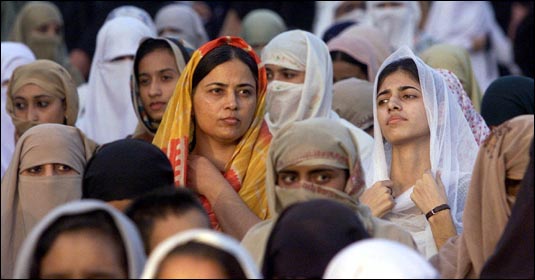
Four thousand women are running for office in Iraq

BAGHDAD, Iraq (CNN) -- Four thousand women are running for office in Iraq's provincial elections Saturday, and many of them will be guaranteed seats under an electoral quota system.

Iraqi women show off their ink-stained fingers after voting Saturday in Baghdad.

Iraqi women show off their ink-stained fingers after voting Saturday in Baghdad.

Regardless of the votes their candidates receive, parties are required to give every third seat to a woman, according to a report this week from the International Crisis Group.

The ultimate share of seats held by women will depend on the distribution of votes among parties, the report said.

Some women candidates say these elections -- only the second provincial elections since the fall of Saddam Hussein -- are a chance to improve their standing in Iraqi society.

Nibras al-Mamuri is a secular female candidate who argues that fundamentalists have taken over the country. She says it was the 2005 elections that brought them into power and tarnished Islam's image in Iraq.

Al-Mamuri, who is running for the Baghdad provincial council, says it's time for a change. Video

"Although a woman's role in the Arab world is mainly that of a mother and child bearer," she said, "I want to prove that women are just as capable as men when it comes to challenging

At first, al-Mamuri said, she thought just participating in the elections as a woman was enough. But now, she says she is running to win in order to defy men who believe a woman's place is in the home.

"I've entered a battlefield where women have to prove they are competent," she said. "I have to forget about fear."

In recent years, Iraqi women have been targeted by extremists for a variety of reasons -- from not covering their hair to entering the political arena.

Under Hussein, Iraq was one of the more secular Arab countries, but the 2003 U.S. invasion unleashed extremist militias. Now, many activists say women have been forced back to the Dark Ages, forced to be submissive, anonymous and fully veiled.

Al-Mamuri said she believes Saturday's vote can help women improve their position in society.

"An Iraqi woman can be an equal. She can participate in change," she told CNN.

The image of a woman posing a public and direct challenge to fundamentalists and their beliefs was not seen in the 2005 vote.

advertisement

"Iraqi women form the core of society," said Rissala Khalid, another female candidate in Baghdad.

Passing out her campaign card, Khalid told young women that she will fight for their rights, and told young men that she will try to provide jobs for Iraq's largely unemployed youth.

references:
http://baghdadbureau.blogs.nytimes.com/2009/01/31/kirkuk-the-province-that-couldnt-vote/?partner=rss
http://www.cnn.com/2009/WORLD/meast/01/31/iraq.women/index.html
http://news.bbc.co.uk/2/hi/middle_east/7863342.stm
http://www.khaleejtimes.com/DisplayArticleNew.asp?col=&section=middleeast&xfile=data/middleeast/2009/January/middleeast_January603.xml

Monday, November 17, 2008

Iraq may pass a security pact letting US stay till 2011


Nov. 17: U.S. Ambassador to Iraq, Ryan Crocker, left, and Iraqi FM Hoshyar Zebar shake hands after a signing ceremony for U.S.-Iraq security pact.

BAGHDAD — Iraqi lawmakers Monday began debate over a pact with the United States that will allow U.S. forces to remain for three more years, while an Iranian official close to that country's leadership praised the Iraqi Cabinet for approving the deal.

The comments from Iran's judiciary chief marked the first time that the deal has met with clear-cut approval in neighboring Iran. Meanwhile, Syria, target of a deadly cross-border raid by U.S. forces in recent weeks, criticized the deal as virtual surrender to America.

More than two-thirds of the 275-seat legislature attended Monday's session, raising confidence that parliament will be able to muster a quorum for the Nov. 24 vote. The session ended after the agreement's text was read to lawmakers, the first step to adopt legislation.

Lawmakers are expected to meet again on Tuesday.

The proposed Status of Forces Agreement not only sets a date for American troop withdrawal - 2011 - but also puts new restrictions on US combat operations in Iraq starting on January 1 and requires a military pullback from urban areas by June 30. The pact goes before parliament in a week or so.

For the deal to go as planned, the security situation must keep improving.

The U.S. signed similar security pacts with Germany and Japan after World War II, and South Korea after the conflict there. In each case a sizeable contingent of U.S. troops remains. Today, there are 56,200 U.S. servicemembers in Germany, 33,100 in Japan and 26,300 in South Korea.

Can Obama change what is being done now, when he becomes President?


The pact can be changed if either President-elect Barack Obama, who takes office Jan. 20, or the Iraqis want to alter it. Each side has the right to repeal the agreement after giving one year's notice, a senior Iraqi lawmaker has said.

Obama Vows to Close Guantanamo

In his first television interview since the election, President-elect Barack Obama said Sunday he plans to close the US military prison at Guantanamo Bay and rebuild the nation’s moral stature. His comments came in an interview with Steve Kroft on 60 Minutes.

Steve Kroft: “There are a number of different things that you could do early on pertaining to executive orders.”

Barack Obama: “Right.”

Kroft: “One of them is to shut down Guantanamo Bay. Another is to change interrogation methods that are used by US troops. Are those things that you plan to take early action on?”

Obama: “Yes. I have said repeatedly that I intend to close Guantanamo, and I will follow through on that. I have said repeatedly that America doesn’t torture, and I’m going to make sure that we don’t torture. Those are part and parcel of an effort to regain America’s moral stature in the world.”


Syrian minister criticizes Iraq-U.S. security pact

Syria's information minister says the security pact with the U.S. approved by the Iraqi Cabinet amounts to an "award to the occupiers" of Iraq.

After months of haggling, the Iraqi Cabinet on Sunday approved the pact that would keep U.S. troops in Iraq for three more years. The deal is to go before the Iraqi parliament for final approval later in November.

Syria's information minister, Mohsen Bilal, told the AP on Monday that rather than rewarding the U.S. occupiers with the pact, Iraqis should get an apology from Washington for the damage done to their country.

Iraqi neighbors and U.S. adversaries Iran and Syria have opposed the pact in the past and say an immediate withdrawal of U.S. forces would be the best solution.

Last month, the U.S. launched a cross-border assault against a Syrian village allegedly used to smuggle foreign fighters into Iraq. The deal contains conditions that the U.S. not use Iraqi land to launch attacks against any neighboring country.

The proposed Status of Forces Agreement not only sets a date for American troop withdrawal - 2011 - but also puts new restrictions on US combat operations in Iraq starting on January 1 and requires a military pullback from urban areas by June 30. The pact goes before parliament in a week or so.

Internal Iraqi opposition

The 30-strong Sadrist bloc will move heaven and Earth - including massive nationwide protests - to bloc the pact in the Iraqi National Assembly.

Sadrist spokesman Ahmed al-Masoudi stressed this Sunday thatthe pact "did not mean anything" and "hands Iraq over on a golden platter and for an indefinite period".

Masoudi is right on the money when he says the overwhelming majority of popular opinion is against it and the Sadrists and many Sunni parties insist a popular referendum to approve it is essential.

Shi'ite leader Muqtada al-Sadr's position is and has always been "end the occupation now". That happens to be the same view from Tehran: the pact further extends Iraq's agony as an American colony.


Iran's unusual positive stance


Iranian state TV has been spinning it as a victory for the Maliki government - stressing the US was forced to make concessions (in fact Maliki did not extract all the concessions he wanted in terms of prosecuting US troops for crimes in Iraq . The pact calls for joint panels of U.S. and Iraqi judges to try cases involving serious crimes committed by off-duty U.S. servicemembers in Iraq. So while Iraqi judges would be involved, the U.S. would not cede full jurisdiction to them. Second, it is almost unheard of for a U.S. troop to be off duty and off base in Iraq.).

However, last week, a spokesman for the Grand Ayatollah Ali Sistani in Iraq said he would "directly intervene" if he felt the pact was against Iraqi sovereignty.


Will Iran Move in?


"Many Iraqis suspect that Iran wants to annex southern Iraq, which is over 80 percent Shia, has the major Shia holy places and oil fields that would increase Iranian exports by over 50 percent."

Refrences

http://www.usatoday.com/news/world/iraq/2008-11-17-syria-iraq-us_N.htm#uslPageReturn

http://www.foxnews.com/story/0,2933,453029,00.html

http://www.usatoday.com/news/world/iraq/2008-11-16-iraqdealqna_N.htm
http://www.google.com/hostednews/ap/article/ALeqM5hwK_CSpBxsNuVUEaDuOwmSSCiqGwD94GPUGG0

http://www.atimes.com/atimes/Middle_East/JK18Ak01.html

Tuesday, August 26, 2008

Shi ite Prime Minister Maliki wants US out for his ani-Sunni agenda


In the following Opinion article we are informed that as Prime Minister Maliki is about to re-continue his religious based persecution of the Sunni's.

This comes just after he demands for a time table for an actual US pullout:

BAGHDAD -- Iraqi Prime Minister Nouri Maliki said Monday that an agreement on the future of U.S. forces in Iraq must include a firm withdrawal date and that Iraq wants them out of the country by the end of 2011.

It was the first time Maliki explicitly demanded a fixed deadline for the departure of all U.S. troops from Iraq. His words appeared to rule out the presence of any U.S. military advisors, special forces and air support after the withdrawal date.


The answer to the question- can't they all just get along seems clearly- no. History has shown us that these religious groups cannot co-exist without the threat of force (such as Saddam provided, and now we the US provide. In the name of keeping the peace since overthrowing Saddam we have killed and tortured many more than he did in a shorter amount of time.)


Opinion
Baghdad's misguided crackdown on the Sons of Iraq
Prime Minister Maliki's Shiite-dominated government risks security gains by taking on U.S.-backed Sunni forces.
By Shawn Brimley and Colin Kahl
August 26, 2008


There is a gathering storm on Iraq's horizon. Over the last several weeks, its central government has embarked on what appears to be an effort to arrest, drive away or otherwise intimidate tens of thousands of Sunni security volunteers -- the so-called Sons of Iraq -- whose contributions have been crucial to recent security gains. After returning from a trip to Iraq last month at the invitation of Army Gen. David H. Petraeus, the U.S. commander in Iraq, we are convinced that if Iraqi Prime Minister Nouri Maliki and his advisors persist in this sectarian agenda, the country may spiral back into chaos.

Much of Iraq's dramatic security progress can be traced to a series of decisions made by Sunni tribal leaders in late 2006 to turn against Al Qaeda in Iraq and cooperate with American forces in Anbar province. These leaders, outraged by Al Qaeda's brutality against their people, approached the U.S. military with an offer it couldn't refuse: Enter into an alliance with the tribes, and they would turn their weapons against Al Qaeda rather than American troops.

Throughout 2007, U.S. commanders capitalized on this Sunni movement, the so-called Awakening, to create an expanding network of alliances with Sunni tribes and former insurgents that helped turn the tide and drive Al Qaeda in Iraq to near extinction. There are now about 100,000 armed Sons of Iraq, each paid $300 a month by U.S. forces to provide security in local neighborhoods throughout the country. In recognition of the key role the Awakening played in security improvements, President Bush met with several Sunni tribal leaders during his trip to Anbar last September, and Petraeus, who cites the program as a critical factor explaining the decline in violence, has promised to "not walk away from them."


But Iraq's predominantly Shiite central government seems intent on doing precisely that. Maliki and his advisors never really accepted the Sunni Awakening, and they remain convinced that the movement is simply a way for Sunni insurgents to buy time to restart a campaign of violence or to infiltrate the state's security apparatus. In 2007, with Iraq's government weak and its military not yet ready to take the lead in operations, the Maliki government acquiesced to the U.S.-led initiative and grudgingly agreed to integrate 20% of the Sons of Iraq into the Iraqi security forces. Now, a newly confident Maliki government is edging away from this commitment.

During our trip, a common theme among U.S. military commanders, intelligence officers, diplomats and Iraqi political leaders we spoke with was the growing hubris of Maliki and his closest advisors. Recent government successes in Basra, Sadr City and Mosul seem to have convinced Maliki's inner circle that Iraq's army does not need American help as much as it used to. A newly emboldened prime minister is now moving out aggressively against his adversaries, including the Sons of Iraq.

Plans to integrate these Sunni fighters into Iraq's security forces or provide them with civilian employment have been consistently "slow rolled." While Maliki has committed to incorporate 20% of the 100,000 Sons of Iraq members under U.S. contract into Iraq's army or police forces by the end of this year, only a small fraction have actually been hired. When asked if the Iraqi government had created stumbling blocks to integrating the Sons of Iraq, Petraeus said in a recent interview, "That certainly has been the case."

It gets worse. Over the last several weeks, Iraqi army units and special operations forces (which report directly to Maliki) have arrested Sons of Iraq leaders, dismantled checkpoints and otherwise harassed local security volunteers in Diyala province and greater Baghdad. There are reportedly plans to detain hundreds of Sons of Iraq members in the coming weeks. "These people are like cancer, and we must remove them," an Iraqi army general in Abu Ghraib, a Baghdad suburb, told a reporter last week. Another Iraqi commander in Baghdad confided, "We cannot stand them, and we detained many of them recently," before telling that reporter of plans to instigate a major crackdown as early as November.

We talked to a number of tribal and Sons of Iraq leaders during our trip. When asked what would happen if the Maliki government did not keep its word and integrate or otherwise accommodate their members, one leader was blunt: "There will be trouble."

It is obvious where this road might end. The last time tens of thousands of armed Sunni men were humiliated in Iraq -- by disbanding the Baath Party and Iraqi army in May 2003 -- an insurgency began, costing thousands of U.S. lives and throwing Iraq into chaos. Yet Maliki and his advisors risk provoking Iraq's Sunni community into another round of violence.

The rising tensions in Iraq reveal a weakness in U.S. strategy and the Bush administration's approach to the war: the unconditional nature of our support to Maliki's government.

The "surge" strategy in Iraq, as described by President Bush in January 2007, rested on the belief that tamping down violence would provide a window of opportunity that Iraq's leaders would use to pursue political reconciliation. But this has not occurred, despite the dramatic security improvements. Indeed, if the problem in 2006 and 2007 was Maliki's weakness and inability to pursue reconciliation in the midst of a civil war, the issue in 2008 is his overconfidence and unwillingness to entertain any real accommodation with his political adversaries. America's blank check to the Iraqi government feeds this hubris.

U.S. strategy must be reengineered to exploit our diminished but still significant leverage. Despite recent military successes, the Iraqi security forces remain critically dependent on U.S. air power, logistical support, intelligence and training. The United States must make continued security assistance conditional on Maliki carrying through on his commitments to integrate and gainfully employ the Sons of Iraq.

The security gains in Iraq have been remarkable, but U.S. leaders in Washington need to do whatever is necessary to prevent this threatening storm from sweeping away all that has been achieved at great cost and sacrifice.

Shawn Brimley is a fellow at the Center for a New American Security. Colin Kahl is a senior fellow at CNAS and an assistant professor at Georgetown University's Edmund A. Walsh School of Foreign Service.

Thursday, June 28, 2007

Ten lessons from Iraqs past that we might have considered.

They say that hind sight is 20/20. President Bush said mistakes were made in planning for the Iraq invasion. As you will see there are a lot of similarities from Iraqs past history. Might it have been helpful to learn some of the history of the Nation that we were invading?

Here are ten lessons that I picked up from Iraq history from the end of WWI.

1. We will view ourselves as liberators.
VICE PRES. DICK CHENEY: My belief is we will, in fact, be greeted as liberators. When the British invaded Iraq in 1919 they also called them selves liberators:

When the British General Sir Stanley Maude invaded Iraq in 1917 during the First World War and initiated the process of the colonization of that country, he too claimed that 'our armies do not come into your cities and lands as conquerors or enemies but as liberators'.

2.We will talk up `liberation from tyranny : Bush "liberation of Iraq from the tyrannical rule of Saddam Hussein" and Talk up helping set up new government : Bush : "I think its necessary work to help them [Iraqi people] establish a functioning democracy."

As if to ensure that their message to the people of Iraq was clearly understood, in November 1918 the British (together with the French) issued a declaration (called the Anglo-French Declaration) which purported to set out their vision for the future of Iraqi and other Arab peoples formerly ruled by Ottoman Turkey. Their goal, they proclaimed, was 'the complete and final liberation of the peoples who have for so long been oppressed by the Turks, and the setting up of national governments and administrations that shall derive their authority from the free exercise of the initiative and choice of the indigenous population'.

3.Put in your own government, that eventually you can say the Iraqis chose Decisions on the government's composition appear to be entirely in US hands,particularly those of Paul Wolfowitz, the deputy secretary of defense.(Gaurdian))

These pious pronouncements in 1918 about 'liberation' and the right of peoples to self-determination were, of course, public declarations. In private discussions, British government Ministers and advisers expressed very different views about the rights of indigenous peoples to self-determination. Only a month before the Anglo-French Declaration was proclaimed (i.e. October 1918), as British troops reached the outskirts of Mosul, at a meeting of the Eastern Committee of the British War cabinet, some of the key British officials who were to shape British policy in the Middle East revealed what they really thought about 'self-determination'.

Among those who attended this meeting were the British Foreign Secretary, Lord Balfour (of Balfour Declaration fame), Lord Robert Cecil, Assistant Secretary of State for Foreign Affairs, and T E Lawrence ('Lawrence of Arabia').

4.Believe that it is unwise to leave important decisions to the Iraqi people, who are barbarous.

At the meeting Mr Balfour expressed the view that 'it would be unwise to become pedantic about self-determination because it was inapplicable to 'wholly barbarous, undeveloped and unorganised black tribes'; to which Lord Robert Cecil added the bewildering warning that while self-determination should be 'an indication ... we should not attempt to leave it to the populations to say, because you would have the most awful rows if you did that ...' Lawrence at any rate had an understandable point of view: 'Self-determination has been a good deal talked about. I think it is a foolish idea in many ways."1


5.The Kurds will want their own state. Don't let them have it, but try to keep them happy

The Kurds of Iraq unfortunately took the Anglo-French Declaration at its face value and welcomed the British troops as liberators in the autumn of 1918. Their leader, Sheikh Mahmud al-Barzani, took the Declaration so seriously that it is alleged that he kept a copy of the Anglo-French pledge in an amulet as a talisman. Within six months of the Declaration, he had proceeded to exercise the promised right of 'setting up of national governments and administrations' deriving 'from the free exercise of the initiative and choice of the indigenous population', by establishing a Kurdish state in the north.

In May 1919, however, Britain sent her troops to crush the fledgling Kurdish state. The Kurds were obviously to be 'liberated' from certain aspirations which the British could not entertain! The Kurds resisted fiercely and although the revolt was put down ruthlessly, British rule in Iraq continued to be punctuated by a series of Kurdish revolts.

The British attitude (or for that matter, Western attitude as a whole) to the Kurdish question was to remain throughout, an exercise in cynicism, a matter of pure expediency. As one American historian explained, the British had originally toyed with the idea of a British-protected Kurdish state because 'the support of Kurdish aspirations could be used as a lever of pressure on recalcitrant Kemalist Turkey, on Iran and especially on Iraq, in which the percentage of Kurds was higher than in any other country'. Subsequently, however, they abandoned this because it was too explosive. However, as the same historian noted, 'This did not mean that friendship with the Kurds was thrown overboard. On the contrary, it continued to be cultivated, especially on the local level, by various British agents, both in Iraq and in Iran. This served [among other purposes] ... to keep the Kurdish question as a tactical reserve in case of difficulties with Baghdad or Teheran.'2 (emphasis added)

6.Whatch out for Shi ites they will think the occupation is a disgrace to Arab honor and a deep humiliation inflicted on a proud people

The 1920 Shi'ite Revolt

But while Kurdish resistance was almost a permanent feature of British rule in Iraq, it was the Shi'ites who led what was perhaps the first national revolt against British rule. The spark that triggered the revolt was the news from the San Remo Conference that despite the earlier British and Allied pledges of liberation and self-determination for Iraq, the country was to be a mandated territory of the British ('mandated territory' was a euphemism for a colony). What is astonishing about the 1920 revolt, centered in Najaf, was the role of the Shi'ite ulama in not only mobilizing the Iraqi masses, but in forging a united front with the Sunnis in opposition to British colonialism. 'For the first time in many centuries, Shi'ites joined politically with Sunnis and townsmen from Baghdad and tribesmen from the Euphrates made common cause. Unprecedented joint Shi'ite-Sunni celebrations, ostensibly religious but in reality political, were held in all the Shi'ite and Sunni mosques in turn: special maulids, Sunni ceremonial observances in honour of the Prophet's birthday, were on occasions followed by ta'ziyahs, Shi'ite lamentations for the martyred Husain, the proceedings culminating in patriotic oratory and poetic thundering against the English.'3

In order to unite the two communities, the agitation was also focused on the disgrace to Arab honour and the deep humiliation inflicted on a proud people by the imposition of colonial rule - a point encapsulated by the following lines from a poem by a Sunni poet:

'O you the people of Iraq, you are not orphans to seek guardianship [a mandate] for Iraq. You shall no longer enjoy the water of the Tigris if you are content with humiliation and oppression.'4

7.When joined by a common cause the people of the separate religious factions will turn against the so called liberators.

The revolt began in May when two British soldiers were killed, and by July the whole country was up in arms against the invaders. Even with the 130,000 troops at their command in Iraq, the British found it impossible to put the revolt down. Reinforcements had to be rushed in and poison gas ('weapon of mass destruction') was requested to quell the revolt. When the British finally managed to crush the revolt in October, they had suffered some 2,500 casualties.

The revolt was to leave a permanent imprint on the emerging polity. And in view of current attempts by the Western media to portray the latest invasion of Iraq as the liberation of the Shi'ites long suppressed by a Sunni-dominated state, it is essential to underscore British culpability in designing this polity. It was the British, in their drive to undermine the power of the Shi'ite majority, who fashioned and designed the modern Iraqi state with the entrenched Sunni minority at its helm. 'Later generations of Iraq [Sunni] politicians,' wrote a British official in summarising the revolt, 'may appreciate the gratitude they owe the British for saving them from [Shi'ite] Najaf.'5

The process of fashioning this state began after the revolt when the British imported Faisal Hussein, the son of Sharif Hussein of Mecca - a man who had never previously set foot on Iraqi soil - and arranged for a 'spontaneous movement' for him to become the King of Iraq. After some deft footwork, they had him elected as the ruler by a majority of 96.8% - a feat equalled only by Saddam Hussein several decades later. This monarch and his hangers-on, together with a small urban group and powerful tribal leaders from the countryside, constituted the foundation of what was to become an overwhelmingly Sunni-dominated state.

But ultimate power lay in the hands of British advisers whose 'advice' had to be accepted at any cost; and even after Iraq became nominally independent in 1932, it was the British Embassy which called the shots. The crucial role of British military power in propping up this structure was graphically explained by a British Cabinet Minister in 1925 when he remarked that: 'If the Writ of King Faisal runs effectively throughout the Kingdom, it is entirely due to British aeroplanes. If the aeroplanes were removed tomorrow, the whole structure would immediately fall to pieces.'6

8. Watch out for Iran

It was this colonial regime that undertook after the 1920 revolt the measures necessary to undermine the power of the Shi'ite religious establishment. Since the majority of the Shi'ite mujtahids were of Iranian origin, immigration laws were amended to provide for the deportation of foreigners who were engaged in 'anti-government' activities. This power was ruthlessly exercised to break the power of the Shi'ite clergy opposed to British rule. These measures also had the effect of severing the links between Iraqi and Iranian Shi'ites. Moves were also taken to restrict and curb the incomes of Shi'ite clergy from traditional sources such as charities and pilgrimages. Shi'ite educational institutions lost their independence and were brought under state control. As a result of these measures, power slowly gravitated away from the Shi'ite cities of Najaf and Karbala to Baghdad. By 1925, Shi'ite clerics rarely intervened in politics.

9. Watch out for unexpected outcomes coming from out of the blue

The 1958 Revolution

In July 1958 Brigadier Abd al-Karim al-Qasim and the Free Officers movement led an army revolt which developed into a revolution that swept aside the monarchy and the colonial political order.

Qasim had no political party of his own and it was the powerful Iraqi Communist Party (ICP) which provided him with a mass political base. Founded in 1934, the party had an impressive record of anti-colonial resistance and commanded widespread respect because of the tenacity with which it had pursued its struggle. In the 1940s and 1950s, its membership and support had expanded dramatically, particularly within the Shi'ite community. The tilt towards the Communist Party by the Shi'ite community has been explained as the response of a politically disenfranchised community from which 'the poorest of the poor' were drawn. In the 1960s the drift of Shi'ite youth towards the party was so alarming that the traditional Shi'ite ulama even issued a fatwa against those supporting or joining the party.

But despite this development, the real political struggle was not between the secular Communists and the religious Shi'ite opposition, but between the two main secular forces, the Communists and the Ba'athists - a struggle which also reflected the Sunni-Shi'ite divide as the Ba'ath Party was overwhelmingly a Sunni-dominated party. The latter also turned against Qasim after initially backing him because of his lukewarm response to pan-Arabism. After a failed assassination attempt in 1959 against Qasim (in which Saddam Hussein participated), most of the Ba'athist leaders fled the country. As a result the Communists emerged even stronger.

The growing strength and influence of the Communists however set alarm bells ringing in Washington. In 1959, the then CIA director, Allen Dulles, had already described Iraq as 'one of the most dangerous places on earth'. Fear of the growing influence and power of the Communists led the CIA to establish contacts with the exiled Ba'ath leaders to work out plans for the overthrow of Qasim. 'The plans to overthrow the Iraqi leader, led by William Lakeland who was stationed at the Baghdad embassy as an attache, represented one of the most elaborate CIA operations in the history of the Middle East.'7

Coup

On 8 February 1963, a coalition of Ba'athist and independent officers overthrew the Qasim regime. Ba'ath Party supporters took to the streets and their principal targets were the Communists. About 1,500 Communists died in street fighting nationwide and hundreds of others, including seven of the Party's 19 central committee members, were executed.

10.Remember the CIA plays by it's own rules

An interesting point about the CIA role in this coup was that, as in Indonesia in 1965, the Agency was instrumental in supplying the names of the Communists to be eliminated. This has been confirmed by different sources. For example, Qasim's foreign minister later told two analysts that 'the Iraqi Foreign Ministry had information of complicity between the Ba'ath and the CIA. In many cases the CIA supplied the Ba'ath with the names of individual communists, some of whom were taken from their homes and murdered.' King Hussein told a similar story to the Egyptian journalist Mohamed Hassanein Heikal:

'I know for a fact that what happened in Iraq on 8 February was supported by American intelligence ... Many meetings were held between the Ba'ath Party and American intelligence - the most critical ones in Kuwait. Did you know that on 8 February, the day of the coup in Baghdad, there was a secret radio broadcast directed toward Iraq that relayed to those carrying out the coup the names and addresses of Communists there so that they could be seized and executed.'

Jamal Atasi, a member of the Syrian cabinet, who confronted the Iraqi Ba'ath exiles when he learnt about their secret meetings with the CIA, realised the significance of this development:

This was 'a push from the West and in particular from the United States for the Ba'ath to seize power and monopolise it and push away all the other elements and forces [i.e., both the Communists and the Nasserists]'.8

Revival of Shi'ite Opposition

This decimation of the ICP in 1963, coupled with continued persecution of Communists during the ascendancy of Saddam Hussein from 1968 onward, left a political vacuum which enabled the Shi'ite opposition to revive their strength. To be sure, the Shi'ite revival had already begun in the 1960s but there cannot be any doubt that the weakening of the Communist Party was a major factor in the renewed expansion of Shi'ite political influence. As the great scholar on Iraq, the late Hanna Batatu, explained in respect of the Shi'ite stronghold of Al-Thaurah in Baghdad:

' ... the deep wound inflicted upon the Communists in 1963, the course of compromise with the Ba'ath regime that their leadership steered from 1973 to 1978, and the departure into exile in 1979 of no fewer than three thousand of the Communist Party's hardened members left the disadvantaged of the capital with no organised means of protest and produced a void in the underground which the Da'wah and Mujahidin hastened to fill.'9

To be sure, there was no lack of setbacks for the Shi'ite opposition in the 1980s. The execution in 1980 of Mohammed Baqer al-Sadr, probably the most important Shi'ite opposition figure in modern Iraq, the ruthless repression coupled with the successful attempts by Saddam to woo and co-opt some of the Shi'ite establishment leaders clearly weakened the Shi'ite opposition. Moreover, the Shi'ite opposition was plagued by disunity and factionalism - a feature that has continued till today.

Despite all this, it has been clear to any serious observer that if the Ba'ath regime which had monopolised control over all aspects of social life fell, the group best positioned to emerge from the rubble would be the Shi'ite opposition with its clergy and institutions. In his essay written in 1985-86 on Shi'ite organisations in Iraq, Hanna Batatu posed the question of the future prospects of Iraq's Shi'ite movement. His answer was almost prophetic. Despite the setbacks of the 1980s 'Shi'ite themes and symbols remain powerful, and the Shi'ite opposition is poised to benefit if the regime of Saddam Hussein falters politically or suffers a serious military defeat.'10

Overthrowing Sada mm is one thing - Taking the entire Ba'ath party out of power and disbandment of their military will lead to the cycle of fighting between factions, followed by a unified attack against the occupiers, loss of many `coalition force soldier's lives, eventual retreat and loss of any gains and a new anti western government.


In planning its invasion of Iraq, the US seems to have been oblivious to this factor; having unraveled Saddam's political order, it has now been forced to face this bitter reality. But it is not only the Shi'ite opposition that the US has now to confront. As in the 1920s, a growing pervasive unity that transcends the Sunni/Shi'ite divide is now evident. A mass movement is developing which is animated by a single demand: the US invaders must go!

In the face of this growing opposition, it is astonishing that the US can still harbour illusions that it can somehow stitch together a neo-colonial structure like the British did in 1921 and prop it up by force of arms.

But the British were to discover, somewhat painfully, that there is a limit to what can be done to prop up such structures. They made that shock discovery on 14 July 1958 when the whole political edifice that they had erected came tumbling down, and the British Ambassador had to flee for his life when the long-suppressed Iraqi people took to the streets of Baghdad. Hanna Batatu describes this moment of truth before the curtain finally came down on Britain's imperial enterprise in Iraq:

'Before very long the capital overflowed with people - shargawiyyas [those dwelling in mud-huts] and others - many of them in a fighting mood and united by a single passion: 'Death to the traitors and agents of imperialism!' It was like a tide coming in, and at first engulfed and with a vengeance Nuri's house [Nuri was the Prime Minister under the monarchy] and the royal palace, but soon extended to the British consulate and embassy and other places, and became so terrible and overwhelming in its sweep that the military revolutionaries, ill at ease, declared a curfew and later, in the afternoon, martial law. When in the end, after nightfall, the crowds ebbed back, the statue of Faisal, the symbol of the monarchy, lay shattered, and the figure of General Maude, the conqueror of Baghdad, rested in the dust outside the burning old British Chancellery.'11

History in this post by *T Rajamoorthy, a senior lawyer of the Malaysian Bar, is one of the Editors of Third World Resurgence.

Endnotes

1. Phillip Knightley and Colin Simpson (1969), The Secret Lives of Lawrence of Arabia, London: Nelson, p. 112.
2. George Lenczowski (1962), The Middle East in World Affairs, Ithaca and London: Cornell University Press, p. 266.
3. Hanna Batatu (1978), The Old Social Classes and the Revolutionary Movements of Iraq, Princeton: Princeton University Press, p.23.
4. Yitzhak Nakash (1994), The Shi'is of Iraq, Princeton: Princeton University Press, p. 69.
5. Ibid., p. 72.
6. Peter Sluglett (1988), 'Iraq', in The Cambridge Encyclopedia of the Middle East and North Africa, Cambridge: Cambridge University Press, p. 341.
7. Said K. Aburish (2001), Saddam Hussein: The Politics of Revenge, London: Bloomsbury, p. 55.
8. Malik Mufti (1996), Sovereign Creations: Pan-Arabism and Political Order in Syria and Iraq, Ithaca and London: Cornell University Press, p. 144.
9. Hanna Batatu (1986), 'Shi'i Organizations in Iraq: Al-Da'wah al-Islamiyah and al-Mujahidin', in Juan RI Cole and Nikki R Keddie (eds.), Shi'ism and Social Protest, New Haven and London: Yale University Press, p. 184.
10. Ibid., p. 200.
11. Hanna Batatu (1978), op.cit., pp.804-5

RECOMENDED READ:

The hubris of predictions — and our perpetual surprise when the not-predicted happens — are themes of Nassim Nicholas Taleb’s engaging new book, “The Black Swan.” It concerns the occurrence of the improbable, the power of rare events and the author’s lament that “in spite of the empirical record we continue to project into the future as if we were good at it.” We expect all swans to be white and are shocked when a black swan swims by.

Wednesday, February 28, 2007

Short video: What is the Difference Between Shiite and Sunni Muslims?

Sectarian warfare is tearing apart Iraq. In this short video Richard Engel makes a clear historical distinction between Shiite and Sunni Muslims on the Today Show.


Sunnis and Shiites in Iraq


A look at the historical and current divides between Sunnis and Shiites in Iraq.

---

HISTORY - A dispute over succession after the Prophet Muhammad's death in 632 split the Muslim world into Sunni and Shiite branches. Shiites believe Ali, the prophet's son-in-law, was Muhammad's rightful heir. Sunnis believe the succession went to Abu Bakr, the prophet's close associate. Both branches follow the same basic tenets, but important differences include commemorations of rival historical figures, and the Shiite practice of giving greater authority to top clerics to interpret the Quran and traditions.

---

IRAQ - Sunni Arabs account for about 15-20 percent of Iraq's 27 million people. Their cultural bonds are strongly linked to Sunni neighbors such as Jordan and Syria. Under Saddam Hussein, a fellow Sunni, they enjoyed a privileged position. Shiites, who represent about 60 percent, are bonded by tradition with neighboring Iran, the most populous Shiite nation. Several of the most important Shiite shrines and pilgrimage sites are in Iraq.

---


CURRENT BATTLES - Sunnis boycotted the election in January 2005 and have led the insurgency against the Washington-backed government and U.S.-led forces. Some militant factions also have made alliances with foreign Sunni jihadists, including al-Qaida in Iraq. Shiites have widely supported the government of Prime Minister Nouri al-Maliki, a Shiite. But Shiite militias, including the powerful Mahdi Army, have waged fierce battles with U.S. troops.

Friday, January 26, 2007

Four soldiers abducted in sophisticated attack

By STEVEN R. HURST and QASSIM ABDUL-ZAHRA, Associated Press Writers1 hour, 7 minutes ago

In perhaps the boldest and most sophisticated attack in four years of warfare, gunmen speaking English, wearing U.S. military uniforms and carrying American weapons uth of Baghdad, was conducted by nine to 12 gunmen posing as an American security team, the military confirmed. The attackers traveled in black GMC Suburban vehicles (the type used by U.S. government convoys), had American weapons, wore new U.S. military combat fatigues, and spoke English, according to two senior U.S. military officials as well as Iraqi officials.

None of the American or Iraqi officials would allow use of their names because of the sensitive nature of the information.

The confirmation came after nearly a week of inquiries. The U.S. military in Baghdad initially did not respond to repeated requests for comment on reports that began emerging from Iraqi government and military officials on the abduction and a major breakdown in security at the Karbala site.

Within hours of the AP report that four of the five dead soldiers had been abducted and found dead or dying about 25 miles east of Karbala, the military issued a long account of what took place.

"The precision of the attack, the equipment used and the possible use of explosives to destroy the military vehicles in the compound suggests that the attack was well rehearsed prior to execution," said Lt. Col. Scott Bleichwehl, spokesman for Multi-National Division-Baghdad.

"The attackers went straight to where Americans were located in the provincial government facility, bypassing the Iraqi police in the compound," he said. "We are looking at all the evidence to determine who or what was responsible for the breakdown in security at the compound and the perpetration of the assault."

The Karbala raid, as explained by the Iraqi and American officials, began after nightfall on Jan. 20, while American military officers were meeting with their Iraqi counterparts on the main floor of the Provisional Joint Coordination Center in Karbala.

Iraqi officials said the approaching convoy of black GMC Suburbans was waved through an Iraqi checkpoint at the edge of the city. The Iraqi soldiers believed it to be American because of the type of vehicles, the distinctive camouflage American uniforms and the fact that they spoke English. One Iraqi official said the leader of the assault team was blond, but no other official confirmed that.

A top Iraqi security official for Karbala province told the AP that the Iraqi guards at the checkpoint radioed ahead to the governor's compound to alert their compatriots that the convoy was on its way.

Iraqi officials said the attackers' convoy divided upon arrival, with some vehicles parking at the back of the main building where the meeting was taking place, and others parking in front.

The attackers threw a grenade and opened fire with automatic rifles as they grabbed two soldiers inside the compound. Then the guerrilla assault team jumped on top of an armored U.S. Humvee and captured two more soldiers, the U.S. military officials said.

In its statement, the U.S. military said one soldier was killed and three were wounded by a "hand grenade thrown into the center's main office which contains the provincial police chief's office on an upper floor."

The attackers captured four soldiers and fled with them and the computer east toward Mahawil in Babil province, crossing the Euphrates River, the U.S. military officials said.

The Iraqi officials said the four were captured alive and shot just before the vehicles were abandoned.

Police, who became suspicious when the convoy of attackers and their American captives did not stop at a roadblock, chased the vehicles and found the bodies, the gear and the abandoned SUVs.

The military statement said: "Two soldiers were found handcuffed together in the back of one of the SUVs. Both had suffered gunshot wounds and were dead. A third soldier was found shot and dead on the ground. Nearby, the fourth soldier was still alive, despite a gunshot wound to the head."

The wounded soldier was rushed to the hospital by Iraqi police but died on the way, the military said.

The military also said Iraqi police had found five SUVs, U.S. Army-type combat uniforms, boots, radios and a non-U.S. made rifle at the scene.

Three days after the killings, the U.S. military in Baghdad announced the arrest of four suspects in the attack and said they were detained on a tip from a Karbala resident. No further information was released about the suspects.

Friday's military statement referred to the attackers as "insurgents," which usually suggests Sunnis. Although Karbala province is predominantly Shiite, Babil province is heavily populated by Sunnis in the north, near Baghdad. Babil's central and southern regions are largely Shiite.

A senior Iraqi military official said the sophistication of the attack led him to believe it was the work of Iranian intelligence agents in conjunction with Iraq's Shiite Mahdi Army militia, which Iran funds, arms and trains.

The Defense Department has released the names of troops killed Jan. 20 but clearly identified only one as being killed because of the sneak attack.

Capt. Brian S. Freeman, 31, of Temecula, Calif., "died of wounds suffered when his meeting area came under attack by mortar and small arms fire." Freeman was assigned to the 412th Civil Affairs Battalion, Whitehall, Ohio.

The only other troops killed that day in that region of Iraq were four Army soldiers said to have been "ambushed while conducting dismounted operations" in Karbala.

The four were identified as 1st Lt. Jacob N. Fritz, 25, of Verdon, Neb.; Spc. Johnathan B. Chism, 22, of Prairieville, La.; Pfc. Shawn P. Falter, 25, of Homer, N.Y., and Pvt. Johnathon M. Millican, 20, of Trafford, Ala. All were with the 2nd Battalion, 377th Parachute Field Artillery Regiment, 4th Brigade Combat Team, 25th Infantry Division, of Fort Richardson, Alaska.

Wednesday, October 18, 2006

Can You Tell a Sunni From a Shiite? - New York Times


Back to Complete 
War News Index


October 17, 2006
Op-Ed Contributor

Can You Tell a Sunni From a Shiite?

Washington

FOR the past several months, I’ve been wrapping up lengthy interviews with Washington counterterrorism officials with a fundamental question: “Do you know the difference between a Sunni and a Shiite?”

A “gotcha” question? Perhaps. But if knowing your enemy is the most basic rule of war, I don’t think it’s out of bounds. And as I quickly explain to my subjects, I’m not looking for theological explanations, just the basics: Who’s on what side today, and what does each want?

After all, wouldn’t British counterterrorism officials responsible for Northern Ireland know the difference between Catholics and Protestants? In a remotely similar but far more lethal vein, the 1,400-year Sunni-Shiite rivalry is playing out in the streets of Baghdad, raising the specter of a breakup of Iraq into antagonistic states, one backed by Shiite Iran and the other by Saudi Arabia and other Sunni states.

A complete collapse in Iraq could provide a haven for Al Qaeda operatives within striking distance of Israel, even Europe. And the nature of the threat from Iran, a potential nuclear power with protégés in the Gulf states, northern Saudi Arabia, Lebanon and the Palestinian territories, is entirely different from that of Al Qaeda. It seems silly to have to argue that officials responsible for counterterrorism should be able to recognize opportunities for pitting these rivals against each other.

But so far, most American officials I’ve interviewed don’t have a clue. That includes not just intelligence and law enforcement officials, but also members of Congress who have important roles overseeing our spy agencies. How can they do their jobs without knowing the basics?

My curiosity about our policymakers’ grasp of Islam’s two major branches was piqued in 2005, when Jon Stewart and other TV comedians made hash out of depositions, taken in a whistleblower case, in which top F.B.I. officials drew blanks when asked basic questions about Islam. One of the bemused officials was Gary Bald, then the bureau’s counterterrorism chief. Such expertise, Mr. Bald maintained, wasn’t as important as being a good manager.

A few months later, I asked the F.B.I.’s spokesman, John Miller, about Mr. Bald’s comments. “A leader needs to drive the organization forward,” Mr. Miller told me. “If he is the executive in a counterterrorism operation in the post-9/11 world, he does not need to memorize the collected statements of Osama bin Laden, or be able to read Urdu to be effective. ... Playing ‘Islamic Trivial Pursuit’ was a cheap shot for the lawyers and a cheaper shot for the journalist. It’s just a gimmick.”

Of course, I hadn’t asked about reading Urdu or Mr. bin Laden’s writings.

A few weeks ago, I took the F.B.I.’s temperature again. At the end of a long interview, I asked Willie Hulon, chief of the bureau’s new national security branch, whether he thought that it was important for a man in his position to know the difference between Sunnis and Shiites. “Yes, sure, it’s right to know the difference,” he said. “It’s important to know who your targets are.”

That was a big advance over 2005. So next I asked him if he could tell me the difference. He was flummoxed. “The basics goes back to their beliefs and who they were following,” he said. “And the conflicts between the Sunnis and the Shia and the difference between who they were following.”

O.K., I asked, trying to help, what about today? Which one is Iran — Sunni or Shiite? He thought for a second. “Iran and Hezbollah,” I prompted. “Which are they?”

He took a stab: “Sunni.”

Wrong.

Al Qaeda? “Sunni.”

Right.

AND to his credit, Mr. Hulon, a distinguished agent who is up nights worrying about Al Qaeda while we safely sleep, did at least know that the vicious struggle between Islam’s Abel and Cain was driving Iraq into civil war. But then we pay him to know things like that, the same as some members of Congress.

Take Representative Terry Everett, a seven-term Alabama Republican who is vice chairman of the House intelligence subcommittee on technical and tactical intelligence.

“Do you know the difference between a Sunni and a Shiite?” I asked him a few weeks ago.

Mr. Everett responded with a low chuckle. He thought for a moment: “One’s in one location, another’s in another location. No, to be honest with you, I don’t know. I thought it was differences in their religion, different families or something.”

To his credit, he asked me to explain the differences. I told him briefly about the schism that developed after the death of the Prophet Muhammad, and how Iraq and Iran are majority Shiite nations while the rest of the Muslim world is mostly Sunni. “Now that you’ve explained it to me,” he replied, “what occurs to me is that it makes what we’re doing over there extremely difficult, not only in Iraq but that whole area.”

Representative Jo Ann Davis, a Virginia Republican who heads a House intelligence subcommittee charged with overseeing the C.I.A.’s performance in recruiting Islamic spies and analyzing information, was similarly dumbfounded when I asked her if she knew the difference between Sunnis and Shiites.

“Do I?” she asked me. A look of concentration came over her face. “You know, I should.” She took a stab at it: “It’s a difference in their fundamental religious beliefs. The Sunni are more radical than the Shia. Or vice versa. But I think it’s the Sunnis who’re more radical than the Shia.”

Did she know which branch Al Qaeda’s leaders follow?

“Al Qaeda is the one that’s most radical, so I think they’re Sunni,” she replied. “I may be wrong, but I think that’s right.”

Did she think that it was important, I asked, for members of Congress charged with oversight of the intelligence agencies, to know the answer to such questions, so they can cut through officials’ puffery when they came up to the Hill?

“Oh, I think it’s very important,” said Ms. Davis, “because Al Qaeda’s whole reason for being is based on their beliefs. And you’ve got to understand, and to know your enemy.”

It’s not all so grimly humorous. Some agency officials and members of Congress have easily handled my “gotcha” question. But as I keep asking it around Capitol Hill and the agencies, I get more and more blank stares. Too many officials in charge of the war on terrorism just don’t care to learn much, if anything, about the enemy we’re fighting. And that’s enough to keep anybody up at night.

Jeff Stein is the national security editor at Congressional Quarterly.


Sunnis constitute the vast majority of the world's Muslims. They believe that the first four supreme religious leaders, or caliphs, were the rightful successors of the Prophet Mohammed. Sunni Islam draws its name from its identification with the importance of the Sunnah, which literally means "the path." The Sunnah is the example set by the life of the prophet Mohammed. The written document based on the teachings and practices of Mohammed, known as the Hadith, serves as a supplement to the Koran.


Understanding Islam

Sunnism is divided into four legal schools: Hanifi, Maliki, Shafi and Hanbali. These four Islamic schools of jurisprudence were established centuries ago as a way of interpreting the Koran and the Hadith.

While most Sunnis fall within the mainstream of Islam, two particular minority Sunni orientations have moved into the spotlight due to the conflict in Afghanistan.

Click on the names Wahhabism and Deobandism to learn more about them.


Shi'a Islam, also Shi'ite Islam, Shiite or Shi'ism (Arabic: شيعة, translit: ShÄ«‘ah) is the second largest denomination of the religion based on Islam. Shi'a Muslims adhere to what they consider to be the teachings of the Islamic prophet Muhammad and the religious guidance of his family whom they refer to as the Ahlul Bayt. Thus, Shi'as consider the first three ruling Sunni caliphs a historic occurrence and not something attached to faith. The singular/adjective form is ShÄ«’Ä« (شيعي.) and refers to a follower of the Household of Muhammad and of Ali ibn Abi Talib (Imam Ali) in particular.

Shi'a Muslims believe that specific persons from Muhammad's family (the Imams) were the best source of knowledge about the Qur'an, Islam, and Emulation (the best-qualified teachers of Islam after Muhammad), and the most trusted carriers and protectors of Muhammad's Sunnah (traditions).

In particular, Shi'a Muslims recognize the succession of Ali (Muhammad's cousin, son-in-law, the first young man to accept Islam — second person only to Muhammad's wife Khadija —and the male head of the Ahl al-Bayt or "people of the [Prophet's] house") as opposed to that of the caliphate recognized by Sunni Muslims. Shi’a Muslims believe that Ali was appointed successor by Muhammad's direct order on many occasions, and that he is therefore the rightful leader of the Muslim faith pursuant to the Prophet's wishes.

This difference between following either the Ahl al-Bayt (Muhammad's family) or the Caliph Abu Bakr has shaped Shi’ah and non-Shi’ah views on some of the Qur'an, the Hadith (narrations from the prophet) and other areas by extension. For instance, the collection of Hadith venerated by Shi'a Muslims is centered around narrations by members of the Ahl al-Bayt, while some Hadith by narrators not belonging to the Ahl al-Bayt are not included (those of Abu Huraira, for example).

Regardless of the dispute about the Caliphate, Shi'as recognize the authority of the Shi'a Imam (also called Khalifa Ilahi) as a religious authority, though different sects within Shi'a Islam dispute the rightful succession of this Imam and the current rightful successor (Twelvers, Ismalis, and Zaydīs, for instance)

amazon quicklinker

Favorites linker

google adds