Showing posts with label al-Qaida. Show all posts

Thursday, March 13, 2008

US forces accidentally shoot young girl in Kut


Iraq: Child killed by US fire as clashes continue in Kut

US forces in Iraq American troops "accidentally" shot and killed a child on Wednesday in Iraq's Diyala province, the U.S. army said on Thursday. The Americans said soldiers were operating in an area where roadside bombs had been found recently in Diyala.

The soldiers fired a warning shot into a sand berm after they found a "suspicious woman who appeared to be signalling to someone". According to Reuters, the military said a young girl was found on the other side of the berm suffering from a gunshot wound. Soldiers She died on the way to a military hospital.

Diyala has become one of the deadliest provinces in Iraq for U.S. troops. It is home to about 1.4 million people and is mostly a mix of Sunni and Shiites.

The capital, Baquba, is about 35 miles northeast of Baghdad. And it was near there that the leader of al-Qaida in Iraq, Abu Musab al-Zarqawi, was killed by U.S. forces last June.

Description of the area

And former Army Captain Phillip Carter, he was an operations officer for a task force that advised Iraqi police in Baquba from October 2005 to September 2006.

Phillip Carter, to you first. You spent a year there. Describe Diyala province to us. What does it look like? Who are the people who live there?

FORMER CAPT. PHILLIP CARTER, U.S. Army: Judy, we thought of Diyala as Little Iraq. It's a microcosm of the country, which has a mix of Sunnis, Shiites and Kurds in the north and the east.

The geography of the province is diverse. It stretches from the fertile farmlands outside of Baghdad to the deserts along the Iranian border all the way up into mountains in Kurdistan.

And it is a volatile province. It has a little bit of the problems of Baghdad. It touches on the Sunni triangle. And it also has many of the lines of communication leading from Iran into Baghdad, and so it is home to a number of the intrigues that involve Iran and Kurdistan, as well.

JUDY WOODRUFF: Fred Kagan, what would you add to that? How is it different, Diyala, from the rest of Iraq?

FREDERICK KAGAN, American Enterprise Institute: Well, the mix that you have there, I think the captain is absolutely right. It is a Little Iraq. And you have Kurdish infiltration in the north. You have a majority Sunni province. You also have provincial government and security forces that are dominated by Shia, because the Sunnis sat out the local elections. And so you have some tensions there.

And because we have had relatively few forces in Diyala throughout 2006, there's a significant al-Qaida presence in Diyala, which has been causing a lot of problems. And then you've had a flow into Diyala of Sunnis who were displaced in Baghdad over the course of 2006, as well. So it's a very, very rough area, probably one of the toughest in Iraq right now.

Sunday, June 10, 2007

Short Clips: Colin Powell on Meet the Press

Former Secretary of State Colin Powell was host Tim Russert's guest on Meet The Press.


We were not unaware of the problems we would face.

We didn't prepare ourselves well enough.

We didn't have enough troops on the ground- that's my assesment."


Knowing what you know today- would you do it again? Russert asks.


"Cut and run is not an option."

Powell said that he would close Gitmo "this afternoon" and put its inmates into our general prison population. He said that it was "too early" to say if he would support the Republican Presidential nominee.

Powell said that he was advising Barack Obama on foreign policy matters. He would not rule out returning to public service at some future date.


Books:: With the announcement of Powell advising Obama - I thought it might be a good time for people to look at the `race' card in terms of foreign policy recently:


Review
"Clarence Lusane offers a critique, not only of two individuals, but of a foreign policy that has further isolated the USA in a sharply polarizing world. Lusane contextualizes Powell and Rice as both part of a minority political tendency within Black America, as well as individuals the political Right utilizes in order to make more palatable its message of US global domination. Lusane's scholarship and passion make this a compelling book, and one which all students of US foreign policy and the politics of Black America should consider an invaluable text." - Bill Fletcher, Jr. President, TransAfrica Forum Visiting Professor, Brooklyn College/City University of New York

"In a much-needed expose', Clarence Lusane documents the Bush administration's craven attempts to use the civil rights legacy to justify its war in Iraq, and the willful collaboration of Colin and Condi in that shameful equation. This thoroughly researched analysis of the twisted relationship between US racial politics and US foreign policy is a must-read for both academics and activists. Highly recommended!" - Howard Winant UC Santa Barbara author of The World Is a Ghetto: Race and Democracy Since World War II.

Other Powell Books:

Wednesday, October 18, 2006

Can You Tell a Sunni From a Shiite? - New York Times


Back to Complete 
War News Index


October 17, 2006
Op-Ed Contributor

Can You Tell a Sunni From a Shiite?

Washington

FOR the past several months, I’ve been wrapping up lengthy interviews with Washington counterterrorism officials with a fundamental question: “Do you know the difference between a Sunni and a Shiite?”

A “gotcha” question? Perhaps. But if knowing your enemy is the most basic rule of war, I don’t think it’s out of bounds. And as I quickly explain to my subjects, I’m not looking for theological explanations, just the basics: Who’s on what side today, and what does each want?

After all, wouldn’t British counterterrorism officials responsible for Northern Ireland know the difference between Catholics and Protestants? In a remotely similar but far more lethal vein, the 1,400-year Sunni-Shiite rivalry is playing out in the streets of Baghdad, raising the specter of a breakup of Iraq into antagonistic states, one backed by Shiite Iran and the other by Saudi Arabia and other Sunni states.

A complete collapse in Iraq could provide a haven for Al Qaeda operatives within striking distance of Israel, even Europe. And the nature of the threat from Iran, a potential nuclear power with protégés in the Gulf states, northern Saudi Arabia, Lebanon and the Palestinian territories, is entirely different from that of Al Qaeda. It seems silly to have to argue that officials responsible for counterterrorism should be able to recognize opportunities for pitting these rivals against each other.

But so far, most American officials I’ve interviewed don’t have a clue. That includes not just intelligence and law enforcement officials, but also members of Congress who have important roles overseeing our spy agencies. How can they do their jobs without knowing the basics?

My curiosity about our policymakers’ grasp of Islam’s two major branches was piqued in 2005, when Jon Stewart and other TV comedians made hash out of depositions, taken in a whistleblower case, in which top F.B.I. officials drew blanks when asked basic questions about Islam. One of the bemused officials was Gary Bald, then the bureau’s counterterrorism chief. Such expertise, Mr. Bald maintained, wasn’t as important as being a good manager.

A few months later, I asked the F.B.I.’s spokesman, John Miller, about Mr. Bald’s comments. “A leader needs to drive the organization forward,” Mr. Miller told me. “If he is the executive in a counterterrorism operation in the post-9/11 world, he does not need to memorize the collected statements of Osama bin Laden, or be able to read Urdu to be effective. ... Playing ‘Islamic Trivial Pursuit’ was a cheap shot for the lawyers and a cheaper shot for the journalist. It’s just a gimmick.”

Of course, I hadn’t asked about reading Urdu or Mr. bin Laden’s writings.

A few weeks ago, I took the F.B.I.’s temperature again. At the end of a long interview, I asked Willie Hulon, chief of the bureau’s new national security branch, whether he thought that it was important for a man in his position to know the difference between Sunnis and Shiites. “Yes, sure, it’s right to know the difference,” he said. “It’s important to know who your targets are.”

That was a big advance over 2005. So next I asked him if he could tell me the difference. He was flummoxed. “The basics goes back to their beliefs and who they were following,” he said. “And the conflicts between the Sunnis and the Shia and the difference between who they were following.”

O.K., I asked, trying to help, what about today? Which one is Iran — Sunni or Shiite? He thought for a second. “Iran and Hezbollah,” I prompted. “Which are they?”

He took a stab: “Sunni.”

Wrong.

Al Qaeda? “Sunni.”

Right.

AND to his credit, Mr. Hulon, a distinguished agent who is up nights worrying about Al Qaeda while we safely sleep, did at least know that the vicious struggle between Islam’s Abel and Cain was driving Iraq into civil war. But then we pay him to know things like that, the same as some members of Congress.

Take Representative Terry Everett, a seven-term Alabama Republican who is vice chairman of the House intelligence subcommittee on technical and tactical intelligence.

“Do you know the difference between a Sunni and a Shiite?” I asked him a few weeks ago.

Mr. Everett responded with a low chuckle. He thought for a moment: “One’s in one location, another’s in another location. No, to be honest with you, I don’t know. I thought it was differences in their religion, different families or something.”

To his credit, he asked me to explain the differences. I told him briefly about the schism that developed after the death of the Prophet Muhammad, and how Iraq and Iran are majority Shiite nations while the rest of the Muslim world is mostly Sunni. “Now that you’ve explained it to me,” he replied, “what occurs to me is that it makes what we’re doing over there extremely difficult, not only in Iraq but that whole area.”

Representative Jo Ann Davis, a Virginia Republican who heads a House intelligence subcommittee charged with overseeing the C.I.A.’s performance in recruiting Islamic spies and analyzing information, was similarly dumbfounded when I asked her if she knew the difference between Sunnis and Shiites.

“Do I?” she asked me. A look of concentration came over her face. “You know, I should.” She took a stab at it: “It’s a difference in their fundamental religious beliefs. The Sunni are more radical than the Shia. Or vice versa. But I think it’s the Sunnis who’re more radical than the Shia.”

Did she know which branch Al Qaeda’s leaders follow?

“Al Qaeda is the one that’s most radical, so I think they’re Sunni,” she replied. “I may be wrong, but I think that’s right.”

Did she think that it was important, I asked, for members of Congress charged with oversight of the intelligence agencies, to know the answer to such questions, so they can cut through officials’ puffery when they came up to the Hill?

“Oh, I think it’s very important,” said Ms. Davis, “because Al Qaeda’s whole reason for being is based on their beliefs. And you’ve got to understand, and to know your enemy.”

It’s not all so grimly humorous. Some agency officials and members of Congress have easily handled my “gotcha” question. But as I keep asking it around Capitol Hill and the agencies, I get more and more blank stares. Too many officials in charge of the war on terrorism just don’t care to learn much, if anything, about the enemy we’re fighting. And that’s enough to keep anybody up at night.

Jeff Stein is the national security editor at Congressional Quarterly.


Sunnis constitute the vast majority of the world's Muslims. They believe that the first four supreme religious leaders, or caliphs, were the rightful successors of the Prophet Mohammed. Sunni Islam draws its name from its identification with the importance of the Sunnah, which literally means "the path." The Sunnah is the example set by the life of the prophet Mohammed. The written document based on the teachings and practices of Mohammed, known as the Hadith, serves as a supplement to the Koran.


Understanding Islam

Sunnism is divided into four legal schools: Hanifi, Maliki, Shafi and Hanbali. These four Islamic schools of jurisprudence were established centuries ago as a way of interpreting the Koran and the Hadith.

While most Sunnis fall within the mainstream of Islam, two particular minority Sunni orientations have moved into the spotlight due to the conflict in Afghanistan.

Click on the names Wahhabism and Deobandism to learn more about them.
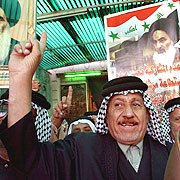


Shi'a Islam, also Shi'ite Islam, Shiite or Shi'ism (Arabic: شيعة, translit: Shī‘ah) is the second largest denomination of the religion based on Islam. Shi'a Muslims adhere to what they consider to be the teachings of the Islamic prophet Muhammad and the religious guidance of his family whom they refer to as the Ahlul Bayt. Thus, Shi'as consider the first three ruling Sunni caliphs a historic occurrence and not something attached to faith. The singular/adjective form is Shī’ī (شيعي.) and refers to a follower of the Household of Muhammad and of Ali ibn Abi Talib (Imam Ali) in particular.

Shi'a Muslims believe that specific persons from Muhammad's family (the Imams) were the best source of knowledge about the Qur'an, Islam, and Emulation (the best-qualified teachers of Islam after Muhammad), and the most trusted carriers and protectors of Muhammad's Sunnah (traditions).

In particular, Shi'a Muslims recognize the succession of Ali (Muhammad's cousin, son-in-law, the first young man to accept Islam — second person only to Muhammad's wife Khadija —and the male head of the Ahl al-Bayt or "people of the [Prophet's] house") as opposed to that of the caliphate recognized by Sunni Muslims. Shi’a Muslims believe that Ali was appointed successor by Muhammad's direct order on many occasions, and that he is therefore the rightful leader of the Muslim faith pursuant to the Prophet's wishes.

This difference between following either the Ahl al-Bayt (Muhammad's family) or the Caliph Abu Bakr has shaped Shi’ah and non-Shi’ah views on some of the Qur'an, the Hadith (narrations from the prophet) and other areas by extension. For instance, the collection of Hadith venerated by Shi'a Muslims is centered around narrations by members of the Ahl al-Bayt, while some Hadith by narrators not belonging to the Ahl al-Bayt are not included (those of Abu Huraira, for example).

Regardless of the dispute about the Caliphate, Shi'as recognize the authority of the Shi'a Imam (also called Khalifa Ilahi) as a religious authority, though different sects within Shi'a Islam dispute the rightful succession of this Imam and the current rightful successor (Twelvers, Ismalis, and Zaydīs, for instance)

Sunday, February 26, 2006

Askariya Shrine Bombed


Before and after the bombing.

The US must decide how the country of Iraq should be governed after they toppled Saddam's government. Initially the plan was to produce one government- run at first by the Us and then handed over to an elected Iraq government policed and directed by the US military. However if the US military were to loose control- by Iraqis requesting the US leave or by a change in control in American politics, and the country was left to it's own then the potential that a radical anti- American government could come to power and the US would be no better off than we started. There is even potential for a uniting between Iran and Iraq which would make the US (and Israel ) in a far worse position.

The solution: break Iraq up into three smaller states- The dissolution of Iraq into a Shi'ite state, a Sunni state and the separation of the Kurdish part.

What would be the justification? That the Iraqi's just can't get along as a unified country. So it has been suggested that the destruction of this shrine was actually done by the US/British to stir up infighting, or a civil war. That has been accomplished.

The last memo from Defense Secretary Donald Rumsfeld ends with :
¶Assist in accelerating an aggressive federalism plan, moving towards three separate states — Sunni, Shia, and Kurd. (See memo here-bottom of page)- poated by Paul Grant (follower of Basho)


Askariya Shrine Bombed

“A large explosion heavily damaged the golden dome of one of Iraq’s most famous Shiite shrines Wednesday, spawning mass protests and triggering reprisal attacks against Sunni mosques,” reports the Associated Press. “It was the third major attack against Shiite targets this week and threatened to stoke sectarian tensions. Shiite leaders called for calm, but militants attacked Sunni mosques and a gunfight broke out between Shiite militiamen and guards at the offices of a Sunni political party in Basra. About 500 soldiers were sent to Sunni neighborhoods in Baghdad to prevent clashes between Shiites and Sunnis, Army Capt. Jassim al-Wahash said.”

It makes absolutely no sense for Sunnis to bomb Shia mosques; this would be akin to Baptists bombing Catholic churches. Sectarian violence, dividing Iraqi society, does not serve Iraqis, either Sunni or Shia. It does, however, serve the occupation forces and also begins to realize the plan sketched out in Oded Yinon’s “A Strategy for Israel in the Nineteen Eighties” (the balkanization of Arab and Muslim society and culture), an objective shared by Jabotinsky Likudites and Straussian neocons.

“No group claimed responsibility for the 6:55 a.m. attack on the Askariya shrine in Samarra, 60 miles north of Baghdad, but suspicion fell on Sunni extremist groups such as al-Qaida in Iraq led by Abu Musab al-Zarqawi. The shrine contains the tombs of two revered Shiite imams, descendants of the Prophet Muhammad.” Of course, it stands to reason the bombing was carried out by “al-Qaida in Iraq” and the dead Abu Musab al-Zarqawi, in other words it was a black op carried out by the Anglo-American occupation forces, designed specifically to create religious violence, the worst sort. Only vicious and crazed Muslims would blow up the remains of descendants of the Prophet Muhammad—or American, British, and Israeli intelligence operatives or their double agent Arab lunatics, or crazies incited by Rumsfeld’s Proactive Preemptive Operations Group (P2OG), designed to “stimulate” terrorist reaction.

Recall the remarks of an anonymous senior military officer on April 22, 2004, declaring a spate of bombings in Basra had “all the hallmarks” of “al-Qaeda.” Several months later, two British “undercover soldiers” wearing “traditional Arab headscarves” were caught red-handed by Iraqi National Guard “driving a booby trapped car loaded with ammunition.”

Michel Chossudovsky: “Has the US [and Britain] created as part of a covert intelligence operation, a bogus ‘resistance movement’ made up of its own Al Qaeda sponsored ‘terrorists’? Their suicide attacks target Iraqi civilians rather than the US military. The suicide bombings tend to encourage sectarian divisions not only within Iraq, but throughout the entire Middle East. They serve Washington’s interests. They contribute to undermining the development of a broader resistance movement uniting Shia, Sunni, Kurds and Christians against the illegal occupation of the Iraqi homeland.”

The Askariya shrine that was bombed Wednesday is among Iraq's most sacred sites for Shiite Muslims, drawing pilgrims from around the world.

It contains the tombs of the 10th and 11th imams, Ali al-Hadi who died in 868, and his son, Hassan al-Askari, who died in 874.

Both are descendants of the Prophet Muhammad and Shiites consider them to be among his successors. The landmark golden dome was completed in 1905 under Muzaffar al-Din Shah.

The shrine is near the place where the last of the 12 Shiite imams, Mohammed al-Mahdi, disappeared. Al-Mahdi, known as the “hidden imam,” was the son and grandson of the two imams buried in the Askariya shrine. Shiites believe he is still alive and will return to restore justice to humanity.


The shrine is in Samarra, 60 miles north of Baghdad, one of four Shiite holy cities in Iraq, which has majestic ruins stretching along the eastern bank of the Tigris river.

It was built by Caliph al-Mutasim in 836 to replace Baghdad as the capital of the Abbasid Caliphate, and abandoned by Caliph Al-Mutamid in 892.

Samarra also is the site of the ninth century Great Mosque with a 170-foot spiral minaret that is one of the most recognized landmarks in Iraq. The town also holds remains of the residence built by Caliph Al-Mutasim in 835.

amazon quicklinker

Favorites linker

google adds