
BAGHDAD, Iraq (CNN) -- A drive to boost the political and economic power of Iraq's oil-rich southern province of Basra has failed, Iraqi election officials said Wednesday.

An Iraqi security patrols a water way in Basra.

A petition campaign that would have paved the way for a referendum asking voters to make Basra an autonomous region did not garner enough signatures, the Independent Electoral High Commission said.
We now have a quantitative indicator of the true level of popular support: it is somewhere between the 2 per cent of the electorate that turned in the first 30,000 plus signatures required to get the initiative going and the 10 per cent of the electorate that the federalists were unable to mobilise between 15 December 2008 and 15 January 2009.
The idea of an autonomous region in southern Iraq reflects the challenges of restoring political stability and balancing competing interests in Iraq among the war-torn country's many diverse constituencies.
Under the country's constitution, one or more of Iraq's 18 provinces may form federal regions. At present, the three-province Kurdish region is the only such region in the country.
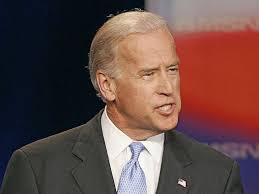
Called for by Vice President Biden in 2004:
The Biden & co plan for federal partition in 2004-5 recognized Iraq civil war for what it was, notable in itself. It accepted US responsibility for putting a mitigating structure in place. 'Fence the sectarian militias in homelands, while safeguarding secular and sectarian blending in the Baghdad belt.' It was an attempt to avert a disaster like Lebanon, Palestine or Bosnia. Hoped for quid pro quo protection of Christian, Turkomen, Persian or imbedded minorities within each partition was bound to be limited, with conflict on the Kurd borderlands evident before we blew our way into Baghdad.
Our feckless six year war of occupation instead saw the destruction of Sunni cities, Baghdad belt chaos and a civil war that killed hundreds of thousands, and displaced 4 millions. The civil war especially impacted the skilled urban middle class that any occupation plan should have protected in place. The occupying force failed to protect even our own translators and informants.
No one can know if early federal partition could have reduced the scope of the Iraq calamity. But Biden should be excused for pointing to constitutional federal provisions during the 2006 melt-down, and the 2007 mission reset that we call 'the surge'.
The barrier to forming any of the 3 'stans' at this time seems to be that no one is able or trusted by Kurd or Sunni to redraw regional boundaries. Shiite and Sunni Arabs remain deeply (lethally) divided within their sectarian communities.
BASARA's return to normalcy after Millitias taken out
There has been a tug of war between the central government and local powers. In the face of a push by regional officials for more autonomy, Iraqi Prime Minister Nuri al-Maliki backs a stronger federal government and wants changes in the constitution to bolster its power.
"The existence of a strong central federal government that is able to preserve the country's unity is not detrimental to the provinces; they will have more support and money to bring about achievements, develop the economy and increase services," al-Maliki said in remarks to crowds Wednesday in Najaf.
Federal region status would give Basra the same legal power as the Kurdistan in northern Iraq.
Basra officials backing federal region status hoped it would have boosted the amount of oil income staying in the region.
Basran politician Wail Abd al-Latif started the drive last month that would give voters the opportunity to make the Shiite-dominated province a federal region. Wail Abd al-Latif, the chief protagonist of the campaign to transform Basra into a standalone federal region, has told Iraqi radio that his project has failed. Abd al-Latif is already talking about the possibility of re-launching his scheme at some future juncture, and his comments echo statements to the press by another supporter of the project,
The month-long petition drive -- which began December 15 and ended January 19 -- needed the signatures of at least 10 percent of the registered voters in the province.
Officials said 135,707 signatures were required but only 32,448 signatures were collected before the deadline.
Another idea for an autonomous region had emerged from the Islamic Supreme Council of Iraq, one of the parties in the ruling United Iraq Alliance. It is looking at a nine-province federal region in the south.
Basra is the only Iraqi province that borders a body of water -- the Shatt al Arab waterway near the Persian Gulf. The province also borders Kuwait and Iran. Cities in the province include Basra city, Umm Qasr and Zubayr.Freed last year from the grip of militias, Basra has emerged as the main battleground for rival Shiites in elections for control of the oil-rich south — a race that will test the power of religious parties and the influence of neighboring Iran.
The Jan. 31 ballot, in which voters across the country will choose ruling provincial councils, will be the first since U.S.-backed Iraqi forces wrested control of Basra from Shiite militias and criminal gangs.
American officials will be watching the outcome for any sign that the militias might return in Iraq's second largest city of about 2 million people, located only a few miles from the Iranian border.
More than 1,000 candidates have entered the race for Basra's 35 council seats, filling the city's dusty and traffic-choked streets with campaign posters and flyers that give the city a festive look. The outcome will help shape the political future of the southern Shiite heartland ahead of national elections expected by year's end.
Basra has been relatively quiet since last year's military crackdown, which ended three years of Shiite militia rule, rampant crime and turmoil. Today, thousands of national police and army soldiers patrol its streets.
At the commercial heart of the city, the soldiers and policemen rub shoulders with the thousands of residents who throng stores until late into the night. With militiamen off the streets, women are out in public again — some unaccompanied by male chaperons and wearing makeup.
Music CDs and DVDs of Western and Egyptian films are back in the stores. Those items were once banned by militias; merchants who defied the gunmen risked death.
The battle for Basra is now being fought politically, with Shiite religious parties more divided than ever following their emergence as Iraq's dominant political force after the ouster of Saddam Hussein's Sunni-led regime in 2003.
Chief among the competitors in Basra are the Supreme Islamic Iraqi Council, the country's largest Shiite party and Iran's main ally in Iraq, and Fadhila, a smaller religious group that has controlled local government since the last provincial elections in January 2005.
Also in the mix are followers of radical Shiite leader Muqtada al-Sadr, whose influence in Basra significantly diminished after last year's crackdown. Al-Sadr, who lives in exile in Iran, is supporting two lists of candidates running as independents.
The Dawa Party of Prime Minister Nouri al-Maliki is also in the race.
Al-Maliki's popularity soared here after he took on the militias. He is at odds with the Supreme Council over distribution of power between provinces and the central government.
No single party is expected to win a majority of seats. But Fadhila and the Supreme Council, which is allied with al-Maliki in the national government and has been a reliable U.S. ally despite its ties to Iran, are expected to top the winners.
That will likely push them into deals with smaller parties to form a majority.
However, some in Basra predict the two biggest parties will suffer from a voter backlash against religious parties, which many urban Shiites believe have failed to provide public services and jobs.
Still, secular politician Hamed al-Dhalmi believes the religious parties have the money for their candidates to succeed. The Supreme Council can also use its ties to Grand Ayatollah Ali al-Sistani, Iraq's top Shiite cleric, to win votes among Basra's poor Shiites.
"Religious parties are flush with cash, while nonreligious parties hope to take advantage of the popular disillusionment with the religious parties," said al-Dhalmi, a member of Basra's provincial council and a linguistics professor.
"No one knows who will win, but one thing is certain, the political map here will change."
For the parties, the stakes are high.
Basra and the surrounding province contain 70 percent of Iraq's proven oil reserves of 115 billion barrels. The province also includes the country's only outlet to the sea — the Umm Qasr port on the Persian Gulf.
"We are not ready to give up Basra and we are hopeful it will remain in our hands," said Aqeel al-Fereij, a senior Fadhila member of the outgoing Basra provincial council.
The Supreme Council is equally determined to win control of Basra after four years of Fadhila domination.
"Without wanting to sound too confident or too ambitious, we will not be happy with less than the majority that places us in a decision-making position," said Furat al-Sharaa, a local Supreme Council leader and a candidate.
Basra's proximity to Iran has made the city a focus of Iranian efforts to gain influence in post-Saddam Iraq.
The Supreme Council is pushing for the establishment of a self-ruled area in the south, similar to one the Kurds enjoy in the north. Critics believe such a region would be effectively run by Iran, harden religious divisions and lead to the breakup Iraq.
Basra stores are filled with Iranian goods from vegetables and fruits to electrical appliances, eggs and fresh red meat. Iran's consulate has an unusually high profile in the city, throwing frequent banquets, organizing book fairs at the local university and sponsoring scores of visits by local officials to Iran.
Fadhila is taking advantage of the popular perception of its rival as an Iranian ally to promote itself as a nationalist party free of foreign influence.
"Fadhila, a party that is 100 percent Iraqi," declare its campaign posters. "Born in Iraq and Financed by Iraqis," say others.
Sources:
http://ricks.foreignpolicy.com/posts/2009/01/21/taps_for_bidens_federalist_plan_for_iraq
http://edition.cnn.com/2009/WORLD/meast/01/21/iraq.basra.petition/


 Posts
Posts


