Showing posts with label Nouri Maliki. Show all posts

Saturday, January 31, 2009

Iraq Election Day Peacefull and Inclusive

Prime Minister of Iraq Nouri Maliki cast his vote.

"A new dawn, God willing," said Sabah Bashir Hassan, known as Abu Talib, who leads thousands of former insurgents and others in the Popular Committees, the name here for the U.S.-backed Sunni militia that fought the insurgent group al-Qaeda in Iraq.

"To me, the elections represent the point between darkness and light," the Sunni leader said. "Everybody wants to turn a page on the past. We're turning a new page over today."

Iraqis vote in provincial elections under tight security. The vote is seen as a test for the nation's stability as the U.S. weighs dialing down its troop presence here.

US President Barack Obama has congratulated Iraqis for holding a largely peaceful vote for provincial councils across the country.

He called the elections "an important step forward" for Iraqi self-determination.

Mr Obama urged the newly elected councils to "get seated, select new governors, and begin work on behalf of the Iraqi people who elected them".


The elections were held in 14 of the country's 18 provinces, with more than 14,000 candidates competing for just 440 seats.

There was no voting in the three provinces of the semi-autonomous Kurdish region of the north and the ballot was postponed in oil-rich Kirkuk province.

There was a strong turn-out in Sunni areas, which boycotted the last polls.

The first nationwide vote in four years is seen as a test of stability before a general election due later this year.

Displaced Kurds Demanded Vote
Hundreds of Iraqi Kurds stormed an electoral commission office in northeast Iraq on Saturday claiming they were displaced residents of Khanaqin and demanding to vote, an official said.

“The Kurds entered the election commission office and asked to vote because they said they were people displaced by Saddam Hussein,” an official from the electoral commission told AFP.

The issue was resolved when those holding identification from Khanaqin were allowed to vote in the provincial elections that were held on Saturday, the official added.

During Saddam’s reign tens of thousands of Kurds were forced to relocate to the Kurd regions in northern Iraq, as part of the dictator’s Arabisation plans.

Many of those 16,000 residents have returned in the wake of the 2003 US-invasion which deposed Saddam, renewing tensions and sparking rival territorial claims between Kurds and Arab Shiites.

The town of Khanaqin in northeast Diyala province is near the border with Iran and holds sizeable oil reserves.

The local Kurdish political leadership has called for Khanaqin to join the adjoining autonomous Kurdish region in northern Iraq

Four thousand women are running for office in Iraq

BAGHDAD, Iraq (CNN) -- Four thousand women are running for office in Iraq's provincial elections Saturday, and many of them will be guaranteed seats under an electoral quota system.

Iraqi women show off their ink-stained fingers after voting Saturday in Baghdad.

Iraqi women show off their ink-stained fingers after voting Saturday in Baghdad.

Regardless of the votes their candidates receive, parties are required to give every third seat to a woman, according to a report this week from the International Crisis Group.

The ultimate share of seats held by women will depend on the distribution of votes among parties, the report said.

Some women candidates say these elections -- only the second provincial elections since the fall of Saddam Hussein -- are a chance to improve their standing in Iraqi society.

Nibras al-Mamuri is a secular female candidate who argues that fundamentalists have taken over the country. She says it was the 2005 elections that brought them into power and tarnished Islam's image in Iraq.

Al-Mamuri, who is running for the Baghdad provincial council, says it's time for a change. Video

"Although a woman's role in the Arab world is mainly that of a mother and child bearer," she said, "I want to prove that women are just as capable as men when it comes to challenging

At first, al-Mamuri said, she thought just participating in the elections as a woman was enough. But now, she says she is running to win in order to defy men who believe a woman's place is in the home.

"I've entered a battlefield where women have to prove they are competent," she said. "I have to forget about fear."

In recent years, Iraqi women have been targeted by extremists for a variety of reasons -- from not covering their hair to entering the political arena.

Under Hussein, Iraq was one of the more secular Arab countries, but the 2003 U.S. invasion unleashed extremist militias. Now, many activists say women have been forced back to the Dark Ages, forced to be submissive, anonymous and fully veiled.

Al-Mamuri said she believes Saturday's vote can help women improve their position in society.

"An Iraqi woman can be an equal. She can participate in change," she told CNN.

The image of a woman posing a public and direct challenge to fundamentalists and their beliefs was not seen in the 2005 vote.

advertisement

"Iraqi women form the core of society," said Rissala Khalid, another female candidate in Baghdad.

Passing out her campaign card, Khalid told young women that she will fight for their rights, and told young men that she will try to provide jobs for Iraq's largely unemployed youth.

references:
http://baghdadbureau.blogs.nytimes.com/2009/01/31/kirkuk-the-province-that-couldnt-vote/?partner=rss
http://www.cnn.com/2009/WORLD/meast/01/31/iraq.women/index.html
http://news.bbc.co.uk/2/hi/middle_east/7863342.stm
http://www.khaleejtimes.com/DisplayArticleNew.asp?col=&section=middleeast&xfile=data/middleeast/2009/January/middleeast_January603.xml

Wednesday, January 21, 2009

In Iraq Basara attempt at becoming autonomous Failed

BAGHDAD, Iraq (CNN) -- A drive to boost the political and economic power of Iraq's oil-rich southern province of Basra has failed, Iraqi election officials said Wednesday.

An Iraqi security patrols a water way in Basra.

An Iraqi security patrols a water way in Basra.

A petition campaign that would have paved the way for a referendum asking voters to make Basra an autonomous region did not garner enough signatures, the Independent Electoral High Commission said.

We now have a quantitative indicator of the true level of popular support: it is somewhere between the 2 per cent of the electorate that turned in the first 30,000 plus signatures required to get the initiative going and the 10 per cent of the electorate that the federalists were unable to mobilise between 15 December 2008 and 15 January 2009.

The idea of an autonomous region in southern Iraq reflects the challenges of restoring political stability and balancing competing interests in Iraq among the war-torn country's many diverse constituencies.

Under the country's constitution, one or more of Iraq's 18 provinces may form federal regions. At present, the three-province Kurdish region is the only such region in the country.

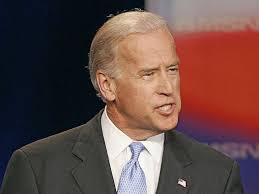
Called for by Vice President Biden in 2004:

The Biden & co plan for federal partition in 2004-5 recognized Iraq civil war for what it was, notable in itself. It accepted US responsibility for putting a mitigating structure in place. 'Fence the sectarian militias in homelands, while safeguarding secular and sectarian blending in the Baghdad belt.' It was an attempt to avert a disaster like Lebanon, Palestine or Bosnia. Hoped for quid pro quo protection of Christian, Turkomen, Persian or imbedded minorities within each partition was bound to be limited, with conflict on the Kurd borderlands evident before we blew our way into Baghdad.

Our feckless six year war of occupation instead saw the destruction of Sunni cities, Baghdad belt chaos and a civil war that killed hundreds of thousands, and displaced 4 millions. The civil war especially impacted the skilled urban middle class that any occupation plan should have protected in place. The occupying force failed to protect even our own translators and informants.

No one can know if early federal partition could have reduced the scope of the Iraq calamity. But Biden should be excused for pointing to constitutional federal provisions during the 2006 melt-down, and the 2007 mission reset that we call 'the surge'.

The barrier to forming any of the 3 'stans' at this time seems to be that no one is able or trusted by Kurd or Sunni to redraw regional boundaries. Shiite and Sunni Arabs remain deeply (lethally) divided within their sectarian communities.

BASARA's return to normalcy after Millitias taken out

There has been a tug of war between the central government and local powers. In the face of a push by regional officials for more autonomy, Iraqi Prime Minister Nuri al-Maliki backs a stronger federal government and wants changes in the constitution to bolster its power.

"The existence of a strong central federal government that is able to preserve the country's unity is not detrimental to the provinces; they will have more support and money to bring about achievements, develop the economy and increase services," al-Maliki said in remarks to crowds Wednesday in Najaf.

Federal region status would give Basra the same legal power as the Kurdistan in northern Iraq.

Basra officials backing federal region status hoped it would have boosted the amount of oil income staying in the region.

Basran politician Wail Abd al-Latif started the drive last month that would give voters the opportunity to make the Shiite-dominated province a federal region. Wail Abd al-Latif, the chief protagonist of the campaign to transform Basra into a standalone federal region, has told Iraqi radio that his project has failed. Abd al-Latif is already talking about the possibility of re-launching his scheme at some future juncture, and his comments echo statements to the press by another supporter of the project,

The month-long petition drive -- which began December 15 and ended January 19 -- needed the signatures of at least 10 percent of the registered voters in the province.

Officials said 135,707 signatures were required but only 32,448 signatures were collected before the deadline.

Another idea for an autonomous region had emerged from the Islamic Supreme Council of Iraq, one of the parties in the ruling United Iraq Alliance. It is looking at a nine-province federal region in the south.

Basra is the only Iraqi province that borders a body of water -- the Shatt al Arab waterway near the Persian Gulf. The province also borders Kuwait and Iran. Cities in the province include Basra city, Umm Qasr and Zubayr.

Freed last year from the grip of militias, Basra has emerged as the main battleground for rival Shiites in elections for control of the oil-rich south — a race that will test the power of religious parties and the influence of neighboring Iran.

The Jan. 31 ballot, in which voters across the country will choose ruling provincial councils, will be the first since U.S.-backed Iraqi forces wrested control of Basra from Shiite militias and criminal gangs.

American officials will be watching the outcome for any sign that the militias might return in Iraq's second largest city of about 2 million people, located only a few miles from the Iranian border.

More than 1,000 candidates have entered the race for Basra's 35 council seats, filling the city's dusty and traffic-choked streets with campaign posters and flyers that give the city a festive look. The outcome will help shape the political future of the southern Shiite heartland ahead of national elections expected by year's end.

Basra has been relatively quiet since last year's military crackdown, which ended three years of Shiite militia rule, rampant crime and turmoil. Today, thousands of national police and army soldiers patrol its streets.

At the commercial heart of the city, the soldiers and policemen rub shoulders with the thousands of residents who throng stores until late into the night. With militiamen off the streets, women are out in public again — some unaccompanied by male chaperons and wearing makeup.

Music CDs and DVDs of Western and Egyptian films are back in the stores. Those items were once banned by militias; merchants who defied the gunmen risked death.

The battle for Basra is now being fought politically, with Shiite religious parties more divided than ever following their emergence as Iraq's dominant political force after the ouster of Saddam Hussein's Sunni-led regime in 2003.

Chief among the competitors in Basra are the Supreme Islamic Iraqi Council, the country's largest Shiite party and Iran's main ally in Iraq, and Fadhila, a smaller religious group that has controlled local government since the last provincial elections in January 2005.

Also in the mix are followers of radical Shiite leader Muqtada al-Sadr, whose influence in Basra significantly diminished after last year's crackdown. Al-Sadr, who lives in exile in Iran, is supporting two lists of candidates running as independents.

The Dawa Party of Prime Minister Nouri al-Maliki is also in the race.

Al-Maliki's popularity soared here after he took on the militias. He is at odds with the Supreme Council over distribution of power between provinces and the central government.

No single party is expected to win a majority of seats. But Fadhila and the Supreme Council, which is allied with al-Maliki in the national government and has been a reliable U.S. ally despite its ties to Iran, are expected to top the winners.

That will likely push them into deals with smaller parties to form a majority.

However, some in Basra predict the two biggest parties will suffer from a voter backlash against religious parties, which many urban Shiites believe have failed to provide public services and jobs.

Still, secular politician Hamed al-Dhalmi believes the religious parties have the money for their candidates to succeed. The Supreme Council can also use its ties to Grand Ayatollah Ali al-Sistani, Iraq's top Shiite cleric, to win votes among Basra's poor Shiites.

"Religious parties are flush with cash, while nonreligious parties hope to take advantage of the popular disillusionment with the religious parties," said al-Dhalmi, a member of Basra's provincial council and a linguistics professor.

"No one knows who will win, but one thing is certain, the political map here will change."

For the parties, the stakes are high.

Basra and the surrounding province contain 70 percent of Iraq's proven oil reserves of 115 billion barrels. The province also includes the country's only outlet to the sea — the Umm Qasr port on the Persian Gulf.

"We are not ready to give up Basra and we are hopeful it will remain in our hands," said Aqeel al-Fereij, a senior Fadhila member of the outgoing Basra provincial council.

The Supreme Council is equally determined to win control of Basra after four years of Fadhila domination.

"Without wanting to sound too confident or too ambitious, we will not be happy with less than the majority that places us in a decision-making position," said Furat al-Sharaa, a local Supreme Council leader and a candidate.

Basra's proximity to Iran has made the city a focus of Iranian efforts to gain influence in post-Saddam Iraq.

The Supreme Council is pushing for the establishment of a self-ruled area in the south, similar to one the Kurds enjoy in the north. Critics believe such a region would be effectively run by Iran, harden religious divisions and lead to the breakup Iraq.

Basra stores are filled with Iranian goods from vegetables and fruits to electrical appliances, eggs and fresh red meat. Iran's consulate has an unusually high profile in the city, throwing frequent banquets, organizing book fairs at the local university and sponsoring scores of visits by local officials to Iran.

Fadhila is taking advantage of the popular perception of its rival as an Iranian ally to promote itself as a nationalist party free of foreign influence.

"Fadhila, a party that is 100 percent Iraqi," declare its campaign posters. "Born in Iraq and Financed by Iraqis," say others.


Sources:

http://www.newsabah.com/look/enarticle.tpl?IdLanguage=17&IdPublication=2&NrArticle=23306&NrIssue=1333&NrSection=26

http://ricks.foreignpolicy.com/posts/2009/01/21/taps_for_bidens_federalist_plan_for_iraq

http://edition.cnn.com/2009/WORLD/meast/01/21/iraq.basra.petition/

Monday, November 17, 2008

Iraq may pass a security pact letting US stay till 2011


Nov. 17: U.S. Ambassador to Iraq, Ryan Crocker, left, and Iraqi FM Hoshyar Zebar shake hands after a signing ceremony for U.S.-Iraq security pact.

BAGHDAD — Iraqi lawmakers Monday began debate over a pact with the United States that will allow U.S. forces to remain for three more years, while an Iranian official close to that country's leadership praised the Iraqi Cabinet for approving the deal.

The comments from Iran's judiciary chief marked the first time that the deal has met with clear-cut approval in neighboring Iran. Meanwhile, Syria, target of a deadly cross-border raid by U.S. forces in recent weeks, criticized the deal as virtual surrender to America.

More than two-thirds of the 275-seat legislature attended Monday's session, raising confidence that parliament will be able to muster a quorum for the Nov. 24 vote. The session ended after the agreement's text was read to lawmakers, the first step to adopt legislation.

Lawmakers are expected to meet again on Tuesday.

The proposed Status of Forces Agreement not only sets a date for American troop withdrawal - 2011 - but also puts new restrictions on US combat operations in Iraq starting on January 1 and requires a military pullback from urban areas by June 30. The pact goes before parliament in a week or so.

For the deal to go as planned, the security situation must keep improving.

The U.S. signed similar security pacts with Germany and Japan after World War II, and South Korea after the conflict there. In each case a sizeable contingent of U.S. troops remains. Today, there are 56,200 U.S. servicemembers in Germany, 33,100 in Japan and 26,300 in South Korea.

Can Obama change what is being done now, when he becomes President?


The pact can be changed if either President-elect Barack Obama, who takes office Jan. 20, or the Iraqis want to alter it. Each side has the right to repeal the agreement after giving one year's notice, a senior Iraqi lawmaker has said.

Obama Vows to Close Guantanamo

In his first television interview since the election, President-elect Barack Obama said Sunday he plans to close the US military prison at Guantanamo Bay and rebuild the nation’s moral stature. His comments came in an interview with Steve Kroft on 60 Minutes.

Steve Kroft: “There are a number of different things that you could do early on pertaining to executive orders.”

Barack Obama: “Right.”

Kroft: “One of them is to shut down Guantanamo Bay. Another is to change interrogation methods that are used by US troops. Are those things that you plan to take early action on?”

Obama: “Yes. I have said repeatedly that I intend to close Guantanamo, and I will follow through on that. I have said repeatedly that America doesn’t torture, and I’m going to make sure that we don’t torture. Those are part and parcel of an effort to regain America’s moral stature in the world.”


Syrian minister criticizes Iraq-U.S. security pact

Syria's information minister says the security pact with the U.S. approved by the Iraqi Cabinet amounts to an "award to the occupiers" of Iraq.

After months of haggling, the Iraqi Cabinet on Sunday approved the pact that would keep U.S. troops in Iraq for three more years. The deal is to go before the Iraqi parliament for final approval later in November.

Syria's information minister, Mohsen Bilal, told the AP on Monday that rather than rewarding the U.S. occupiers with the pact, Iraqis should get an apology from Washington for the damage done to their country.

Iraqi neighbors and U.S. adversaries Iran and Syria have opposed the pact in the past and say an immediate withdrawal of U.S. forces would be the best solution.

Last month, the U.S. launched a cross-border assault against a Syrian village allegedly used to smuggle foreign fighters into Iraq. The deal contains conditions that the U.S. not use Iraqi land to launch attacks against any neighboring country.

The proposed Status of Forces Agreement not only sets a date for American troop withdrawal - 2011 - but also puts new restrictions on US combat operations in Iraq starting on January 1 and requires a military pullback from urban areas by June 30. The pact goes before parliament in a week or so.

Internal Iraqi opposition

The 30-strong Sadrist bloc will move heaven and Earth - including massive nationwide protests - to bloc the pact in the Iraqi National Assembly.

Sadrist spokesman Ahmed al-Masoudi stressed this Sunday thatthe pact "did not mean anything" and "hands Iraq over on a golden platter and for an indefinite period".

Masoudi is right on the money when he says the overwhelming majority of popular opinion is against it and the Sadrists and many Sunni parties insist a popular referendum to approve it is essential.

Shi'ite leader Muqtada al-Sadr's position is and has always been "end the occupation now". That happens to be the same view from Tehran: the pact further extends Iraq's agony as an American colony.


Iran's unusual positive stance


Iranian state TV has been spinning it as a victory for the Maliki government - stressing the US was forced to make concessions (in fact Maliki did not extract all the concessions he wanted in terms of prosecuting US troops for crimes in Iraq . The pact calls for joint panels of U.S. and Iraqi judges to try cases involving serious crimes committed by off-duty U.S. servicemembers in Iraq. So while Iraqi judges would be involved, the U.S. would not cede full jurisdiction to them. Second, it is almost unheard of for a U.S. troop to be off duty and off base in Iraq.).

However, last week, a spokesman for the Grand Ayatollah Ali Sistani in Iraq said he would "directly intervene" if he felt the pact was against Iraqi sovereignty.


Will Iran Move in?


"Many Iraqis suspect that Iran wants to annex southern Iraq, which is over 80 percent Shia, has the major Shia holy places and oil fields that would increase Iranian exports by over 50 percent."

Refrences

http://www.usatoday.com/news/world/iraq/2008-11-17-syria-iraq-us_N.htm#uslPageReturn

http://www.foxnews.com/story/0,2933,453029,00.html

http://www.usatoday.com/news/world/iraq/2008-11-16-iraqdealqna_N.htm
http://www.google.com/hostednews/ap/article/ALeqM5hwK_CSpBxsNuVUEaDuOwmSSCiqGwD94GPUGG0

http://www.atimes.com/atimes/Middle_East/JK18Ak01.html

Wednesday, September 24, 2008

Iraq War extended for Political Reasons


Maddow: Bush extending Iraq war for political reasons
09/24/2008 @ 9:23 am
Filed by David Edwards and Muriel Kane

Advertisement
The 2008 president campaign has been marked by continuing arguments between the parties over the most appropriate timetable for withdrawing troops from Iraq, but it has never been clear how the Bush administration had established its own proposed schedule.

However, according to MSNBC's Rachel Maddow, "We suddenly have got a lot more clarity about Iraq right now than we've had in a really, really long time."

Maddow cited an interview with Iraqi Prime Minister Maliki, conducted last week by Iraqi state television, during which "he said when he was negotiating with the Bush administration to pick a withdrawal date for our troops to come home, they initially settled on about 15 months from now, the end of 2010. But then ... the Bush administration came back and told the Iraqis they'd actually like our troops to stay in Iraq an extra year, through 2011 ... 'due to political circumstances related to the US domestic situation.'"

"So the prime minister of Iraq says on tape," Maddow summarized, "according to our own government's translation, that the Bush administration wants to prolong the war in Iraq for an extra year because of our domestic politics."

"If you feel like your hair is on fire right now," she added, "you're not alone."

When contacted by the Maddow Show, a White House spokesperson replied with familiar rhetoric, saying, "We do not have anything to announce on that. ... What we're really pleased about is the fact that we're having these discussions. ... Any decisions on troops will be based on the conditions on the ground."

"If you're keeping track at home, you're right," Maddow commented. "They are not directly denying what the Iraqi prime minister said -- which is incredible."

It was reported in early August that "Iraq and the United States are close to reaching a deal under which U.S. combat troops would leave by December 2010 and the rest would leave by the end of 2011, two Iraqi officials said Thursday. ... Two senior U.S. officials said negotiators have made progress and are close to a deal. But they also said that some issues are unresolved and that troop withdrawals would be tied to conditions on the ground."

By the end of August, however, Maliki's demands for a complete US withdrawal by 2011 were being described as "an attempt to extract further concessions from American officials, less than a week after both sides said they had agreed to remove all U.S. combat troops by the end of 2011, if the security situation remained relatively stable, but leave other American forces in place."

Maliki's latest remarks appear to be a referecne to this shift in the timetable. He told Iraqi tv, "They asked for a change (in date) due to political circumstances related to the domestic situation (in the US) so it will not be said to the end of 2010 followed by one year for withdrawal but the end of 2011 as a final date."

"The Republicans are convinced that keeping the war going is good for them politically," continued Maddow. "I think it's a political stinker. I think there's a reason why the tape you've seen over and over and over again of John McCain promising to stay 100 years in Iraq -- that's the tape that turns up in pro-Obama ads, not pro-McCain ads."

"So why are the Republicans invested in our troops staying and staying and staying and staying?" Maddow wondered. She suggested it might be significant that this Monday, for the first time since Iraq kicked out the foreign oil companies in 197, "a Western oil company opened up an office in Iraq. In a sobering reminder of the dangers of doing business in Baghdad, the company is not disclosing the location of its office."

"If you're looking for a mission to proclaim 'accomplished' in Iraq, there you have it," concluded Maddow. "This is the kind of 'accomplishment' that will keep our troops there longer."

This video is from MSNBC's The Rachel Maddow Show, broadcast September 23, 2008.

Saturday, September 06, 2008

Bush spying on Iraq? Administration declines to comment.

BAGHDAD — The Iraqi government reacted with concern and dismay on Friday to allegations that American officials spied on Prime Minister Nuri Kamal al-Maliki, and warned that it could affect negotiations over the continuing American troop presence in the country.

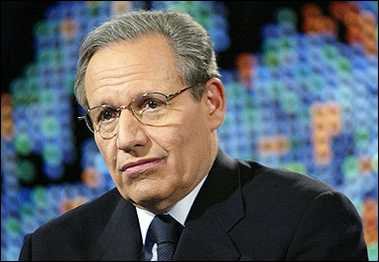
The claims about espionage against senior Iraqi government figures appear in Bob Woodward’s book “The War Within: A Secret White House History, 2006-2008,” The Washington Post reported Friday.


Ali al-Dabbagh, a government spokesman, said Mr. Maliki’s government would seek explanations and assurances about the conduct of the C.I.A. and other intelligence agencies.

“If it is a fact, it reflects that there is no trust and it reflects also that the institutions in the United States are used to spying on their friends and their enemies in the same way,” he said. “If it is true, it casts a shadow on the future relations with such institutions.”

Haidar al-Abadi, a member of Mr. Maliki’s Dawa Party and a senior adviser to the prime minister, said that he preferred to wait until the American government answered the accusation officially. But he added, “If it is true, we will demand guarantees that this will not happen again.”

He also indicated that the concerns may run deep enough for Iraqi negotiators to seek guarantees in the continuing discussions to frame a long-term security agreement governing the continuing presence of American troops in Iraq


WASHINGTON POST STORY
U.S. Spied on Iraqi Leaders, Book Says
Woodward Also Reveals That Political Fears Kept War Strategy Review 'Under the Radar'

By Steve Luxenberg
Washington Post Staff Writer
Friday, September 5, 2008; A01

The Bush administration has conducted an extensive spying operation on Prime Minister Nouri al-Maliki, his staff and others in the Iraqi government, according to a new book by Washington Post associate editor Bob Woodward.

"We know everything he says," according to one of multiple sources Woodward cites about the practice in "The War Within: A Secret White House History, 2006-2008," scheduled for release Monday.

Surge not cause of decrease in violence

The book also says that the U.S. troop "surge" of 2007, in which President Bush sent nearly 30,000 additional U.S. combat forces and support troops to Iraq, was not the primary factor behind the steep drop in violence there during the past 16 months.

Rather, Woodward reports, "groundbreaking" new covert techniques enabled U.S. military and intelligence officials to locate, target and kill insurgent leaders and key individuals in extremist groups such as al-Qaeda in Iraq.

Woodward does not disclose the code names of these covert programs or provide much detail about them, saying in the book that White House and other officials cited national security concerns in asking him to withhold specifics.

Overall, Woodward writes, four factors combined to reduce the violence: the covert operations; the influx of troops; the decision by militant cleric Moqtada al-Sadr to rein in his powerful Mahdi Army; and the so-called Anbar Awakening, in which tens of thousands of Sunnis turned against al-Qaeda in Iraq and allied with U.S. forces.

The book is Woodward's fourth to examine the inner debates of the Bush administration and its handling of the Iraq and Afghanistan wars. The Washington Post will run a four-part series based on the book beginning Sunday. Fox News published a report about the book on its Web site last night after obtaining a copy ahead of the release date.


The 487-page book concentrates on Bush's leadership and governing style, based on more than 150 interviews with the president's national security team, senior deputies and other key intelligence, diplomatic and military players. Woodward also conducted two on-the-record interviews with Bush in May.

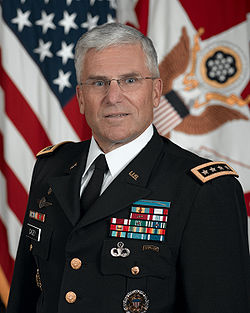
The book portrays an administration riven by dissension, either unwilling or slow to confront the deterioration of its strategy in Iraq during the summer and early fall of 2006. Publicly, Bush maintained that U.S. forces were "winning"; privately, he came to believe that the military's long-term strategy of training Iraq security forces and handing over responsibility to the new Iraqi government was failing. Eventually, Woodward writes, the president lost confidence in the two military commanders overseeing the war at the time: Gen. George W. Casey Jr., then commander of coalition forces in Iraq, and Gen. John P. Abizaid, then head of U.S. Central Command.

Bush's secrecy caused by midterm election fears

In October 2006, the book says, Bush asked Stephen J. Hadley, his national security adviser, to lead a closely guarded review of the Iraq war. That first assessment did not include military participants and proceeded secretly because of White House fears that news coverage of a review might damage Republican chances in the midterm congressional elections.


Rice was against the Surge


"We've got to do it under the radar screen because the electoral season is so hot," Hadley is quoted as telling Secretary of State Condoleezza Rice, who is described as challenging the president on the wisdom of sending additional troops to Iraq. "You're not getting a clear picture of what's going on on the ground," she told the president, the book says.

The quality and credibility of information about the war's progress became a source of ongoing tension within the administration, according to the book. Rice complained about the Defense Department's "overconfident" briefings during the tenure of Secretary Donald H. Rumsfeld. Rather than receiving options on the war, Bush would get "a fable, a story . . . that skirted the real problems," Rice is quoted as saying.

Stephan Hadley was key man

According to Woodward, the president maintained an odd detachment from the reviews of war policy during this period, turning much of the process over to Hadley. "Let's cut to the chase," Bush told Woodward, "Hadley drove a lot of this."

Nor, Woodward reports, did Bush express much urgency for change during the months when sectarian killings and violent attacks against U.S. forces in Iraq began rising, reaching more than 1,400 incidents a week by October 2006 -- an average of more than eight an hour. "This is nothing that you hurry," he told Woodward in one of the interviews, when asked whether he had given his advisers a firm deadline for recommending a revised war strategy.

In response to a question about how the White House settled on a troop surge of five brigades after the military leadership in Washington had reluctantly said it could provide two, Bush said: "Okay, I don't know this. I'm not in these meetings, you'll be happy to hear, because I got other things to do."

The book presents an evolving portrait of the president's decision-making. On the one hand, the book portrays Bush as tentative and slow to react to the escalating violence in Iraq; on the other, once he decides that a surge is required, he is shown acting with focus and determination to move ahead with his plan in the face of strong resistance from his top military advisers at the Joint Chiefs of Staff.


Administration considered impact of spying on Maliki


Woodward also depicts the development of a close working relationship between Bush and Maliki, with the president leaning on the Iraqi leader to govern evenhandedly and to take decisive action against sectarianism. "I've worked hard to get in a position where we can relate human being to human being, and where I try to understand his frustrations and his concerns, but also in a place where I am capable of getting him to listen to me," Bush told Woodward.

Given Bush's efforts to earn Maliki's trust, the surveillance of the Iraqi prime minister caused some consternation among several senior U.S. officials, who questioned whether it was worth the risk, Woodward reports. One official knowledgeable about the surveillance "recognized the sensitivity of the issue and then asked, 'Would it be better if we didn't?' "


Commanding General: one big problem with the war was the president himself


Meanwhile, Woodward reports that Casey, the president's commanding general in Iraq from 2004 to 2007, came to believe that Bush did not understand the nature of the Iraq war, that the president focused too much on body counts as a measure of progress.

"Casey had long concluded that one big problem with the war was the president himself," Woodward writes. "He later told a colleague in private that he had the impression that Bush reflected the 'radical wing of the Republican Party that kept saying, "Kill the bastards! Kill the bastards! And you'll succeed." ' "

Asked about his interest in body counts, Bush told Woodward: "I asked that on occasion to find out whether or not we're fighting back. Because the perception is that our guys are dying and they're not. Because we don't put out numbers. We don't have a tally. On the other hand, if I'm sitting here watching the casualties come in, I'd at least like to know whether or not our soldiers are fighting."

The discord between Bush and Casey is one manifestation of the often-debilitating rift that Woodward portrays between the U.S. military and its civilian leadership. The book describes a "near revolt" in late 2006 by the Joint Chiefs of Staff, who felt that their advice was not reaching the president. Adm. Michael Mullen, then serving as chief of naval operations, expressed fear that the military would "take the fall" for a failure in Iraq. According to the book, Casey and Abizaid resolutely opposed the large surge that the president ultimately ordered, as did Rumsfeld. Casey went so far as to refer to Baghdad as a "troop sump." Within the administration, only the National Security Council staff strongly supported the surge plan.

Bush changes the team

In the midst of the surge debate, Bush decided to replace Rumsfeld, who had served as defense secretary throughout the war and had long argued that the United States should "take the training wheels off the Iraqi government." Bush chose Rumsfeld's replacement, Robert M. Gates, without consulting Vice President Cheney, Rumsfeld's chief patron, the book reports. Bush informed Cheney of his decision on Nov. 6, 2006, the day before the mid-term elections. "Well, Mr. President, I disagree," Cheney is quoted as saying, "but obviously it's your call."

Woodward's account also includes a portrait of Gen. David H. Petraeus, who replaced Casey in Iraq. In one scene in the Oval Office in January 2007, Bush tells his new commander in Iraq that the surge is his attempt to "double down." According to Woodward, Petraeus replies, "Mr. President, this is not double down. This is all in."


"The War Within" also tells the story of retired Gen. Jack Keane, a former Army vice chief of staff who used his high-level contacts in the White House and the Pentagon to influence war policy and major military personnel moves. A friend and mentor of Petraeus, Keane made regular visits to Iraq to advise the new commanding general and then briefed Cheney about each trip. In turn, Woodward reports, Bush sent a back-channel message to Petraeus through Keane, circumventing the chain of command.

In a critical epilogue assessing the president's performance as commander-in-chief, Woodward concludes that Bush "rarely was the voice of realism on the Iraq war" and "too often failed to lead."

During the interviews with Woodward, the president spoke of the war as part of a recentering of American power in the Middle East. "And it should be," Bush said. "And the reason it should be: It is the place from which a deadly attack emanated. And it is the place where further deadly attacks could emanate."

The president also conceded: "This war has created a lot of really harsh emotion, out of which comes a lot of harsh rhetoric. One of my failures has been to change the tone in Washington."

Tuesday, August 26, 2008

Shi ite Prime Minister Maliki wants US out for his ani-Sunni agenda


In the following Opinion article we are informed that as Prime Minister Maliki is about to re-continue his religious based persecution of the Sunni's.

This comes just after he demands for a time table for an actual US pullout:

BAGHDAD -- Iraqi Prime Minister Nouri Maliki said Monday that an agreement on the future of U.S. forces in Iraq must include a firm withdrawal date and that Iraq wants them out of the country by the end of 2011.

It was the first time Maliki explicitly demanded a fixed deadline for the departure of all U.S. troops from Iraq. His words appeared to rule out the presence of any U.S. military advisors, special forces and air support after the withdrawal date.


The answer to the question- can't they all just get along seems clearly- no. History has shown us that these religious groups cannot co-exist without the threat of force (such as Saddam provided, and now we the US provide. In the name of keeping the peace since overthrowing Saddam we have killed and tortured many more than he did in a shorter amount of time.)


Opinion
Baghdad's misguided crackdown on the Sons of Iraq
Prime Minister Maliki's Shiite-dominated government risks security gains by taking on U.S.-backed Sunni forces.
By Shawn Brimley and Colin Kahl
August 26, 2008


There is a gathering storm on Iraq's horizon. Over the last several weeks, its central government has embarked on what appears to be an effort to arrest, drive away or otherwise intimidate tens of thousands of Sunni security volunteers -- the so-called Sons of Iraq -- whose contributions have been crucial to recent security gains. After returning from a trip to Iraq last month at the invitation of Army Gen. David H. Petraeus, the U.S. commander in Iraq, we are convinced that if Iraqi Prime Minister Nouri Maliki and his advisors persist in this sectarian agenda, the country may spiral back into chaos.

Much of Iraq's dramatic security progress can be traced to a series of decisions made by Sunni tribal leaders in late 2006 to turn against Al Qaeda in Iraq and cooperate with American forces in Anbar province. These leaders, outraged by Al Qaeda's brutality against their people, approached the U.S. military with an offer it couldn't refuse: Enter into an alliance with the tribes, and they would turn their weapons against Al Qaeda rather than American troops.

Throughout 2007, U.S. commanders capitalized on this Sunni movement, the so-called Awakening, to create an expanding network of alliances with Sunni tribes and former insurgents that helped turn the tide and drive Al Qaeda in Iraq to near extinction. There are now about 100,000 armed Sons of Iraq, each paid $300 a month by U.S. forces to provide security in local neighborhoods throughout the country. In recognition of the key role the Awakening played in security improvements, President Bush met with several Sunni tribal leaders during his trip to Anbar last September, and Petraeus, who cites the program as a critical factor explaining the decline in violence, has promised to "not walk away from them."


But Iraq's predominantly Shiite central government seems intent on doing precisely that. Maliki and his advisors never really accepted the Sunni Awakening, and they remain convinced that the movement is simply a way for Sunni insurgents to buy time to restart a campaign of violence or to infiltrate the state's security apparatus. In 2007, with Iraq's government weak and its military not yet ready to take the lead in operations, the Maliki government acquiesced to the U.S.-led initiative and grudgingly agreed to integrate 20% of the Sons of Iraq into the Iraqi security forces. Now, a newly confident Maliki government is edging away from this commitment.

During our trip, a common theme among U.S. military commanders, intelligence officers, diplomats and Iraqi political leaders we spoke with was the growing hubris of Maliki and his closest advisors. Recent government successes in Basra, Sadr City and Mosul seem to have convinced Maliki's inner circle that Iraq's army does not need American help as much as it used to. A newly emboldened prime minister is now moving out aggressively against his adversaries, including the Sons of Iraq.

Plans to integrate these Sunni fighters into Iraq's security forces or provide them with civilian employment have been consistently "slow rolled." While Maliki has committed to incorporate 20% of the 100,000 Sons of Iraq members under U.S. contract into Iraq's army or police forces by the end of this year, only a small fraction have actually been hired. When asked if the Iraqi government had created stumbling blocks to integrating the Sons of Iraq, Petraeus said in a recent interview, "That certainly has been the case."

It gets worse. Over the last several weeks, Iraqi army units and special operations forces (which report directly to Maliki) have arrested Sons of Iraq leaders, dismantled checkpoints and otherwise harassed local security volunteers in Diyala province and greater Baghdad. There are reportedly plans to detain hundreds of Sons of Iraq members in the coming weeks. "These people are like cancer, and we must remove them," an Iraqi army general in Abu Ghraib, a Baghdad suburb, told a reporter last week. Another Iraqi commander in Baghdad confided, "We cannot stand them, and we detained many of them recently," before telling that reporter of plans to instigate a major crackdown as early as November.

We talked to a number of tribal and Sons of Iraq leaders during our trip. When asked what would happen if the Maliki government did not keep its word and integrate or otherwise accommodate their members, one leader was blunt: "There will be trouble."

It is obvious where this road might end. The last time tens of thousands of armed Sunni men were humiliated in Iraq -- by disbanding the Baath Party and Iraqi army in May 2003 -- an insurgency began, costing thousands of U.S. lives and throwing Iraq into chaos. Yet Maliki and his advisors risk provoking Iraq's Sunni community into another round of violence.

The rising tensions in Iraq reveal a weakness in U.S. strategy and the Bush administration's approach to the war: the unconditional nature of our support to Maliki's government.

The "surge" strategy in Iraq, as described by President Bush in January 2007, rested on the belief that tamping down violence would provide a window of opportunity that Iraq's leaders would use to pursue political reconciliation. But this has not occurred, despite the dramatic security improvements. Indeed, if the problem in 2006 and 2007 was Maliki's weakness and inability to pursue reconciliation in the midst of a civil war, the issue in 2008 is his overconfidence and unwillingness to entertain any real accommodation with his political adversaries. America's blank check to the Iraqi government feeds this hubris.

U.S. strategy must be reengineered to exploit our diminished but still significant leverage. Despite recent military successes, the Iraqi security forces remain critically dependent on U.S. air power, logistical support, intelligence and training. The United States must make continued security assistance conditional on Maliki carrying through on his commitments to integrate and gainfully employ the Sons of Iraq.

The security gains in Iraq have been remarkable, but U.S. leaders in Washington need to do whatever is necessary to prevent this threatening storm from sweeping away all that has been achieved at great cost and sacrifice.

Shawn Brimley is a fellow at the Center for a New American Security. Colin Kahl is a senior fellow at CNAS and an assistant professor at Georgetown University's Edmund A. Walsh School of Foreign Service.

Friday, March 14, 2008

Funeral mass for Iraqi archbishop


Christians from across Iraq have been attending the funeral of the Chaldean Catholic Archbishop of Mosul, Paulos Faraj Rahho.

Surrounded by armed guards, mourners wept and held flowers as the coffin was carried through the village of Kremlis, near Mosul in northern Iraq

$1 million ransom

Kidnappers of a Chaldean Catholic archbishop found dead in the northern Iraqi city of Mosul had demanded a $1 million ransom, a senior police official said on Friday.

The Catholic Chaldean archbishop of Mosul, Paulos Faraj Rahho, was found dead Thursday in a shallow grave in that northern Iraq city. On February 29, Islamist extremists had abducted the 65-year-old prelate while he prayed, in Aramaic, the language of Jesus himself, the Lenten Stations of the Cross at his church.

There could be no starker statement that Christians are targeted for their faith in a ruthlessly intolerant Iraq. Cardinal Delly, the Patriarch of Babylon of the Chaldeans, weeps in Baghdad; he weeps for his martyred friend, and for the bitter fate of Iraq’s ancient Christian Church.


The body of Paulos Faraj Rahho, the Chaldean Catholic archbishop of Mosul, was found in a shallow grave close to the city.

Pope Benedict XVI said he was profoundly moved and saddened, calling the archbishop's death an act of inhuman violence.

Archbishop Rahho was kidnapped after leading prayers at the Church of the Holy Spirit in Mosul on 29 February. Three people who were with him at the time, a driver and two guards, were killed by the gunmen.

According to the SIR Catholic news agency, the kidnappers told Iraqi church officials on Wednesday that Archbishop Rahho was very ill and, later on the same day, that he was dead.

Died at least a week ago

However, Iraqi police say the condition of the archbishop's body suggests that he may have died at least a week ago.

It is not clear whether he was killed, or died of natural causes. Nobody has claimed responsibility for his death.

The archbishop's body was found by church workers who went to the area after being contacted by the kidnappers.

'Horrible crime'

The archbishop, 65, was the latest in a long line of Chaldean clerics to be abducted in Iraq since the US-led invasion in March 2003.

Only last Sunday, Pope Benedict had appealed for the archbishop's release.

A Vatican spokesman, Father Federico Lombardi, said: "The most absurd and unjustified violence continues to afflict the Iraqi people and in particular the small Christian community, whom the Pope holds in his prayers in this time of deep sadness.

"This tragic event underscored once more and with more urgency the duty of all, and in particular of the international community, to bring peace to a country that has been so tormented."


Iraqi Prime Minister Nouri Maliki said those behind the kidnapping would not escape justice.

It was, he said, a "horrible crime" by "a criminal, terrorist gang".


Who are the Chaldeans?

The Chaldeans are the largest sect within Iraq's Christian community, which was estimated at 800,000 before the overthrow of Saddam Hussein.

Many have left their homes after attacks linked to the continuing insurgency.
IRAQ'S CHALDEAN CHRISTIANS
550,000 Chaldeans, forming majority of Iraq's Christians are an Eastern-rite Church with liturgical languag in Syriac, descended from Aramaic. They are autonomous from Rome but recognizes Pope's authority. Their spiritual leader is Patriarch Emmanuel III Delly, based in Baghdad

amazon quicklinker

Favorites linker

google adds