The following are notes from the article that follows
The crusades and their relationship to the
US/ Iraq War
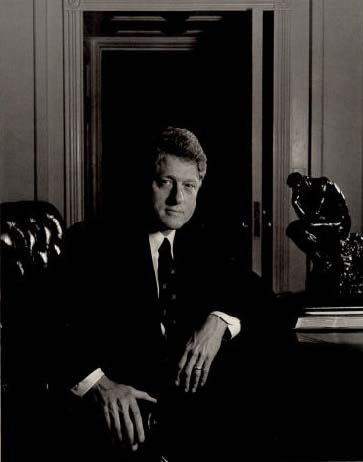
Three prominent people in the US / Iraq war have used the word `crusade' : Osama Bin Laden, ex-Prudent Bill Clinton, and President George W. Bush.
Professor Madden explains the history of the crusades in this well written article.
The key passage for me are:
1. the Crusades to the East were in every way defensive wars. They were a direct response to Muslim aggression—an attempt to turn back or defend against Muslim conquests of Christian lands.
2. From the time of Mohamed, the means of Muslim expansion was always the sword. Muslim thought divides the world into two spheres, the Abode of Islam and the Abode of War. Christianity—and for that matter any other non-Muslim religion—has no abode.
3. in traditional Islam, Christian and Jewish states must be destroyed and their lands conquered.
4. The word crusade is modern. Medieval Crusaders saw themselves as pilgrims, performing acts of righteousness on their way to the Holy Sepulcher. ( a Christian church now within the walled Old City of Jerusalem. The ground on which the church rests is venerated by most Christians as Golgotha[1], the Hill of Calvary, where the New Testament describes that Jesus was crucified[2]. It also is said to contain the place where Jesus was reportedly buried (the sepulchre). The church has been an important pilgrimage destination since the 4th century. )
What does this mean?
Are Islamist extremist like Bin Laden or Iranian leaders going to attempt to destroy Israel? And is this Iraq war somehow connected to a plan ro stop the spread of radical Islam in the middle East? Did we really go after Sadaam because of his anti Israel position? ( During the 1991 Gulf War, Saddam Hussein directed an unprovoked attack on Israel with 39 Scuds slamming into Israel's coastal plain, killing two people and wounding hundreds.And Saddam also reportedly compensated financial suicide bombers in Israel.)
The Real History of the Crusades
By Thomas F. Madden
With the possible exception of Umberto Eco, medieval scholars are not used to getting much media attention. We tend to be a quiet lot (except during the annual bacchanalia we call the International Congress on Medieval Studies in Kalamazoo, Michigan, of all places), poring over musty chronicles and writing dull yet meticulous studies that few will read. Imagine, then, my surprise when within days of the September 11 attacks, the Middle Ages suddenly became relevant.
As a Crusade historian, I found the tranquil solitude of the ivory tower shattered by journalists, editors, and talk-show hosts on tight deadlines eager to get the real scoop. What were the Crusades?, they asked. When were they? Just how insensitive was President George W. Bush for using the word "crusade" in his remarks? With a few of my callers I had the distinct impression that they already knew the answers to their questions, or at least thought they did. What they really wanted was an expert to say it all back to them. For example, I was frequently asked to comment on the fact that the Islamic world has a just grievance against the West. Doesn’t the present violence, they persisted, have its roots in the Crusades’ brutal and unprovoked attacks against a sophisticated and tolerant Muslim world? In other words, aren’t the Crusades really to blame?
Osama bin Laden certainly thinks so. In his various video performances, he never fails to describe the American war against terrorism as a new Crusade against Islam. Ex-president Bill Clinton has also fingered the Crusades as the root cause of the present conflict. In a speech at Georgetown University, he recounted (and embellished) a massacre of Jews after the Crusader conquest of Jerusalem in 1099 and informed his audience that the episode was still bitterly remembered in the Middle East. (Why Islamist terrorists should be upset about the killing of Jews was not explained.) Clinton took a beating on the nation’s editorial pages for wanting so much to blame the United States that he was willing to reach back to the Middle Ages. Yet no one disputed the ex-president’s fundamental premise.
Well, almost no one. Many historians had been trying to set the record straight on the Crusades long before Clinton discovered them. They are not revisionists, like the American historians who manufactured the Enola Gay exhibit, but mainstream scholars offering the fruit of several decades of very careful, very serious scholarship. For them, this is a "teaching moment," an opportunity to explain the Crusades while people are actually listening. It won’t last long, so here goes.
Misconceptions about the Crusades are all too common. The Crusades are generally portrayed as a series of holy wars against Islam led by power-mad popes and fought by religious fanatics. They are supposed to have been the epitome of self-righteousness and intolerance, a black stain on the history of the Catholic Church in particular and Western civilization in general. A breed of proto-imperialists, the Crusaders introduced Western aggression to the peaceful Middle East and then deformed the enlightened Muslim culture, leaving it in ruins. For variations on this theme, one need not look far. See, for example, Steven Runciman’s famous three-volume epic, History of the Crusades, or the BBC/A&E documentary, The Crusades, hosted by Terry Jones. Both are terrible history yet wonderfully entertaining.
So what is the truth about the Crusades? Scholars are still working some of that out. But much can already be said with certainty. For starters, the Crusades to the East were in every way defensive wars. They were a direct response to Muslim aggression—an attempt to turn back or defend against Muslim conquests of Christian lands.
Christians in the eleventh century were not paranoid fanatics. Muslims really were gunning for them. While Muslims can be peaceful, Islam was born in war and grew the same way. From the time of Mohammed, the means of Muslim expansion was always the sword. Muslim thought divides the world into two spheres, the Abode of Islam and the Abode of War. Christianity—and for that matter any other non-Muslim religion—has no abode. Christians and Jews can be tolerated within a Muslim state under Muslim rule. But, in traditional Islam, Christian and Jewish states must be destroyed and their lands conquered. When Mohammed was waging war against Mecca in the seventh century, Christianity was the dominant religion of power and wealth. As the faith of the Roman Empire, it spanned the entire Mediterranean, including the Middle East, where it was born. The Christian world, therefore, was a prime target for the earliest caliphs, and it would remain so for Muslim leaders for the next thousand years.
With enormous energy, the warriors of Islam struck out against the Christians shortly after Mohammed’s death. They were extremely successful. Palestine, Syria, and Egypt—once the most heavily Christian areas in the world—quickly succumbed. By the eighth century, Muslim armies had conquered all of Christian North Africa and Spain. In the eleventh century, the Seljuk Turks conquered Asia Minor (modern Turkey), which had been Christian since the time of St. Paul. The old Roman Empire, known to modern historians as the Byzantine Empire, was reduced to little more than Greece. In desperation, the emperor in Constantinople sent word to the Christians of western Europe asking them to aid their brothers and sisters in the East.
That is what gave birth to the Crusades. They were not the brainchild of an ambitious pope or rapacious knights but a response to more than four centuries of conquests in which Muslims had already captured two-thirds of the old Christian world. At some point, Christianity as a faith and a culture had to defend itself or be subsumed by Islam. The Crusades were that defense.
Pope Urban II called upon the knights of Christendom to push back the conquests of Islam at the Council of Clermont in 1095. The response was tremendous. Many thousands of warriors took the vow of the cross and prepared for war. Why did they do it? The answer to that question has been badly misunderstood. In the wake of the Enlightenment, it was usually asserted that Crusaders were merely lacklands and ne’er-do-wells who took advantage of an opportunity to rob and pillage in a faraway land. The Crusaders’ expressed sentiments of piety, self-sacrifice, and love for God were obviously not to be taken seriously. They were only a front for darker designs.
During the past two decades, computer-assisted charter studies have demolished that contrivance. Scholars have discovered that crusading knights were generally wealthy men with plenty of their own land in Europe. Nevertheless, they willingly gave up everything to undertake the holy mission. Crusading was not cheap. Even wealthy lords could easily impoverish themselves and their families by joining a Crusade. They did so not because they expected material wealth (which many of them had already) but because they hoped to store up treasure where rust and moth could not corrupt. They were keenly aware of their sinfulness and eager to undertake the hardships of the Crusade as a penitential act of charity and love. Europe is littered with thousands of medieval charters attesting to these sentiments, charters in which these men still speak to us today if we will listen. Of course, they were not opposed to capturing booty if it could be had. But the truth is that the Crusades were notoriously bad for plunder. A few people got rich, but the vast majority returned with nothing.
* * *
Urban II gave the Crusaders two goals, both of which would remain central to the eastern Crusades for centuries. The first was to rescue the Christians of the East. As his successor, Pope Innocent III, later wrote:
How does a man love according to divine precept his neighbor as himself when, knowing that his Christian brothers in faith and in name are held by the perfidious Muslims in strict confinement and weighed down by the yoke of heaviest servitude, he does not devote himself to the task of freeing them? ...Is it by chance that you do not know that many thousands of Christians are bound in slavery and imprisoned by the Muslims, tortured with innumerable torments?
"Crusading," Professor Jonathan Riley-Smith has rightly argued, was understood as an "an act of love"—in this case, the love of one’s neighbor. The Crusade was seen as an errand of mercy to right a terrible wrong. As Pope Innocent III wrote to the Knights Templar, "You carry out in deeds the words of the Gospel, ‘Greater love than this hath no man, that he lay down his life for his friends.’"
The second goal was the liberation of Jerusalem and the other places made holy by the life of Christ. The word crusade is modern. Medieval Crusaders saw themselves as pilgrims, performing acts of righteousness on their way to the Holy Sepulcher. The Crusade indulgence they received was canonically related to the pilgrimage indulgence. This goal was frequently described in feudal terms. When calling the Fifth Crusade in 1215, Innocent III wrote:
Consider most dear sons, consider carefully that if any temporal king was thrown out of his domain and perhaps captured, would he not, when he was restored to his pristine liberty and the time had come for dispensing justice look on his vassals as unfaithful and traitors...unless they had committed not only their property but also their persons to the task of freeing him? ...And similarly will not Jesus Christ, the king of kings and lord of lords, whose servant you cannot deny being, who joined your soul to your body, who redeemed you with the Precious Blood...condemn you for the vice of ingratitude and the crime of infidelity if you neglect to help Him?
The reconquest of Jerusalem, therefore, was not colonialism but an act of restoration and an open declaration of one’s love of God. Medieval men knew, of course, that God had the power to restore Jerusalem Himself—indeed, He had the power to restore the whole world to His rule. Yet as St. Bernard of Clairvaux preached, His refusal to do so was a blessing to His people:
Again I say, consider the Almighty’s goodness and pay heed to His plans of mercy. He puts Himself under obligation to you, or rather feigns to do so, that He can help you to satisfy your obligations toward Himself.... I call blessed the generation that can seize an opportunity of such rich indulgence as this.
It is often assumed that the central goal of the Crusades was forced conversion of the Muslim world. Nothing could be further from the truth. From the perspective of medieval Christians, Muslims were the enemies of Christ and His Church. It was the Crusaders’ task to defeat and defend against them. That was all. Muslims who lived in Crusader-won territories were generally allowed to retain their property and livelihood, and always their religion. Indeed, throughout the history of the Crusader Kingdom of Jerusalem, Muslim inhabitants far outnumbered the Catholics. It was not until the 13th century that the Franciscans began conversion efforts among Muslims. But these were mostly unsuccessful and finally abandoned. In any case, such efforts were by peaceful persuasion, not the threat of violence.
The Crusades were wars, so it would be a mistake to characterize them as nothing but piety and good intentions. Like all warfare, the violence was brutal (although not as brutal as modern wars). There were mishaps, blunders, and crimes. These are usually well-remembered today. During the early days of the First Crusade in 1095, a ragtag band of Crusaders led by Count Emicho of Leiningen made its way down the Rhine, robbing and murdering all the Jews they could find. Without success, the local bishops attempted to stop the carnage. In the eyes of these warriors, the Jews, like the Muslims, were the enemies of Christ. Plundering and killing them, then, was no vice. Indeed, they believed it was a righteous deed, since the Jews’ money could be used to fund the Crusade to Jerusalem. But they were wrong, and the Church strongly condemned the anti-Jewish attacks.
Fifty years later, when the Second Crusade was gearing up,
St. Bernard frequently preached that the Jews were not to be persecuted:Ask anyone who knows the Sacred Scriptures what he finds foretold of the Jews in the Psalm. "Not for their destruction do I pray," it says. The Jews are for us the living words of Scripture, for they remind us always of what our Lord suffered.... Under Christian princes they endure a hard captivity, but "they only wait for the time of their deliverance."
Nevertheless, a fellow Cistercian monk named Radulf stirred up people against the Rhineland Jews, despite numerous letters from Bernard demanding that he stop. At last Bernard was forced to travel to Germany himself, where he caught up with Radulf, sent him back to his convent, and ended the massacres.
It is often said that the roots of the Holocaust can be seen in these medieval pogroms. That may be. But if so, those roots are far deeper and more widespread than the Crusades. Jews perished during the Crusades, but the purpose of the Crusades was not to kill Jews. Quite the contrary: Popes, bishops, and preachers made it clear that the Jews of Europe were to be left unmolested. In a modern war, we call tragic deaths like these "collateral damage." Even with smart technologies, the United States has killed far more innocents in our wars than the Crusaders ever could. But no one would seriously argue that the purpose of American wars is to kill women and children.
By any reckoning, the First Crusade was a long shot. There was no leader, no chain of command, no supply lines, no detailed strategy. It was simply thousands of warriors marching deep into enemy territory, committed to a common cause. Many of them died, either in battle or through disease or starvation. It was a rough campaign, one that seemed always on the brink of disaster. Yet it was miraculously successful. By 1098, the Crusaders had restored Nicaea and Antioch to Christian rule. In July 1099, they conquered Jerusalem and began to build a Christian state in Palestine. The joy in Europe was unbridled. It seemed that the tide of history, which had lifted the Muslims to such heights, was now turning.
* * *
But it was not. When we think about the Middle Ages, it is easy to view Europe in light of what it became rather than what it was. The colossus of the medieval world was Islam, not Christendom. The Crusades are interesting largely because they were an attempt to counter that trend. But in five centuries of crusading, it was only the First Crusade that significantly rolled back the military progress of Islam. It was downhill from there.
When the Crusader County of Edessa fell to the Turks and Kurds in 1144, there was an enormous groundswell of support for a new Crusade in Europe. It was led by two kings, Louis VII of France and Conrad III of Germany, and preached by St. Bernard himself. It failed miserably. Most of the Crusaders were killed along the way. Those who made it to Jerusalem only made things worse by attacking Muslim Damascus, which formerly had been a strong ally of the Christians. In the wake of such a disaster, Christians across Europe were forced to accept not only the continued growth of Muslim power but the certainty that God was punishing the West for its sins. Lay piety movements sprouted up throughout Europe, all rooted in the desire to purify Christian society so that it might be worthy of victory in the East.
Crusading in the late twelfth century, therefore, became a total war effort. Every person, no matter how weak or poor, was called to help. Warriors were asked to sacrifice their wealth and, if need be, their lives for the defense of the Christian East. On the home front, all Christians were called to support the Crusades through prayer, fasting, and alms. Yet still the Muslims grew in strength. Saladin, the great unifier, had forged the Muslim Near East into a single entity, all the while preaching jihad against the Christians. In 1187 at the Battle of Hattin, his forces wiped out the combined armies of the Christian Kingdom of Jerusalem and captured the precious relic of the True Cross. Defenseless, the Christian cities began surrendering one by one, culminating in the surrender of Jerusalem on October 2. Only a tiny handful of ports held out.
The response was the Third Crusade. It was led by Emperor Frederick I Barbarossa of the German Empire, King Philip II Augustus of France, and King Richard I Lionheart of England. By any measure it was a grand affair, although not quite as grand as the Christians had hoped. The aged Frederick drowned while crossing a river on horseback, so his army returned home before reaching the Holy Land. Philip and Richard came by boat, but their incessant bickering only added to an already divisive situation on the ground in Palestine. After recapturing Acre, the king of France went home, where he busied himself carving up Richard’s French holdings. The Crusade, therefore, fell into Richard’s lap. A skilled warrior, gifted leader, and superb tactician, Richard led the Christian forces to victory after victory, eventually reconquering the entire coast. But Jerusalem was not on the coast, and after two abortive attempts to secure supply lines to the Holy City, Richard at last gave up. Promising to return one day, he struck a truce with Saladin that ensured peace in the region and free access to Jerusalem for unarmed pilgrims. But it was a bitter pill to swallow. The desire to restore Jerusalem to Christian rule and regain the True Cross remained intense throughout Europe.
The Crusades of the 13th century were larger, better funded, and better organized. But they too failed. The Fourth Crusade (1201-1204) ran aground when it was seduced into a web of Byzantine politics, which the Westerners never fully understood. They had made a detour to Constantinople to support an imperial claimant who promised great rewards and support for the Holy Land. Yet once he was on the throne of the Caesars, their benefactor found that he could not pay what he had promised. Thus betrayed by their Greek friends, in 1204 the Crusaders attacked, captured, and brutally sacked Constantinople, the greatest Christian city in the world. Pope Innocent III, who had previously excommunicated the entire Crusade, strongly denounced the Crusaders. But there was little else he could do. The tragic events of 1204 closed an iron door between Roman Catholic and Greek Orthodox, a door that even today Pope John Paul II has been unable to reopen. It is a terrible irony that the Crusades, which were a direct result of the Catholic desire to rescue the Orthodox people, drove the two further—and perhaps irrevocably—apart.
The remainder of the 13th century’s Crusades did little better. The Fifth Crusade (1217-1221) managed briefly to capture Damietta in Egypt, but the Muslims eventually defeated the army and reoccupied the city. St. Louis IX of France led two Crusades in his life. The first also captured Damietta, but Louis was quickly outwitted by the Egyptians and forced to abandon the city. Although Louis was in the Holy Land for several years, spending freely on defensive works, he never achieved his fondest wish: to free Jerusalem. He was a much older man in 1270 when he led another Crusade to Tunis, where he died of a disease that ravaged the camp. After St. Louis’s death, the ruthless Muslim leaders, Baybars and Kalavun, waged a brutal jihad against the Christians in Palestine. By 1291, the Muslim forces had succeeded in killing or ejecting the last of the Crusaders, thus erasing the Crusader kingdom from the map. Despite numerous attempts and many more plans, Christian forces were never again able to gain a foothold in the region until the 19th century.
* * *
One might think that three centuries of Christian defeats would have soured Europeans on the idea of Crusade. Not at all. In one sense, they had little alternative. Muslim kingdoms were becoming more, not less, powerful in the 14th, 15th, and 16th centuries. The Ottoman Turks conquered not only their fellow Muslims, thus further unifying Islam, but also continued to press westward, capturing Constantinople and plunging deep into Europe itself. By the 15th century, the Crusades were no longer errands of mercy for a distant people but desperate attempts of one of the last remnants of Christendom to survive. Europeans began to ponder the real possibility that Islam would finally achieve its aim of conquering the entire Christian world. One of the great best-sellers of the time, Sebastian Brant’s The Ship of Fools, gave voice to this sentiment in a chapter titled "Of the Decline of the Faith":
Our faith was strong in th’ Orient,
It ruled in all of Asia,
In Moorish lands and Africa.
But now for us these lands are gone
’Twould even grieve the hardest stone....
Four sisters of our Church you find,
They’re of the patriarchic kind:
Constantinople, Alexandria,
Jerusalem, Antiochia.
But they’ve been forfeited and sacked
And soon the head will be attacked.
Of course, that is not what happened. But it very nearly did. In 1480, Sultan Mehmed II captured Otranto as a beachhead for his invasion of Italy. Rome was evacuated. Yet the sultan died shortly thereafter, and his plan died with him. In 1529, Suleiman the Magnificent laid siege to Vienna. If not for a run of freak rainstorms that delayed his progress and forced him to leave behind much of his artillery, it is virtually certain that the Turks would have taken the city. Germany, then, would have been at their mercy.
Yet, even while these close shaves were taking place, something else was brewing in Europe—something unprecedented in human history. The Renaissance, born from a strange mixture of Roman values, medieval piety, and a unique respect for commerce and entrepreneurialism, had led to other movements like humanism, the Scientific Revolution, and the Age of Exploration. Even while fighting for its life, Europe was preparing to expand on a global scale. The Protestant Reformation, which rejected the papacy and the doctrine of indulgence, made Crusades unthinkable for many Europeans, thus leaving the fighting to the Catholics. In 1571, a Holy League, which was itself a Crusade, defeated the Ottoman fleet at Lepanto. Yet military victories like that remained rare. The Muslim threat was neutralized economically. As Europe grew in wealth and power, the once awesome and sophisticated Turks began to seem backward and pathetic—no longer worth a Crusade. The "Sick Man of Europe" limped along until the 20th century, when he finally expired, leaving behind the present mess of the modern Middle East.
From the safe distance of many centuries, it is easy enough to scowl in disgust at the Crusades. Religion, after all, is nothing to fight wars over. But we should be mindful that our medieval ancestors would have been equally disgusted by our infinitely more destructive wars fought in the name of political ideologies. And yet, both the medieval and the modern soldier fight ultimately for their own world and all that makes it up. Both are willing to suffer enormous sacrifice, provided that it is in the service of something they hold dear, something greater than themselves. Whether we admire the Crusaders or not, it is a fact that the world we know today would not exist without their efforts. The ancient faith of Christianity, with its respect for women and antipathy toward slavery, not only survived but flourished. Without the Crusades, it might well have followed Zoroastrianism, another of Islam’s rivals, into extinction.
Thomas F. Madden is associate professor and chair of the Department of History at Saint Louis University. He is the author of numerous works, including A Concise History of the Crusades, and co-author, with Donald Queller, of The Fourth Crusade: The Conquest of Constantinople.




 Posts
Posts


