Showing posts with label Iraq war. Show all posts

Wednesday, April 22, 2009

4,274 members of the U.S. Military had died in the Iraq war since it began


Boston Globe reports

As of Sunday, April 19, 2009, at least 4,274 members of the U.S. military had died in the Iraq war since it began in March 2003, according to an Associated Press count.

The figure includes eight military civilians killed in action. At least 3,433 military personnel died as a result of hostile action, according to the military's numbers.

The AP count is three fewer than the Defense Department's tally, last updated Friday at 10 a.m. EDT.

The British military has reported 179 deaths; Italy, 33; Ukraine, 18; Poland, 21; Bulgaria, 13; Spain, 11; Denmark, seven; El Salvador, five; Slovakia, four; Latvia and Georgia, three each; Estonia, Netherlands, Thailand and Romania, two each; and Australia, Hungary, Kazakhstan and South Korea, one death each.


http://www.boston.com/news/world/middleeast/articles/2009/04/19/us_military_deaths_in_iraq_war_at_4274/?rss_id=Boston.com+--+World+news

Tuesday, April 21, 2009

Asking a Federal Court to declare the Iraq war unconstitutional

Iraq War

NEWARK, N.J. — Attorneys representing a veteran and two mothers of soldiers are asking a federal court to declare the Iraq war unconstitutional.

They are doing so not for compensation but "in order to focus their case upon seeking the more important relief for the entire nation - an adjudication that the Constitution has been violated and that the People and, indeed, our Nation as a whole,have all been damaged as a result. It will be sufficient remedy for these plaintiffs if this Court rules directly upon the plain language and the original intention of the Constitution and thereby fulfills the Court’s primary responsibility, first articulated by Chief Justice Marshall, “to say what the law is.” Marbury v. Madison, supra, 5 U.S. (1 Cranch) at 177."

They said in court Tuesday that former President George W. Bush overstepped his constitutional authority to invade Iraq in 2003 without Congress officially declaring war.

It is a constitutional duty not to launch a war against a foreign sovereign state in the absence of a formal Congressional Declaration of War, a breach of that duty insofar as Iraq was invaded without such a Declaration of War, and injuries proximately caused by that breach that are of
types that are cognizable and redressable by the court.


They say that wasn't the intent of the country's "founding fathers" who wrote the constitution more than 200 years ago.

It is a constitutional duty not to launch a war against a foreign sovereign state in the absence of a formal Congressional Declaration of War, a breach of that duty insofar as Iraq was invaded without such a Declaration of War, and injuries proximately caused by that breach that are of
types that are cognizable and redressable by the court.


Thomas Jefferson

Thomas Jefferson, while serving as Ambassador to France, wrote James Madison praising the Convention for creating “an effectual check to the Dog of War by transferring the power of letting it loose from Executive to Legislative body, from those who are to spend to those who are to pay.”

Alexander_Hamilton

Alexander Hamilton had warned that: “Men love power”. Experience with the failed Articles of Confederation taught the Framers that “men loved power,” as Alexander Hamilton told the Convention on June 18. Thus, they adopted Montesquieu’s analysis that power must be checked by other power. The framers knew personal ambition animated people to become political figures and to exercise power of their positions. Fear that presidential ambition would shape national policy permeated the Constitutional Convention.35 Alexander Hamilton was especially concerned about presidential power. An intensely ambitious man himself, he understood how ambitious leaders created wars.


The government argued that courts do not have authority to rule on a political matter.

-----------------------------------------------------------------------

WASHINGTON - April 21 - WHAT: The constitutionality of the occupation of Iraq will be the subject of a Federal hearing.

WHEN: 11:00 AM Eastern, Tuesday, April 21, 2009.

WHERE: Newark, New Jersey Federal District Court, 50 Walnut Street, Newark, NJ, Room #4105

WHO: Rutgers Professor Frank Askin, Director of the law school's Constitutional Litigation Clinic at Rutgers School of Law-Newark, and Bennet Zurofsky, Newark attorney who is general Counsel of New Jersey Peace Action, will appear on behalf of the plaintiffs to challenge the legality of the invasion of Iraq without a Congressional Declaration of War. The plaintiffs are New Jersey Peace Action, an affiliate of the nation's largest non-profit peace organization, Peace Action; an Iraq war veteran; and two New Jersey mothers, members of Military Families Speak Out, whose sons were deployed in Iraq.

BACKGROUND: "The current war in Iraq began in a highly questionable way when the Congress ceded its authority to declare war to the president. The U.S. is now dropping bombs from unmanned drones onto Pakistan, killing civilians, without war ever against Pakistan ever being declared by Congress. It is time for the courts to issue a ruling on the constitutionality of this practice so we can avoid making such foreign policy mistakes in the future and so the people can hold their congressional representatives accountable for past mistakes," said Madelyn Hoffman, Executive Director of NJ Peace Action. She also notes that Obama's Department of Justice have simply adopted the Bush Department of Justice motion instead of withdrawing or at least modifying its positions. The April 21 hearing before U.S. District Court Judge Jose L. Linares is in response to the government's motion to dismiss the Complaint.

The brief in opposition to the motion to dismiss the lawsuit can be found at http://law.newark.rutgers.edu/files/u/PltfsBriefInOppToDefsMotionToDismiss.pdf

The complaint was drafted by Rutgers' law students under Professor Askin's supervision, after a yearlong study of the Constitutional Convention of 1787 and the adoption of the Constitution's Article I, Section 8, lodging the power to declare war in the Congress, rather than the President.

The suit does not ask the Court to take any direct action against ongoing activities in Iraq. It claims that the President is not authorized under the Constitution to launch a preemptive war against a sovereign nation and seeks a Declaration that can be used as a guide to the legality of such actions in the future.


###
Founded in 1957, Peace Action, the United States' largest peace and disarmament organization with over 100,000 members and nearly 100 chapters in 34 states, works to achieve the abolition of nuclear weapons, promote government spending priorities that support human needs and encourage real security through international cooperation and human rights.

Sunday, January 18, 2009

Bush's Legacy must include Prosocution of his Crimes

Forgive and forget all of the crimes of the Bush Administration and instead focus on the future would be in itself criminal and inexcusable- as was much of what happened during the last 8 years.

Well summed up by Kieth Olbereman in this video

8 years in 8 minutes - accomplishments of George W. Bush - Keith Olberman

Saturday, September 06, 2008

Bush spying on Iraq? Administration declines to comment.

BAGHDAD — The Iraqi government reacted with concern and dismay on Friday to allegations that American officials spied on Prime Minister Nuri Kamal al-Maliki, and warned that it could affect negotiations over the continuing American troop presence in the country.

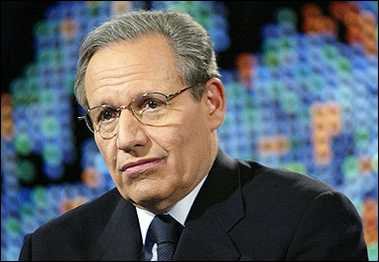
The claims about espionage against senior Iraqi government figures appear in Bob Woodward’s book “The War Within: A Secret White House History, 2006-2008,” The Washington Post reported Friday.


Ali al-Dabbagh, a government spokesman, said Mr. Maliki’s government would seek explanations and assurances about the conduct of the C.I.A. and other intelligence agencies.

“If it is a fact, it reflects that there is no trust and it reflects also that the institutions in the United States are used to spying on their friends and their enemies in the same way,” he said. “If it is true, it casts a shadow on the future relations with such institutions.”

Haidar al-Abadi, a member of Mr. Maliki’s Dawa Party and a senior adviser to the prime minister, said that he preferred to wait until the American government answered the accusation officially. But he added, “If it is true, we will demand guarantees that this will not happen again.”

He also indicated that the concerns may run deep enough for Iraqi negotiators to seek guarantees in the continuing discussions to frame a long-term security agreement governing the continuing presence of American troops in Iraq


WASHINGTON POST STORY
U.S. Spied on Iraqi Leaders, Book Says
Woodward Also Reveals That Political Fears Kept War Strategy Review 'Under the Radar'

By Steve Luxenberg
Washington Post Staff Writer
Friday, September 5, 2008; A01

The Bush administration has conducted an extensive spying operation on Prime Minister Nouri al-Maliki, his staff and others in the Iraqi government, according to a new book by Washington Post associate editor Bob Woodward.

"We know everything he says," according to one of multiple sources Woodward cites about the practice in "The War Within: A Secret White House History, 2006-2008," scheduled for release Monday.

Surge not cause of decrease in violence

The book also says that the U.S. troop "surge" of 2007, in which President Bush sent nearly 30,000 additional U.S. combat forces and support troops to Iraq, was not the primary factor behind the steep drop in violence there during the past 16 months.

Rather, Woodward reports, "groundbreaking" new covert techniques enabled U.S. military and intelligence officials to locate, target and kill insurgent leaders and key individuals in extremist groups such as al-Qaeda in Iraq.

Woodward does not disclose the code names of these covert programs or provide much detail about them, saying in the book that White House and other officials cited national security concerns in asking him to withhold specifics.

Overall, Woodward writes, four factors combined to reduce the violence: the covert operations; the influx of troops; the decision by militant cleric Moqtada al-Sadr to rein in his powerful Mahdi Army; and the so-called Anbar Awakening, in which tens of thousands of Sunnis turned against al-Qaeda in Iraq and allied with U.S. forces.

The book is Woodward's fourth to examine the inner debates of the Bush administration and its handling of the Iraq and Afghanistan wars. The Washington Post will run a four-part series based on the book beginning Sunday. Fox News published a report about the book on its Web site last night after obtaining a copy ahead of the release date.


The 487-page book concentrates on Bush's leadership and governing style, based on more than 150 interviews with the president's national security team, senior deputies and other key intelligence, diplomatic and military players. Woodward also conducted two on-the-record interviews with Bush in May.

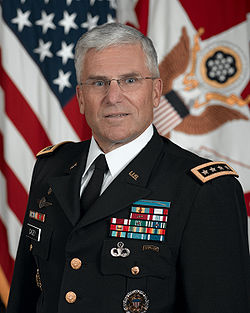
The book portrays an administration riven by dissension, either unwilling or slow to confront the deterioration of its strategy in Iraq during the summer and early fall of 2006. Publicly, Bush maintained that U.S. forces were "winning"; privately, he came to believe that the military's long-term strategy of training Iraq security forces and handing over responsibility to the new Iraqi government was failing. Eventually, Woodward writes, the president lost confidence in the two military commanders overseeing the war at the time: Gen. George W. Casey Jr., then commander of coalition forces in Iraq, and Gen. John P. Abizaid, then head of U.S. Central Command.

Bush's secrecy caused by midterm election fears

In October 2006, the book says, Bush asked Stephen J. Hadley, his national security adviser, to lead a closely guarded review of the Iraq war. That first assessment did not include military participants and proceeded secretly because of White House fears that news coverage of a review might damage Republican chances in the midterm congressional elections.


Rice was against the Surge


"We've got to do it under the radar screen because the electoral season is so hot," Hadley is quoted as telling Secretary of State Condoleezza Rice, who is described as challenging the president on the wisdom of sending additional troops to Iraq. "You're not getting a clear picture of what's going on on the ground," she told the president, the book says.

The quality and credibility of information about the war's progress became a source of ongoing tension within the administration, according to the book. Rice complained about the Defense Department's "overconfident" briefings during the tenure of Secretary Donald H. Rumsfeld. Rather than receiving options on the war, Bush would get "a fable, a story . . . that skirted the real problems," Rice is quoted as saying.

Stephan Hadley was key man

According to Woodward, the president maintained an odd detachment from the reviews of war policy during this period, turning much of the process over to Hadley. "Let's cut to the chase," Bush told Woodward, "Hadley drove a lot of this."

Nor, Woodward reports, did Bush express much urgency for change during the months when sectarian killings and violent attacks against U.S. forces in Iraq began rising, reaching more than 1,400 incidents a week by October 2006 -- an average of more than eight an hour. "This is nothing that you hurry," he told Woodward in one of the interviews, when asked whether he had given his advisers a firm deadline for recommending a revised war strategy.

In response to a question about how the White House settled on a troop surge of five brigades after the military leadership in Washington had reluctantly said it could provide two, Bush said: "Okay, I don't know this. I'm not in these meetings, you'll be happy to hear, because I got other things to do."

The book presents an evolving portrait of the president's decision-making. On the one hand, the book portrays Bush as tentative and slow to react to the escalating violence in Iraq; on the other, once he decides that a surge is required, he is shown acting with focus and determination to move ahead with his plan in the face of strong resistance from his top military advisers at the Joint Chiefs of Staff.


Administration considered impact of spying on Maliki


Woodward also depicts the development of a close working relationship between Bush and Maliki, with the president leaning on the Iraqi leader to govern evenhandedly and to take decisive action against sectarianism. "I've worked hard to get in a position where we can relate human being to human being, and where I try to understand his frustrations and his concerns, but also in a place where I am capable of getting him to listen to me," Bush told Woodward.

Given Bush's efforts to earn Maliki's trust, the surveillance of the Iraqi prime minister caused some consternation among several senior U.S. officials, who questioned whether it was worth the risk, Woodward reports. One official knowledgeable about the surveillance "recognized the sensitivity of the issue and then asked, 'Would it be better if we didn't?' "


Commanding General: one big problem with the war was the president himself


Meanwhile, Woodward reports that Casey, the president's commanding general in Iraq from 2004 to 2007, came to believe that Bush did not understand the nature of the Iraq war, that the president focused too much on body counts as a measure of progress.

"Casey had long concluded that one big problem with the war was the president himself," Woodward writes. "He later told a colleague in private that he had the impression that Bush reflected the 'radical wing of the Republican Party that kept saying, "Kill the bastards! Kill the bastards! And you'll succeed." ' "

Asked about his interest in body counts, Bush told Woodward: "I asked that on occasion to find out whether or not we're fighting back. Because the perception is that our guys are dying and they're not. Because we don't put out numbers. We don't have a tally. On the other hand, if I'm sitting here watching the casualties come in, I'd at least like to know whether or not our soldiers are fighting."

The discord between Bush and Casey is one manifestation of the often-debilitating rift that Woodward portrays between the U.S. military and its civilian leadership. The book describes a "near revolt" in late 2006 by the Joint Chiefs of Staff, who felt that their advice was not reaching the president. Adm. Michael Mullen, then serving as chief of naval operations, expressed fear that the military would "take the fall" for a failure in Iraq. According to the book, Casey and Abizaid resolutely opposed the large surge that the president ultimately ordered, as did Rumsfeld. Casey went so far as to refer to Baghdad as a "troop sump." Within the administration, only the National Security Council staff strongly supported the surge plan.

Bush changes the team

In the midst of the surge debate, Bush decided to replace Rumsfeld, who had served as defense secretary throughout the war and had long argued that the United States should "take the training wheels off the Iraqi government." Bush chose Rumsfeld's replacement, Robert M. Gates, without consulting Vice President Cheney, Rumsfeld's chief patron, the book reports. Bush informed Cheney of his decision on Nov. 6, 2006, the day before the mid-term elections. "Well, Mr. President, I disagree," Cheney is quoted as saying, "but obviously it's your call."

Woodward's account also includes a portrait of Gen. David H. Petraeus, who replaced Casey in Iraq. In one scene in the Oval Office in January 2007, Bush tells his new commander in Iraq that the surge is his attempt to "double down." According to Woodward, Petraeus replies, "Mr. President, this is not double down. This is all in."


"The War Within" also tells the story of retired Gen. Jack Keane, a former Army vice chief of staff who used his high-level contacts in the White House and the Pentagon to influence war policy and major military personnel moves. A friend and mentor of Petraeus, Keane made regular visits to Iraq to advise the new commanding general and then briefed Cheney about each trip. In turn, Woodward reports, Bush sent a back-channel message to Petraeus through Keane, circumventing the chain of command.

In a critical epilogue assessing the president's performance as commander-in-chief, Woodward concludes that Bush "rarely was the voice of realism on the Iraq war" and "too often failed to lead."

During the interviews with Woodward, the president spoke of the war as part of a recentering of American power in the Middle East. "And it should be," Bush said. "And the reason it should be: It is the place from which a deadly attack emanated. And it is the place where further deadly attacks could emanate."

The president also conceded: "This war has created a lot of really harsh emotion, out of which comes a lot of harsh rhetoric. One of my failures has been to change the tone in Washington."

Tuesday, March 25, 2008

Cheney video: They volunteered to be sacrificed.

4,000 US military personell killed ... and counting... already 4006....


He thinks and talks remarkably like Hitler who, when asked if he felt badly about the thousands of young soldiers dying at Stalingrad, responded: "Well thats what young soldiers are for" - meaning to be killed and sacrificed. The more that die the more important Cheney feels his contribution to history will be considered.

Cheney video: They volunteered to be sacrificed.

Friday, March 21, 2008

The Daily Show Remembers “Iraq: The First Five Years”


Stewart: “Hard to believe folks — five years. And they said it wouldn’t last. No, seriously, they said it wouldn’t last.”

MR. RUSSERT: [D]o you think the American people are prepared for a long, costly, and bloody battle with significant American casualties?

VICE PRES. CHENEY: Well, I don’t think it’s likely to unfold that way, Tim.

RUMSFELD: It could last six days, six weeks. I doubt six months.

Sunday, February 24, 2008

The Obama Parable : To many wars equals not enough troops and supplies


While Barak Obama was debating Hillary Clinton he was trying to make the point that the invasion of Iraq had serious negative impact on the ongoing war in Afghanistan. He gave an illustration:

"You know, I've heard from an Army captain who was the head of a rifle platoon -- supposed to have 39 men in a rifle platoon," he said. "Ended up being sent to Afghanistan with 24 because 15 of those soldiers had been sent to Iraq. And as a consequence, they didn't have enough ammunition, they didn't have enough humvees. They were actually capturing Taliban weapons, because it was easier to get Taliban weapons than it was for them to get properly equipped by our current commander in chief."

From the Fact Check Desk: Obama's Army Anecdote

February 22, 2008 1:33 PM

ABC News Senior National Correspondent Jake Tapper:
http://blogs.abcnews.com/politicalpunch/2008/02/from-the-fact-3.html


Asked about the story in the Spin Room last night, Obama strategist David Axelrod told the National Review's Stephen Spruiell, "that was a discussion that a captain in the military had with our staff, and he asked that that be passed along to Senator Obama."

Conservatives have weighed in on this story, many of them challenging its veracity
Well, captains command companies, not rifle platoons. A rifle platoon is normally commanded by a 2nd lieutenant, sometimes (if short handed) by a senior sergeant. So for starters, Obama betrays a woeful ignorance of military organization and the chain of command. Then he remarks that the platoon was under-strength because 15 of its men had been “sent to Iraq.” Sorry, the Army doesn’t work that way. Platoons are organic units, consisting of three rifle squads, a heavy weapons squad, and a headquarters section. You can’t break it up. It is the smallest building block in the infantry that can conduct fire-and-movement tactics…

The idea that our guys were scrounging weapons and ammo because they were short is ludicrous. How much ammo you carry is done on a “per man” basis in the infantry–each solder carries a “basic load,” which is backed up by reserve supplies at company, battalion, and above. It is possible to run out of ammunition, temporarily, in the midst of an intense firefight…

To the best of my knowledge, no U.S. forces in either Afghanistan or Iraq ever ran out of ammunition for more than a few hours at most. When you consider that we were operating in Afghanistan at the tenuous end of a 8,000 mile supply line, that’s pretty impressive.


ARMY CAPTAIN DEFENDS STORY

I called the Obama campaign this morning to chat about this story, and was put in touch with the Army captain in question.

He told me his story, which I found quite credible, though for obvious reasons he asked that I not mention his name or certain identifying information.

Short answer: He backs up Obama's story.

The longer answer is worth telling, though.

The Army captain, a West Point graduate, did a tour in a hot area of eastern Afghanistan from the Summer of 2003 through Spring 2004.

Prior to deployment the Captain -- then a Lieutenant -- took command of a rifle platoon at Fort Drum. When he took command, the platoon had 39 members, but -- in ones and twos -- 15 members of the platoon were re-assigned to other units. He knows of 10 of those 15 for sure who went to Iraq, and he suspects the other five did as well.

The platoon was sent to Afghanistan with 24 men.

"We should have deployed with 39," he told me, "we should have gotten replacements. But we didn't. And that was pretty consistent across the battalion."

He adds that maybe a half-dozen of the 15 were replaced by the Fall of 2003, months after they arrived in Afghanistan, but never all 15.

As for the weapons and humvees, there are two distinct periods in this, as he explains -- before deployment, and afterwards.

At Fort Drum, in training, "we didn't have access to heavy weapons or the ammunition for the weapons, or humvees to train before we deployed."

What ammunition?

40 mm automatic grenade launcher ammunition for the MK-19, and ammunition for the .50 caliber M-2 machine gun ("50 cal.")

"We weren't able to train in the way we needed to train," he says. When the platoon got to Afghanistan they had three days to learn.

They also didn't have the humvees they were supposed to have both before deployment and once they were in Afghanistan, the Captain says.

"We should have had 4 up-armored humvees," he said. "We were supposed to. But at most we had three operable humvees, and it was usually just two."

So what did they do? "To get the rest of the platoon to the fight," he says, "we would use Toyota Hilux pickup trucks or unarmored flatbed humvees." Sometimes with sandbags, sometimes without.

Also in Afghanistan they had issues getting parts for their MK-19s and their 50-cals. Getting parts or ammunition for their standard rifles was not a problem.

"It was very difficult to get any parts in theater," he says, "because parts are prioritized to the theater where they were needed most -- so they were going to Iraq not Afghanistan."

"The purpose of going after the Taliban was not to get their weapons," he said, but on occasion they used Taliban weapons. Sometimes AK-47s, and they also mounted a Soviet-model DShK (or "Dishka") on one of their humvees instead of their 50 cal.

The Captain has spoken to Sen. Obama, he says, but this anecdote was relayed to Obama through an Obama staffer.

I find that Obama's anecdote checks out.

Some are quibbling about whether or not the "commander in chief" can be held responsible for how well our soldiers are being equipped, since Congress provides the funding for the military, but the Pentagon (and ultimately President Bush) are in charge of the funding mechanism.

I might suggest those on the blogosphere upset about this story would be better suited directing their ire at those responsible for this problem, which is certainly not new. That is, if they actually care about the men and women bravely serving our country at home and abroad.

- jpt

Thursday, January 24, 2008

US Military Deaths in Iraq at 3,931


How many Americans are we willing to sacrifice in Iraq now knowing that 935 false statements by President Bush, Vice President Cheney and other top administration officials led us into this fiasco?

By The Associated Press – 3 hours ago

As of Wednesday, Jan. 23, 2008, at least 3,931 members of the U.S. military have died since the beginning of the Iraq war in March 2003, according to an Associated Press count. The figure includes eight military civilians. At least 3,197 died as a result of hostile action, according to the military's numbers.

The AP count is two higher than the Defense Department's tally, last updated Wednesday at 10 a.m. EST.

The British military has reported 174 deaths; Italy, 33; Ukraine, 18; Poland, 21; Bulgaria, 13; Spain, 11; Denmark, seven; El Salvador, five; Slovakia, four; Latvia, three; Estonia, Netherlands, Thailand, Romania, two each; and Australia, Hungary, Kazakhstan, South Korea, one death each.US Military Deaths in Iraq at 3,931

By The Associated Press – 3 hours ago

As of Wednesday, Jan. 23, 2008, at least 3,931 members of the U.S. military have died since the beginning of the Iraq war in March 2003, according to an Associated Press count. The figure includes eight military civilians. At least 3,197 died as a result of hostile action, according to the military's numbers.

The AP count is two higher than the Defense Department's tally, last updated Wednesday at 10 a.m. EST.

The British military has reported 174 deaths; Italy, 33; Ukraine, 18; Poland, 21; Bulgaria, 13; Spain, 11; Denmark, seven; El Salvador, five; Slovakia, four; Latvia, three; Estonia, Netherlands, Thailand, Romania, two each; and Australia, Hungary, Kazakhstan, South Korea, one death each.

Friday, January 04, 2008

New Amnisty bill in Iraq proposed while Sunni leader held


Adnan al-Dulaimi case

Iraqi media reported that a number of politicians would ask parliament to strip Adnan al-Dulaimi, the head of a mainly Sunni party, of his parliamentary immunity.

A joint force of the Iraqi police and multinational forces recently found a cache of weapons in al-Dulaimi's house and investigations reportedly revealed the involvement of al-Dulaimi's son in the killings of civilians.

After the incident, Iraqi authorities transferred al-Dulaimi from his residence to the Rashid Hotel inside Baghdad's Green Zone to keep him under monitoring.

Al-Dulaimi's house was similarly raided last year and weapons were found inside it, but the matter was later settled after a meeting between him and US officials.

Qoutes of Adnan al-Dulaimi


* "Our participation in this so-called national unity government is weak and marginalized and our ministers have no authority to serve Iraq or its people."[1]

* "When you are forgotten and suffer psychological pressure you tend to go back to religion and appeal to God to end your ordeal, added to that the desire to take revenge on those who illegally threw you in jail, you tend to be a soft target for extremists."

* "In every meeting I have with US officials I repeat my appeal to them to take into consideration that they cannot keep people in prison indefinitely without charges.

* "It is just not right and gains them nothing but increasing extremists who spend their days in detention looking forward to one thing, which is to be released one day and to take their revenge."

* "They keep reassuring me that they would take action but they never did. They release [a] few dozens and the next day arrest hundreds."

* "There are now around 17,000 Iraqi detainees in Buka camp in the south. Most of them are innocent people. They get arrested and thrown in jail for months and years without charges and without trial, and while in prison they are approached by al-Qaeda people."

Amnesty bill


The Iraqi government took a small step towards national reconciliation by sending a draft amnesty bill to the parliament speaker.

The bill, drafted by the Shia-dominated government, falls far short of Sunni demands, however. It covers less than a quarter of those held in Iraqi prisons, and none of those held by the American military.

Sunni parliamentarians have argued that most prisoners are charged with terrorist crimes, rendering it ineffective.

Some also fear referring the bill to parliament will actually delay prisoner releases.

Ali al-Dabbagh, the government's spokesman, said the draft bill would exclude those imprisoned for a variety of crimes ranging from terrorism, kidnapping and rape to antiquities smuggling, adultery and homosexuality.

It also excludes senior figures of the former Baath government.

If passed in its current form, the bill could see some 5,000 prisoners released, al-Dabbagh said. The Iraqi government has about 20,000 people in custody, while the US military holds about 25,000.

Sunday, November 25, 2007

Bush should not to be blamed for lying


With continual revelations that the Bush administration at best manipulated information, and at worst made up information, as the justification of invading Iraq, it seems to many that the presumptive moral superiority that Bush and Company is out of whack.

But wait, science can explain:

In the new study, detailed in the November issue of the Journal of Applied Psychology, researchers find that when this line between right and wrong is ambiguous among people who think of themselves as having high moral standards, the do-gooders can become the worst of cheaters.

The results recall the seeming disconnect between the words and actions of folks like televangelist and fraud convict Jim Bakker or admitted meth-buyer Ted Haggard, former president of the National Evangelical Association, an umbrella group representing some 45,000 churches.

"The principle we uncovered is that when faced with a moral decision, those with a strong moral identity choose their fate (for good or for bad) and then the moral identity drives them to pursue that fate to the extreme," said researcher Scott Reynolds of the University of Washington Business School in Seattle. "So it makes sense that this principle would help explain what makes the greatest of saints and the foulest of hypocrites." (1)

The President, or rather the person who takes on that role, seems inclined to fall into presumptive moral superiority - and not just George W. Bush. Past Presidents have displayed the disregard for truth on their drive to press their (or the United Sates) moral superiority onto others.

The author Howard Zinn points out:"President Polk lied to the nation about the reason for going to war with Mexico in 1846. It wasn't that Mexico "shed American blood upon the American soil" but that Polk, and the slave-owning aristocracy, coveted half of Mexico.

President McKinley lied in 1898 about the reason for invading Cuba, saying we wanted to liberate the Cubans from Spanish control, but the truth is that he really wanted Spain out of Cuba so that the island could be open to United Fruit and other American corporations. He also lied about the reasons for our war in the Philippines, claiming we only wanted to "civilize" the Filipinos, while the real reason was to own a valuable piece of real estate in the far Pacific, even if we had to kill hundreds of thousands of Filipinos to accomplish that.

President Wilson lied about the reasons for entering the First World War, saying it was a war to "make the world safe for democracy," when it was really a war to make the world safe for the rising American power.

President Truman lied when he said the atomic bomb was dropped on Hiroshima because it was "a military target."

And everyone lied about Vietnam -- President Kennedy about the extent of our involvement, President Johnson about the Gulf of Tonkin and President Nixon about the secret bombing of Cambodia. They all claimed the war was to keep South Vietnam free of communism, but really wanted to keep South Vietnam as an American outpost at the edge of the Asian continent.

President Reagan lied about the invasion of Grenada, claiming falsely that it was a threat to the United States.

The elder Bush lied about the invasion of Panama, leading to the death of thousands of ordinary citizens in that country. And he lied again about the reason for attacking Iraq in 1991 -- hardly to defend the integrity of Kuwait, rather to assert U.S. power in the oil-rich Middle East.(2)

So in retrospect it was not George W. Bush and his cronies to blame for lying to the nation about Iraq, it was in their human nature.


People almost lie reflexively," University of Massachusetts psychologist Robert Feldman. reports. . "They don't think about it as part of their normal social discourse." But it is, the research showed. "It's tied in with self-esteem," says Feldman. "We find that as soon as people feel that their self-esteem is threatened, they immediately begin to lie at higher levels." (3)

President George W. Bush has low self esteem, for a variety of reasons. So it's not going to be in his nature to tell the truth.

Another problem with low self esteem is that the feeling of being seen as a looser can cause Mr. Bush's reluctance to bring the troops home, to grow. It Mr. Bush and his cronies who are pushing the idea that pulling troops out of Iraq would be conceding "defeat" and would mean that the American blood shed over there was in vain (Iraqi lives don't enter into the equation). Forgetting the fact that the two main reasons we went over there:

* Guaranteed that Iraq does not possess stockpiles of illicit weapons, including those which Donald Rumsfeld said were known to be "in the area around Tikrit and Baghdad and east, west, south and north somewhat"

* Deposed the evil dictator (the one we helped to power and supported for three decades), and killed his devil-spawn sons.

have been achieved.

Unfortunately for Mr. Bush, his stay the course policy, works against him. The majorities of Americans now say that it is no longer possible for the U.S. to "win" in Iraq (whatever that means) and favor a timetable for pulling troops out. And as polls show Bush' popularity decreasing, his self esteem lowers and he falls prey to another consequence of low self esteem -increased materialism.

Researchers have found that low self-esteem and materialism are not just a correlation, but also a causal relationship where low self esteem increases materialism.(4) On the world stage, for Mr. Bush this does not mean products, but countries. It is therefore not truly his fault that he feels the need to attack and occupy another country such as Iran - he can't help himself.

Luckily for the world Mr. Bush's time leading the United States is coming to an end.


And as we face our next election we should consider other findings in the scientific research:"Men lie no more than women, but they tend to lie to make themselves look better, while women are more likely to lie to make the other person feel better." We must realize therefore that we are doomed to be lead by lie-rs and our choice will be what types of lies we would prefer to hear.

If polled and asked of our feelings towards the current President, we should stand on higher moral grounds and lie - saying we love and respect him and think he has done and is doing a great job - in hopes of shifting Mr. Bush's prerogatives during his final days.

by Paul Grant (follower of Basho)

References:

1. http://news.yahoo.com/s/livescience/20071115/sc_livescience/oddlyhypocrisyrootedinhighmorals
2. Howard Zinn http://www.commondreams.org/views06/0314-24.htm
2. http://www.livescience.com/health/060515_why_lie.html
3.http://www.topix.com/tech/2007/11/scientists-find-that-low-self-esteem-and-materialism-goes-hand-in-hand

also referenced: http://www.alternet.org/blogs/waroniraq/68705/

Recommended Books:

With the Bush administration in permanent crisis, a renowned Washington psychoanalyst updates his portrait of George W.'s public persona—and how it has damaged the presidency.

Insightful and accessible, courageous and controversial, Bush on the Couch sheds startling new light on George W. Bush's psyche and its impact on the way he governs, tackling head-on the question few seem willing to ask: Is our president psychologically fit to run the country? With an eye for the subtleties of human behavior sharpened by thirty years of clinical practice, Dr. Justin A. Frank traces the development of Bush's character from childhood through his presidency, identifying and analyzing his patterns of thought, action, and communication. The result is a troubling portrait filled with important revelations about our nation's leader—including disturbing new insights into:

* How Bush reacted to the 2006 Democratic sweep in Congress with a new surge of troops into Iraq
* His telling habits and coping strategies—from his persistent mangling of English to his tendency to "go blank" in the midst of crisis
* The tearful public breakdown of his father, George H. W. Bush, and what it says about the former president's relationship to his prominent sons
* The debacle of Katrina—the moment when Bush's arrogance finally failed him

With a new introduction and afterword, Bush on the Couch offers the most thorough and candid portrait to date of arguably the most psychologically damaged president since Nixon.

Howard Zinn, who served as a bombardier in the Air Force in World War II, is the author of "A People's History of the United States" (HarperCollins, 1995). He is also the co-author, with Anthony Arnove, of "Voices of a People's History of the United States" (Seven Stories Press, 2004).

Thursday, November 08, 2007

Iraq plans raids on US backed 'beyond the law private security firms'


The Iraqi Interior Minister showing his resolve, will take risky actions against US sponsored terrorist also known as `beyond the law private security firms'.

His plan is to `raid' these firms to see if they are complying with new gun registration laws. The operative word being `raid.' The question of how many American lives will be lost, might be the point the the Interior Minister wants to get across to the American public - for undoubtedly the confrontations will pit American soldiers against American contractors.

The US leadership in Iraq blundered when Gen. David H. Petraeus, now the American commander in Iraq, was in charge of training and equipping Iraqi security forces and `lost' 190,000 fire arms. Maybe they ended up free of charge in the hands of the contractors? With the missing millions?

The Iraqi leadership's goal of `gun control' through registration seems a smart move, but `raiding' the lawless Western contractors- or even just threatening to do so, is not. The contractors should be removed, and reparations should be made for their bad behavior.


November 8, 2007
Iraq Plans to Confront Security Firms on Guns
By JAMES GLANZ

BAGHDAD, Nov. 7 — The Iraqi interior minister said Wednesday that he would authorize raids by his security forces on Western security firms to ensure that they were complying with tightened licensing requirements on guns and other weaponry, setting up the possibility of violent confrontations between the Iraqis and heavily armed Western guards.

The tightening of the requirements followed a shooting in September by one of those firms, Blackwater, that Iraqi authorities said left 17 Iraqis dead.

“Every company will be subject to such examination, and any company that does not follow the law will lose its license,” the minister, Jawad al-Bolani, said of the planned raids. “They are called security companies. They are not called violate-the-law companies.”

During a tour of the Interior Ministry compound in eastern Baghdad, Iraqi government officials also said for the first time that they accepted estimates by American oversight officials that some 190,000 pistols and automatic rifles supplied by the United States to Iraqi forces in 2004 and 2005 were unaccounted for.

Iraqi officials have created an elaborate computerized database to help recover the weapons and ensure that no more are lost, and officials took great pains on Wednesday to show the system to this reporter and his interpreter.

“We have 190,000 lost weapons because they were not distributed properly,” said Maj. Gen. Abdul Karim Khalaf, an Interior Ministry spokesman. “So we built this database.”


Many of those weapons were distributed when Gen. David H. Petraeus, now the American commander in Iraq, was in charge of training and equipping Iraqi security forces in 2004 and 2005. General Petraeus has said that he decided to arm the Iraqi forces as quickly as possible, before tracking systems were fully in place.


On Wednesday, Iraqi officials delicately placed blame for the loss of the weapons on the American military, saying that it had been impossible for the Iraqis to account for the weapons when they were not given necessary tracking information, such as serial numbers.

Within Baghdad’s relatively safe and heavily guarded Green Zone, there have been early indications of a battle over who controls Iraqi streets. Private security guards say that Iraqi police officers have already descended on Western compounds and stopped vehicles driven by Westerners to check for weapons violations in recent weeks.


Any extension of those measures into the rest of the country, known as the Red Zone, could quickly turn into armed confrontation. Westerners are wary of Interior Ministry checkpoints, some of which have been fake, as well as of ministry units, which are sometimes militia-controlled and have been implicated in sectarian killings. Western convoys routinely have to choose between the risk of stopping and the risk of accelerating past what appear to be official Iraqi forces.

And because Western convoys run by private security companies are often protecting senior American civilian and military officials, the Iraqi government’s struggle with the companies has in some cases become a sort of proxy tug-of-war with the United States.

That dynamic was laid bare in the weeks immediately after the shooting on Sept. 16 in Nisour Square in Baghdad. The Iraqi government at first suggested that it would ban Blackwater, which has a contract to protect American diplomats, from working in Iraq. But the government was embarrassed when it discovered that its legal options were limited, and the United States — after placing a few new restrictions on the company — quickly sent it back onto the streets.


Based on its own investigation, the Iraqi government has concluded that the Blackwater guards who opened fire committed murder. An American investigation led by the F.B.I. has not yet publicly announced any results.

The outlines of a struggle for primacy on the streets also seem apparent in what the Interior Ministry says is a decision to insist that weapons carried by members of Shiite-controlled militias that protect certain neighborhoods must also be registered. Asked about the vast areas of Baghdad patrolled by the powerful Mahdi Army, which was founded by the radical Shiite cleric Moktada al-Sadr, General Khalaf said that it too would be challenged.


“In the near future there is a campaign that will happen,” General Khalaf said. “We are delaying this campaign until we finish this database.”

Privately, Interior Ministry officials say that they had been surprised that the Iraqi investigators’ findings of culpability by the Blackwater guards had found such a sympathetic hearing elsewhere in the world, where for years there had been questions about the loyalties and capability of Interior Ministry officials.

In one sense, by emphasizing the new steps it is taking to control weapons, the Interior Ministry seems determined to leverage the respect shown for its investigators in such a high-profile case into an improved image over all. The strategy appears to be to concede that both American and Iraqi security forces have made mistakes in the past but that both were taking steps to put those problems behind them.

During one remarkable session on Wednesday, an administrative official at the ministry said that it had had problems with “ghost payrollers,” or fictitious employees, and political pressure in the past. But the official, Maj. Gen. Jihan Hussein, said that the ministry was squarely facing those problems.

“If you knew the pressures we have from members of Parliament to have their relatives employed by the ministry, you wouldn’t believe it,” General Hussein said.

But he said the ministry would not bow to those pressures. In a similar vein, Mr. Bolani said that the ministry’s strict new approach to weapons licenses would try to redress past mistakes.

And Mr. Bolani said he believed that legal action against Blackwater in Iraq was still possible in spite of immunity given to Western security contractors under Iraqi law. He said that third parties like nongovernmental organizations or the Iraqi Bar Association could bring suits on behalf of the victims of the Sept. 16 shootings.

“We are fully aware that the people must be given their rights, and there are cases that will be brought against the criminals,” Mr. Bolani said.

Ahmad Fadam contributed reporting.

Sunday, October 07, 2007

Dear Mr. President (2 videos)

Protest song: Dear Mr. President

I came across this on one of my favorite blogs- Crooks And Liers

Here are two versions of Pink's Dear Mr. President:

Live in NYC. (Acoustic)


Pink at Wembley Empire Pool, London, UK -w/ video in background


Alecia Moore (IPA pronunciation: [ə'li:ʃə 'mɔ:(ɹ)][1]) (born on September 8, 1979), known professionally as Pink (often stylized as P!nk), is an American singer-songwriter who gained prominence in 2000.

Pink released her first record, the R&B-based Can't Take Me Home, in 2000 via LaFace Records. Her pop rock-based second studio album, M!ssundaztood, was released in 2001 and is her biggest seller to date. 2003's Try This, her third album, failed to match the success of M!ssundaztood. After taking a break, Pink released her fourth studio album, I'm Not Dead (2006), which has been successful worldwide. Pink has sold over twenty-five million albums.

Pink, who follows a strict vegetarian lifestyle, is a prominent campaigner for PETA, contributing her voice towards causes such as KFC's alleged poor treatment of chickens. She sent a letter to Prince William criticizing him for fox hunting and one to Queen Elizabeth II protesting about the use of real fur in the bearskins of the Foot Guards and the Honourable Artillery Company. In November 2006 Pink mentioned in the News of the World that she was disgusted with fellow singer Beyoncé for wearing fur. Pink, in conjunction with PETA, recently criticized the Australian wool industry over its use of mulesing. In January 2007 Pink stated that she had been misled by PETA about mulesing and that she had not done enough research before lending her name to the campaign.

Her campaigning led to a headlining concert in Cardiff, Wales on August 21, 2007 which is PAW (Party for Animals Worldwide). This highlighted her involvement with animal cruelty problem

President Bush on Blackwater (video)

A flashback of Bush dodging a college freshman's question about what laws govern our mercenaries (Blackwater).

The President admits to not knowing, but assures that someone else must know.

This administration has continually sought ways to go outside of the law in programs such as Secret Prisons, Torture, Prisoner Rights and even Domestic Spying,


PREVIOUS POST ABOUT BLACKWATER:

Blackwater manager blamed for 2004 massacre in Fallujah
July 9th 2007


US Private mercenaries Mutilated in Fallujia


Video :BLACKWATER the US Secretive Mercenary Firm


Video- Iraq for Sale: The War Profiteers (part 4 of 8)

Please post commnents

Wednesday, September 26, 2007

Al Qaeda Holds “Kill A Cop Day” In Iraq Updated


September 25th, 2007 Posted By Pat Dollard.

r1487735922.jpg
A member of the Special Police Commandos gestures near a burnt vehicle after this morning’s suicide car bomb attack on police in Basra

Suicide bombers target cops in Basra, Fallujah, and Mosul, all in one day. Update: Fourth attack reported in Kut.

1. A suicide car bomber struck the police headquarters in Basra on Tuesday, killing at least three officers and wounding 20 people amid fears over the southern city’s deteriorating security situation.

Basra, Iraq’s second-largest city, 340 miles southeast of Baghdad, had been relatively peaceful for much of the war but has seen tensions rise as Shiite militias battle for control of the oil-rich area.

Maj. Gen. Abdul-Jalil Khalaf, Basra’s police chief, said one of the suicide bomber’s legs had been found tied to the steering wheel, and he blamed al-Qaida in Iraq for the attack.

“It seems that al-Qaida wants to make use of the fragile situation in the city caused by the tension among the parties and the city’s officials,” he said. “We cannot say that there is a security vacuum, but the security measures are less strong in the day than the night. After this attack, we will increase the police patrols in the day.”

Security concerns also rose after the British military last month pulled back its troops out of the city to a nearby airport to allow Iraqi security forces to take over—a move being closely watched by the U.S. military as it anticipates the eventual withdrawal of American forces in other areas of Iraq.


2. Mosul, Sept 25, (VOI)- Ninewa local police on Tuesday said a police chief was wounded as a suicide bomber blew himself up near him in the northern Iraqi city of Mosul.
“Chief of Abo Tamam police station, Lt. Colonel Abd Tobiyah, sustained injuries, today afternoon, when a suicide attacker detonated an explosives belt near him,” Brigadier Abdul Karim al-Juburi, head of Ninewa police operations room, told the independent news agency Voices of Iraq (VOI).

The source added “Tobiyah was supervising cars queuing in front of a petrol station in northern Mosul when the blast occurred.”

“The attack also left nine persons, including a judge, wounded,” said the source declining to name the wounded judge.

Mosul, capital city of Ninewa province, is 405 km north of Baghdad.

3. Falluja, Sept 25, (VOI)- A policeman was killed on Tuesday when a bomb exploded in the western Iraqi city of Falluja, a police source said.

“A roadside bomb detonated, today shortly before noon, near a police vehicle patrol in southern Falluja, killing a policeman,” the source told the independent news agency Voices of Iraq (VOI).

The source added “the blast also damaged a police vehicle.”

Falluja is 45 km west of Baghdad.

4.Kut, Sept 25, (VOI)- Suspected Al Qaeda gunmen blew up a policeman’s house in al-Kut al-Gharbiya district, while police forces discovered an unknown body in southern Kut, a police source said on Tuesday.

“Unknown armed men blew up a policeman’s house in Dour al-Shoaoon region in al-Kut al-Gharbiya district using high-explosive materials,” the source, who refused to be named, told the independent news agency Voices of Iraq (VOI).

“The house was empty, but the blast injured one passing by and damaged three houses,” he also said.

“The police opened investigation into the incident,” the source noted.

Meanwhile, the same source said that “police patrols found an unidentified body south of Kut and sent it to the forensic medicine department.”

“The body belongs to a man wearing civilian clothes and bore signs of gunshot wounds to different parts of the body,” the source added.

Kut, capital city of Wassit province, lies 180 km southeast Baghdad.

___

Associated Press writers Katarina Kratovac and Hamid Ahmed in Baghdad and Yahya Barzanji in Sulaimaniyah contributed to this report.

Wednesday, August 29, 2007

Bush Wants $50 Billion More for Iraq War

Bush Wants $50 Billion More for Iraq War
Planned Request Signals Confidence That Congress Won't Prevail on Pullout

President Bush: Fund my fiasco

President Bush plans to ask Congress next month for up to $50 billion in additional funding for the war in Iraq, a White House official said yesterday, a move that appears to reflect increasing administration confidence that it can fend off congressional calls for a rapid drawdown of U.S. forces.

We're simply bankrupting ourselves over Iraq.

The request -- which would come on top of about $460 billion in the fiscal 2008 defense budget and $147 billion in a pending supplemental bill to fund the wars in Afghanistan and Iraq -- is expected to be announced after congressional hearings scheduled for mid-September featuring the two top U.S. officials in Iraq. Army Gen. David H. Petraeus and Ambassador Ryan C. Crocker will assess the state of the war and the effect of the new strategy the U.S. military has pursued this year.

Yes the toothless congress will Air Freight the $$$$$ to Halliburton ASAP

The request is being prepared now in the belief that Congress will be unlikely to balk so soon after hearing the two officials argue that there are promising developments in Iraq but that they need more time to solidify the progress they have made, a congressional aide said.

Most of the additional funding in a revised supplemental bill would pay for the current counteroffensive in Iraq, which has expanded the U.S. force there by about 28,000 troops, to about 160,000. The cost of the buildup was not included in the proposed 2008 budget because Pentagon officials said they did not know how long the troop increase would last. The decision to seek about $50 billion more appears to reflect the view in the administration that the counteroffensive will last into the spring of 2008 and will not be shortened by Congress.

Some consideration is being given to trimming the new request by a few billion dollars, the White House official said. But, he added, "this is pretty close to a done deal." Almost all the spending is relatively noncontroversial, he added, with the vast majority of it necessary just to keep the U.S. military operating in Iraq. The official, who spoke on the condition of anonymity because he is not authorized to talk to reporters, said that the supplemental requests are likely to be "rolled together" and considered as one package.

The revised supplemental would total about $200 billion, indicating that the cost of the war in Iraq now exceeds $3 billion a week. The bill also covers the far smaller costs of the war in Afghanistan. The Pentagon said recently that the cost of the Iraq war has surpassed $330 billion, while the war in Afghanistan has cost $78 billion.

"We have said previously that after General Petraeus reports, we will be evaluating what adjustments may need to be made to our pending [fiscal 2008] supplemental request, which was sent up in February with the rest of the budget," White House spokesman Gordon Johndroe said last night. "I'm going to decline to speculate on this, as General Petraeus has not testified. Nor have any decisions been made at this stage about whether, when or what specific changes could be made."

A House Appropriations Committee aide said that an additional White House spending request has been anticipated but that it was expected to be far smaller, perhaps about $30 billion. "We haven't seen the details, but we'll give it the scrutiny it deserves," said Jim Manley, a spokesman for Senate Majority Leader Harry M. Reid (D-Nev.). "It's long past time for giving blank checks to the administration."

Despite widespread media anticipation of next month's Iraq hearings, Pentagon insiders say they do not expect them to result in any major changes in military strategy. The sessions are expected to occur the week of Sept. 10, with Petraeus and Crocker appearing before a total of four committees in the House and Senate.

"I don't see any surprises" coming out of the hearings, said an officer on the staff of the Joint Chiefs of Staff. He said he expects Petraeus and Crocker to focus on tactical security gains in and around Baghdad in recent months and on shifts in tribal allegiances in favor of U.S. forces, and to argue that those improvements may open a window for greater political reconciliation in Iraq over the next six or seven months.

In any event, this officer said, he expects the current counteroffensive to be maintained into next April. "The surge was designed to last for a year," he said. "I don't think they'll change that."

In a speech yesterday to the convention of the American Legion in Reno, Nev., Bush gave an optimistic assessment of recent events in the war, now in its fifth year. "There are unmistakable signs that our strategy is achieving the objectives we set out," he said. "The momentum is now on our side."

2 Year Anniversary of Katrina, and this Criminal Dares to ask for $50B for W A R!


What the money we're spending could be doing instead.... Updated at 1:44 PM

http://nationalpriorities.org/index.php?option=com_cont...

The War In Iraq Costs SO FAR...

$456,172,238,408

Instead, we could have insured
273,157,028
children for one year.

Instead, we could have built
4,107,403
additional housing units.


Instead, we could have hired
7,905,524
additional public school teachers for one year.

Instead, we could have paid for
60,420,205
children to attend a year of Head Start.


Instead, we could have provided
22,114,244
students four-year scholarships at public universities.

SO FAR, and the counter is running with $4,100 for every American household;
$1,500 for every American;
$3,400 for every taxpayer;
$11 million per hour and;
$275 million per day.

Think what that amount of money could have done if we'd invested it in alternative energy sources. At $4,100 per household, we could have made solar, wind, or other natural and renewable sources of energy available to each home in America, making oil and coal nearly obsolete in the heating and cooling of our homes. If we'd spent that on our auto industries and created more fuel efficient, cleaner, or even electric transportation, think what that could do for our dependence on oil and the unstable countries we do business with.

Monday, July 16, 2007

A Solution to the War in Iraq offered on Ebay


3PM Central Standard Time

Current high Bid = $6,100.00

81 bids


Among the bootleg albums, second-hand golf clubs and bargain linens on Internet auction site eBay, lot 150141399174 is perhaps more likely to attract the attention of the Pentagon.

"A Solution to the War in Iraq," is being offered by a US Army intelligence officer fed up with the conflict and anxious to attract some attention to what he says is a viable and face-saving solution to the four-year-old conflict.

"I am offering the winning bidder the solution to the war in Iraq," the seller, identified as "cptnabil," says in the bid.

"This is not a flippant or facetious offer... If you are the high bidder, I will send you a viable solution to the conflict in which we are currently engaged," the seller wrote.

The New York Post on Monday identified the seller as Army Captain Thad Krasnesky, who describes himself on eBay as a US Army military intelligence officer with an extensive background in the Middle East.

"I speak the language and understand the culture, history, and religion, well enough to construct a fair, honorable, and successful plan."

Cptnabil says he served in both the Gulf War and Iraq in military intelligence and had been involved in planning over 400 combat operations ranging from "terrorist cell take-downs to single-handed arms market raids."

"I disagree with the way the war is being handled," Krasnesky told The Post. "I think we're doing some good things over there but I think the end result is going to be bad."

Cptnabil did not immediately respond to email requests from AFP to confirm his identity.

Among potential bidders were senators, congressmen or possible presidential candidates, cptnabil wrote, suggesting to aides: "Maybe you should get everyone at the office to chip in and purchase my solution for them."

The lot comes with a buy-it-now price tag of five million dollars and if not sold will go to the highest bidder when the auction ends on Sunday.

The top bid around midday Monday was 20.50 dollars from a buyer whose most recent other bids were for gun parts, knives and military memorabilia.

A competing buyer had recently bid for women's shoes and unidentified body piercing accessories.

http://www.breitbart.com/article.php?id=070716181012.egd20m0h&show_article=1
Copyright AFP 2005, AFP stories and photos shall not be published, broadcast, rewritten for broadcast or publication or redistributed directly or indirectly in any medium

Friday, July 13, 2007

Will our leaders be charged with War Crimes?


Called to Account


The BBC has a must-listen show on radio tomorrow titled Called to Account (times noted further below) offering a theatrical version of Tony Blair's indictment for Iraq War-related crimes. This may inspire many on this side of the Atlantic pond to think about various strategies to hold America's current political leadership accountable for duplicity and mismanagement of America's national security portfolio -- and particularly for the Iraq War.

Democracy = Western Duplicity


Democracy has become a term derided in much of the world today because for many beleaguered peoples it has come to mean Western duplicity, uneven standards between the mighty and the weak, an excuse for invasion and occupation, a code word for regime change, or obsessive focus on ballots rather than healthy civil society institutions like courts and a free media that help to keep power accountable.

If 'Democracy' is ever going to shed its bad name, accountability must be one of its fundamental pillars in any genuine system of checks and balances. There should be a price paid for serious errors by national leaders -- and an even higher price paid by those who wield power with impunity and who lie to their publics in so-called democracies.

When the revelations of Abu Ghraib became public, Donald Rumsfeld should have resigned. The fact that he did not and was not fired did more to undermine the American brand than virtually anything up until that point.


If there was no accountability for crimes of that scale, why should other foreign states abroad empty their torture prisons or work against corruption or not falsely promise reforms to their people while engaging in self-dealing for themselves or their sectarian interests?


America is struggling with the mess it is in and trying to figure out the power dynamics of fixing blame and responsibility for the Iraq War on national leaders. The current reality is that there is little stomach among moderates and conservatives in the United States to impeach Cheney or Bush for lying America into a war whose end one way or another has disastrous consequences for the nation. This may change -- and certainly the calls for an impeachment process against Cheney have picked up some momentum.

But BBC Radio 4 will be broadcasting a play titled Called to Account this Saturday, 14 July 2007, at 2:30 pm UK Time and at 9:30 am EST. This can be listened to over the web live or downloaded to a podcast for later listening.


One of the principals involved in this production is British barrister and writer Philippe Sands whose book, Lawless World: America and the Making and Breaking of Global Rules -- From FDR's Atlantic Charter to George W. Bush's Illegal War, exposed the important fact that Prime Minister Blair and President Bush decided on war with Iraq in January 2003 no matter what the outcome of diplomatic efforts.

Sands is a very serious and thoughtful legal commentator who is part of the "reasonable middle" of British political society -- and the BBC's support of such a provocative legal simulation is something that might inspire similar exercises -- even in theatrical form if not real -- in the United States.

Philippe Sands: when Bush and Blair set off to war

An updated version of international lawyer Philippe Sands’ book, Lawless World, details of a memo of a meeting between George Bush and Tony Blair’s drive to go to war against Iraq without a second United Nations (UN) security council resolution or any evidence of weapons of mass destruction was revealed last week.


The memo shows that George Bush had decided to go to war without a second UN resolution and Tony Blair was “solidly” behind him.

Philippe Sands told a press briefing last week, “A very important meeting took place between Bush and Blair on 31 January 2003 – a two hour meeting referred to in Bob Woodward’s book Plan of Attack by George Bush as the ‘famous second resolution meeting’.

“It is abundantly clear from the material I’ve seen, which was prepared by one of the very small number of people who attended that meeting, that two significant factors stand out.

“Firstly, president Bush had explicitly decided to go to war without a second resolution and he made that view clear to the prime minister.

No evidence


“The prime minister’s response was that he was ‘solidly’ with the president. That indicated that in terms of his own personal decision making the prime minister had decided to go to war with or without a second resolution.

“The second element is that the material that I have referred to is that these two gentlemen were not in possession of hard evidence of weapons of mass destruction, which would give them any degree of confidence that they would get a second resolution and hence the discussions on what some would refer to as ‘dirty tricks’.

“The prime minister wanted a second resolution for political reasons – an ‘insurance policy’ he describes it. The view was that if anything went wrong with the military campaign or Saddam increased the stakes by burning the oil wells, killing children, or fomenting internal divisions within Iraq, a second resolution would provide international cover, including with the Arabs.

“The president tells him: ‘We’re going to go without one and the starting date is pencilled in for 10 March. The diplomatic strategy has to be worked around the military planning but I’ll help you get that. We’ll threaten and twist arms.


If Saddam fires

“‘And we are thinking of taking US spy planes with fighter cover, painting them in UN colours and sending them over Iraq. If Saddam fires on them he’ll be in material breach.’

“If you have hard evidence of weapons of mass destruction you do not have to engage in this.”

Sands continued, “An early decision was taken by the prime minister. He had not by that point had legal advice. The attorney general had been told by the prime minister not to give advice at that time, presumably to give the prime minister a reasonably free hand in his decision making.

“The prime minister is 100 percent behind the US president and looking for ways to deal with difficult domestic issues.

“President Bush didn’t think there was going to be an insurgency. He tells Blair, he ‘thought it unlikely there would be internecine warfare between the different religious and ethnic groups’.

“One would have expected the prime minister to say, ‘Hang on a second I’m getting different advice.’ But there is nothing in the memo that indicates that the prime minister said, ‘I think you might be wrong.’

“The two of them had concocted a strategy as far back as March/April 2002. It was to go down the UN route.

“They then concocted a plan to do that but that went belly-up because they had no evidence and from their perspective [UN inspectors] Blix and El Baradei didn’t deliver the smoking gun and Iraq was cooperating.”

Sands new revelations reveal that the push for a second resolution was at best an attempt to get an “insurance policy” and at worst a facade.

Troops

Philippe Sands said, “From a political perspective of two leaders’ personal decision to commit troops to war everything that followed was a sham.

“The prime minister still had the problem of delivering troops as a domestic political issue – this was before the marches and the debates in parliament.

“He couldn’t deliver troops without overcoming significant domestic obstacles. But I think he had made up his mind and any language which suggested he was dependent on a second resolution had gone. His decision was to proceed.

“George Bush had decided much earlier he could live without a second resolution. He has been straighter than the prime minister. His view on international law is that it’s all nonsense. It wasn’t a domestic issue for him. Bush had the freedom to go politically, Tony Blair was subject to enormous political constraints.

“Bush genuinely wanted to help Blair if he could get the second resolution. If Tony Blair had a quiescent media and population, no parliament to get through, the situation would have been very different.

“People ask why is this important? We face other serious challenges, such as Iran which is on the cusp of going off to the UN security council.

“What this material tends to indicate is that we cannot have a high level of confidence in the US president and the British prime minister’s ability to take hugely important decisions in an informed and sensible way.”


State of War
From Publishers Weekly
Starred Review. Lucid, balanced and brimming with surprises, this is a-to borrow a notorious phrase-slam dunk exposé of the CIA's recent snafus. New York Times reporter Risen is broadly sympathetic to the CIA, and his tactful use of inside sources shifts much of the blame away from field agents and toward the brass in Washington, where CIA Director George Tenet's eagerness to please his political masters and Defense Secretary Donald Rumsfeld's bureaucratic skills create the conditions for a perfect storm of intelligence failures. The book's disclosures about secret prisons, "renditions"-the transfer of suspects to countries which may torture them-and domestic wiretaps are likely to be talking points for some time, but its lasting value will be as a record of how the CIA came so tantalizingly close to the truth about Iraq's nonexistent nuclear arsenal. The retelling of one undercover operation shows the agency had direct evidence that there was no nuclear program in Iraq, but chose to doubt its source. Other scenes from the secret war on terror make novelist John Le Carre look like a timid plotter: a single misdirected message in 2004 brings down the agency's entire spy network in Iran, four years after a harebrained scheme had given Tehran flawed blueprints for a nuclear weapon-hoping to sow confusion, but possibly helping Iran to arm itself faster. Risen has written a thrilling, depressing and worrying book.
Copyright © Reed Business Information, a division of Reed Elsevier Inc. All rights reserved.

The Assassins' Gate : America in IraqFrom Publishers Weekly
Reviewed by Christopher Hitchens

It is extremely uncommon for any reporter to read another's work and to find that he altogether recognizes the scene being described. Reading George Packer's book, I found not only that I was remembering things I had forgotten, but also that I was finding things that I ought to have noticed myself.

His book rests on three main pillars: analysis of the intellectual origins of the Iraq war, summary of the political argument that preceded and then led to it, and firsthand description of the consequences on the ground. In each capacity, Packer shows himself once more to be the best chronicler, apart perhaps from John Burns of the New York Times, that the conflict has produced. (I say "once more" because some of this material has already appeared in the New Yorker.)

A very strong opening section traces the ideas, and the ideologists, of the push for regime change in Iraq. Packer is evidently not a neoconservative, but he provides an admirably fair and lucid account of those who are. There is one extraordinary lacuna in his tale—he manages to summarize the long debate between the "realists" and the "neocons" without mentioning Henry Kissinger—but otherwise he makes an impressively intelligent guide. Of value in itself is the ribbonlike presence, through the narrative, of the impressive exile Iraqi dissident Kanan Makiya, upon whom Packer hones many of his own ideas. (I should confess that I myself make an appearance at this stage and, to my frustration, can find nothing to quarrel with.)

The argument within the administration was not quite so intellectual, but Packer takes us through it with insight and verve, giving an excellent account in particular of the way in which Vice President Cheney swung from the "realist" to the "neocon" side. And then the scene shifts to Iraq itself. Packer has a genuine instinct for what the Iraqi people have endured and are enduring, and writes with admirable empathy. His own opinions are neither suppressed nor intrusive: he clearly welcomes the end of Saddam while having serious doubts about the wisdom of the war, and he continually tests himself against experience.

The surreal atmosphere of Paul Bremer's brief period of palace rule is very well caught, but the outstanding chapter recounts a visit to the northern city of Kirkuk and literally "walks" us through the mesh of tribal, ethnic and religious rivalry. The Iraq debate has long needed someone who is both tough-minded enough, and sufficiently sensitive, to register all its complexities. In George Packer's work, this need is answered. (Oct. 15)Christopher Hitchens is a columnist for Vanity Fair. His book Thomas Jefferson: Author of America (HarperCollins) was published last week.

amazon quicklinker

Favorites linker

google adds