Paper: Detainee Lawyer Must Leave Navy | |
| | |
| The Navy lawyer who led a successful Supreme Court challenge of the Bush administration's military tribunals for detainees at Guantanamo Bay has been passed over for promotion and will have to leave the military, The Miami Herald reported Sunday. He said the notification came about two weeks after the Supreme Court sided with him and against the White House in the case involving Salim Ahmed Hamdan, a Yemeni who was Osama bin Laden's driver. "It was a pleasure to serve," Swift told the newspaper. He added he would have defended Hamdan even if he had known it would cut short his Navy career. "All I ever wanted was to make a difference — and in that sense I think my career and personal satisfaction has been beyond my dreams," Swift said. The Pentagon had no comment Sunday. A graduate of the University of Seattle School of Law, Swift plans to continue defending Hamdan as a civilian. The 36-year-old Hamdan was captured along the border between Pakistan and Afghanistan while fleeing the U.S. invasion that was a response to the Sept. 11, 2001, terrorist attacks. Hamdan has acknowledged that bin Laden paid him $200 a month as his driver on a Kandahar farm, but he says he never joined al-Qaida or engaged in military fighting. Hamdan turned to civilian courts to challenge the constitutionality of his war-crimes trial, a case that eventually led the Supreme Court to rule that President Bush had outstripped his authority when he created ad hoc military tribunals for prisoners at Guantanamo Bay, Cuba. Swift's supervisor said he served with distinction. "Charlie has obviously done an exceptional job, a really extraordinary job," said Marine Col. Dwight Sullivan, the Pentagon's chief defense counsel for Military Commissions. He added it was "quite a coincidence" that Swift was passed over for a promotion "within two weeks of the Supreme Court opinion." Washington, D.C., attorney Eugene Fidell, president of the National Institute of Military Justice, said Swift was "a no-brainer for promotion." Swift joins many other distinguished Navy officers over the years who have seen their careers end prematurely, Fidell said. "He brought real credit to the Navy," Fidell said. "It's too bad that it's unrequited love." Copyright © 2006 The Associated Press |
Wednesday, October 11, 2006
Paper: Detainee Lawyer Must Leave Navy


Saturday, September 30, 2006
When Soldiers Go to War, Flat Daddies Hold Their Place at Home - New York Times
When Soldiers Go to War, Flat Daddies Hold Their Place at Home
HERMON, Me. — It was the first day of school, and distance not withstanding, 9-year-old Baylee Smith wanted to take a picture with her father, Mark, who is stationed with a National Guard unit in Afghanistan. Real daddy was not available, but Sergeant Smith’s doppelgänger was.
“Where’s Flat Daddy?” an excited Baylee asked as her stepmother, Jennifer Smith, pulled a large cardboard picture of Sergeant Smith, in his uniform, out of her Chevy Blazer and propped him on the bumper. The two, along with Ms. Smith’s young sons, Alec and Derek, posed for a picture with their Flat Daddy, who promptly fell down.
“Stop it Dad, that’s not funny. It’s not a joke,” Baylee said with a laugh.
The Maine National Guard is giving life-size from-the-waist-up pictures of soldiers to the families of deployed guard members. Guard officials and families say the cutouts, known as Flat Daddies or Flat Soldiers, connect families with a relative who is thousands of miles away. The Flat Daddies are toted everywhere from soccer practice to coffee shops to weddings.
“The response has been unbelievable,” said Sgt. First Class Barbara Claudel, director of the Maine National Guard’s family unit. “The families just miss people so much when they’re gone that they try to bring their soldier everywhere.”
The Maine National Guard has given out more than 200 Flat Soldiers since January. While other guard units are recommending Flat Soldiers, and families around the country are using them, officials here say Maine’s National Guard is the only one giving one to each family that asks.
Flat Daddies have been used by military families since at least 2003, when Cindy Sorenson of Bismarck, N.D., ordered a life-size photo of her former husband, Capt. Dave Bruschwein, on a piece of foam board when he was stationed in Iraq with the North Dakota National Guard.
Ms. Sorenson heard that the children of local guard members made small cutouts of themselves modeled on the children’s book “Flat Stanley,” where the character is flattened and can travel by envelope, and then mailed the images to Iraq.
She wanted to make a similar, life-size version of Captain Bruschwein for their daughter, Sarah, who was 13 months old when her father was deployed. She took a picture of him and his jacket measurements to a local printer, who charged her $75 for Flat Dave, as he was called.
Ms. Sorenson said it helped Sarah, now 4, recognize her father when he came home on leave. “She saw him on the jetway and said, ‘Daddy, Daddy,’ ” Ms. Sorenson said. “There was no anxiety.”
Ms. Sorenson shared the idea with Elaine Dumler, a Colorado motivational speaker, who included it in a book on coping with deployment.
Ms. Dumler said National Guard families were receptive to the idea because many had never dealt with a long overseas deployment.
“It affects these families a little more,” Ms. Dumler said, “because they’re not living on a base or a post, surrounded by families who know what they’re going through. They tend to feel a little more isolated.”
That is especially true here in Maine, whose National Guard members are randomly assigned to bases throughout that large state. The National Guard tries to have parties where Flat Soldiers are invited, and family members sometimes take them to support meetings.
Cristin Gardner of Ellsworth, whose husband, Troy, is stationed in Iraq, said she often caught her 6-year-old son, Ashton, including Flat Daddy when he played with soldiers.
Rachel Austin of Colorado Springs paid $50 for a flat version of her husband, Toby, in February after hearing about them through the Colorado National Guard. Ms. Austin said Toby was at the dinner table every night with their sons, Ayden, 20 months, and Ryan, 5. Flat Toby also has been to pre-kindergarten graduation, an uncle’s 50th birthday party in Cheyenne, Wyo., and a Denver Broncos game, although he sat in the car because it was raining.
Ms. Austin said Ayden, who was 13 months old when she brought Flat Toby home, recognized his father, often taking the image off its usual chair and kissing it. Flat Toby is a real person in their house, she said.
“It’s nice to see him each day, just to remember that he’s still with us,” Ms. Austin said. “It’s one of the best things I’ve done during this deployment. I really think it’s helped us stay connected, to remember that he’s still with us.”
Angela Williams, 27, of Anchorage, got a flat version of her husband, who she married three months before he was deployed to Afghanistan, through the Alaska National Guard.
Her flat husband spends most of his time in their bedroom closet, but she will occasionally take him out to show to friends or to look at herself.
“He went away so recently after we got married that sometimes I look at it and say, ‘Oh, I’m married, and he’s real and he’s gorgeous,”’ Ms. Williams said.
Parents of young deployed soldiers are also using flat soldiers. Carol Campbell of Anson, Me., got a flat version of her 24-year-old daughter, Jessica, who now sits at the family’s kitchen table. Ms. Campbell writes all of the places Jessica has visited on the back of the cutout. In June, Flat Jessica even chaperoned an after-prom party that her younger sister attended.
Ms. Campbell said that her youngest daughter thought the idea was odd at first, and that their dog, Speckles, used to bark at the Flat Soldier, but that both are now used to it.
“At first, it can take you aback, but it never did for me,” Ms. Campbell said. “I just felt like her presence is here. The Flat Soldier does provide comfort, and we’ll take it any way we can.”
Saturday, September 23, 2006
Group says video shows U.S. soldiers' bodies being burned
Updated 9/23/2006 9:59 PM ET E-mail | Save | Print | Subscribe to stories like this Subscribe to stories like this
CAIRO (AP) — An al-Qaeda-linked group posted a Web video Saturday purporting to show the bodies of two American soldiers being dragged behind a truck, then set on fire in apparent retaliation for the alleged rape-slaying of a young Iraqi woman by U.S. troops from the same unit.
The Mujahedeen Shura Council — an umbrella organization of insurgent groups, including al-Qaeda in Iraq — posted a previous video in June showing the soldiers' mutilated bodies, and claiming it killed them. It was not clear whether Saturday's video was a continuation of that footage, or why it was released.
The new footage came hours after the posting of another al-Qaeda video, an apparent re-release of a tape showing the execution of a Turkish hostage — by the man purported to be the new leader of al-Qaeda in Iraq.
The images would be the first of Abu Ayyub al-Masri to be released since the group announced that he had succeeded Abu Musab al-Zarqawi, who was killed by a U.S. airstrike in Iraq on June 7.
Both videos appeared just as Sunni Arabs in Iraq began Ramadan, the Islamic holy month. "
Monday, September 18, 2006
National Priorities Project - Cost of War
Sunday, September 17, 2006
THE ARCHITECTS OF WAR: WHERE ARE THEY NOW?
THE ARCHITECTS OF WAR: WHERE ARE THEY NOW?
Click here to comment on this report.
President Bush has not fired any of the architects of the Iraq war. In fact, a review of the key planners of the conflict reveals that they have been rewarded – not blamed – for their incompetence.
PAUL WOLFOWITZ

Role In Going To War: Wolfowitz said the U.S. would be greeted as liberators, that Iraqi oil money for pay for the reconstruction, and that Gen. Eric Shinseki’s estimate that several hundred thousand troops would be needed was “wildly off the mark.” [Washington Post, 12/8/05]
Where He Is Now: Bush promoted Wolfowitz to head the World Bank in March 2005. [Washington Post, 3/17/05]
Key Quote: “We are dealing with a country that can really finance its own reconstruction and relatively soon.” [Wolfowitz, 3/27/03]
DOUGLAS FEITH

Role In Going To War: As Undersecretary of Defense for Policy, Feith spearheaded two secretive groups at the Pentagon — the Counter Terrorism Evaluation Group and the Office of Special Plans — that were instrumental in drawing up documents that explained the supposed ties between Saddam and al Qaeda. The groups were “created in order to find evidence of what Wolfowitz and his boss, Defense Secretary Donald Rumsfeld, believed to be true.” Colin Powell referred to Feith’s operation as the Gestapo. In Bob Woodward’s Plan of Attack, former CentCom Commander Gen. Tommy Franks called Feith the “f***ing stupidest guy on the face of the earth.” [LAT, 1/27/05; NYT, 4/28/04; New Yorker, 5/12/03; Plan of Attack, p.281]
Where He Is Now: Feith voluntarily resigned from the Defense Department shortly after Bush’s reelection. He is co-chairman of a project at Harvard University’s John F. Kennedy School of Government to write an academic book on how to fight terrorism. Feith’s secretive groups at the Pentagon are under investigation by the Pentagon and the Senate Intelligence Committee for intelligence failures. [Washington Post, 1/27/05, 11/18/05; Washington Times, 3/3/06]
Key Quote: “I am not asserting to you that I know that the answer is — we did it right. What I am saying is it’s an extremely complex judgment to know whether the course that we chose with its pros and cons was more sensible.” [Washington Post, 7/13/05]
STEPHEN HADLEY

Role In Going To War: As then-Deputy National Security Advisor, Hadley disregarded memos from the CIA and a personal phone call from Director George Tenet warning that references to Iraq’s pursuit of uranium be dropped from Bush’s speeches. The false information ended up in Bush’s 2003 State of the Union address. [Washington Post, 7/23/03]
Where He Is Now: On January 26, 2005, Stephen Hadley was promoted to National Security Advisor. [White House bio]
Key Quote: “I should have recalled at the time of the State of the Union speech that there was controversy associated with the uranium issue. … And it is now clear to me that I failed in that responsibility in connection with the inclusion of these 16 words in the speech that he gave on the 28th of January.” [Hadley, 7/22/03]
RICHARD PERLE

Role In Going To War: Richard Perle, the so-called “Prince of Darkness,” was the chairman of Defense Policy Board during the run-up to the Iraq war. He suggested Iraq had a hand in 9-11. In 1996, he authored “Clean Break,” a paper that was co-signed by Douglas Feith, David Wurmser, and others that argued for regime change in Iraq. Shortly after the war began, Perle resigned from the Board because he came under fire for having relationships with businesses that stood to profit from the war. [Guardian, 9/3/02, 3/28/03; AFP, 8/9/02]
Where He Is Now: Currently, Perle is a resident fellow at the American Enterprise Institute where he specializes in national security and defense issues. He has been investigated for ethical violations concerning war profiteering and other conflicts of interest. [Washington Post, 9/1/04]
Key Quote: “And a year from now, I’ll be very surprised if there is not some grand square in Baghdad that is named after President Bush. There is no doubt that, with the exception of a very small number of people close to a vicious regime, the people of Iraq have been liberated and they understand that they’ve been liberated. And it is getting easier every day for Iraqis to express that sense of liberation.” [Perle, 9/22/03]
ELLIOT ABRAMS

Role In Going To War: Abrams was one of the defendants in the Iran-Contra Affair, and he pled guilty to two misdemeanor counts of withholding information from Congress. He was appointed Special Assistant to the President and Senior Director on the National Security Council for Near East and North African Affairs during Bush’s first term, where he served as Bush’s chief advisor on the Middle East. His name surfaced as part of the investigation into who leaked the name of a undercover CIA operative Valerie Plame. [Washington Post, 5/27/03, 2/3/05]
Where He Is Now: Abrams was promoted to deputy national security adviser in February of 2005. [Slate, 2/17/05]
Key Quote: “We recognize that military action in Iraq, if necessary, will have adverse humanitarian consequences. We have been planning over the last several months, across all relevant agencies, to limit any such consequences and provide relief quickly.” [CNN, 2/25/03]
DAVID WURMSER

Role In Going To War: At the time of the war, Wurmser was a special assistant to John Bolton in the State Department. Wurmser has long advocated the belief that both Syria and Iraq represented threats to the stability of the Middle East. In early 2001, Wurmser had issued a call for air strikes against Iraq and Syria. Along with Perle, he is considered a main author of “Clean Break.” [Asia Times, 4/17/03; Guardian, 9/3/02]
Where He Is Now: Wurmser was promoted to Principal Deputy Assistant to the Vice President for National Security Affairs; he is in charge of coordinating Middle East strategy. His name has been associated with the Plame Affair and with an FBI investigation into the passing of classified information to Chalabi and AIPAC. [Raw Story, 10/19/05; Washington Post, 9/4/04]
Key Quote: “Syria, Iran, Iraq, the PLO and Sudan are playing a skillful game, but have consistently worked to undermine US interests and influence in the region for years, and certainly will continue to do so now, even if they momentarily, out of fear, seem more forthcoming.” [Washington Post, 9/24/01]
ANDREW NATSIOS

Role In Going To War: Shortly after the invasion of Iraq, Andrew Natsios, then the Administrator of the U.S. Agency for International Development, went on Nightline and claimed that the U.S. contribution to the rebuilding of Iraq would be just $1.7 billion. When it became quickly apparent that Natsios’ prediction would fall woefully short of reality, the government came under fire for scrubbing his comments from the USAID Web site. [Washington Post, 12/18/03; ABC News, 4/23/03]
Where He Is Now: Natsios stepped down as the head of USAID in January and is currently teaching at Georgetown University’s Edmund A. Walsh’s School of Foreign Service as a Distinguished Professor in the Practice of Diplomacy and Advisor on International Development. [AP, 2/20/06; Georgetown, 12/2/05]
Key Quote: “[T]he American part of this will be $1.7 billion. We have no plans for any further-on funding for this.” [Nightline, 4/23/03]
DAN BARTLETT

Role In Going To War: Dan Bartlett was the White House Communications Director at the time of the war and was a mouthpiece in hyping the Iraq threat. Bartlett was also a regular participant in the weekly meetings of the White House Iraq Group (WHIG). The main purpose of the group was the systematic coordination of the “marketing” of going to war with Iraq as well as selling the war here at home. [Washington Post, 8/10/03]
Where He Is Now: Bartlett was promoted to Counselor to the President on January 5, 2005, and is responsible for the formulation of policy and implementation of the President’s agenda. [White House]
Key Quote: “President Bush understands that the need to disarm Saddam Hussein is necessary. He has made that case to the United Nations Security Council. He’s made that case to the United States Congress. The entire world rallied behind this resolution that gives him one last chance. He has that chance, but time is running out.” [CNN, 1/26/03]
MITCH DANIELS

Role In Going To War: Mitch Daniels was the director of the Office of Management and Budget from January 2001 through June of 2003. In this capacity, he was responsible for releasing the initial budget estimates for the Iraq War which he pegged at $50 to $60 billion. The estimated cost of the war, including the full economic ramifications, is approaching $1 trillion. [MSNBC, 3/17/06]
Where He Is Now: In 2004, Daniels was elected Governor of Indiana. [USA Today, 11/3/04]
Key Quote: Mitch Daniels had said the war would be an “affordable endeavor” and rejected an estimate by the chief White House economic adviser that the war would cost between $100 billion and $200 billion as “very, very high.” [Christian Science Monitor, 1/10/06]
GEORGE TENET

Role In Going To War: As CIA Director, Tenet was responsible for gathering information on Iraq and the potential threat posted by Saddam Hussein. According to author Bob Woodward, Tenet told President Bush before the war that there was a “slam dunk case” that Saddam possessed weapons of mass destruction. Tenet remained publicly silent while the Bush administration made pre-war statements on Iraq’s supposed nuclear program and ties to al Qaeda that were contrary to the CIA’s judgments. Tenet issued a statement in July 2003, drafted by Karl Rove and Scooter Libby, taking responsibility for Bush’s false statements in his State of the Union address. [CNN, 4/19/04; NYT, 7/22/05]
Where He Is Now: Tenet voluntarily resigned from the administration on June 3, 2004. He was later awarded a Presidential Medal of Freedom. [Washington Post, 6/3/04]
Key Quote: “It’s a slam dunk case.” [CNN, 4/19/04]
COLIN POWELL

Role In Going To War: Despite stating in Feb. 2001 that Saddam had not developed “any significant capability with respect to weapons of mass destruction,” Powell made the case in front of the United Nations for a United States-led invasion of Iraq, stating that, “There can be no doubt that Saddam Hussein has biological weapons and the capability to rapidly produce more, many more. And he has the ability to dispense these lethal poisons and diseases in ways that can cause massive death and destruction.” [Powell, 2/5/03; Powell, 2/24/01]
Where He Is Now: Shortly after Bush won reelection in 2004, Powell resigned from the administration. Powell now sits on numerous corporate boards. He is poised to succeed Henry Kissinger in May as Chairman of the Eisenhower Fellowship Program at the City College of New York. In September 2005, Powell said of his U.N. speech that it was a “blot” on his record. He went on to say, “It will always be a part of my record. It was painful. It’s painful now.” [ABC News, 9/9/05]
Key Quote: “‘You are going to be the proud owner of 25 million people,’ he told the president. ‘You will own all their hopes, aspirations, and problems. You’ll own it all.’ Privately, Powell and Deputy Secretary of State Richard Armitage called this the Pottery Barn rule: You break it, you own it.” [Bob Woodward, Plan of Attack]
DONALD RUMSFELD

Role In Going To War: Prior to the war, Rumsfeld repeatedly suggested the war in Iraq would be short and swift. He said, “The Gulf War in the 1990s lasted five days on the ground. I can’t tell you if the use of force in Iraq today would last five days, or five weeks, or five months, but it certainly isn’t going to last any longer than that.” He also said, “It is unknowable how long that conflict will last. It could last six days, six weeks. I doubt six months.” [Rumsfeld, 11/14/02; USA Today, 4/1/03]
Where He Is Now: Despite increased calls for his resignation, Donald Rumsfeld continues to be the most vocal supporter of staying the course in Iraq. Recently, he claimed that an early U.S. pullout would be the equivalent of leaving Germany in the hands of Nazis. [Bill Kristol, Washington Post, 12/15/04; Reuters, 3/19/06]
Key Quote: “You go to war with the Army you have. They’re not the Army you might want or wish to have at a later time.” [CNN, 12/9/04]
CONDOLEEZZA RICE

Role In Going To War: As National Security Adviser, Rice disregarded at least two CIA memos and a personal phone call from Director George Tenet stating that the evidence behind Iraq’s supposed uranium acquisition was weak. She urged the necessity of war because “we don’t want the smoking gun to be a mushroom cloud.” [Washington Post, 7/27/03; CNN, 9/8/02]
Where She Is Now: In December of 2004, Condoleezza Rice was promoted to Secretary of State and is being widely-mentioned as a possible presidential candidate. [ABC News, 11/16/04]
Key Quote: “We did not know at the time – maybe someone knew down in the bowels of the agency – but no one in our circles knew that there were doubts and suspicions that this might be a forgery. Of course it was information that was mistaken.” [Meet the Press, 6/8/03]
DICK CHENEY

Role In Going To War: Among a host of false pre-war statements, Cheney claimed that Iraq may have had a role in 9/11, stating that it was “pretty well confirmed” that 9/11 hijacker Mohammed Atta met with Iraqi intelligence officials. Cheney also claimed that Saddam was “in fact reconstituting his nuclear program” and that the U.S. would be “greeted as liberators.” [Meet the Press, 12/9/01, 3/16/03]
Where He Is Now: Cheney earned another four years in power when Bush won re-election in 2004. Despite recent calls from conservatives calling for him to be replaced, Cheney has said, “I’ve now been elected to a second term; I’ll serve out my term.” [CBS Face the Nation, 3/19/06]
Key Quote: “I think they’re in the last throes, if you will, of the insurgency.” [Larry King Live, 6/20/05]
GEORGE W. BUSH

Role In Going To War: Emphasizing Saddam Hussein’s supposed stockpile of weapons of mass destruction, supposed ties to al Qaeda, and supposed nuclear weapons program, Bush led the effort to build public support for an invasion of Iraq. [State of the Union, 1/28/03]
Where He Is Now: In November 2004, Bush won re-election. Since that time, popular support for the war and the President have reached a low point. [Washington Post, 3/7/06]
Key Quote: “Facing clear evidence of peril, we cannot wait for the final proof — the smoking gun — that could come in the form of a mushroom cloud.” [Bush, 10/7/02]
Friday, September 15, 2006
Video: Bush on Torture - Press confrence and anaylisis
Countdown with Olbermann: White House defends their "program" to degrade, torture and sentence people to death on a mere whim of thought, in their all-time arrogant quest to bypass the safeguards in Article 3 of thejavascript:void(0)
Publish Geneva Conventions.
Monday, September 11, 2006
Iraq and Sept. 11th - Bush Lied
To justify the war, Bush informed Congress on March 19, 2003 that acting against Iraq was consistent with “continuing to take the necessary actions against international terrorists and terrorist organizations, including those nations, organizations, or persons who planned, authorized, committed, or aided the terrorist attacks that occurred on September 11, 2001.”
As ThinkProgress has repeatedly documented, Vice President Cheney cited “evidence” cooked up by Douglas Feith and others to claim it was “pretty well confirmed” that Iraq had contacts with 9/11 hijackers.
More generally, in the lead-up to the war in Iraq, the administration encouraged the false impression that Saddam had a role in 9/11. Bush never stated then, as he does now, that Iraq had “nothing” to do with 9/11. Only after the Iraq war began did Bush candidly acknowledge that Iraq was not operationally linked to 9/11.
Full transcript:
BUSH: The terrorists attacked us and killed 3,000 of our citizens before we started the freedom agenda in the Middle East.
QUESTION: What did Iraq have to do with it?
BUSH: What did Iraq have to do with what?
QUESTION: The attack on the World Trade Center.
BUSH: Nothing. Except it’s part of — and nobody has suggested in this administration that Saddam Hussein ordered the attack. Iraq was a — Iraq — the lesson of September 11th is take threats before they fully materialize, Ken. Nobody’s ever suggested that the attacks of September the 11th were ordered by Iraq.
Wednesday, August 30, 2006
Rumsfeld's speech to American Legion National Convention

In this post we have
1.Keith Olbermann Smacking Down Senile Donald Rumsfeld for the speech to the American Legion
2. Text of that speech.
Address at the 88th Annual American Legion National Convention
As Delivered by Secretary of Defense Donald H. Rumsfeld, Salt Lake City, Utah, Tuesday, August 29, 2006
Thank you so very much. I appreciate that a great deal, that warm welcome. Earlier, a few minutes ago, I had a chance say hello to Senator Bennett and Senator Hatch, both of whom have provided such fine representation for this state and strong support for the Department of Defense and for the men and women in uniform. Members of the congressional delegation, I believe, are here -- Rob Bishop and Christopher Smith. We thank you for being here. The mayor, Mr. Corroon -- thank you. Distinguished guests.
Michael Peterson, if I could sing, I'd sing just like that. (Laughter.) That is very nice. (Applause.)
And to the spirit of youth, young folks, I had a chance before I came him to watch their presentations on television. We appreciate your thoughtfulness and your service.
To the Spirit of Service Awardees, congratulations. It is impressive to note what you're doing while you serve our country in uniform.
My special thanks to you, Tom [American Legion Commander Tom Bock], for your service to the military, to our veterans and to our country. It was a pleasure to meet your wonderful family over there; your son who's flown Chinooks, I guess, in Iraq, is following your proud tradition of military service.
Certainly, our country is grateful to all of you who have children, relatives, serving in our nation's military. They're in our thoughts and prayers, and please tell them that we appreciate all they do for our country.
I also want to thank each of you, members of the American Legion, for the love and the support that you provide for our troops every day. It is important, and it is deeply appreciated.
No one is more proud of these young people than their Commander-in-Chief, and I know that President Bush is looking forward to being with you later this week. It's a privilege to work with a president who is determined to protect our flag. (Applause.) We are fortunate to have a leader of strong resolve at a time of war.
Through all the challenges, he remains the same man who stood atop the rubble in Manhattan with a bullhorn vowing to fight back. The leader who told a grieving nation that we will never forget what was lost. And the President who has worked every day to fulfill his vow to protect the American people and to bring the enemy to justice or to bring justice to the enemy.
Our nation is so fortunate to have the American Legion standing up for all of those who are serving our country at this time of testing.
About a year ago, I participated in the dedication of the World War II Memorial in Washington. My father had served in the Pacific on a carrier during that war. When I looked out in the audience I could see a great many American Legion caps, not surprising, and it was a reminder of the millions who sacrificed for our country, so many of whom did not come home.
And it was also a reminder of all that the American Legionnaires do for our servicemen and servicewomen. Indeed, through nearly nine decades of service, the American Legion continues to find ways to undertake new initiatives that embody the motto: “For God and Country.”
The Department of Defense is proud to be your partner in the Heroes to Hometowns program, which is helping severely wounded veterans with job searches, with their homes, and with other activities to aid in their transition to civilian life.
Your partnership with the America Supports You program helps communities, organizations, and individuals across this nation express their appreciation to our troops and to their families. You can find it at: americasupportsyou.mil, and see all of the things that the compassionate and generous American people are doing; schools, corporations, villages, helping the families and helping the troops.
And on a personal note, I want to commend the American Legion for its sponsorship of the Boy Scouts. I know there are places where Scouting is kind of put down. Well, I was a proud Cub Scout; a Boy Scout; an Explorer Scout; an Eagle Scout; and a Distinguished Eagle Scout; and the Scouts represent, in my view, some of the very best qualities of our country, and they certainly merit our support. (Applause.)
The American Legion -- actually the members of the American Legion -- have achieved a great deal since its founding in the months following World War I, when those small number of folks got together in a hotel room in Europe looking for a way to help some of their fellow veterans who would be coming home soon.
That year -- 1919 -- turned out to be one of the pivotal junctures in modern history with the signing of the Treaty of Versailles, the creation of the League of Nations, a treaty and an organization intended to make future wars unnecessary and obsolete. Indeed, 1919 was the beginning of a period where, over time, a very different set of views would come to dominate public discourse and thinking in the West.
Over the next decades, a sentiment took root that contended that if only the growing threats that had begun to emerge in Europe and Asia could be accommodated, then the carnage and the destruction of then-recent memory of World War I could be avoided.
It was a time when a certain amount of cynicism and moral confusion set in among Western democracies. When those who warned about a coming crisis, the rise of fascism and nazism, they were ridiculed or ignored. Indeed, in the decades before World War II, a great many argued that the fascist threat was exaggerated or that it was someone else's problem. Some nations tried to negotiate a separate peace, even as the enemy made its deadly ambitions crystal clear. It was, as Winston Churchill observed, a bit like feeding a crocodile, hoping it would eat you last.
There was a strange innocence about the world. Someone recently recalled one U.S. senator's reaction in September of 1939 upon hearing that Hitler had invaded Poland to start World War II. He exclaimed:
“Lord, if only I had talked to Hitler, all of this might have been avoided!”
I recount that history because once again we face similar challenges in efforts to confront the rising threat of a new type of fascism. Today -- another enemy, a different kind of enemy -- has made clear its intentions with attacks in places like New York and Washington, D.C., Bali, London, Madrid, Moscow and so many other places. But some seem not to have learned history's lessons.
We need to consider the following questions, I would submit:
* With the growing lethality and the increasing availability of weapons, can we truly afford to believe that somehow, some way, vicious extremists can be appeased?
* Can folks really continue to think that free countries can negotiate a separate peace with terrorists?
* Can we afford the luxury of pretending that the threats today are simply law enforcement problems, like robbing a bank or stealing a car; rather than threats of a fundamentally different nature requiring fundamentally different approaches?
* And can we really afford to return to the destructive view that America, not the enemy, but America, is the source of the world's troubles?
These are central questions of our time, and we must face them honestly.
We hear every day of new plans, new efforts to murder Americans and other free people. Indeed, the plot that was discovered in London that would have killed hundreds -- possibly thousands -- of innocent men, women and children on aircraft flying from London to the United States should remind us that this enemy is serious, lethal, and relentless.
But this is still not well recognized or fully understood. It seems that in some quarters there's more of a focus on dividing our country than acting with unity against the gathering threats.
It's a strange time:
* When a database search of America's leading newspapers turns up literally 10 times as many mentions of one of the soldiers who has been punished for misconduct -- 10 times more -- than the mentions of Sergeant First Class Paul Ray Smith, the first recipient of the Medal of Honor in the Global War on Terror;
* Or when a senior editor at Newsweek disparagingly refers to the brave volunteers in our armed forces -- the Army, the Navy, the Air Force, the Marines, the Coast Guard -- as a "mercenary army;"
* When the former head of CNN accuses the American military of deliberately targeting journalists; and the once CNN Baghdad bureau chief finally admits that as bureau chief in Baghdad, he concealed reports of Saddam Hussein's crimes when he was in charge there so that CNN could keep on reporting selective news;
* And it's a time when Amnesty International refers to the military facility at Guantanamo Bay -- which holds terrorists who have vowed to kill Americans and which is arguably the best run and most scrutinized detention facility in the history of warfare -- as "the gulag of our times." It’s inexcusable. (Applause.)
Those who know the truth need to speak out against these kinds of myths and distortions that are being told about our troops and about our country. America is not what's wrong with the world. (Applause.)
The struggle we are in -- the consequences are too severe -- the struggle too important to have the luxury of returning to that old mentality of “Blame America First.”
One of the most important things the American Legion has done is not only to serve and assist and advocate, as you have done so superbly for so much of the past century, but also to educate and to speak the truth about our country and about the men and women in the military.
Not so long ago, an exhibit -- Enola Gay at the Smithsonian during the 1990s -- seemed to try to rewrite the history of World War II by portraying the United States as somewhat of an aggressor. Fortunately, the American Legion was there to lead the effort to set the record straight. (Applause.)
Your watchdog role is particularly important today in a war that is to a great extent fought in the media on a global stage, a role to not allow the distortions and myths be repeated without challenge so that at the least the second or third draft of history will be more accurate than the first quick allegations we see.
You know from experience personally that in every war there have been mistakes, setbacks, and casualties. War is, as Clemenceau said, “a series of catastrophes that result in victory.”
And in every army, there are occasional bad actors, the ones who dominate the headlines today, who don't live up to the standards of the oath and of our country. But you also know that they are a very, very small percentage of the literally hundreds of thousands of honorable men and women in all theaters in this struggle who are serving our country with humanity, with decency, with professionalism, and with courage in the face of continuous provocation. (Applause.)
And that is important in any long struggle or long war, where any kind of moral or intellectual confusion about who and what is right or wrong, can weaken the ability of free societies to persevere.
Our enemies know this well. They frequently invoke the names of Beirut or Somalia -- places they see as examples of American retreat and American weakness. And as we've seen -- even this month -- in Lebanon, they design attacks and manipulate the media to try to demoralize public opinion. They doctor photographs of casualties. They use civilians as human shields. And then they try to provoke an outcry when civilians are killed in their midst, which of course was their intent.
The good news is that most Americans, though understandably influenced by what they see and read, have good inner gyroscopes. They have good center of gravity. So, I'm confident that over time they will evaluate and reflect on what is happening in this struggle and come to wise conclusions about it.
Iraq, a country that was brutalized by a cruel and dangerous dictatorship, is now traveling the slow, difficult, bumpy, uncertain path to a secure new future under a representative government that will be at peace with its neighbors, rather than a threat to their own people, to their neighbors, or to the world.
As the nature of the threat and the conflict in Iraq has changed over these past several years, so have the tactics and the deployments. But while military tactics have changed and adapted to the realities on the ground -- as they must -- the strategy has not changed, which is to empower the Iraqi people to be able to defend, and govern, and rebuild their own country.
The extremists themselves call Iraq the “epicenter” in the War on Terror. And our troops know how important their mission is.
A soldier who recently volunteered for a second tour in Iraq captured the feeling of many of his peers. In an e-mail to some friends, he wrote the following, and I quote:
“I ask that you never take advantage of the liberties guaranteed by the shedding of free blood, never take for granted the freedoms granted by our Constitution. For those liberties would be merely ink on paper were it not for the sacrifice of generations of Americans who heard the call of duty and responded heart, mind and soul with ‘Yes, I will.’”
Some day that young man very likely will be a member of the American Legion attending a convention like this. I certainly hope so. And I hope he does that and that we all have a chance to meet. And one day a future speaker may reflect back on the time of historic choice, remembering the questions raised as to our country's courage, and dedication, and willingness to persevere in this fight until we prevail.
The question is not whether we can win; it's whether we have the will to persevere to win. I'm convinced that Americans do have that determination and that we have learned the lessons of history, of the folly of trying to turn a blind eye to danger. These are lessons you know well, lessons that your heroism has helped to teach to generations of Americans.
May God bless each of you. May God bless the men and women in uniform, and their families. And may God continue to bless our wonderful country.
Thank you very much. (Applause.)
Tuesday, August 22, 2006
McCain, a staunch defender of the Iraq war, on Tuesday faulted the Bush administration
Reprinted from NewsMax.com
Sen. John McCain: Iraq War No 'Day at the Beach'
Republican Sen. John McCain, a staunch defender of the Iraq war, on Tuesday faulted the Bush administration for misleading Americans into believing the conflict would be "some kind of day at the beach."
The potential 2008 presidential candidate, who a day earlier had rejected calls for withdrawing U.S. forces, said the administration had failed to make clear the challenges facing the military.
"I think one of the biggest mistakes we made was underestimating the size of the task and the sacrifices that would be required," McCain said. "Stuff happens, mission accomplished, last throes, a few dead-enders. I'm just more familiar with those statements than anyone else because it grieves me so much that we had not told the American people how tough and difficult this task would be."
Those phrases are closely associated with top members of the Bush administration, including the president.
Bush stood below a banner proclaiming "Mission Accomplished" on May 1, 2003 after the collapse of Saddam Hussein's regime. The war has continued since then, with the death of more than 2,600 members of the U.S. military. Vice President Dick Cheney said last year that the Iraqi insurgency was "in its final throes."
McCain said that talk "has contributed enormously to the frustration that Americans feel today because they were led to believe this could be some kind of day at the beach, which many of us fully understood from the beginning would be a very, very difficult undertaking."
McCain was campaigning for Republican Sen. Mike DeWine, who faces a tough fight in his re-election bid against Democratic challenger Rep. Sherrod Brown. Ohio was decisive in the 2004 presidential election, ensuring Bush's win, and is certain to be critical in 2008.
On Monday, McCain said at an appearance in suburban Cleveland that if U.S. troops announce a specific date to leave Iraq, insurgents will bide their time until they have an opportunity to act without interference.
"The chaos that would ensue would have direct implications for our national security," McCain said.
© 2006 Associated Press.
Friday, August 18, 2006
1997 interview Schwarzkopf & Gates
Wednesday, August 02, 2006
Staff Sgt. Chris Bain
Staff Sgt. Chris Bain
Reconnaissance and chemical weapons specialist, Army Reserve, Baltimore, Md.
Special to washingtonpost.com
Sunday, March 19, 2006; 12:00 AM
Chris Bain was severely wounded on April 8, 2004, when a small group of insurgents attacked the Al Taji base camp at dusk, just as the convoy he commanded was rolling out on a mission.
He said it was the best and worst day of his four-months in Iraq; hours before being wounded he discovered that his identical twin brother had arrived in Iraq with another Army unit.
Bain underwent physical therapy and reconstructive surgery on a forearm and hand mangled by a mortar that exploded at short range and an elbow that was hit by a bullet. He remains very supportive of the war, was active in President Bush's 2004 reelection campaign and is mulling a run for Congress as a Republican. Bain is married and has three children -- a son, 15, and 6- and 4-year-old daughters.At the time of his deployment, Bain had been in the military almost 13 years, including eight years of active duty that included deployments to Somalia, Egypt and Korea. Before arriving in Iraq, Bain said his his superiors explained that U.S. troops were seen as the tools of the world's "No. 1 power." Iraqis, he was told, felt "a little threatened" and "don't want to be overrun."
"But at the same time," Bain said he was told, "there are going to be a lot of [Iraqis] that would be happy to have us to secure them."
A typical day in Iraq for Bain included teaching infantry skills, radio operations and tactics, SUCH as how to clear a building and check chemical or radiological activity. "You know you hear all about weapons of mass destruction, WMD. Hey, WMD is anything that could destroy this nation, and eventually the whole world. That could be anything, one big bomb, even IEDs. That's a WMD," he said.
Earlier on the day he was injured, Bain has been on a convoy to Camp Anaconda. He went through a checkpoint at Anaconda and was surprised to see his twin brother there, whom he didn't even know was in the country. "When I ran into my brother, I said [to my men], 'You do what you're going to do. I'm going to stay with my brother all day.'" When Bain left the camp that afternoon, he told his brother he would see him in a few days. His brother replied, "OK bro, no problem."
Bain made it safely back to Al Taji. But then he and his squad were sent back out on another convoy. They were ambushed just inside the compound.
"There were four to six of them. They hit us with small arms, around 5:30 or 6 p.m. The sun was going down. I'm sitting in the back of a truck, sitting there relaxing. I was hearing mortar fire, and I asked if it was all outgoing. It took about 50 seconds for the first round to hit, about 50 meters in front of us. We jumped out, throwing people under cover for protection. I just stayed out there too long, making sure my guys were protected."
Bain said one soldier in his unit suffered a broken arm after Bain picked him up and threw him under the truck to escape enemy fire. "He was crying and crying. I said, 'Sh**, I think I hurt him.'"
A mortar landed three feet in front of Bain's face, ripping his whole left forearm. Then he was shot in the right elbow.
"I can tell you second by second. It comes back to me every day. All's I saw was all the blood. I was under a truck and just gushing. I lost three to three-and-a-half pints. I'm lucky I didn't bleed out. With all the adrenaline and all, I didn't feel my arm. I was crying over my finger."
Bain's ring finger was nearly severed by the mortar blast.
"Everything was like slow motion. I saw a medic. He was going, 'What hurts?' I couldn't hear him but I read his lips, saying 'what hurts?' I said, 'My finger, it's killing me.' He said, 'Your finger? Have you seen your arm?' I said, 'What's wrong with my arm?'"
Bain was taken to Anaconda. His brother didn't know he was injured until two days later. Five days after the attack, Bain was lying in Walter Reed Hospital in Washington, D.C.
Bain was left with nerve damage in his right arm, and he can't feel half of his right hand. With his left hand, he can make a fist, but other than that he can't really do much with it. The end of his pinky finger was reconstructed, and the ring finger was sewn back on.
"I'm not going to get any worse at this point. I'm not going to get any better. And I'm happy with it. My morale is still high. I wanted to go back, but they won't let me. I've also got short term memory problems now. I can't even remember your name. I have to carry a calendar and a note pad with me, and I don't write real good either."
Bain said he dreams about the attack all the time. "I have a hard time going to sleep, and every time I hear something loud, like the 4th of July is the worst holiday for me now. It used to be my favorite."
Tuesday, August 01, 2006
Iraq by the numbers as of July 24th
2,560 US Soldiers Killed, 18,988 Wounded, 126,900 Remain in Iraq
For your quick reading, I've listed key statistics about the Iraq War, taken primarily from data analyzed by various think tanks, including The Brookings Institution's Iraq Index, and from mainstream media sources. Data is presented as of July 24, 2006, except as indicated.US SPENDING IN IRAQ
Spent & approved to spend in Iraq - $435 billion of US taxpayers' money
Lost & Unaccounted for in Iraq - $9 billion of US taxpayers' money and $549.7 milion in spare parts shipped in 2004 to US contractors
Halliburton Overcharges Classified by the Pentagon as Unreasonable and Unsupported - $1.4 billion
US AND COALITION TROOPS IN IRAQ
Coalition Troops in Iraq - Total 146,900, including 126,900 from the US, 7,200 from the UK, and 11,800 from all other nations (other than Iraq)
US Troop Casualities - 2,560 US troops; 98% male.
90% non-officers; 77% active duty, 14% National Guard; 74% Caucasian, 10% African-American, 11% Latino. 18% killed by non-hostile causes. 53% of US casualties were under 25 years old. 68% were from the US ArmyNon-US Troop Casualties - Total 229, with 114 from the UK
US Troops Wounded - 18,988, 20% of which are serious brain or spinal injuries (total excludes psychological injuries)
US Troops with Serious Mental Health Problems 30% of US troops develop serious mental health problems within 3 to 4 months of returning home
US Military Helicopters Downed in Iraq - 51 total, 27 by enemy fire
IRAQI TROOPS, CIVILIANS AND OTHERS IN IRAQ
Private Contractors in Iraq, Working in Support of US Army Troops - 84,105
Journalists killed - 74
Journalists killed by US Forces - 14
Iraqi Military and Police Casualties - 5,031
Iraqi Civilians Killed, Estimated - 48,100 to 98,200
Iraqi Insurgents Killed, Roughly Estimated - 55,000
Non-Iraqi Contractors and Civilian Workers Killed - 401
Non-Iraqi Kidnapped - 287, including 50 killed, 146 released, 3 escaped, 6 rescued and 82 status unknown.
Daily insurgent attacks, Feb 2004 - 14
Daily insurgent attacks, July 2005 - 70
Daily insurgent attacks, July 2006 - 90
Trained Iraqi Troops Needed by July 2006 272,566
Trained Iraqi Troops, Per US Ambassador to Iraq Zalmay Khalilzad in August 2005 - "Not very large."
Trained Iraqi Troops Able to Fight Without Major US Support, as of March 2006 - Zero
QUALITY OF LIFE INDICATORS
Iraqi Unemployment Rate - 27 to 60%, where curfew not in effect
Consumer Price Inflation in 2005 - 20%
Iraqi Children Suffering from Chronic Malnutrition - 25% in May 2006
Percent of professionals who have left Iraq since 2003 - 40%
Iraqi Physicians Before 2003 Invasion - 34,000
Iraqi Physicians Who Have Left Iraq Since 2005 Invasion - 12,000
Iraqi Physicians Murdered Since 2003 Invasion - 2,000
Average Daily Hours Iraqi Homes Have Electricity - 11.8
Average Daily Hours Baghdad Homes Have Electricity - 7.6
Number of Iraqi Homes Connected to Sewer Systems - 37%
Percentage of Iraqi Homes with Access to Piped Water - 78%
Water Treatment Plants Rehabilitated - 22%
Hepatitis Outbreaks - 2002, 100; 2003, 170; 2004, 200.
Children Enrolled in Primary School - 2000, 3.6 million; 2004, 4.3 million
Telephone Subscribers - pre-war, 833,000; April 2006, 7.4 million
RESULTS OF POLL Taken in Iraq in August 2005 by the British Ministry of Defense (Source: Brookings Institute)
Iraqis "strongly opposed to presence of coalition troops - 82%
Iraqis who believe Coalition forces are responsible for any improvement in security - less than 1%
Iraqis who feel less ecure because of the occupation - 67%
Iraqis who do not have confidence in multi-national forces - 72%
Iraqis who rarely have safe, clean water - 71%
Iraqis who never have enough electricity - 47%
Robert Novack's self portrayal in his leaking the CIA agent Valerie Plame Wilson's Idenity
Though Robert Novak was not charged with criminal charges, he most likely should have been. As he claims to get revealing testimony from Bill Harlow, "the CIA public information officer who was my CIA source for the column confirming Mrs. Wilson's identity" - he most likely would have also been informed that Mrs. Wilson was covert- a fact appreciated and remarked upon by Special Counsel Fitzgerald:
During his October 28, 2005 press conference about the grand jury's indictment of Libby,
Fitzgerald: Valerie Wilson was a CIA officer. In July 2003, the fact that Valerie Wilson was a CIA officer was classified. Not only was it classified, but it was not widely known outside the intelligence community.
Valerie Wilson's friends, neighbors, college classmates had no idea she had another life.
FITZGERALD: The fact that she was a CIA officer was not well- known, for her protection or for the benefit of all us. It's important that a CIA officer's identity be protected, that it be protected not just for the officer, but for the nation's security.
Valerie Wilson's cover was blown in July 2003. The first sign of that cover being blown was when Mr. Novak published a column on July 14th, 2003.
July 16, 2003, David Corn "started this scandal" when he published the piece "A White House Smear" in The Nation, wherein he wrote:
"This is not only a possible breach of national security; it is a potential violation of law. Under the Intelligence Identities Protection Act of 1982, it is a crime for anyone who has access to classified information to disclose intentionally information identifying a covert agent."
http://www.washingtonpost.com/wp-dyn/content/article/2005/10/28/AR2005102801340.html
Specifically:
According to U.S. Code 50, SEC 421, enacted in 1982, it a felony to knowingly divulge the identity of a covert CIA operative. It carries penalities of 10 years in prison and a $50,000 or both for each offense. 50 U.S.C. 421 Whoever, having or having had authorized access to classified information that identifies a covert agent, intentionally discloses any information identifying such covert agent to any individual not authorized to receive classified information, knowing that the information disclosed so identifies such covert agent and that the United States is taking affirmative measures to conceal such covert agent's intelligence relationship to the United States, shall be fined under title 18 or imprisoned not more than ten years, or both.
the key word being Whoever.
My Role in the Valerie Plame Leak Story
by Robert Novak
07/12/2006
Special Prosecutor Patrick Fitzgerald has informed my attorneys that, after two and one-half years, his investigation of the CIA leak case concerning matters directly relating to me has been concluded. That frees me to reveal my role in the federal inquiry that, at the request of Fitzgerald, I have kept secret.
I have cooperated in the investigation while trying to protect journalistic privileges under the First Amendment and shield sources who have not revealed themselves. I have been subpoenaed by and testified to a federal grand jury. Published reports that I took the Fifth Amendment, made a plea bargain with the prosecutors or was a prosecutorial target were all untrue.
For nearly the entire time of his investigation, Fitzgerald knew -- independent of me -- the identity of the sources I used in my column of July 14, 2003. A federal investigation was triggered when I reported that former Ambassador Joseph Wilson's wife, Valerie Plame Wilson, was employed by the CIA and helped initiate his 2002 mission to Niger. That Fitzgerald did not indict any of these sources may indicate his conclusion that none of them violated the Intelligence Identities Protection Act.
Some journalists have badgered me to disclose my role in the case, even demanding I reveal my sources -- identified in the column as two senior Bush administration officials and an unspecified CIA source. I have promised to discuss my role in the investigation when permitted by the prosecution, and I do so now.
The news broke Sept. 26, 2003, that the Justice Department was investigating the CIA leak case. I contacted my longtime attorney, Lester Hyman, who brought his partner at Swidler Berlin, James Hamilton, into the case. Hamilton urged me not to comment publicly on the case, and I have followed that advice for the most part.
The FBI soon asked to interview me, prompting my first major decision. My attorneys advised me that I had no certain constitutional basis to refuse cooperation if subpoenaed by a grand jury. To do so would make me subject to imprisonment and inevitably result in court decisions that would diminish press freedom, all at heavy personal legal costs.
I was interrogated at the Swidler Berlin offices Oct. 7, 2003, by an FBI inspector and two agents. I had not identified my sources to my attorneys, and I told them I would not reveal them to the FBI. I did disclose how Valerie Wilson's role was reported to me, but the FBI did not press me to disclose my sources.
On Dec. 30, 2003, the Justice Department named Fitzgerald as special prosecutor. An appointment was made for Fitzgerald to interview me at Swidler Berlin on Jan. 14, 2004. The problem facing me was that the special prosecutor had obtained signed waivers from every official who might have given me information about Wilson's wife.
That created a dilemma. I did not believe blanket waivers in any way relieved me of my journalistic responsibility to protect a source. Hamilton told me that I was sure to lose a case in the courts at great expense. Nevertheless, I still felt I could not reveal their names.
However, on Jan. 12, two days before my meeting with Fitzgerald, the special prosecutor informed Hamilton that he would be bringing to the Swidler Berlin offices only two waivers. One was by my principal source in the Valerie Wilson column, a source whose name has not yet been revealed. The other was by presidential adviser Karl Rove, whom I interpret as confirming my primary source's information. In other words, the special prosecutor knew the names of my sources.
When Fitzgerald arrived, he had a third waiver in hand -- from Bill Harlow, the CIA public information officer who was my CIA source for the column confirming Mrs. Wilson's identity. I answered questions using the names of Rove, Harlow and my primary source.
I had a second session with Fitzgerald at Swidler Berlin on Feb. 5, 2004, after which I was subpoenaed to appear before the grand jury. I testified there at the U.S. courthouse in Washington on Feb. 25.
In these four appearances with federal authorities, I declined to answer when the questioning touched on matters beyond the CIA leak case. Neither the FBI nor the special prosecutor pressed me.
I have revealed Rove's name because his attorney has divulged the substance of our conversation, though in a form different from my recollection. I have revealed Harlow's name because he has publicly disclosed his version of our conversation, which also differs from my recollection. My primary source has not come forward to identify himself.
When I testified before the grand jury, I was permitted to read a statement that I had written expressing my discomfort at disclosing confidential conversations with news sources. It should be remembered that the special prosecutor knew their identities and did not learn them from me.
In my sworn testimony, I said what I have contended in my columns and on television: Joe Wilson's wife's role in instituting her husband's mission was revealed to me in the middle of a long interview with an official who I have previously said was not a political gunslinger. After the federal investigation was announced, he told me through a third party that the disclosure was inadvertent on his part.
Following my interview with the primary source, I sought out the second administration official and the CIA spokesman for confirmation. I learned Valerie Plame's name from Joe Wilson's entry in "Who's Who in America."
I considered his wife's role in initiating Wilson's mission, later confirmed by the Senate Intelligence Committee, to be a previously undisclosed part of an important news story. I reported it on that basis. (http://www.humanevents.com/article.php?id=15988)
Posted by Paul Grant (follower of Basho)
War and occupation through the eyes of a child
-Paul
Read entire post at http://mparent7777.livejournal.com/9987357.html
War and occupation through the eyes of a child
Juky 4, 2006
The mother of a dear friend of mine, here, in the South of France, was six and living in Bordeaux when the Germans invaded that part of France.
She very recently wrote a moving testimony of her experiences as a child, during the German occupation and the liberation of France.
I translated it in English because, frankly, my first impression upon reading it was: "Is this how we are perceived in Iraq?" and the answer, which breaks my heart, is all too likely, "Yes, it is."
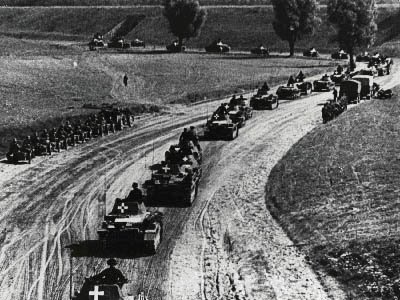
HOW IT WENT DOWN:
On June 5, the German attack on the Somme River line begins. The French have reorganized their forces, but there is little they can do to stop the Germans. On June 6, the line is breached between Amiens and the coast; eight days later Paris falls to the Germans. The British are evacuating all the troops they can - 30,000 from Cherbourg, 21,000 from Saint Malo, 32,000 from Brest, and almost 60,000 from Saint Nazaire and Nantes. On June 22, French General Huntzinger signs an armistice with Germany. While some fighting continues, the Germans have won - they have crushed three Allied armies and driven a fourth (the British Expeditionary Force) off the continent.
The Allied armies learn they are unprepared for Germany’s blitzkrieg tactics. They have inadequate tanks and antitank weapons; this inadequacy is compounded by poor deployment. The Germans mass their armor into divisions and even armies, while the Allies deploy armor in small units spread across wide fronts. The Allies also learn that it will take a force several orders of magnitude larger than that defeated in France to defeat Germany.
The Blog | Larry Gelbart: Waking Up is Hard to do | The Huffington Post
So much harder than it used to be.
So hard to start the day gagging on a body count before breakfast.
So hard looking into the bathroom mirror, still trying to absorb the sight of so many lifeless bodies on the tube at the foot of my bed.
Who am I that I should still have the privilege of brushing my teeth?
After seeing the sight of so many who died while I slept?
Young men.
Mothers.
Five year-olds.
Infants who will never get that far.
Waking up, I delay for as long as I can pressing the remote. I resist having as my first view of yet another day what has become television's test pattern for the 21st century: a bunch of somebody's good guys slaughtering a bunch of somebody else's good guys.
And my guides and usherettes through all the carnage that cable chews on so voraciously: urban anchors in their L.L. Bean's, simultaneously reporting and upstaging file and vile footage of the Red Cross, the Red Crescent, and all of the red blood that threatens to soil my bedspread.
It gets harder and harder, waking up to learn what new leakings have revealed which of our lawmakers have been discovered breaking even more of our laws.
Harder and harder to restart the daily cycle of frustration, of fear and of anger - anger at those who never stop lying about how they have made the world a safer, less fearful place.
Harder and harder to shut out the noise of crashing pensions and the steady drumbeat of corporate criminality.
Harder and harder to accept being humped at the pump.
Even and ever-harder to endure one single day more of the three R's:
Rove.
Rice.
Rumsfeld.
(If you need another R, Richard is what our vice president was called before he chose to become a Dick.)
(Cheap shot? Less troublesome than a bad one - one who aims at a duck and hits a human being; one who aims at Afghanistan and maims the whole of Iraq.)
Hard waking up hoping: if we are lucky maybe some of us will be remembered as the good Germans at this nadir in the history of the late, great United States.
One nation under God?
Excuse me?
God sanctions torture?
God smiles down on signing statements?
Thou shalt not kill - wink, wink?
When asked what he considered the secret to happiness, Tennessee Williams replied: "Insensitivity, l guess."
By that standard, this White House has to be happiest administration ever.
If I thought any of those scumbags had an ounce of pity stowed away in their irremediable, falsely optimistic hearts, I would get down on my knees and beg them to give me back just a tenth of my former peace of mind. I would implore them to give me back my mornings.
If they'll just give me that, I'll take responsibility for the rest of the day.
So hard looking into the bathroom mirror, still trying to absorb the sight of so many lifeless bodies on the tube at the foot of my bed.
Who am I that I should still have the privilege of brushing my teeth?
After seeing the sight of so many who died while I slept?
Young men.
Mothers.
Five year-olds.
Infants who will never get that far.
Waking up, I delay for as long as I can pressing the remote. I resist having as my first view of yet another day what has become television's test pattern for the 21st century: a bunch of somebody's good guys slaughtering a bunch of somebody else's good guys.
And my guides and usherettes through all the carnage that cable chews on so voraciously: urban anchors in their L.L. Bean's, simultaneously reporting and upstaging file and vile footage of the Red Cross, the Red Crescent, and all of the red blood that threatens to soil my bedspread.
It gets harder and harder, waking up to learn what new leakings have revealed which of our lawmakers have been discovered breaking even more of our laws.
Harder and harder to restart the daily"
Sunday, July 23, 2006
Burt Bacharach: To Cher on Operation Helmet

I want to salute Cher, who has all my respect and my love for not only what she has done, but the way she has done it. Her campaign for "Operation Helmet" - done quietly and putting the cause, not herself, out front - is great. She has chosen this issue of trying to eliminate any more of the head and brain injuries our military in Iraq sustains by explosive devices because their helmets aren't good enough to protect them. "Operation Helmet" is a non-profit public service organization that provides our troops with upgrade kits to make their helmets safer.
For some soldiers, it is too late. Some have suffered brain damage and other serious injuries because their U.S. military-issued equipment isn't effective enough to protect our young men and women. Cher tells us the fact that most of these injuries are happening to the Marines because their helmets don't have proper padding. Also, their helmets are often too loose, leaving them vulnerable to even more head injuries. The military is fighting for us, and Cher is fighting for them. It's hard to believe that private citizens need to provide helmet upgrade kits, but it's necessary and being done. Cher's support has brought badly-needed attention to the situation, and every day more soldiers are being equipped with better helmet padding.
Shockingly, the Marine Corps is still studying the "feasibility" of whether this is a good idea. In the meantime, families and friends of those brave Marines are buying padding and sending it to these kids in Iraq while the Marine brass decide whether it is a good idea.
What the hell is this? Cher's support is featured on the web a donation site http://www.operation-helmet.org/ and it is full of useful information. She went before Congress recently to make the case. She called in to C-SPAN, trying to be anonymous to bring attention to the need, not to her celebrity. She donated a lot of money herself. I like the way you discovered the cause and effectively put it out there, Cher. I respect and love you for it.
Over 28,418 helmet upgrades sent
Current backlog
1521+ kits
Note: backlog is based on contributions, not manufacturing.
We have heard from troops in the field that some pad systems are really hard, hot, and/or uncomfortable. Fill out an anonymous survey here
Christmas message
Mailing address:
Dr. Bob Meaders
74 Greenview Street
Montgomery, TX 77356
Electronic mail:
ophelm@operation-helmet.org
Telephone:
936-449-9706 Answered gladly 8AM-5PM CST (sorry, English only)
Reluctantly answered before and after... this is our home phone.
OPERATION HELMET provides helmet upgrade kits free of charge to troops in Iraq and Afghanistan, as well as to those ordered to deploy in the near future. These helmet upgrades do three primary things:
* Protection - Shock-absorbing pads keep the helmet from slapping the skull when hit with blast forces, fragments, or being tumbled along the ground or inside a vehicle. This decreases the chance of brain injury from bombs, RPG's, vehicle accidents, falls, etc.
* Comfort - If it is comfortable, it will stay on troop's head longer and more often.
* Stability - Keeps the helmet firmly on the head and out of the eyes.
The life you save might save another!
Once all troops are provided the blast/impact protecting helmet upgrades, we will utilize residual funds to help other charities providing for rehabilitation and support of our wounded troops and their families. We are researching several charities and will support those we find to be well managed, little or AT LEAST MINIMAL administrative fees and have a proven track record of helping our wounded warriors cope with their injuries and return to either civilian or military life.
We continue to receive requests from the troops IN Iraq and Afghanistan.
A couple of weeks ago we asked folks to Stand By. Turns out to have been premature. While plans are 'afloat' to provide helmet upgrades by the Marines and Air Force, some units are unable to obtain them (MEU's especially), but the Marines say there is no shortage, just supply issues. The end of December is too long a wait for units that may be called on quickly to augment ongoing OIF/OEF combat or threats elsewhere. So we're back, hat in hand, asking people to donate if they can.
11/8/06 Even if a trooper wears their donated helmet upgrade on only ONE patrol/urban combat mission, it may save their future and perhaps life, so let's all get high behind again and help them.
On another note, troops tell us the 'new' Marine-issued pad systems and the newly purchased by the Army, are NOT the Oregon Aero pads we have historically provided. We selected them due to their excellent track record protecting from blast forces as well as 'wearability'. We are told by troops that the new pads are very hard, do not allow the helmet to adjust to their heads, resulting in headaches and discomfort. Some are taking the 'new' pads out and pounding them with a hammer to try and make them softer and more wearable. We don't know what that will do to the protection they provide, but it can't be good. Helmets only work if they are on the head. If troops have to take them off for comfort in the middle of a patrol, that's NOT GOOD. While the 'new' pads meet blast/impact protection test limits, so do NASCAR shock absorbers. Would you wear those in YOUR helmet? The manufacturers CAN and MUST do better by our troops.
We are sticking around to be the proverbial thorn in the foot of the military/industrial complex to get them looking at this issue from a view other than saving money. Our troops deserve the best if we are going to ask them to stand in harm's way in that troubled and dangerous area of the world! Stay tuned.
We are a 100% volunteer, non-partisan, charitable organization headquartered in Houston, Texas with volunteer operations around the country. 99% of all contributions are used to send upgrade kits to our troops! [*] We have one percent overhead which is used to for very limited expenses - it is a labor of love. We have no salaries or payroll.
Operation Helmet, Inc. is a 501-c-3 charity; our EIN is 20-1756585. Donations are tax-deductible
Tuesday, July 04, 2006
Monday, July 03, 2006
Ex-Soldier Charged in Killing of Iraqi Family
Back to Complete War News Index
Revealed last week and denounced by clerics as showing the “real, ugly face of America”, the case could be particularly damaging to the U.S. image in Iraq’s conservative Muslim society even after several other murder cases in the past few weeks
 Ex-Soldier Charged in Killing of Iraqi Family
Coverup Is Alleged; Four Others Implicated
By Josh White
Washington Post Staff Writer
Tuesday, July 4, 2006; A01
A former U.S. Army soldier was charged yesterday with the rape and murder of a young Iraqi woman and the slayings of three of her family members in their home south of Baghdad in March, federal prosecutors said.
Several soldiers allegedly planned the attack over drinks after noticing the woman near the traffic checkpoint they manned in Mahmudiyah, according to a criminal complaint filed in U.S. District Court for the Western District of Kentucky. The soldiers allegedly worked out an elaborate plan to carry out the crime and then cover it up, wearing dark clothes to the home, using an AK-47 assault rifle from the house to kill the family, and allowing authorities to believe that the attack was carried out by insurgents, investigators said.
Former Pfc. Steven D. Green, 21, and other members of 1st Platoon, B Company, 1st Battalion, 502nd Infantry Regiment, allegedly carried out the crimes on March 12. Several soldiers told authorities that Green killed all four people and that he and another soldier raped the young woman.
The plan worked, at least until soldiers began discussing the incident last month while they were going through stress counseling after two other members of their platoon were captured at a checkpoint and beheaded by insurgents. Army officials began investigating the day after hearing about the events in Mahmudiyah.
Green, who was honorably discharged from the Army for an unspecified "personality disorder" before U.S. officials were aware of the alleged crimes, was arrested Friday at his grandmother's house in Marion, N.C., on a federal warrant. Four other soldiers who have been implicated in the attack but were not named in the federal court documents remain in Iraq. None has been charged.
Cecilia Oseguera, a federal public defender who represented Green at an initial hearing yesterday in Charlotte, said that Green has not yet entered a plea and that he is incarcerated awaiting a preliminary hearing on July 10. She declined to comment further.
The case is the fifth in recent weeks in which U.S. troops have been accused of killing civilians in Iraq, a spate of incidents that has drawn attention to the way U.S. forces operate in what is often a complex and confusing battlefield. The rape and murder allegations against Green, however, detail a crime that appears to have had little if anything to do with the prosecution of the war itself.
Federal prosecutors are pursuing four charges of murder and one charge of rape against Green, said Marisa Ford, chief of the criminal division for the U.S. attorney's office in the Western District of Kentucky. In a rare move, the Justice Department is pursuing the charges because Green is no longer in military service.
The case was filed in Kentucky because it is the home district for the 101st Airborne Division, of which the 502nd Infantry Regiment is a part. If convicted, Green could face the death penalty.
According to an affidavit by FBI Special Agent Gregor J. Ahlers, the crimes appeared carefully crafted. Soldiers told Army investigators that Green and another soldier discussed raping the woman and had previously been to her residence, about 200 yards from their traffic checkpoint. Before leaving for the house, they also said, Green and two others drank alcohol and changed into dark clothes.
One soldier was left at the checkpoint to man the radio, while four others headed to the home, armed with three M4 rifles and a shotgun, according to the document. With one soldier guarding the door, the three others entered. Green covered his face with a brown T-shirt, grabbed an AK-47 rifle from the house and herded an adult couple and a young girl -- who authorities estimated was 5 years old -- into a bedroom. Green then shot them, according to authorities.
"Green came to the bedroom door and told everyone, 'I just killed them, all are dead,' " Ahlers wrote. Green and another soldier then allegedly raped the other daughter before Green shot her two or three times in the head with the AK-47. Military officials estimated her age at 20, although neighbors and hospital officials in Iraq said she was 15. She apparently was set on fire in an attempt to hide the crime.
Neighbors identified the young woman as Abeer Qasim Hamza. They said she had expressed concerns about the U.S. troops to her mother in the days before her death because the soldiers made advances toward her. According to death certificates viewed over the weekend, also killed in the attack were Fakhriyah Taha Muhsin, 34; Qasim Hamza Raheem, 45; and Hadeel Qasim Hamza, 7. Army officials could not confirm the names of the dead yesterday.
Soldiers told investigators that Green and others returned to the Army checkpoint with blood on their clothes, which they later burned. Green told one of the soldiers to throw the AK-47 into a canal.
According to the criminal complaint, Iraqis notified the U.S. soldiers of the killings and reported that the house was on fire on the afternoon of March 12. A soldier who allegedly was in the house during the crime was one of those who later responded to the scene. Army investigators have 15 photographs of the bodies, taken to record what was believed at the time to be an insurgent attack.
Green, who grew up in Midland, Tex., joined the Army after receiving his GED, and later went to Fort Benning, Ga., for infantry training, according to his family. He graduated in June 2005, and family members joined him at the ceremony.
"It was such a proud day," Green's uncle, Greg Simolke, said in an interview last night. "He had found direction in his life, something important and something that he really wanted to do. He was talking about making the military his career and was ready to go to Iraq. He thought it was a good thing to be serving his country."
Last week, Green traveled to Arlington National Cemetery for the funeral of a member of his platoon who was killed in an insurgent attack south of Baghdad, Simolke said. It was during that attack that two other soldiers were captured by insurgents and later beheaded.
Green, traveling by car, stopped in North Carolina to visit relatives on his way to and from Arlington. Simolke talked with Green and did not notice anything unusual, and the topic of the war did not come up often, the uncle said. Simolke said he was unfamiliar with the details of Green's discharge and knew nothing about the alleged crimes.
"When he was here for this visit, he seemed like the same old Steve," Simolke said. "I don't understand what happens in a war, so I don't know how these things happen."
Mahmudiyah Mayor Mouyad Fadhil Saif said in a telephone interview that Lt. Col. Thomas Kunk, who commands the 1st Battalion, 502nd Infantry Regiment, told him during a meeting yesterday that "a homicide was committed here" and that U.S. military leaders would offer an official apology when the investigation is complete.
Kunk also told the mayor that U.S. officials would ask relatives of the victims where the bodies were buried so they could be exhumed for a forensic analysis. Saif said he advised Kunk to respect the family's wishes and those of local religious authorities about whether digging up the bodies was appropriate.
Maj. Jose Garcia, a spokesman for the brigade to which the 502nd is attached, confirmed that Kunk met with the mayor but declined to comment on what was discussed.
Retired Maj. Gen. John Batiste, who commanded the Army's 1st Infantry Division in Iraq, said yesterday that the most important thing is how the military responds.
"The military is a reflection of society, and because of that there is always a percentage of soldiers, Marines, airmen and sailors who get it terribly wrong," Batiste said. "I also think the people of Iraq respect the U.S. military and will keep that in perspective. They'll appreciate the way we investigate and hold people accountable."
An Army official said yesterday that Green's discharge for a personality disorder does not necessarily indicate a mental disorder. Such a notation can be used to document willful disobedience or a personality that does not mesh well with military life.
Staff writer Jonathan Finer in Baghdad and researcher Julie Tate contributed to this report.


 Posts
Posts


