Saturday, April 15, 2006

What Rumsfeld knew

By Michael Scherer and Mark Benjamin

Apr. 14, 2006 | Secretary of Defense Donald Rumsfeld was personally involved in the late 2002 interrogation of a high-value al-Qaida detainee known in intelligence circles as "the 20th hijacker." He also communicated weekly with the man in charge of the interrogation, Maj. Gen. Geoffrey Miller, the controversial commander of the Guantánamo Bay detention center.

During the same period, detainee Mohammed al-Kahtani suffered from what Army investigators have called "degrading and abusive" treatment by soldiers who were following the interrogation plan Rumsfeld had approved. Kahtani was forced to stand naked in front of a female interrogator, was accused of being a homosexual, and was forced to wear women's underwear and to perform "dog tricks" on a leash. He received 18-to-20-hour interrogations during 48 of 54 days.

Little more than two years later, during an investigation into the mistreatment of prisoners at Guantánamo, Rumsfeld expressed puzzlement at the notion that his policies had caused the abuse. "He was going, 'My God, you know, did I authorize putting a bra and underwear on this guy's head?'" recalled Lt. Gen. Randall M. Schmidt, an investigator who interviewed Rumsfeld twice in early 2005.

These disclosures are contained in a Dec. 20, 2005, Army inspector general's report on Miller's conduct, which was obtained this week by Salon through the Freedom of Information Act. The 391-page document -- which has long passages blacked out by the government -- concludes that Miller should not be punished for his oversight role in detainee operations, a fact that was reported last month by Time magazine. But the never-before-released full report also includes the transcripts of interviews with high-ranking military officials that shed new light on the role that Rumsfeld and Miller played in the harsh treatment of Kahtani, who had met with Osama bin Laden on several occasions and received terrorist training in al-Qaida camps.
In a sworn statement to the inspector general, Schmidt described Rumsfeld as "personally involved" in the interrogation and said that the defense secretary was "talking weekly" with Miller. Schmidt said he concluded that Rumsfeld did not specifically prescribe the more "creative" interrogation methods used on Kahtani. But he added that the open-ended policies Rumsfeld approved, and that the apparent lack of supervision of day-to-day interrogations permitted the abusive conduct to take place. "Where is the throttle on this stuff?" asked Schmidt, an Air Force fighter pilot, who said in his interview under oath with the inspector general that he had concerns about the length and repetition of the harsh interrogation methods. "There were no limits."
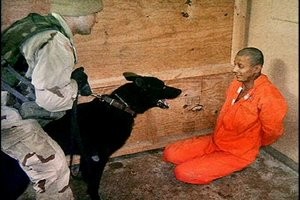


Schmidt also saw close parallels between the interrogations at Guantánamo, and the photographic evidence of abuse at Abu Ghraib prison in Iraq. "Just for the lack of a camera, it would sure look like Abu Ghraib," Schmidt told the inspector general, in the interview that was conducted in August 2005. At the direction of Pentagon officials, Miller led a mission to Iraq in August 2003 to review detainee operations at Abu Ghraib -- a visit that critics say precipitated the abuse of prisoners there.

In April 2005, Schmidt completed his report on detainee abuse at Guantánamo, which he co-authored with Brig. Gen. John T. Furlow. They recommended that Miller be "admonished" and "held accountable" for the alleged abuse of Kahtani. But that recommendation was rejected by Gen. Bantz J. Craddock, the current head of the Southern Command, who said Miller had not violated any law or policy.

On Dec. 2, 2002, Rumsfeld approved 16 harsher interrogation strategies for use against Kahtani, including the use of forced nudity, stress positions and the removal of religious items. In public statements, however, Rumsfeld has maintained that none of the policies at Guantánamo led to "inhumane" treatment of detainees. Jeffrey Gordon, a Pentagon spokesman, told Salon Thursday that Kahtani was an al-Qaida terrorist who provided a "treasure trove" of still-classified information during his interrogation. "Al-Kahtani's interrogation was guided by a very detailed plan, conducted by trained professionals in a controlled environment, and with active supervision and oversight," Gordon said in an e-mail statement. "Nothing was done randomly."

Miller -- who has invoked his right against self-incrimination in courts-martial of Abu Ghraib soldiers -- said that he did not know all the details of Kahtani's interrogation. But Schmidt told the inspector general that he found that claim "hard to believe" in light of Miller's knowledge of Rumsfeld's continuing interest in Kahtani. "The secretary of defense is personally involved in the interrogation of one person, and the entire General Counsel system of all the departments of the military," Schmidt said. "There is just not a too-busy alibi there for that."

The harsh interrogation of Kahtani came to an abrupt end in mid-January 2003. Gen. James T. Hill, Craddock's predecessor as the head of Southern Command, recalled in his interview with the inspector general that he received a call from Rumsfeld on a January weekend asking about the progress of Kahtani's interrogation. "Someone had come to him and suggested that it needed to be looked at," Hill said of Rumsfeld. "He said, 'What do you think?' And I said, 'Why don't [you] let me call General Miller.'"

According to Hill's account of that call, Miller advised that the harsh interrogation of Kahtani should continue, using the techniques Rumsfeld had previously approved. "We think we're right on the verge of making a breakthrough," Hill remembered Miller saying. Hill said he called Rumsfeld back with the news. "The secretary said, 'Fine,'" Hill remembered.


Nonetheless, several days later Rumsfeld revoked the harsher interrogation methods, apparently responding to military lawyers who had raised concerns that they may constitute cruel and unusual punishment or torture.

"My attitude on that was, 'Great!'" said Hill. The general recalled thinking about Rumsfeld and the decision to halt the harsh interrogation, "All I'm trying to do is what you want us to do in the first place and doing it the right way."

The harsher methods were not approved again.

-- By Michael Scherer and Mark Benjamin

Monday, April 03, 2006

Wasted Money & Broken Promises

Not considering the health care needs the U.S. invasion Caused

"U.S. Plan to Build Iraq Clinics Falters
Contractor Will Try to Finish 20 of 142 Sites

By Ellen Knickmeyer
Washington Post Foreign Service
Monday, April 3, 2006; A01

BAGHDAD -- A reconstruction contract for the building of 142 primary health centers across Iraq is running out of money, after two years and roughly $200 million, with no more than 20 clinics now expected to be completed, the U.S. Army Corps of Engineers says.


The contract, awarded to U.S. construction giant Parsons Inc. in the flush, early days of reconstruction in Iraq, was expected to lay the foundation of a modern health care system for the country, putting quality medical care within reach of all Iraqis.


Parsons, according to the Corps, will walk away from more than 120 clinics that on average are two-thirds finished. Auditors say the project serves as a warning for other U.S. reconstruction efforts due to be completed this year.

Coming with little public warning, the 86 percent shortfall of completions dismayed the World Health Organization's representative for Iraq. "That's not good. That's shocking," Naeema al-Gasseer said by telephone from Cairo. "We're not sending the right message here. That's affecting people's expectations and people's trust, I must say."

By the end of 2006, the $18.4 billion that Washington has allocated for Iraq's reconstruction runs out. All remaining projects in the U.S. reconstruction program, including electricity, water, sewer, health care and the justice system, are due for completion. As a result, the next nine months are crunchtime for the easy-term contracts that were awarded to American contractors early on, before surging violence drove up security costs and idled workers.

Stuart Bowen, the top U.S. auditor for reconstruction, warned in a telephone interview from Washington that other reconstruction efforts may fall short like that of Parsons. "I've been consumed for a year with the fear we would run out of money to finish projects," said Bowen, the inspector general for reconstruction in Iraq.

The reconstruction campaign in Iraq is the largest such American undertaking since World War II. The rebuilding efforts have remained a point of pride for American troops and leaders as they struggle with an insurgency and now Shiite Muslim militias and escalating sectarian conflict.

The Corps of Engineers says the campaign so far has renovated or built 3,000 schools, upgraded 13 hospitals and created hundreds of border forts and police stations. Major projects this summer, the Corps says, should noticeably improve electricity and other basic services, which have fallen below prewar levels despite the billions of dollars that the United States already has expended toward reconstruction here.

Violence for which the United States failed to plan has consumed up to half the $18.4 billion through higher costs to guard project sites and workers and through direct shifts of billions of dollars to build Iraq's police and military.


In January, Bowen's office calculated the American reconstruction effort would be able to finish only 300 of 425 promised electricity projects and 49 of 136 water and sanitation projects.

U.S. authorities say they made a special effort to preserve the more than $700 million of work for Iraq's health care system, which had fallen into decay after two decades of war and international sanctions.

Doctors in Baghdad's hospitals still cite dirty water as one of the major killers of infants. The city's hospitals place medically troubled newborns two to an incubator, when incubators work at all.

Early in the occupation, U.S. officials mapped out the construction of 300 primary-care clinics, said Gasseer, the WHO official. In addition to spreading basic health care beyond the major cities into small towns, the clinics were meant to provide training for Iraq's medical professionals. "Overall, they were considered vital," she said.

In April 2004, the project was awarded to Parsons Inc. of Pasadena, Calif., a leading construction firm in domestic and international markets. McCoy, the Corps of Engineers commander, said Parsons has been awarded about $1 billion in reconstruction projects in Iraq.

Like much U.S. government work in 2003 and 2004, the contract was awarded on terms known as "cost-plus," Parsons said, meaning that the company could bill the government for its actual cost, rather than a cost agreed to at the start, and add a profit margin. The deal was also classified as "design-build," in which the contractor oversees the project from design to completion.

These terms, among the most generous possible for contractors, were meant to encourage companies to undertake projects in a dangerous environment and complete them quickly.

McCoy said Parsons subcontracted the clinics to four main Iraqi companies, which often hired local firms to do the actual construction, creating several tiers of overhead costs.

Starting in 2004, the need for security sent costs soaring. Insurgent attacks forced companies to organize mini-militias to guard employees and sites; work often was idled when sites were judged to be too dangerous. Western contractors often were reduced to monitoring work sites by photographs, Parsons officials said.

"Security degenerated from the beginning. The expectations on the part of Parsons and the U.S. government was we would have a very benign construction environment, like building a clinic in Falls Church," said Earnest Robbins, senior vice president for the international division of Parsons in Fairfax, Va. Difficulty choosing sites for the clinics also delayed work, Robbins said.

Faced with a growing insurgency, U.S. authorities in 2004 took funding away from many projects to put it into building up Iraqi security forces.

"During that period, very little actual project work, dirt-turning, was being done," Bowen said. At the same time, "we were paying large overhead for contractors to remain in-country." Overhead has consumed 40 percent to 50 percent of the clinic project's budget, McCoy said.

In 2005, plans were scaled back to build 142 primary clinics by December of that year, an extended deadline. By December, however, only four had been completed, reconstruction officials said. Two more were finished weeks later. With the money almost all gone, the Corps of Engineers and Parsons reached what both sides described as a negotiated settlement under which Parsons would try to finish 14 more clinics by early April and then leave the project.

The agreement stipulated that the contract was terminated by consensus, not for cause, the Corps and Parsons said.

Both said the Corps had wanted to cancel the contract outright, and McCoy rejected the reasons that Parsons put forward for the slow progress.

"In the time they completed 45 projects, I completed 500 projects," he said. Parsons has a number of other contracts in Baghdad, from oil-facility upgrades to border forts to prisons. "The fact is it is hard, but there are companies over here that are doing it."


© 2006 The Washington Post Company

Sunday, April 02, 2006

Follow up -What ever happened to the American Taliban?

An exclusive look at Lindh's life behind bars


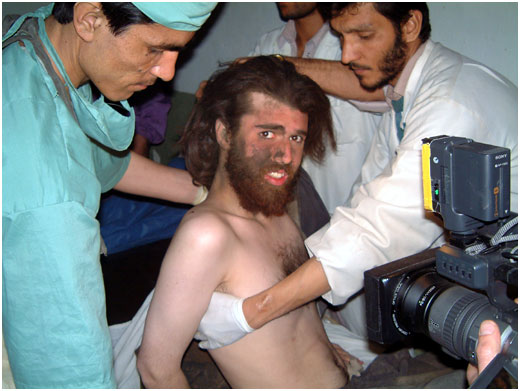
An image of John Walker Lindh, the American Taliban.

In some ways, he's like a lot of 25-year-olds: After years of running from his upbringing and trying to blaze his own trail, he has become studious, stable and settled.

But there's really no other 25-year-old like John Walker Lindh.

He will be forever tagged as the American Taliban, a California kid who converted to Islam and left home to find himself - and joined the radical Taliban to fight in Afghanistan.

Now Lindh is serving a 20-year prison sentence, and is under a court-imposed silence.

But Lindh's family and supporters say he deserves a break, and America needs to take another look at what he really did.

"His story is indeed a story that needs to come out, and needs to be shared with the world," said Shakeel Syed, who served as a religious adviser to Lindh in prison.

In his first-ever account of Lindh's life in a medium-security federal prison in Victorville, Calif., Syed said Lindh is a model inmate who lives as normal a life as possible behind bars - but also is a spiritual beacon to other Muslims there.

"Prison has helped him become a better Muslim," Syed said. "He is a Malcolm X with a softer tone."

Lindh lives with a cellmate, works a prison job and is allowed to mingle with other inmates, Syed said - but he is prohibited from talking about his experiences in Afghanistan, can't see visitors who aren't relatives or lawyers, and isn't allowed to speak Arabic.


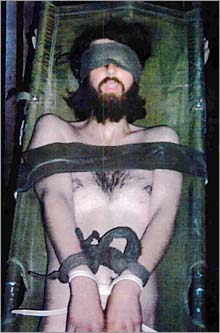
Contained ... this above shot of John Walker Lindh shows him bound naked in a container at Camp Rhino, near Kandahar, following his capture in December, say his defence lawyers, who released the photograph


While Lindh was taunted with cries of "Traitor!" when he first came to Victorville, and was once attacked by another inmate, he now faces no threats to his safety and even has gained a measure of respect, Syed said.

"He is an extremely well-liked, well-respected, model inmate in the system by the authorities as well as by the inmates," said Syed, now executive director of the Islamic Shura Council of Southern California. "Some of the inmates have come to sympathize with him because of his special restrictions."

Federal prison officials would not comment on Lindh or release information about him, citing privacy rules.

He burst into the public eye in November 2001, when CIA commandos working with the Northern Alliance, an Afghan group opposed to Taliban rule, found him among wounded and bedraggled Taliban fighters, who soon killed CIA operative Johnny (Mike) Spann.

The image of Lindh, filthy and exhausted, was beamed around the world - shocking the country with his unbelievable journey and stunning his parents, who hadn't heard from him in months.

Lindh had converted to Islam as a teen and traveled to Yemen to study the Koran and Arabic. When his visa expired he went to Pakistan, then sneaked across the border to Afghanistan - where he trained in an Al Qaeda-funded camp and twice met Osama Bin Laden.

Lindh's father, Frank Lindh, said his son was well-meaning but misguided, never taking up arms against America or joining Al Qaeda in its destructive quest.

"In simple terms, this is the story of a decent and honorable young man who became involved in a spiritual quest and became the focus of the grief and anger of an entire nation over an event in which he had no part," Frank Lindh told a San Francisco audience earlier this year.

But in the angry months after Sept. 11, Lindh was held up as a candidate for the death penalty.

Barely 10 months after he was seized on the battlefield, Lindh accepted a plea deal admitting he aided the Taliban - not plotting terror attacks or battling the U.S. He agreed to a 20-year prison term with no opportunity to appeal or challenge the government's restrictions while he's in prison.

Lindh's last public statement came when he was sentenced, where he tried to explain how he ended up in Afghanistan.

"I did not go to fight against America, and I never did," Lindh said. "I understand why so many Americans were angry when I was first discovered in Afghanistan. I realize that many still are, but I hope that with time and understanding, those feelings will change."

His parents have said little since then, but his lawyers are hoping a change in public mood could help him. With few legal options available, they've petitioned President Bush in a long-shot bid to shorten Lindh's sentence.

"I think we all have to realize that the odds are against it," Frank Lindh said in his San Francisco speech. "It is difficult to envision a situation where all those hotheads in Washington can turn around and recognize the kid got a raw deal and should be released."

Legal observers said the sentence was the byproduct of the national mood at the time, and note that many subsequent terror prosecutions in the U.S. have led to much shorter prison terms.

"He became an almost cathartic criminal case for the public," said George Washington University law Prof. Jonathan Turley. "Just as the public emotion was at a fever pitch, John Walker Lindh walked right out of central casting as a vicious traitor who betrayed his country. Upon further examination, he appears to be a confused kid playing a low-level role."

Originally published on April 2, 2006


KEY Words: American Taliban, John Walker Lindh, Books about John Walker Lindh, Google images of John Walker Lindh


Investigating the transformation of John Walker Lindh from a typical American teenager into the most infamous turncoat of our day, Kukis, a former UPI White House correspondent, traces the influences that played a part in Lindh's metamorphosis, from his California childhood to his capture in Mazar-i-Sharif. While unable to interview the young man himself (due, according to the publisher, to Attorney General Ashcroft's gag order) or his parents, the author draws from conversations he had with those who knew Lindh and witnessed his experiences-friends, teachers, lawyers, fellow students, family members and Taliban soldiers-all the way from San Francisco to Afghanistan, Pakistan and Yemen. Despite all the hype surrounding Lindh, Kukis "vowed to keep an open mind" in the research and writing of his biography, and expresses his hope that "understanding Lindh...will help us, as Americans at war, to reflect on ourselves as well as the enemies we face." B&w photos, maps. Copyright 2003 Reed Business Information, Inc.


Mahoney claims that his new book puts not only John Walker Lindh on trial but the entire U.S. government, for what he calls its treasonous double dealings with states that aid terrorists. Part biography of Lindh, part courtroom transcript, part military field report and in large part conjecture, the book, while often muddled and disconnected, raises important questions about the precarious nature of the U.S.'s alliances with Saudi Arabia and Pakistan. The author claims, as have others, that the U.S. enabled the rise of the Taliban by arming the mujahideen fighting the Soviets in Afghanistan in the 1980s. Most readers will find, though, that the charge that this constitutes treason ignores the complexity of the geopolitical landscape. Mahoney's second claim is that, because of its insatiable thirst for oil and profit, the U.S. habitually turns a blind eye to Saudi Arabia's and Pakistan's support of terrorism. The author's main charge, however, is that the Justice Department abruptly stopped Lindh's trial for fear of what might be revealed. This charge ignores what the judge noted: the evidence of Lindh's conspiracy to kill Americans was far from compelling, though Mahoney weakly argues the opposite. While providing much fodder for conspiracy theorists, Mahoney (Sons and Brothers: The Days of Jack and Bobby Kennedy) falls short of making his sweeping indictments stick.
Copyright © Reed Business Information, a division of Reed Elsevier Inc. All rights reserved.

Sunday, March 26, 2006

Americans share blame for war


March 26, 2006

Americans share blame for war, speaker says


That was one of the messages during the Iraqi Women Speak Out Tour, an anti-war event that drew hundreds of attendees to the Veterans Memorial Building.

"When you look at the lead-up to the war in Iraq, I blame President Bush, I blame Congress, I blame the media," said Scott Ritter, a former Marine, former United Nations chief weapons inspector for Iraq and contributor to the book "Neo-Conned Again!," a compilation of condemnations of the Iraq War. "But I'm not cutting any slack for the American people."

Americans, he said, have grown accustomed to a lifestyle they cannot sustain. Many Americans have failed to engage, he said, making the American government more of an oligarchy than a representative democracy.

"As a nation, we are mute, we are silent," Ritter thundered.

The event was part of a tour organized by San Francisco international human rights organization Global Exchange that is sending Iraqi women to speaking engagements across the country to talk about their experiences and the U.S. invasion.

But the Iraqi woman scheduled to speak at the Santa Cruz event, Faiza Al-Araji, could not make it because of exhaustion, said Medea Benjamin, founding director of Global Exchange.

Four Iraqi women are participating in the project, speaking at events, colleges, houses of worship and other places, giving local newspaper interviews and speaking on radio shows.

Al-Araji, said Benjamin, has mostly been sent to traditionally conservative parts of the country.

"We've found that people are hungry for information no matter where they are," said Benjamin.

Al-Araji, said Benjamin, maintains that Iraqis are capable of stopping civil war if the U.S. troops would leave. Others say their main hope is that their children will come home alive from school each day.

Such information was one of the things Jay Johnson, of Santa Cruz, came to hear.

"I'm interested in the war, and I want to learn any more information I can get about it," he said, "particularly the women's issues."

That search for information also drew Dina Scoppettoni of Aptos.

"I'm wanting to find out the truth, I guess, or a little more of it," she said.

Also speaking at the event was Ray McGovern, a former U.S. Army captain and a former CIA analyst. McGovern detailed how President Bush sidestepped the Geneva Conventions, leading to "our publicly acknowledged policy of torturing people.

"We've all heard it was a couple of bad apples at the bottom, but I have documentation that it was bad apples at the top of the barrel," said McGovern, producing a memorandum signed by President Bush that requires "that the detainees be treated humanely and, to the extent appropriate and consistent with military necessity, in a manner consistent with the principles of Geneva."

"That's a loophole you can drive a Mack truck through," said McGovern.

The organizers urged attendees to act by sending a postcard to Rep. Sam Farr, D-Carmel, urging him to cut off funds for the war by signing Massachusetts Rep. James P. McGovern's End the War in Iraq Act of 2005.

Americans share blame for war, speaker says - By Gwen Mickelson - Sentinel staff writer - March 26, 2006

Americans share blame for war, speaker says

By Gwen Mickelson

SANTA CRUZ — The American people share the blame for the war in Iraq.

That was one of the messages during the Iraqi Women Speak Out Tour, an anti-war event that drew hundreds of attendees to the Veterans Memorial Building.

"When you look at the lead-up to the war in Iraq, I blame President Bush, I blame Congress, I blame the media," said Scott Ritter, a former Marine, former United Nations chief weapons inspector for Iraq and contributor to the book "Neo-Conned Again!," a compilation of condemnations of the Iraq War. "But I'm not cutting any slack for the American people."

Americans, he said, have grown accustomed to a lifestyle they cannot sustain. Many Americans have failed to engage, he said, making the American government more of an oligarchy than a representative democracy.

"As a nation, we are mute, we are silent," Ritter thundered.

The event was part of a tour organized by San Francisco international human rights organization Global Exchange that is sending Iraqi women to speaking engagements across the country to talk about their experiences and the U.S. invasion.

But the Iraqi woman scheduled to speak at the Santa Cruz event, Faiza Al-Araji, could not make it because of exhaustion, said Medea Benjamin, founding director of Global Exchange.


Four Iraqi women are participating in the project, speaking at events, colleges, houses of worship and other places, giving local newspaper interviews and speaking on radio shows.

Al-Araji, said Benjamin, has mostly been sent to traditionally conservative parts of the country.

"We've found that people are hungry for information no matter where they are," said Benjamin.

Al-Araji, said Benjamin, maintains that Iraqis are capable of stopping civil war if the U.S. troops would leave. Others say their main hope is that their children will come home alive from school each day.

Such information was one of the things Jay Johnson, of Santa Cruz, came to hear.

"I'm interested in the war, and I want to learn any more information I can get about it," he said, "particularly the women's issues."

That search for information also drew Dina Scoppettoni of Aptos.

"I'm wanting to find out the truth, I guess, or a little more of it," she said.

Also speaking at the event was Ray McGovern, a former U.S. Army captain and a former CIA analyst. McGovern detailed how President Bush sidestepped the Geneva Conventions, leading to "our publicly acknowledged policy of torturing people.

"We've all heard it was a couple of bad apples at the bottom, but I have documentation that it was bad apples at the top of the barrel," said McGovern, producing a memorandum signed by President Bush that requires "that the detainees be treated humanely and, to the extent appropriate and consistent with military necessity, in a manner consistent with the principles of Geneva."

"That's a loophole you can drive a Mack truck through," said McGovern.

The organizers urged attendees to act by sending a postcard to Rep. Sam Farr, D-Carmel, urging him to cut off funds for the war by signing Massachusetts Rep. James P. McGovern's End the War in Iraq Act of 2005.

Friday, March 24, 2006

Will Bush let this man be killed for becomming a Christian? Don't we finance this country?


In a television image broadcast on Wednesday,
Abdul Rahman was shown in a Kabul court with a Bible.


New York Times Letter to the Editor:

To the Editor:

What a sad irony it is that a Christian convert in Afghanistan managed to survive the rule of the Taliban but is in danger of not surviving the rule of a democratically elected, American-supported government.

What this case proves is just how hollow the rhetoric about 50 million people "liberated" in the Middle East really is.

Perhaps those who are eager to spread American-style democracy around the world will now realize that freedom is as much about the culture and customs of a society as it is about the spectacle of heavily guarded elections and purple-stained fingers.

Alan Rusk
Trenton, March 23, 2006


The Story:
KABUL, Afghanistan, March 23 — The judge presiding over the prosecution of an Afghan man facing death for converting from Islam to Christianity said Thursday that he would resist any interference, despite mounting international condemnation.

To Afghan prosecutors, the case appears equally clear cut. One described Mr. Rahman as a "microbe," said conversion is illegal under Islamic law, and requested the death penalty.

If he is convicted, Mr. Rahman will be able to appeal his sentence to two higher courts. Maulavi Zada, the judge overseeing the case, said Thursday that the next court session would be held in several days. It was unclear whether Mr. Rahman would present any defense. To date, no lawyer in Kabul has been willing to represent him.

Moderate Afghan officials are eager to quietly dispose of the case, but the vocal criticism from American and Western officials makes that more difficult, according to Mr. Rubin. One possible compromise would involve the court's declaring Mr. Rahman mentally ill and allowing him to leave the country.

Tuesday, March 21, 2006

Print Story: Bush Defends Decisions on Iraq War on Yahoo! News

Bush Defends Decisions on Iraq War

By TERENCE HUNT, AP White House Correspondent 7 minutes ago

President Bush said Tuesday the decision about when to withdraw all U.S. troops from Iraq will fall to future presidents and Iraqi leaders, suggesting that U.S. involvement will continue at least through 2008.

Acknowledging the public's growing unease with the war — and election-year skittishness among fellow Republicans — the president nonetheless vowed to keep U.S. soldiers in the fight.

"If I didn't believe we could succeed, I wouldn't be there. I wouldn't put those kids there," Bush declared.

He also stood by embattled Secretary of Defense Donald H. Rumsfeld.

"I don't believe he should resign. He's done a fine job. Every war plan looks good on paper until you meet the enemy," he said.

In his second full-blown news conference of the year, Bush sought to ease his political problems by addressing them directly.

"Nobody likes war. It creates a sense of uncertainty in the country," he said. "War creates trauma." He acknowledged that Republicans are worried about their political standing in November.

"There's a certain unease as you head into an election year," Bush said during a wide-ranging news conference that lasted nearly an hour.

More than 2,300 Americans have died in three years of war in Iraq. Polls show the public's support of the war and Bush himself have dramatically declined in recent months, jeopardizing the political goodwill he carried out of the 2004 re-election victory.

"I'd say I'm spending that capital on the war," Bush quipped.

When asked about his failed Social Security plan, he simply said: "I didn't get done." But the president defiantly defended his warrantless eavesdropping program, and baited Democrats who suggest that he broke the law.

Calling a censure resolution "needless partisanship," Bush challenged Democrats to go into the November midterm elections in opposition to eavesdropping on suspected terrorists. "They ought to stand up and say, `The tools we're using to protect the American people should not be used,'" Bush said.

The news conference marked a new push by Bush to confront doubts about his strategy in Iraq. A day earlier, he acknowledged to a sometimes skeptical audience that there was dwindling support for his Iraq policy and that he understood why people were disheartened.

"The terrorists haven't given up. They're tough-minded. They like to kill," he said Tuesday. "There will be more tough fighting ahead."

Later in the news conference, Bush was asked whether there would come a day when no U.S. forces are in Iraq.

"That, of course, is an objective. And that will be decided by future presidents and future governments of Iraq," he said.

Asked if that meant it won't happen on his watch, the president said, "You mean a complete withdrawal? That's a timetable. I can only tell you that I will make decisions on force levels based upon what the commanders on the ground say."

The president said he did not agree with former interim Iraqi Prime Minister Ayad Allawi, who told the British Broadcasting Corporation Sunday, "If this is not civil war, then God knows what civil war is."

Bush said others inside and outside Iraq think the nation has stopped short of civil war. "There are other voices coming out of Iraq, by the way, other than Mr. Allawi, who I know by the way — like. A good fellow."

"We all recognized that there is violence, that there is sectarian violence. But the way I look at the situation is, the Iraqis looked and decided not to go into civil war."

Nearly four out of five Americans, including 70 percent of Republicans, believe civil war will break out in Iraq, according to a recent AP-Ipsos poll.

Bush said he's confident of victory in Iraq. "I'm optimistic we'll succeed. If not, I'd pull our troops out," he said, warning that abandoning the nation would be a dangerous mistake.

"So failure in Iraq, which isn't going to happen, would send all kinds of terrible signals to an enemy that wants to hurt us and people who are desperate to change the condition in the broader Middle East," Bush said.

He said he agreed to U.S. talks with Iran to underscore his point that Tehran's attempts to spread sectarian violence or provide support to Iraqi insurgents was unacceptable to the United States.

His opening remarks were designed to steel Americans for more fighting in Iraq and put an optimistic spin on the state of the U.S. economy.

"Productivity is strong. Inflation is contained. Household net worth is at an all-time high," Bush said, crediting his administration's policies.

On Iraq, Bush bristled at a suggestion that he had wanted to wage war against that country since early in his presidency.

"I didn't want war. To assume I wanted war is just flat wrong ... with all due respect," he told a reporter. "No president wants war." To those who say otherwise, "it's simply not true," Bush said.

Asked about former supporters who now oppose him and the war, Bush said he's trying to win them over by "talking realistically to people" about the war and its importance to the nation.

"I can understand how Americans are worried about whether or not we can win," Bush said, adding that most Americans want victory "but they're concerned about whether or not we can win."

Bush scoffed at a question suggesting he should reshuffle or shake up his White House staff to help raise his sagging poll standings. But he did hint that he might bring in an experienced Washington insider to work with a disgruntled Congress.

"I'm not going to announce it right now," Bush said, adding that he's satisfied with the staff he's surrounded himself with.

Monday, March 20, 2006

Angelo A. Zawaydeh

Angelo A. Zawaydeh

Individuals USwww.mercurynews.com -- When Angelo Zawaydeh was 16, the San Bruno boy wanted to join the military. His parents refused.

``When he was 18, he said, `Well, I don't need anybody's permission,' '' his mother, April Bradreau, recalled Friday.

He enlisted in the Army, and in September he was sent to Iraq.

Wednesday, at a Baghdad traffic control point, 19-year-old Pfc. Zawaydeh was manning a machine gun atop a tank when he was killed by a bullet in the neck. He becomes one of more than 2,300 U.S. soldiers who have been killed since the Iraq war began three years ago.

Bradreau, 45, and her husband received the news of their son's death Thursday, on the eve of their 21st wedding anniversary. Reached by phone at the family's San Bruno home Friday afternoon, she said her son had become disillusioned with the war, but he also had been instilled with a soldier's pride -- to do as ordered and do that job well.


His parents cited many reasons for him not to go into the military. His mother and father, Akram Zawaydeh, who is Jordanian, did not believe their son should participate in a Middle Eastern war. The younger Zawaydeh's uncle is a member of the Jordanian parliament, Bradreau said.

They debated many things, including the politics of the war. But most of all, the parents were worried about how the violence, the carnage, the killing, might affect their son.

``Mostly what it was, what would it do to his psyche? To have to murder someone else? Unfortunately, when boys are 18 years old, their testosterone gets in the way, doesn't it?'' Bradreau said.

Over time, Pfc. Zawaydeh began to draw a bright line between the job he knew he had to carry out and the politics of the war.

``He believed what he was doing was the right thing,'' Bradreau said. ``He didn't believe that what President Bush was doing was the right thing anymore. He thought we could let them (the Iraqis) fight their own battles from now on over there.''

Zawaydeh was born in San Francisco. He attended Terra Nova High School in Pacifica. Many of his good pals would enlist in the armed forces, which played a part in his motivation to enlist.

``When he joined,'' Bradreau said, ``we asked, `Why didn't you go to college?' And he said, `I can't sit in the classroom anymore. I need to get up and do something.' ''

He was assigned to the Army's 101st Airborne Division based in Fort Campbell, Ky.

After his four-year hitch, Zawaydeh intended to attend college in the Los Angeles area.

``He said he wanted to go where the sun shines all the time . . . He just wanted to go and get in college and take some classes and figure out from there what was his,'' she said.

He had been an avid skateboarder, and when he heard the family was moving to a house at Folsom he was delighted -- it would make it easier for him to learn how to snowboard.

``What did I love about him? He was always there for anybody who needed help. He never said no to anybody. He was a respectful young man. He helped whenever I needed help,'' she said.

He was at home in December 2004 when his 89-year-old grandmother, Helene Bradreau, suffered a massive heart attack. He tried to save her life with CPR only to see her die days later in a hospital.

A week before his death, he phoned his parents. He was excited about his pet Siberian husky, Shadow, and her 3-month-old male pup, Oso.

``He was telling us he was going to go south and set up a new camp . . . He told us not to worry and that he'd be coming home anyway in May and telling everybody he loved them and that we better take care of his dogs,'' she said.

Zawaydeh is survived by his parents and his sisters, Francesca, 17, and Nicole, 14; and his 12-year-old brother, Dominic

Some troops headed back to Iraq are mentally ill | The San Diego Union-Tribune

By Rick Rogers

STAFF WRITER

March 19, 2006

Besides bringing antibiotics and painkillers, military personnel nationwide are heading back to Iraq with a cache of antidepressant and anti-anxiety medications.

The psychotropic drugs are a bow to a little-discussed truth fraught with implications: Mentally ill service mem-bers are being returned to combat.

The redeployments are legal, and the service members are often eager to go. But veterans groups, lawmakers and mental-health professionals fear that the practice lacks adequate civilian oversight. They also worry that such redeployments are becoming more frequent as multiple combat tours become the norm and traumatized service members are retained out of loyalty or wartime pressures to maintain troop numbers.

Sen. Barbara Boxer hopes to address the controversy through the Department of Defense Task Force on Mental Health, which is expected to start work next month. The California Democrat wrote the legislation that created the panel. She wants the task force to examine deployment policies and the quality and availability of mental-health care for the military.

“We've also heard reports that doctors are being encouraged not to identify mental-health illness in our troops. I am asking for a lot of answers,” Boxer said during a March 8 telephone interview. “If people are suffering from mental-health problems, they should not be sent on the battlefield.”

Stress reduces a person's chances of functioning well in combat, said Frank M. Ochberg, a psychiatrist for 40 years and a founding member of the International Society for Traumatic Stress Studies.

“I have not seen anything that says this is a good thing to use these drugs in high-stress situations. But if you are going to be going (into combat) anyway, you are better off on the meds,” said Ochberg, a former consultant to the Secret Service and the National Security Council. “I would hope that those with major depression would not be sent.”

About 25,000 Marines and sailors based in San Diego County are undergoing a major combat rotation that began in January. Their deployments are expected to last seven months.

Officials from the Defense Department and Camp Pendleton, where some units have been to Iraq three times, said they don't track personnel deployed while taking mental-health medication or the number diagnosed with mental illness.

But medical officers for the Army and Marine Corps acknowledge that medicated service members – and those suffering combat-induced psychological problems – are returning to war. And anecdotal evidence, bolstered by the government's own studies, suggest that the number could be significant.

A 2004 Army report found that up to 17 percent of combat-seasoned infantrymen experienced major depression, anxiety or post-traumatic stress disorder after one combat tour to Iraq. Less than 40 percent of them had sought mental-health care.

A Pentagon survey released last month found that 35 percent of the troops returning from Iraq had received psychological counseling during their first year home.

That survey echoed statistics collected by the San Diego Veterans Affairs Healthcare System. The system has found that about 33 percent of Iraq and Afghanistan veterans suffer from schizophrenia, depression and post-traumatic stress disorder.

The various studies apparently didn't consider the effects of multiple combat tours, though psychiatrists agree that the greater people's exposure to combat, generally the higher their risk of suffering mental illness.

More than 435,000 U.S. personnel have served in Iraq and Afghanistan combined. It is unclear how many have served in that region more than once.

Joe Costello, a mental-health counselor at the Vista Veterans Center, said emotionally scarred troops are routinely redeployed and that most want to go back to the war zone.

“I see it every day,” said Costello, who mainly treats reservists.

Buttressing the idea that large numbers of service members are medicated, more than 200,000 prescriptions for the most common types of antidepressants were written in the past 14 months for service members and their families, said Sydney Hickey, a spokeswoman for the National Military Family Association.

Hicks said a Defense Department official gave her the information during a December briefing. She said the official did not distinguish between prescriptions for the troops and those for their family members.

In addition, the Defense Department has not provided prescription totals for such antidepressants from before and after the United States invaded Iraq in 2003.

The prescriptions were for selective serotonin reuptake inhibitors, commonly called SSRIs. These drugs are used to treat depression, anxiety disorders, some personality disorders and post-traumatic stress disorder. They include brand names such as Paxil, Cymbalta and Wellbutrin.

The antidepressants work by elevating the level of the neurotransmitter serotonin. Researchers believe that low serotonin levels in the brain could be a biological cause of depression and certain anxiety disorders.

Mental-health care for service members and the Defense Department's efforts to keep the mentally ill in uniform are becoming national issues, said Steve Robinson, director of the National Gulf War Resource Center in Silver Spring, Md.

Robinson said three Army doctors have told him about being pressured by their commanders not to identify mental conditions that would prevent personnel from being deployed.

“They are being told to diagnose combat-stress reaction instead of PTSD,” he said. “That does two things: It keeps the troops deployable and it makes it hard for them to collect disability claims once they get out of the military.”

Robinson contends that the Pentagon is trying to control its spending on mental-health disabilities.

Between 1999 and 2004, disability payments to veterans with post-traumatic stress disorder rose to $4.3 billion from $1.7 billion nationwide, according to a report by the Department of Veterans Affairs' inspector general.

Overall, service members' mental health is a hot-button subject because it goes to the cost of the war in dollars and lives, said Joy Ilem, an assistant national legislative director for the organization Disabled American Veterans.

“The (Department of Veterans Affairs) is very worried about the political implications of PTSD and other mental issues arising from the war,” Ilem said. “They are talking about early outreach and treatment, but they are really trying to tamp down the discussion.”

Cmdr. Paul S. Hammer deals with such issues daily.

Hammer, a psychiatrist, is responsible for the Marine Corps' mental-health programs during this deployment rotation. He confirmed that Marines with post-traumatic stress disorder and combat stress are returning to Iraq, though he would not say how many.

Hammer said deciding who is deployed is often anguishing.

Sometimes he has to tell Marine commanders that personnel they had counted on will not be deploying. In other instances, he said, “We'll hold some guy's feet to the fire and say, 'This is what you signed up for, and you have to go.' ”

Marines are “amazingly resilient,” Hammer added. “You've got people exposed to incredible violence, but they do entirely well.”

It's the tough calls that worry Adrian Atizado, a legislative director for Disabled American Veterans.

“Currently, the services will deploy a service member if the person is medically stable and it is determined that the deployment won't aggravate (his) condition,” Atizado said. “How does one gauge that?

“This a gray area; this is asking a medical provider to make a decision based on the future. The medical providers are human beings. I have no doubt that they are looking out for the best interest of the service members, but they are under pressure to check off on their deployment.”

Ultimately, much is unknown about the rates of post-traumatic stress disorder among Iraq veterans, especially those who have been through more than one combat tour, said Matt Friedman, executive director of the U.S. Department of Veterans Affairs National Center for PTSD in White River Junction, Vt.

Friedman said that with time, “one of the things we are going to find out is how well people function who might have been on medication (during combat). This is a very important question and has all kinds of implications.

“But remember, they are all volunteers. This isn't Vietnam, where people were drafted and sent to fight. Think of the ethical questions that would arise from sending draftees back to war on medications.”

Saturday, March 18, 2006

Dirty Water: KBR Negligence Threatens Troops

Halliburton has become the slumlord of Iraq.


At the end of this artical thier is a video from the film Iraq for sale that touches on the water incident.

Paul Rieckhoff

Negligence Threatens Troops

"KBR had exposed the entire camp to water twice as contaminated as raw water from the Euphrates River. KBR was apparently taking the waste water... which should have been dumped back in the river, and using that as the non-potable water supply. Such problems had been happening for more than a year... No trained water treatment specialist could claim that the water was fit for human use."

That's from Senate testimony of a former Halliburton employee, Ben Carter, a water purification specialist. He's talking about water purification at Camp Ar Ramadi, home to thousands of US Troops in Iraq. Ben Carter tried to sound the alarm back in March of 2005, telling his higher-ups at KBR that they were leaving the water supply "vulnerable to contamination from dust, insects, rodents, or even enemy attack," but KBR wasn't interested in admitting the severity of the problem to the Troops who had been affected.


Today, an AP story shows that the problem wasn't just at Camp Ar Ramadi. KBR allowed dangerously polluted water to reach US Troops throughout Iraq. Wil Granger, one of the KBR whistleblowers, says, "This event should be considered a 'near miss' as the consequences of these actions could have been very severe resulting in mass sickness or death."

And people did get sick. Ben Carter was diagnosed with an "unidentified organism" in his digestive tract, and some Troops have complained of stomach problems, as well. From Marissa Sousa, Iraq veteran:

"The whole time I was in Iraq I had extreme gastrointestinal problems, that the medics had no idea what it was and the medications they gave never worked. I wasn't until I left Iraq that the bigger 'problems' diminished and I was left with occasional cramping and indigestion. I feel that if I had known earlier, this could have been prevented and I could have taken measures that I didn't have to use because I was being taken care of, such as hand sanitizer instead of soap and luke warm water at the DFAC. All of this would make the average person upset at this news, but to me and possibly others that served in Iraq, this is nothing new. If it isn't one thing it is another. Crappy armor, crappy water. Halliburton has become the slumlord of Iraq."

KBR and the DOD claim that the water supply is now safe. But for months, the American public paid KBR to provide our Troops with safe water, and KBR didn't hold up their end of the contract. IAVA's new Follow the Money Project, lead by chief investigator Dina Rasor, will be following this money to see how this could happen and who is responsible.

But we are the most concerned about the troops. If you're an Iraq veteran and you think you were affected by this problem, send an email to info@iava.org.

Friday, March 17, 2006

U.S. Army performance in Iraq, : cultural ignorance, moralistic self-righteousness, unproductive micromanagement and unwarranted optimism


Army's Iraq Work Assailed by Briton
Senior Officer Points to Cultural Ignorance In an Essay Published by the U.S. Military

By Thomas E. Ricks
Washington Post Staff Writer
Wednesday, January 11, 2006; A17

FORT LEAVENWORTH, Kan. -- A senior British officer has written a scathing critique of the U.S. Army and its performance in Iraq, accusing it of cultural ignorance, moralistic self-righteousness, unproductive micromanagement and unwarranted optimism there.

His publisher: the U.S. Army.

In an article published this week in the Army magazine Military Review, British Brig. Nigel Aylwin-Foster, who was deputy commander of a program to train the Iraqi military, said American officers in Iraq displayed such "cultural insensitivity" that it "arguably amounted to institutional racism" and may have spurred the growth of the insurgency. The Army has been slow to adapt its tactics, he argues, and its approach during the early stages of the occupation "exacerbated the task it now faces by alienating significant sections of the population."

The decision by the Army magazine to publish the essay -- which already has provoked an intense reaction among American officers -- is part of a broader self-examination occurring in many parts of the Army as it approaches the end of its third year of fighting in Iraq.

Military Review, which is based here along with many of the Army's educational institutions, has been part of that examination, becoming increasingly influential and pointed under the editorship of Col. William M. Darley. In the past two years, his magazine has run articles that have sharply criticized U.S. military operations in Iraq. A piece last summer by then-Maj. Gen. Peter W. Chiarelli about how to better counter the insurgency has become required reading for officers deploying to Iraq -- especially since Chiarelli was recently selected to become the No. 2 American officer there.

But none of the earlier articles has been as bluntly critical of the Army as the essay by Aylwin-Foster, whose assessment is also unusual because it comes from a senior military commander with the closest ally the U.S. government has in Iraq.

The Army is full of soldiers showing qualities such as patriotism, duty, passion and talent, writes Aylwin-Foster, whose rank is equivalent to a U.S. one-star general. "Yet," he continues, "it seemed weighed down by bureaucracy, a stiflingly hierarchical outlook, a predisposition to offensive operations, and a sense that duty required all issues to be confronted head-on."

Those traits reflect the Army's traditional focus on conventional state-on-state wars and are seen by some experts as less appropriate for counterinsurgency, which they say requires patience, cultural understanding and a willingness to use innovative and counterintuitive approaches, such as employing only the minimal amount of force necessary. In counterinsurgency campaigns, Aylwin-Foster argues, "the quick solution is often the wrong one."

He said he found that an intense pressure to conform and overcentralized decision making slowed the Army's operations in Iraq, giving the enemy time to understand and respond to U.S. moves. And the Army's can-do spirit, he wrote, encouraged a "damaging optimism" that interfered with realistic assessments of the situation in Iraq.

"Such an ethos is unhelpful if it discourages junior commanders from reporting unwelcome news up the chain of command," Aylwin-Foster says. A pervasive sense of righteousness or moral outrage, he adds, further distorted military judgments, especially in the handling of fighting in Fallujah.

Lt. Gen. David Petraeus, who runs much of the Army's educational establishment, and also oversees Military Review, said he does not agree with many of Aylwin-Foster's assertions. But Petraeus, who commanded Aylwin-Foster in Iraq, said "he is a very good officer, and therefore his viewpoint has some importance, as we do not think it is his alone."

Reflecting that ambivalence, the article was published with two disclaimers -- one in the form of an introduction, the other as a footnote -- which make clear that the views expressed do not reflect those of the British government, the British military, the U.S. Army, its Combined Arms Center or Military Review.

"I think he's an insufferable British snob," said Col. Kevin Benson, commander of the Army's elite School of Advanced Military Studies, referring to Aylwin-Foster. Benson said he plans a rebuttal.

"I think he's overstating the case," said another military intellectual here, retired Col. Gregory Fontenot, who led U.S. forces into Bosnia in 1995. But he added, "whether he's right or wrong, what's important is that the Army understands it has a problem, which it does."

Aylwin-Foster, now on assignment in Bosnia, said he has heard favorable early reaction to the article. "The Brits approve, those that have read it," he said by e-mail yesterday.

Darley, the review's editor, is holding his ground. "We've had some very strong reaction as to why the Military Review would even consider publishing this," he said as he strolled across the grounds of Fort Leavenworth last week. He said he did so because he wants "to win the war" in Iraq.

A link to the article by Aylwin-Foster can be found at www.washingtonpost.com/world.

© 2006 The Washington Post Company

Halliburton Didn't Protect Soldiers' Water

WASHINGTON (March 16) - Halliburton Co. failed to protect the water supply it is paid to purify for U.S. soldiers throughout Iraq, in one instance missing contamination that could have caused "mass sickness or death," an internal company report concluded.


Getty Images
A Marine and soldiers stand guard at Ar Ramadi, Iraq, in March 2004. The camp is one site in Iraq where Halliburton failed to properly purify water for military personnel, an internal company report says.


The report, obtained by The Associated Press, said the company failed to assemble and use its own water purification equipment, allowing contaminated water directly from the Euphrates River to be used for washing and laundry at Camp Ar Ramadi in Ramadi, Iraq.

The problems discovered last year at that site - poor training, miscommunication and lax record keeping - occurred at Halliburton's other operations throughout Iraq, the report said.

"Countrywide, all camps suffer to some extent from all or some of the deficiencies noted," Wil Granger, Theatre Water Quality Manager in the war zone for Halliburton's KBR subsidiary, wrote in his May 2005 report.

AP reported earlier this year allegations from whistleblowers about the Camp Ar Ramadi incident, but Halliburton never made public Granger's internal report alleging wider problems.

The water quality expert warned Halliburton the problems "will have to be dealt with at a very elevated level of management" to protect health and safety of U.S. personnel.

Halliburton said Wednesday it conducted a second review last year that found no evidence of any illnesses in Iraq from water and it believes some of its earlier conclusions were incomplete and inaccurate. The company declined to release the second report.

The company said it has "worked closely with the Army to develop standards and take action to ensure that the water provided in Iraq is safe and of the highest quality possible."

Halliburton was headed by Vice President Dick Cheney for several years before he ran for vice president. Its KBR subsidiary, also known as Kellogg Brown & Root, works under contract to provide a number of services to the U.S. military in Iraq, including providing water and purifying it.

The contaminated, non-chlorinated water at Ar Ramadi was discovered in March 2005 in a commode by Ben Carter, a KBR water expert at the base. In an interview, Carter said he resigned after KBR barred him from notifying the military and senior company officials about the untreated water.

A supervisor at Ar Ramadi "told me to stop e-mailing" company officials outside the base and warned that informing the military "was none of my concern," Carter said. He said he threatened to sue if company officials didn't let him be examined to determine whether he suffered medical problems from exposure to the contaminated water.

Granger's report cited several countrywide problems:

A lack of training for key personnel. "Theatre wide there is no formalized training for anyone at any level in concerns to water operations."

Confusion between KBR and military officials over their respective roles. For instance, each assumed the other would chlorinate the water at Ar Ramadi for any uses that would require the treatment.

Inadequate or nonexistent records that could have caught problems in advance. Little or no documentation was kept on water inventories, safety stand-downs, audits of water quality, deliveries, inspections and logs showing alterations or modifications to water systems.

Relying on employees the company identified as semiskilled labor, and paid as unskilled workers in the pay structure.

The report said the event at Ar Ramadi could have been prevented if KBR's Reverse Osmosis Units on the site had been assembled, instead of relying on the military's water production facilities.

"This event should be considered a 'near miss' as the consequences of these actions could have been very severe resulting in mass sickness or death," Granger wrote.

The report said that KBR officials at Ar Ramadi tried to keep the contamination from senior company officials.

"The event that was submitted in a report to local camp management should have been classified as a recordable occurrence and communicated to senior management in a timely manner," Granger wrote. "The primary awareness to this event came through threat of domestic litigation."

Beginning last May, Halliburton said it began using its equipment to remove contaminants, bacteria, and viruses in Ar Ramadi, and disinfect the water with chlorine. The company said KBR has worked closely with the Army to develop safe water standards.

It said its subsequent review in August-September 2005 found nonpotable water used for washing "was effectively filtered" to remove at least 99 percent of the parasite giardia and 90 percent of viruses. The Ar Ramadi water also tested negative for bacteria, Halliburton added.

03/16/06 03:11 EST

Wednesday, March 15, 2006

Tina Marie Priest


Individuals US SMITHVILLE A Central Texas family is coping with the death of a soldier killed in Iraq.

The Army said Private First Class Tina Marie Priest of Smithville died from non-combat-related injuries.

There was unimaginable pain for family members who sent their daughter off to war, believing she would come back -- but knowing there was a chance she would not.

Family members told CBS 42’s Gregg Watson that they are having a hard time believing that Priest did not die in combat.

According to the U.S. Department of Defense, Priest died Wednesday of injuries not related to war. Her family’s not so sure.

Monday, March 13, 2006

Why I am getting out of the Marines | Comments:


In the previous post, I copied a posting from Craiglist, a free classified internet forum. That story has been picked up by other blogs. The blogs then get comments about the story. I think it is interesting to see how the general public reacts to the feelings of a soldier who is calling it quits.

***


you tell'em.
posted by zenzizi at 12:18 PM PST on March 13

Is this guy saying that a U.S. pilot intentionally flew his jet into the water and killed himself? Cuz that's how this is reading to me.
posted by stinkycheese at 12:27 PM PST on March 13


If this is real, the author sounds like a chopper pilot. Not sure about his friends.
p osted by bardic at 12:28 PM PST on March 13


It could have been poor maintenance, he's complaining that the equipment isn't being maintained the way it should be. [shock, horror]
posted by Malor at 12:30 PM PST on March 13


I've been told that there are far more military suicides during wartime than we ever hear about. It's only natural that people break under that kind of pressure. It's also normal that it never makes it into the press, and that commanders clamp down upon it hard. There's an omerta among the suicide's friends too -- do you want to tell the family that their brave trooper went nuts and shot himself in the middle of the chow hall, or would you rather it be due to a "training accident"?
posted by xthlc at 12:38 PM PST on March 13


Hey, you "Go to war with the army you have". At least that's what Donald Rumsfeld, with his years and years of combat experience says. And that should be good enough for anyone.
p osted by slatternus at 12:42 PM PST on March 13


There's something very familiar about that line. Very familiar indeed. It's either a quote taken straight from Robocop, or that link (or something with the same content) has been posted around these here parts before.
Posted by mad judge pickles at 12:42 PM PST on March 13


stinkycheese; I don't get that impression, I get the impression that it was due to poor maintenance, or something like sleep deprivation. I don't get the impression that it was a suicide.
posted by odinsdream at 12:45 PM PST on March 13


I agree with odin, I think that the poster's complaint was that the death was caused by poor equipment maintenance.

The material readiness of the US military is an interesting and important story. But an anonymous posting to craigslist as an FPP? Come on.
posted by justkevin at 12:51 PM PST on March 13


I'm looking through the casualty list for December 2005 (when this was posted), but I'm not finding any dead marines who "crashed into the water." (LINK) Maybe he's referring to something that happened months earlier, and he spent some time stewing over it before posting? I don't know.

Maybe I'm overlooking it, but I can't find a Beger, Kerns, and Murphy who all died on the same day, either.
posted by Jatayu das at 12:54 PM PST on March 13

This was posted on DailyKos on January 26. While they don't exactly debunk the story, some of the commenters throw a small amount of doubt as to whether it is true or not.
posted by Joey Michaels at 12:54 PM PST on March 13


If you read the link, it looks like his friends have been ordered to fly in unmaintained aircraft to do missions that they aren't qualified for, and died trying. I wouldn't really call that suicide. I would question the sanity of anyone joining the Marines, but that's just an old Navy prejudice creeping up.
posted by doctor_negative at 12:58 PM PST on March 13


Maybe I'm overlooking it, but I can't find a Beger, Kerns, and Murphy who all died on the same day, either.

Have you checked the cemetery?
posted by palinode at 12:58 PM PST on March 13


uless the US Marines do it vastly differently from the British military, I'll call bullshit on the maintenance logs being faked. Nobody I've ever encountered with that sort of responsibility would do anything but the right thing when lives are involved.
posted by mad judge pickles at 1:03 PM PST on March 13


So it's an anonymous, possibly fake posting to craigslist which is really old and has already been determined to be dubious at best.

And seriously - The war is going badly and there's no end in sight. It shows every sign of being a PR problem where the troops are asked to fail as little as possible while the administration tries to bolster the "everything is fine" argument by not adding enough men or resources. I think we'd all be surprised if the attitude in this FFP wasn't widespread.

In other words - Is there anyone in the country who doesn't "get it" to the point where this sort of gratuitous crap is required?
posted by y6y6y6 at 1:07 PM PST on March 13


Yeah, in reading it over again, I'm inclined to go with the poorly maintained equipment over an outright suicide.
posted by stinkycheese at 1:10 PM PST on March 13


> In other words - Is there anyone in the country who doesn't
> "get it" to the point where this sort of gratuitous crap is required?

Well, there is at least one person. Tragically, he's in charge.
posted by sfslim at 1:12 PM PST on March 13


There's no reason to assume Berger, Kerns, and Murphy died on the same day.

According to CNN, nobody named "Berger" has died at all. A Murpy and a Kerns were killed, but they weren't pilots. (They drove over a land mine.)

This is bogus.
posted by Jatayu das at 3:15 PM PST on March 13


Eh, even if it's real (which I don't really doubt), it sounds more like the rant of a discontented employee than anything specific to the current administration, etc. The passion and the stakes are a lot higher, but the familiar refrains (understaffed, underbudgeted) could apply to most jobs. It certainly must be more frustrating when coworkers are dying, however.
posted by mrgrimm at 3:20 PM PST on March 13


man this guy is really gonna be pissed when he has to start all over again in Iran.
posted by j.p. Hung at 3:28 PM PST on March 13


I'm not buying this at all. Knowing quite a few people in Naval Aviation, including pilots and maintainers, I have to say that this is B.S. Maintanence problems are par for the course and are always a huge problem. This guy obviously has some knowledge but is really talking out of his ass and should shut up.
posted by snsranch at 5:42 PM PST on March 13


maintenance problems are par for the course and are always a huge problem.

That kind of struck me as a little odd as well. When my brother was over there, he said they regularly flew in conditions (weather and maintenance) that wouldn't be acceptable stateside.

But he wasn't bitter about it. One of his best friends over there was a ground scout. One night, after the scouts had been on patrol for over twelve hours, my brother escorted them back to the base and flew off. As he was flying away he came under fire from insurgents on the ground. His scout friend actually turned his convoy around, again, after twelve exhausting hours outside the wire, to go engage the insurgents shooting at my brother.

No military pilot worth his wings is going to stay on the ground because of a Check Engine light when there are people like that scout out there screaming for his help.
posted by Cyrano at 7:38 PM PST on March 13


Has some knowledge? If this is a fake, this guy should be writing for the movies. It's one of the tightest prose depictions of battle shock I've ever read. The content is verifiable, though I see no reason to think that someone wouldn't blur identifying details on purpose before posting something almost certainly court martialable, and likely to get the dude fragged too, if he's still in theater. But if the Marines are hiring guys who write like that, things are stranger than I thought abroad. On the other hand, if this is a fake, a serious literary talent has been discovered here. The debate here about whether it's political or personal is moot, unlike the debate about its authenticity. The beauty of the piece is the way it evokes the voice of a working-stiff soldier, with no horizon higher than the world of the Marines, with just a hint of longing to see past that horizon to the world he doesn't feel he is defending properly. He is not opposed to the war. He is opposed to war, in general, but he doesn't know that because he is too numb and unconscious to do more than lash out at the immediate agents of his misery -- and interestingly not the Iraqi or Afghan ones so much as his CoC. What a character. Maybe it's James Frey.
posted by fourcheesemac at 7:39 PM PST on March 13


Yes ... because if you were a soldier serving in the Armed Forces, you'd be certain to give the real names of fatalities you were personally acquainted with, so that your identity could easily be deduced by your superior officers, who no doubt would be quite pleased with your rant.
posted by WCityMike at 8:14 PM PST on March 13

THESE COMMENTS WERE ABOUT A PREVIOUS POST: Why I am getting out of the Marines

Which shirt would you wear?

Why I am getting out of the Marines

This was psoted on a free classified on the net:

Why I am getting out of the Marines


Reply to: anon-118782492@craigslist.org
Date: Fri Dec 16 22:09:56 2005


As I sit here I am still shaking. I can't take much more of this shit. I am a Marine Pilot. Not that it means anything anymore. Today was another safety stand down put on by the mother fuckers in DOSS. Why? Cause another one of my friends is dead and gone. Why? Cause he flew his shit into the water that's why. Why'd he do that? Cause the mother fuckers that "be" i.e. the boys at the top have lost their fucking minds and can't say no.
"Sir the aircraft are at 13% readiness, we don't have anything up."
"That's not my problem, we got a FRAG, get it done."
"Sir, none of our pilots are current to do this."
"Currency? Currency is for pussies. Just do some pattern work before you go, you'll be fine."
"Sir, the maintainers have been working non-stop 12 on 12 off for weeks now, we can't keep this pace up?
"Rest, Marines don't need rest, they are tough. Tell them to drink some coffee and get these planes up."
"Sir, I've been in the tube for the last 10 hours, the weather was shit, and I haven't seen my wife in 2 weeks, can I work on this tomorrow?"
"No, I am going on leave Captain, I need that power point done by tomorrow, oh wait your on the schedule. Well, I guess you better get working."
"Sir I don't have the crew rest to fly this."
"Crew rest? What's crew rest. Your day doesn't start until the engines do, never mind that I had you in here this morning doing mindless bullshit."

I hate you Marine Corps. I hate you. You push us and push us and ask us to do more. But there is no more. You can take your $18,000 dollar bonus and shove it up your ass! I am not staying. I am not flying this shit anymore. I am not going to go and break the rules for you anymore. Iam not going to turn motors when I know the maint. log books aren't worth the paper they are written on. I am not doing your fucking log run in this weather when you can't even get me the bare minimum flight time to keep my skills up. I am not going to anymore safety stand downs about leadership and seatbelt use. I am not going to listen to another fucking Major who has lost his soul and cares more about the taste of his coffee in the morning than if his people had time to even eat chow today. I will not do this. I will not get another phone call about a friend of mine who is now dead, because you bend the rules to make mission, because you can't say NO to anyone.

We are broke damn it. We don't have the people, we don't have the parts. Hell, what kind of fucking military organization has the commanding officer tell his officers they need to go out and buy toilet paper for the head because we ran out? Fuck this. I am out.

Berger, you were the best man, you shouldn't have died like that. Kerns, you were a funny dude. I am sorry I couldn’t see you buried, or have the courage to write your Mom and Dad about what nice guy you were. Murphy, why would you sign up for that shit! Your kids will never get to know what an awesome guy you were.

I am in tears I am so frustrated. I wish you were still around, but I won't die like you. I won’t be some number on CNN's death 'o meter. I won’t contribute to this madness of telling the Wing we can do it when we are so far on our ass we can’t see the light of day. You Generals are fucking cowards. You know it’s broke, but you won’t say no will you. I did my part, and that's all I can do. Fuck you Marine Corps. I am not the only one that feels this way. Let's see where your retention is when the planes are so broke dick nobody can fly them, no matter how many rules you break to keep them up. Fuck You!

George Clooney: I Am a Liberal.


I am a liberal. And I make no apologies for it. Hell, I'm proud of it.

Too many people run away from the label. They whisper it like you'd whisper "I'm a Nazi." Like it's dirty word. But turn away from saying "I'm a liberal" and it's like you're turning away from saying that blacks should be allowed to sit in the front of the bus, that women should be able to vote and get paid the same as a man, that McCarthy was wrong, that Vietnam was a mistake. And that Saddam Hussein had no ties to al-Qaeda and had nothing to do with 9/11.

This is an incredibly polarized time (wonder how that happened?). But I find that, more and more, people are trying to find things we can agree on. And, for me, one of the things we absolutely need to agree on is the idea that we're all allowed to question authority. We have to agree that it's not unpatriotic to hold our leaders accountable and to speak out.

That's one of the things that drew me to making a film about Murrow. When you hear Murrow say, "We mustn't confuse dissent with disloyalty" and "We can't defend freedom abroad by deserting it at home," it's like he's commenting on today's headlines.

The fear of been criticized can be paralyzing. Just look at the way so many Democrats caved in the run up to the war. In 2003, a lot of us were saying, where is the link between Saddam and bin Laden? What does Iraq have to do with 9/11? We knew it was bullshit. Which is why it drives me crazy to hear all these Democrats saying, "We were misled." It makes me want to shout, "Fuck you, you weren't misled. You were afraid of being called unpatriotic."

Bottom line: it's not merely our right to question our government, it's our duty. Whatever the consequences. We can't demand freedom of speech then turn around and say, But please don't say bad things about us. You gotta be a grown up and take your hits.

I am a liberal. Fire away.

Thursday, March 09, 2006

Rumsfeld: Iraqis would deal with civil war

WASHINGTON (AP) — Dealing with a civil war in Iraq would fall to Iraq's own security forces, not U.S. troops, Defense Secretary Donald Rumsfeld told Congress on Thursday.

Rumsfeld testifies as Gen. Pace, center, and Gen. Abizaid listen during a hearing to review Bush's request for more war money. Rumsfeld testifies as Gen. Pace, center, and Gen. Abizaid listen during a hearing to review Bush's request for more war money.
By Alex Wong, Getty Images

Testifying alongside senior military leaders and Secretary of State Condoleezza Rice, Rumsfeld said he did not believe Iraq would descend into all-out civil war, though he acknowledged that sectarian strife had worsened. (Related story: Rumsfeld rejects reports of civil war)

Gen. John Abizaid, the top U.S. commander in the Middle East, said the situation in Iraq had evolved to the point where Sunni-Shiite violence was more of a threat to U.S. success there than the insurgency, which continues taking a deadly toll on Iraqi and American troops, and to impede efforts to stabilize the country.

Rumsfeld previously had been reluctant to say what the U.S. military would do in the event of civil war, but in an appearance before the Senate Appropriations Committee he was pressed on the matter by Sen. Robert Byrd, D-W.Va.

"The plan is to prevent a civil war, and to the extent one were to occur, to have the — from a security standpoint — have the Iraqi security forces deal with it, to the extent they are able to," Rumsfeld told the committee.

He did not elaborate on the implication of his remark: that at some point the Iraqi security forces might be overwhelmed by a civil conflict and ask the Americans to get involved militarily.

One of Rumsfeld's chief critics in Congress, Sen. Edward Kennedy, D-Mass., issued a statement after the hearing urging the administration to explain more fully what it would do in case of a civil war.

"Obviously, it's not realistic to depend on the Iraqi security forces, which are not yet able to fight on their own," Kennedy said. "So, Secretary Rumsfeld is basically saying that if the prevention strategy fails and Iraq plunges into civil war, U.S. troops will inevitably be deeply involved."

Rumsfeld said the key to avoiding civil war is for Iraq's political leaders to form a government of national unity, he said.

Both Abizaid and Rumsfeld cited progress in the training of Iraqi security forces. Abizaid said more than 100 Iraqi battalions are now conducting counterinsurgency operations, compared with only five in 2004. He did not mention that the number of Iraqi battalions rated as capable of operating without U.S. military assistance had recently dropped from one to zero. (Related story: Generals struggle with troop drawdown)

During an extensive question-and-answer session with committee members, some Democrats including Byrd and Sen. Herbert Kohl of Wisconsin sharply criticized the war but the overall tone of the hearing was not hostile.

Rice's opening statement to the committee was interrupted by a man in the audience who stood and shouted, "How many of you have children in this illegal and immoral war? The blood is on your hands and you cannot wash it away." As he was escorted from the room by security officers, the man also shouted, "Fire Rumsfeld."

An AP-Ipsos poll released Thursday shows 77% of Americans think civil war is likely to break out in Iraq. They're evenly divided on whether a stable democratic government can survive in Iraq.

More than half of Americans continue to disapprove of President Bush's handling of the war in Iraq.

Abizaid, who frequently visits Iraq and has overall responsibility for U.S. military operations there, cited the dangers of rising sectarian violence.

"There's no doubt that the sectarian tensions are higher than we've seen, and it is of great concern to all of us," he said, adding that he was pleased with the professionalism that Iraq's own security forces have demonstrated in responding to the surge in civil strife since the late-February bombing of a Shiite shrine in Samarra.

Abizaid described the situation in Iraq as "changing in its nature from insurgency toward sectarian violence." Asked about that comment after the hearing, Abizaid told a reporter, "The sectarian violence is a greater concern for us security-wise right now than the insurgency."

At a later news conference in the Capitol, Abizaid was asked if Iraqi troops would be expected to handle any outbreak of civil war.

"It's my impression that Iraq is not moving toward civil war," he said, adding that the plan is for Iraqi security forces to "take the lead on most military operations, like they're currently doing, and we'll be in support."

The hearing was called primarily to hear the administration's defense of its request for $91 billion in emergency funds mainly to pay for the wars in Iraq and Afghanistan. Rice and Rumsfeld said the money was vital to continuing U.S. efforts on the military, political and economic fronts to establish a stable government.

Asked about the prospects for a U.S. troop withdrawal from Iraq, Rumsfeld said it would be counterproductive to set a timetable, stressing that he's confident the Iraqis realize the enormity of the stakes at this stage of the process.

"They have everything to lose," he said. "If they are not able to put together a government in a relatively short period of time, they are facing a very difficult situation for all of the people involved in governance in that country."

There are now about 132,000 U.S. troops in Iraq. The U.S. death toll since the start of the war in March 2003 exceeds 2,300, in addition to more than 17,000 wounded.

Wednesday, March 08, 2006

Matthew Snyder

Matthew Snyder

Individuals US

Washington Post -- As a teenager, Matthew Snyder seemed perhaps a bit short to be a Marine. But people who knew him said last night that the young Carroll County man made up for whatever he might have lacked in height.

"He had all that spunk and desire," said David F. Brown, who once coached Snyder in a church basketball league. "On the court, he made up for everything."

Lance Cpl. Matthew A. Snyder of Finksburg died Friday from a noncombat-related vehicle accident in Iraq's Anbar province, the Pentagon announced yesterday. Snyder, 20, had been in Iraq since last month, the Marine Corps said.

"He was a wonderful son, and we're very proud of him," an aunt said last night, speaking for the family. "And he served our country well."


A neighbor recalled Snyder yesterday as "just a fine young man" who would help her with chores. Erma Dewitt said that she liked to pay children for their helpfulness but that he acted more out of a spirit of neighborliness than out of desire for monetary reward.

Snyder's character showed in the way he took care of things, she said. Once, when he came by to let the neighbor's dog out, he found a blacksnake in the garage.

"He wouldn't kill it," Dewitt said. He just took it outside."

Dewitt said Snyder did not strike her as someone with the physical stature of a Marine.

But "he had high objectives for life and wanted to serve his country," she said.

He "was going to take the Marines on and get through boot camp," which is celebrated for its physical demands. "And he did it," Dewitt said.

When she heard of his desire to join the armed forces, she said, she suggested to Snyder's mother that he pursue an enlistment that might be safer and less demanding.

But Dewitt said she was told, "No, he wants to be a Marine."

She said she believed that "part of it was that he wanted to prove something. That he could do that." Nor did he leave matters to chance. She said Snyder prepared himself through weight training and sports.

Snyder apparently enlisted shortly after graduating from Westminster Senior High School, where Brown, his former childhood basketball coach, is an assistant principal.

"He was small in stature," Brown recalled. "Always one of the shortest ones there." And he was quiet, too, Brown said.

But on the basketball court, it proved inconsequential. "He was just a ball of fire," Brown said. "He went at everything with full intensity."

When Snyder finished high school, Brown said, he "certainly didn't hesitate to step forward and put his life on the line. . . . He knew he was doing the right thing." He joined the Marines in October 2003, when he was 18 and working as a generator mechanic.

The family spokeswoman said Brown was the son of Julie and Albert Snyder. The Marines said his mother lives in Westminster and his father lives in Pennsylvania. He had two sisters, Sarah and Tracie, the aunt said.

The Pentagon said he was assigned to Combat Service Support Group-1, 1st Marine Logistics Group, 1st Marine Expeditionary Force, based at Twentynine Palms, Calif.

amazon quicklinker

Favorites linker

google adds