Monday, March 13, 2006

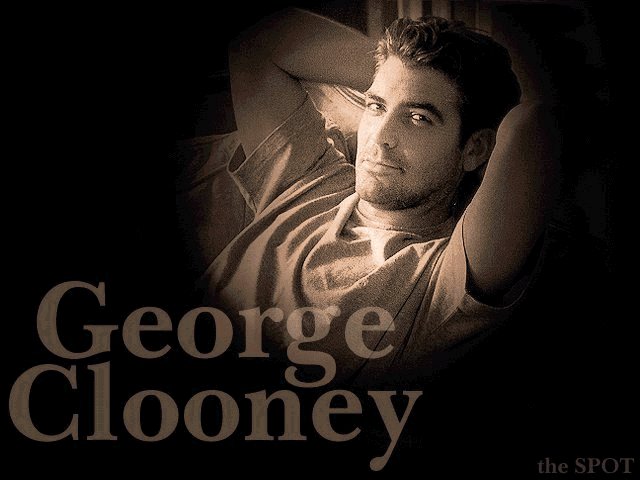
George Clooney: I Am a Liberal.


I am a liberal. And I make no apologies for it. Hell, I'm proud of it.

Too many people run away from the label. They whisper it like you'd whisper "I'm a Nazi." Like it's dirty word. But turn away from saying "I'm a liberal" and it's like you're turning away from saying that blacks should be allowed to sit in the front of the bus, that women should be able to vote and get paid the same as a man, that McCarthy was wrong, that Vietnam was a mistake. And that Saddam Hussein had no ties to al-Qaeda and had nothing to do with 9/11.

This is an incredibly polarized time (wonder how that happened?). But I find that, more and more, people are trying to find things we can agree on. And, for me, one of the things we absolutely need to agree on is the idea that we're all allowed to question authority. We have to agree that it's not unpatriotic to hold our leaders accountable and to speak out.

That's one of the things that drew me to making a film about Murrow. When you hear Murrow say, "We mustn't confuse dissent with disloyalty" and "We can't defend freedom abroad by deserting it at home," it's like he's commenting on today's headlines.

The fear of been criticized can be paralyzing. Just look at the way so many Democrats caved in the run up to the war. In 2003, a lot of us were saying, where is the link between Saddam and bin Laden? What does Iraq have to do with 9/11? We knew it was bullshit. Which is why it drives me crazy to hear all these Democrats saying, "We were misled." It makes me want to shout, "Fuck you, you weren't misled. You were afraid of being called unpatriotic."

Bottom line: it's not merely our right to question our government, it's our duty. Whatever the consequences. We can't demand freedom of speech then turn around and say, But please don't say bad things about us. You gotta be a grown up and take your hits.

I am a liberal. Fire away.

Thursday, March 09, 2006

Rumsfeld: Iraqis would deal with civil war

WASHINGTON (AP) — Dealing with a civil war in Iraq would fall to Iraq's own security forces, not U.S. troops, Defense Secretary Donald Rumsfeld told Congress on Thursday.

Rumsfeld testifies as Gen. Pace, center, and Gen. Abizaid listen during a hearing to review Bush's request for more war money. Rumsfeld testifies as Gen. Pace, center, and Gen. Abizaid listen during a hearing to review Bush's request for more war money.
By Alex Wong, Getty Images

Testifying alongside senior military leaders and Secretary of State Condoleezza Rice, Rumsfeld said he did not believe Iraq would descend into all-out civil war, though he acknowledged that sectarian strife had worsened. (Related story: Rumsfeld rejects reports of civil war)

Gen. John Abizaid, the top U.S. commander in the Middle East, said the situation in Iraq had evolved to the point where Sunni-Shiite violence was more of a threat to U.S. success there than the insurgency, which continues taking a deadly toll on Iraqi and American troops, and to impede efforts to stabilize the country.

Rumsfeld previously had been reluctant to say what the U.S. military would do in the event of civil war, but in an appearance before the Senate Appropriations Committee he was pressed on the matter by Sen. Robert Byrd, D-W.Va.

"The plan is to prevent a civil war, and to the extent one were to occur, to have the — from a security standpoint — have the Iraqi security forces deal with it, to the extent they are able to," Rumsfeld told the committee.

He did not elaborate on the implication of his remark: that at some point the Iraqi security forces might be overwhelmed by a civil conflict and ask the Americans to get involved militarily.

One of Rumsfeld's chief critics in Congress, Sen. Edward Kennedy, D-Mass., issued a statement after the hearing urging the administration to explain more fully what it would do in case of a civil war.

"Obviously, it's not realistic to depend on the Iraqi security forces, which are not yet able to fight on their own," Kennedy said. "So, Secretary Rumsfeld is basically saying that if the prevention strategy fails and Iraq plunges into civil war, U.S. troops will inevitably be deeply involved."

Rumsfeld said the key to avoiding civil war is for Iraq's political leaders to form a government of national unity, he said.

Both Abizaid and Rumsfeld cited progress in the training of Iraqi security forces. Abizaid said more than 100 Iraqi battalions are now conducting counterinsurgency operations, compared with only five in 2004. He did not mention that the number of Iraqi battalions rated as capable of operating without U.S. military assistance had recently dropped from one to zero. (Related story: Generals struggle with troop drawdown)

During an extensive question-and-answer session with committee members, some Democrats including Byrd and Sen. Herbert Kohl of Wisconsin sharply criticized the war but the overall tone of the hearing was not hostile.

Rice's opening statement to the committee was interrupted by a man in the audience who stood and shouted, "How many of you have children in this illegal and immoral war? The blood is on your hands and you cannot wash it away." As he was escorted from the room by security officers, the man also shouted, "Fire Rumsfeld."

An AP-Ipsos poll released Thursday shows 77% of Americans think civil war is likely to break out in Iraq. They're evenly divided on whether a stable democratic government can survive in Iraq.

More than half of Americans continue to disapprove of President Bush's handling of the war in Iraq.

Abizaid, who frequently visits Iraq and has overall responsibility for U.S. military operations there, cited the dangers of rising sectarian violence.

"There's no doubt that the sectarian tensions are higher than we've seen, and it is of great concern to all of us," he said, adding that he was pleased with the professionalism that Iraq's own security forces have demonstrated in responding to the surge in civil strife since the late-February bombing of a Shiite shrine in Samarra.

Abizaid described the situation in Iraq as "changing in its nature from insurgency toward sectarian violence." Asked about that comment after the hearing, Abizaid told a reporter, "The sectarian violence is a greater concern for us security-wise right now than the insurgency."

At a later news conference in the Capitol, Abizaid was asked if Iraqi troops would be expected to handle any outbreak of civil war.

"It's my impression that Iraq is not moving toward civil war," he said, adding that the plan is for Iraqi security forces to "take the lead on most military operations, like they're currently doing, and we'll be in support."

The hearing was called primarily to hear the administration's defense of its request for $91 billion in emergency funds mainly to pay for the wars in Iraq and Afghanistan. Rice and Rumsfeld said the money was vital to continuing U.S. efforts on the military, political and economic fronts to establish a stable government.

Asked about the prospects for a U.S. troop withdrawal from Iraq, Rumsfeld said it would be counterproductive to set a timetable, stressing that he's confident the Iraqis realize the enormity of the stakes at this stage of the process.

"They have everything to lose," he said. "If they are not able to put together a government in a relatively short period of time, they are facing a very difficult situation for all of the people involved in governance in that country."

There are now about 132,000 U.S. troops in Iraq. The U.S. death toll since the start of the war in March 2003 exceeds 2,300, in addition to more than 17,000 wounded.

Wednesday, March 08, 2006

Matthew Snyder

Matthew Snyder

Individuals US

Washington Post -- As a teenager, Matthew Snyder seemed perhaps a bit short to be a Marine. But people who knew him said last night that the young Carroll County man made up for whatever he might have lacked in height.

"He had all that spunk and desire," said David F. Brown, who once coached Snyder in a church basketball league. "On the court, he made up for everything."

Lance Cpl. Matthew A. Snyder of Finksburg died Friday from a noncombat-related vehicle accident in Iraq's Anbar province, the Pentagon announced yesterday. Snyder, 20, had been in Iraq since last month, the Marine Corps said.

"He was a wonderful son, and we're very proud of him," an aunt said last night, speaking for the family. "And he served our country well."


A neighbor recalled Snyder yesterday as "just a fine young man" who would help her with chores. Erma Dewitt said that she liked to pay children for their helpfulness but that he acted more out of a spirit of neighborliness than out of desire for monetary reward.

Snyder's character showed in the way he took care of things, she said. Once, when he came by to let the neighbor's dog out, he found a blacksnake in the garage.

"He wouldn't kill it," Dewitt said. He just took it outside."

Dewitt said Snyder did not strike her as someone with the physical stature of a Marine.

But "he had high objectives for life and wanted to serve his country," she said.

He "was going to take the Marines on and get through boot camp," which is celebrated for its physical demands. "And he did it," Dewitt said.

When she heard of his desire to join the armed forces, she said, she suggested to Snyder's mother that he pursue an enlistment that might be safer and less demanding.

But Dewitt said she was told, "No, he wants to be a Marine."

She said she believed that "part of it was that he wanted to prove something. That he could do that." Nor did he leave matters to chance. She said Snyder prepared himself through weight training and sports.

Snyder apparently enlisted shortly after graduating from Westminster Senior High School, where Brown, his former childhood basketball coach, is an assistant principal.

"He was small in stature," Brown recalled. "Always one of the shortest ones there." And he was quiet, too, Brown said.

But on the basketball court, it proved inconsequential. "He was just a ball of fire," Brown said. "He went at everything with full intensity."

When Snyder finished high school, Brown said, he "certainly didn't hesitate to step forward and put his life on the line. . . . He knew he was doing the right thing." He joined the Marines in October 2003, when he was 18 and working as a generator mechanic.

The family spokeswoman said Brown was the son of Julie and Albert Snyder. The Marines said his mother lives in Westminster and his father lives in Pennsylvania. He had two sisters, Sarah and Tracie, the aunt said.

The Pentagon said he was assigned to Combat Service Support Group-1, 1st Marine Logistics Group, 1st Marine Expeditionary Force, based at Twentynine Palms, Calif.

Sunday, February 26, 2006

Askariya Shrine Bombed


Before and after the bombing.

The US must decide how the country of Iraq should be governed after they toppled Saddam's government. Initially the plan was to produce one government- run at first by the Us and then handed over to an elected Iraq government policed and directed by the US military. However if the US military were to loose control- by Iraqis requesting the US leave or by a change in control in American politics, and the country was left to it's own then the potential that a radical anti- American government could come to power and the US would be no better off than we started. There is even potential for a uniting between Iran and Iraq which would make the US (and Israel ) in a far worse position.

The solution: break Iraq up into three smaller states- The dissolution of Iraq into a Shi'ite state, a Sunni state and the separation of the Kurdish part.

What would be the justification? That the Iraqi's just can't get along as a unified country. So it has been suggested that the destruction of this shrine was actually done by the US/British to stir up infighting, or a civil war. That has been accomplished.

The last memo from Defense Secretary Donald Rumsfeld ends with :
¶Assist in accelerating an aggressive federalism plan, moving towards three separate states — Sunni, Shia, and Kurd. (See memo here-bottom of page)- poated by Paul Grant (follower of Basho)


Askariya Shrine Bombed

“A large explosion heavily damaged the golden dome of one of Iraq’s most famous Shiite shrines Wednesday, spawning mass protests and triggering reprisal attacks against Sunni mosques,” reports the Associated Press. “It was the third major attack against Shiite targets this week and threatened to stoke sectarian tensions. Shiite leaders called for calm, but militants attacked Sunni mosques and a gunfight broke out between Shiite militiamen and guards at the offices of a Sunni political party in Basra. About 500 soldiers were sent to Sunni neighborhoods in Baghdad to prevent clashes between Shiites and Sunnis, Army Capt. Jassim al-Wahash said.”

It makes absolutely no sense for Sunnis to bomb Shia mosques; this would be akin to Baptists bombing Catholic churches. Sectarian violence, dividing Iraqi society, does not serve Iraqis, either Sunni or Shia. It does, however, serve the occupation forces and also begins to realize the plan sketched out in Oded Yinon’s “A Strategy for Israel in the Nineteen Eighties” (the balkanization of Arab and Muslim society and culture), an objective shared by Jabotinsky Likudites and Straussian neocons.

“No group claimed responsibility for the 6:55 a.m. attack on the Askariya shrine in Samarra, 60 miles north of Baghdad, but suspicion fell on Sunni extremist groups such as al-Qaida in Iraq led by Abu Musab al-Zarqawi. The shrine contains the tombs of two revered Shiite imams, descendants of the Prophet Muhammad.” Of course, it stands to reason the bombing was carried out by “al-Qaida in Iraq” and the dead Abu Musab al-Zarqawi, in other words it was a black op carried out by the Anglo-American occupation forces, designed specifically to create religious violence, the worst sort. Only vicious and crazed Muslims would blow up the remains of descendants of the Prophet Muhammad—or American, British, and Israeli intelligence operatives or their double agent Arab lunatics, or crazies incited by Rumsfeld’s Proactive Preemptive Operations Group (P2OG), designed to “stimulate” terrorist reaction.

Recall the remarks of an anonymous senior military officer on April 22, 2004, declaring a spate of bombings in Basra had “all the hallmarks” of “al-Qaeda.” Several months later, two British “undercover soldiers” wearing “traditional Arab headscarves” were caught red-handed by Iraqi National Guard “driving a booby trapped car loaded with ammunition.”

Michel Chossudovsky: “Has the US [and Britain] created as part of a covert intelligence operation, a bogus ‘resistance movement’ made up of its own Al Qaeda sponsored ‘terrorists’? Their suicide attacks target Iraqi civilians rather than the US military. The suicide bombings tend to encourage sectarian divisions not only within Iraq, but throughout the entire Middle East. They serve Washington’s interests. They contribute to undermining the development of a broader resistance movement uniting Shia, Sunni, Kurds and Christians against the illegal occupation of the Iraqi homeland.”

The Askariya shrine that was bombed Wednesday is among Iraq's most sacred sites for Shiite Muslims, drawing pilgrims from around the world.

It contains the tombs of the 10th and 11th imams, Ali al-Hadi who died in 868, and his son, Hassan al-Askari, who died in 874.

Both are descendants of the Prophet Muhammad and Shiites consider them to be among his successors. The landmark golden dome was completed in 1905 under Muzaffar al-Din Shah.

The shrine is near the place where the last of the 12 Shiite imams, Mohammed al-Mahdi, disappeared. Al-Mahdi, known as the “hidden imam,” was the son and grandson of the two imams buried in the Askariya shrine. Shiites believe he is still alive and will return to restore justice to humanity.


The shrine is in Samarra, 60 miles north of Baghdad, one of four Shiite holy cities in Iraq, which has majestic ruins stretching along the eastern bank of the Tigris river.

It was built by Caliph al-Mutasim in 836 to replace Baghdad as the capital of the Abbasid Caliphate, and abandoned by Caliph Al-Mutamid in 892.

Samarra also is the site of the ninth century Great Mosque with a 170-foot spiral minaret that is one of the most recognized landmarks in Iraq. The town also holds remains of the residence built by Caliph Al-Mutasim in 835.

Monday, February 20, 2006

U.S. Marines 'Devastated' After Crash


Sgt. Jonathan E. McColley, 23

U.S. Marines 'Devastated' After Crash

By STEVE HARTSOE, Associated Press WriterMon Feb 20, 2:36 AM ET

Ten U.S. service members died when a pair of Marine Corps helicopters from a unit based in North Carolina crashed off the coast of Africa, U.S. military officials confirmed Sunday.

The two CH-53E choppers, carrying a dozen crew and troops from a U.S. counterterrorism force, went down during a training flight Friday in the Gulf of Aden, near the northern coastal town of Ras Siyyan in Djibouti.

Two crew members who were rescued were taken in stable condition to the U.S. military's Landstuhl Regional Medical Center in Germany.

The aircraft and eight Marines were from Marine Heavy Helicopter Squadron 464, based at Marine Corps Air Station New River. Two Air Force airmen killed were from bases in Washington state and Virginia.

'We were devastated,' said Marine Corps 1st Lt. Paul Tremblay, who is based at Camp Lejeune, the huge post on the Atlantic Ocean that's next to the New River air station. 'It hits us very hard as Marines when we lose anyone.'

The Pentagon said the Marines killed in the crash were:

• 1st Lt. Brandon R. Dronet, 33, of Erath, La.

• • Sgt. Jonathan E. McColley, 23, of Gettysburg, Pa.

• Capt. Bryan D. Willard, 33, of Hummelstown, Pa.

Also killed in the crash were Senior Airman Alecia S. Good, 23, of Broadview Heights, Ohio, of the 92nd Communications Squadron at Fairchild Air Force Base, Wash.; and Staff Sgt. Luis M. Melendez Sanchez, 33, of Bayamon, Puerto Rico, of the 1st Communications Squadron, Langley Air Force Base, Va.

"Our deepest sympathy and heartfelt prayers go out to the family members, friends, loved ones and co-workers of our fallen brothers- and sisters-in-arms," said Maj. Gen. Timothy Ghormley, commanding general of the counterterrorism force. "We mourn their loss and honor their memory."

John McColley of Gettysburg, Pa., said his son was less than two months away from being rotated out of Africa and it was difficult to wait for news after the first reports of the crash.

"That news affected every member of the contingent, 40 or 50 families," McColley said. "Every family's heart sank."

Margaret Levens, of Long Beach, Miss., said she was proud that her son, Donnie Levens, had a chance to do what he loved.

"He was there to serve his country and to keep his family and country safe," Margaret Levens said. "It was what he wanted to do. He was there for us ... in fact he had reenlisted for four (more) years."

The remains of the eight Marines and two airmen were sent back to the United States on Sunday, task force spokeswoman Maj. Susan Romano told The Associated Press by telephone from Djibouti.

One of the two crew members who were rescued was Marine pilot Susan Craig, 28, who called her parents, Pat and Lewis Sackett of Fall Creek, Wis.

"She's bruised and swollen, and her arms and legs got hurt, but no broken bones," Pat Sackett said.

She said her daughter was not sure what caused the crash.

Military officials were investigating why the aircraft when down in shallow water. They said there was no indication of hostile fire, and visibility was good with light wind.

The Combined Joint Task Force-Horn of Africa, set up in the former French colony in June 2002, is responsible for fighting terrorism in nine countries in the region: Djibouti, Eritrea, Ethiopia, Sudan, Kenya, Tanzania, Uganda and Somalia in Africa and Yemen on the southwestern corner of the Arabian Peninsula.

The impoverished region is home to a sizable Muslim population. U.S. officials say it has been used by terrorists as a place to hide, recruit operatives and stage attacks.

The region has suffered four attacks either claimed by or attributed to Osama bin Laden's al-Qaida network, including bombings of the U.S. embassies in Kenya and Tanzania; and the 2002 attack on the USS Cole in Yemen.

___

Associated Press writers Rodrique Ngowi in Nairobi, Kenya, and Valerie Bauman in Jackson, Miss., and Bob Lentz in Philadelphia contributed to this report.

___

On the Net:

MCAS New River: http://www.newriver.usmc.mil/

Marine Heavy Helicopter Squadron 464: http://www.2maw.usmc.mil/MAG29/HMH464/default.asp

Sunday, February 19, 2006

Willie Plays for Troops Injured in Iraq - Forbes.com

Willie Plays for Troops Injured in Iraq - Forbes.com: "

Willie Nelson warmed up for a concert by playing a long freebie gig for soldiers injured in Iraq.

For the second straight year, Nelson squeezed in a show at Brooke Army Medical Center on Friday while he and his band were in San Antonio to play at the city's annual rodeo.

'I have a lot of respect for the military,' said Nelson, 72, an Air Force veteran. 'I like to show them that I support them every chance I get. ... We get as much out of it as (the soldiers).'

A year ago, the singer wore out his voice singing 11 songs at the Army hospital and had to cancel his performance at the San Antonio Stock Show and Rodeo.

Hundreds of patients, family members and hospital staff clapped and cheered Friday as Nelson walked into the hospital's atrium.

He opened, as usual, with "Whiskey River." After more than an hour and 22 numbers - including standbys like "On the Road Again" and "Mamas Don't Let Your Babies Grow Up To Be Cowboys" - he finally set down his well-worn acoustic guitar and was mobbed by fans.

Sgt. 1st Class Alan Hornaday, badly wounded in a suicide car bombing in Baghdad in 2004, had a front-row seat for the concert.

"This is really cool, him being able to come out and visit soldiers and entertain them," said Hornaday, a National Guardsman from Fordyce, Ark., who also saw Nelson here last year. "It picks everybody's spirits up. ... It means a lot

10 U.S. Troops Found After Djibouti Crash, Military Says

10 U.S. Troops Found After Djibouti Crash, Military Says: "10 U.S. Troops Found After Djibouti Crash, Military Says

Associated Press
Sunday, February 19, 2006; A15

NAIROBI, Feb. 18 -- Rescue crews called off operations Saturday after the U.S. military said it had accounted for 10 American troops who went missing after two transport helicopters crashed into the sea but declined to reveal their fate until family members were notified.

The U.S. military normally acknowledges any successful rescue of servicemen, as it did Friday when it announced that two injured crew members were recovered from the crash site.

In saying that the 10 previously missing crew members had been accounted for, the U.S. military command in Djibouti did not indicate that they had been recovered alive.

'We are not giving additional details on the status or condition of the crew out of respect for the next-of-kin,' said Maj. Susan Romano of the U.S.-led Combined Joint Task Force-Horn of Africa.

The CH-53E choppers, carrying a dozen crew members and troops from the counterterrorism force, went down Friday in the Gulf of Aden, near the northern coastal town of Ras Siyyan.

The two rescued crew members were flown Saturday to the U.S. military's Landstuhl Regional Medical Center in southern Germany, Romano said. They were in stable condition.

Authorities "

Saturday, February 18, 2006

Brent Scowcroft on Iraq Sanctions, lead-up to Iraq War

Brent Scowcroft faces a hostile questioner regarding the sanctions against Iraq. He places the blame of the suffering on Saddam Hussein.

See also :
Chronology of main events 1990-2001

Notes on Iraq Sanctions: Humanitarian Implications and Options for the Future - Security Council - Global Policy Forum

BRENT SCOWCROFT: Don't Attack Saddam


Brent Scowcroft

Brent Scowcroft Born: 19-Mar-1925
Birthplace: Ogden, UT
Religion: Mormon
Race or Ethnicity: White
Occupation: Government, Military

Nationality: United States
Executive summary: National Security Advisor to Ford and GHWB

Military service: USAF (Lt. Gen., retired)

Wife: Marian Horner Scowcroft (d., one daughter)

University: BS, West Point
University: PhD International Relations, Columbia University

White House National Security Advisor
Foreign Intelligence Advisory Board Chairman 2001-
George Bush Presidential Library Trustee
America Abroad Media Advisory Board
American Academy of Diplomacy
American Council on Germany Board of Directors
Atlantic Council Director
Atlantic Institute for International Affairs
Bretton Woods Committee
Center for Strategic & International Studies
Council on Foreign Relations
Eisenhower Fellowships Trustee
Forum for International Policy Trustee
Inter-American Dialogue
International Republican Institute
Nixon Center Board of Directors
Pacific Council on International Policy
Presidential Medal of Freedom 1991
National Security Medal
Knight of the British Empire 1993

Saturday, February 11, 2006

Video: Documentary :The Neocon Agenda

Notes from this video:

1. Neocons were the d riving force for war agenda in middle East- Iraq, Iran & Syria
2. Neocons are closely tied to Israel right wing
3. Goal was/is to weaken and destabilize Israels enemies- internal-Palestinians- and external enemies,
4. All were looking for a comprehensive solution for Israel's needs.
5. Iraq hasd been a key geostrategic spot that for that purpose of destabalizing Palestinian support.
6. Neocons tried to promote the idea that it wasn't only Israel in danger, but also the US.
7. Cheney brought the neocons into the Administration in 2001- Cheney was a member of Jewish Institute for National Security affairs and he and his wife were in Neocon organizations(like PNAC)
8. Collin Powell was one of the people who stood against military aggression against Iraq - prior to 9/11
9. Bush was a convert after 9/11
10. The plan was already prepared to attack Iraq- so all that needed to be done was create a compelling reason = weapons of mass destruction.

posted by Paul Grant (follower of Basho)

Thursday, February 09, 2006

In perspective

Detroit native Jerome Bettis, whose final NFL game was be played in yesterday's Super Bowl, was recently given a key to the city of Detroit. The last person given the key to the city was Saddam Hussein (1980).

Thursday, February 02, 2006

Video: Stephen Colbert roast Bush part 2


Back to Complete 
War News Index


part 2 - Stephen Colbert

Sunday, January 29, 2006


Setting the Record Straight: Sen. Kennedy On Iraq

"It is regrettable that Senator Kennedy has chosen Veteran's Day to continue leveling baseless and false attacks that send the wrong signal to our troops and our enemy during a time of war. It is also regrettable that Senator Kennedy has found more time to say negative things about President Bush then he ever did about Saddam Hussein. If America were to follow Senator Kennedy's foreign policy, Saddam Hussein would not only still be in power, he would be oppressing and occupying Kuwait."

- Scott McClellan, White House Press Secretary

Friday, January 06, 2006

New York Times Report on Armor

January 6, 2006

Extra Armor Could Have Saved Many Lives, Study Shows

A secret Pentagon study has found that at least 80 percent of the marines who have been killed in Iraq from wounds to their upper body could have survived if they had extra body armor. That armor has been available since 2003 but until recently the Pentagon has largely declined to supply it to troops despite calls from the field for additional protection, according to military officials.

The ceramic plates in vests currently worn by the majority of military personnel in Iraq cover only some of the chest and back. In at least 74 of the 93 fatal wounds that were analyzed in the Pentagon study of marines from March 2003 through June 2005, bullets and shrapnel struck the marines' shoulders, sides or areas of the torso where the plates do not reach.

Thirty-one of the deadly wounds struck the chest or back so close to the plates that simply enlarging the existing shields "would have had the potential to alter the fatal outcome," according to the study, which was obtained by The New York Times.

For the first time, the study by the military's medical examiner shows the cost in lost lives from inadequate armor, even as the Pentagon continues to publicly defend its protection of the troops. Officials have said they are shipping the best armor to Iraq as quickly as possible. At the same time, they have maintained that it is impossible to shield forces from the increasingly powerful improvised explosive devices used by insurgents. Yet the Pentagon's own study reveals the equally lethal threat of bullets.

The vulnerability of the military's body armor has been known since the start of the war, and is part of a series of problems that have surrounded the protection of American troops. Still, the Marine Corps did not begin buying additional plates to cover the sides of their troops until this September, when it ordered 28,800 sets, Marine Corps officials acknowledge.

The Army, which has the largest force in Iraq, is still deciding what to purchase, according to Army procurement officials. They said the Army is deciding between various sizes of plates to give its 130,000 soldiers; the officials said they hope to issue contracts this month.

Additional forensic studies by the Armed Forces Medical Examiner's unit that were obtained by The Times indicate that about 340 American troops have died solely from torso wounds.

Military officials said they had originally decided against using the extra plates because they were concerned they added too much weight to the vests or constricted the movement of soldiers. Marine Corps officials said the findings of the Pentagon study caused field commanders to override those concerns in the interest of greater protection.

"As the information became more prevalent and aware to everybody that in fact these were casualty sites that they needed to be worried about, then people were much more willing to accept that weight on their body," said Major Wendell Leimbach, a body armor specialist with Marine Corps Systems Command, the marine procurement unit.

The Pentagon has been collecting the data on wounds since the beginning of the war in part to determine the effectiveness of body armor. The military's medical examiner, Craig T. Mallak, told a military panel in 2003 that the information "screams to be published." But it would take nearly two years.

The Marine Corps said it asked for the data in August 2004; but it needed to pay the medical examiner $107,000 to have the data analyzed. Marine officials said funding and other delays resulted in the work not starting until December 2004. It finally began receiving the information by June 2005. The shortfalls in bulletproof vests are just one of the armor problems the Pentagon continues to struggle with as the war in Iraq approaches the three-year mark, The Times has found in an ongoing examination of the military procurement system.

The production of a new armored truck called the Cougar, which military officials said has thus far withstood every insurgent attack, has fallen three months behind schedule. The small company making the truck has been beset by a host of production and legal problems.

Meanwhile, the Pentagon is still relying on another small factory in Ohio to armor all of the military's principal transport truck, the Humvee, and it remains backlogged with orders. The facility, owned by Armor Holdings, increased production in December after reports in The Times about delays drew criticism from Congress. But the Marine Corps said it is still waiting for about 2,000 of these vehicles to replace other Humvees in Iraq that are more lightly armored, and does not expect final delivery until June.

An initiative begun by the Pentagon nearly two years ago to speed up production by having additional firms armor new Humvees remains incomplete, Army officials said.

Body armor has gone through a succession of problems in Iraq. First, there were prolonged shortages of the plates that make the vests bulletproof. This year, the Pentagon began replacing the plates with a stronger model that is more resistant to certain insurgent attacks.

Almost from the beginning, some soldiers asked for additional protection to stop bullets from slicing through their sides. In the fall of 2003, when troops began hanging their crotch protectors under their arms, the Army's Rapid Equipping Force shipped several hundred plates to protect their sides and shoulders. Individual soldiers and units continued to buy their own sets.

The Army's former acting secretary, Les Brownlee, said in a recent interview that he was shown numerous designs for expanded body armor back in 2003, and instructed his staff to weigh their benefits against the perceived threat without losing sight of the main task: eliminating the shortages of plates for the chest and back.

Army procurement officials said that their efforts to purchase side ceramic plates have been encumbered by their much larger force, and that they wanted to provide manufacturers with detailed specifications. Also, they said their plates will be made to resist the stronger insurgent attacks.

The Marines said they opted to take the older version of ceramic to speed delivery. As of early last month, officials said marines in Iraq had received 2,200 of the more than 28,000 sets of plates that are being bought at a cost of about $260 each.

Marine officials said they have supplied troops with soft shoulder protection that can repel some shrapnel, but remain concerned that ceramic shoulder plates would be too restrictive. Similarly, they said they believe the chest and back plates are as large as they can be without unduly limiting the movement of troops.

The Times obtained the 3-page Pentagon report after a military advocacy group, Soldiers for the Truth, learned of its existence. The group posted an article about the report on its website earlier this week. The Times delayed publication of this article for more than a week until the Pentagon confirmed the veracity of its report. Pentagon officials declined to discuss details of the wound data, saying it would aid the enemy.

"Our preliminary research suggests that as many as 42 percent of the Marine casualties who died from isolated torso injuries could have been prevented with improved protection in the areas surrounding the plated areas of the vest," the study concludes. Another 23 percent might have been saved with side plates that extend below the arms, while 15 percent more could have benefited from shoulder plates, the report says. In all, 526 marines have been killed in combat in Iraq. A total of 1,706 American troops have died in combat.

The findings and other research by military pathologists suggests that an analysis of all combat deaths in Iraq, including those of Army personnel, would show that 300 or more lives might have been saved with improved body armor.

Military officials and defense contractors said the Pentagon's procurement troubles have stemmed in part from miscalculations that underestimated the strength of the insurgency, and from years of cost-cutting that left some armoring firms on the brink of collapse as they waited for new orders.

To help defeat roadside ambushes, the military in May 2005 contracted to buy 122 Cougars whose special V-shaped hull helps deflect roadside bombs, military officials said. But the Pentagon gave the job to a small firm in South Carolina, Force Protection, that had never mass-produced vehicles. Company officials said a string of blunders has pushed the completion date to June.

A dozen prototypes shipped to Iraq have been recalled from the field to replace a failing transmission. Steel was cut to the wrong size before the truck's design drawings were perfected. Several managers have left the firm.

Company officials said they also lost time in an inter-service skirmish. The Army, which is buying the bulk of the vehicles, asked for its trucks to be delivered before the Marine vehicles, and company officials said that move upended their production process until the Army agreed to get back in line behind the marines. "It is what it is, and we're running as fast as we can to change it," Gordon McGilton, the company's chief executive, said in an interview at its plant in Ladson, S.C.

On July 5, two former employees brought a federal false claims case that accuses Force Protection of falsifying records to cover up defective workmanship. They allege that the actions "compromise the immediate and long term integrity of the vehicles and result in a deficient product," according to legal documents filed under seal in the United States District Court in Charleston and obtained by The Times.

The legal claim also accuses the company of falsifying records to deceive the military into believing the firm could meet the production deadlines. The United States Attorney's office in South Carolina declined to comment on the case. The Marine Corps says the Justice Department did not notify it about the case until December.

Force Protection officials said they had not been made aware of the legal case. They acknowledged making mistakes in rushing to fill the order, but said there were multiple systems in place to monitor the quality of the trucks, and that they were not aware of any deficiencies that would jeopardize the troops.

Monday, December 19, 2005

Cheney in Iraq


Cheney Fields Tough Questions From Troops
- By NEDRA PICKLER, Associated Press Writer
Sunday, December 18, 2005

(12-18) 12:18 PST AL ASAD AIR BASE, Iraq (AP) --

Facing tough questions from battle-weary troops, Vice President Dick Cheney on Sunday cited signs of progress in Iraq and signaled that force changes could come in 2006.

Cheney rode the wave of last week's parliamentary elections during a 10-hour surprise visit to Iraq that aimed to highlight progress at a time when Americans question the mission. Military commanders and top government officials offered glowing reports, but the rank-and-file troops Cheney met did not seem to share their enthusiasm.

"From our perspective, we don't see much as far as gains," said Marine Cpl. Bradley Warren, the first to question Cheney in a round-table discussion with about 30 military members. "We're looking at small-picture stuff, not many gains. I was wondering what it looks like from the big side of the mountain — how Iraq's looking."

Cheney replied that remarkable progress has been made in the last year and a half.

"I think when we look back from 10 years hence, we'll see that the year '05 was in fact a watershed year here in Iraq," the vice president said. "We're getting the job done. It's hard to tell that from watching the news. But I guess we don't pay that much attention to the news."

Another Marine, Cpl. R.P. Zapella, asked, "Sir, what are the benefits of doing all this work to get Iraq on its feet?"

Cheney said the result could be a democratically elected Iraq that is unified, capable of defending itself and no longer a base for terrorists or a threat to its neighbors. "We believe all that's possible," he said.

Although he said that any decision about troop levels will be made by military commanders, Cheney told the troops, "I think you will see changes in our deployment patterns probably within this next year."

About 160,000 troops are in Iraq. The administration has said that troop levels are expected to return to a baseline of 138,000 after the elections, but critics of the war have called for a significant drawdown.

More than 2,100 troops have died in Iraq since the U.S. invaded in March 2003.

The round-table with the vice president came after hundreds of troops had gathered in an aircraft hangar to hear from a mystery guest. When Cheney emerged at the podium, he drew laughs when he deadpanned, "I'm not Jessica Simpson."

Shouts of "hooah!" from the audience interrupted Cheney a few times, but mostly the service members listened intently. When he delivered the applause line, "We're in this fight to win. These colors don't run," the only sound was a lone whistle.

The skepticism that Cheney faced reflects opinions back home, where most Americans say they do not approve of President Bush's handling of the war. It was unique coming from a military audience, which typically receives administration officials more enthusiastically.

Cheney became the highest-ranking administration official to visit the country since Bush's trip on Thanksgiving Day 2003. It was his first visit to Iraq since March 1991, when he was defense secretary for President George H.W. Bush.

The tour came on the same day that President Bush was giving a prime-time Oval Office address on Iraq. Cheney's aides said the timing was a coincidence, yet the two events combined in a public-relations blitz aimed at capitalizing on the elections to rebuild support for the unpopular war.

The daylong tour of Iraq was so shrouded in secrecy that even Iraqi Prime Minister Ibrahim al-Jaafari and President Jalal Talabani were kept in the dark. The prime minister said he was surprised when he showed up for what he thought was a meeting with the U.S. ambassador and saw Cheney.

Talabani, his finger still stained purple as proof that he had voted three days earlier, was clearly delighted. He thanked Cheney profusely for coming and called him "one of the heroes of liberating Iraq."

Cheney had an hourlong briefing on the election from Ambassador Zalmay Khalilzad, top U.S. commander Gen. George Casey and Gen. John Abizaid, commander of U.S. forces in Iraq. He emerged saying he was encouraged by preliminary results showing high turnout about Sunni Muslims, who make up the backbone of the insurgency.

His next visit was to Taji Air Base, where he saw tanks that Iraqis had rebuilt and watched while they practiced a vehicle sweep at a security checkpoint.

U.S. forces guarded Cheney with weapons at the ready while Iraqi soldiers, who had no weapons, held their arms out as if they were carrying imaginary guns.

"The Syrian border is back under Iraq control now," U.S. Lt. Gen. Marty Dempsey told the vice president, pointing to a map of Iraqi troop locations. "When people say, 'When will Iraq take control of its own security?' the answer truly is it already has."

Cheney lunched on lamb kebobs, hummus and rice with raisins along with U.S. and Iraqi soldiers who helped secure polling sites. Then he headed to his third and final stop in Iraq at al-Asad.

Cheney flew over Baghdad in a pack of eight fast-moving Blackhawk helicopters, following the airport road that has been the site of so many insurgent attacks and passing the courthouse where Saddam Hussein is being tried.

The unannounced stops in Iraq came at the beginning of a five-day tour aimed at strengthening support for the war on terror. Stops include Oman, Afghanistan, Pakistan, Egypt and Saudi Arabia.

Cheney's staff kept the Iraq portion secret from reporters, waiting to reveal the plans when Air Force Two was preparing to refuel in the United Kingdom. Once on the ground, the entourage transferred from his conspicuous white and blue 757 to an unmarked C-17 cargo plane that would fly overnight to Baghdad International Airport.

___

Sunday, December 18, 2005

Rice Spinning


Rice on Fox News Sunday With Chris Wallace
Monday, 19 December 2005, 9:52 pm
Press Release: US State Department

Interview on Fox News Sunday With Chris Wallace


Secretary Condoleezza Rice
Washington, DC
December 18, 2005


QUESTION: We're joined now by Secretary of State, Condoleezza Rice. Secretary Rice, welcome back to Fox News Sunday.

SECRETARY RICE: Thank you. Nice to be with you, Chris.

QUESTION: As we said, the President has confirmed that he authorized the National Security Agency to spy on people, including U.S. citizens in this country, without a court warrant. Why was that necessary?

SECRETARY RICE: Well, what the President authorized is for the National Security Agency to be able to collect information on a limited number of people with links to al-Qaida. This is about the geographic space of the United States. People may or may not be American. But if you'll remember, Chris, probably one of the most compelling outcomes of the 9/11 Commission was an understanding that our intelligence agencies looked outward, our law enforcement agencies looked inward, and a seam had developed between them.

And so, using his constitutional authorities, using authorities granted to him, the President wanted to make certain that that seam did not exist, that people could not communicate inside the United States about terrorist activity with people outside the United States, leaving us vulnerable to terrorist attack.

We simply can't be in a situation in which the President is not responding to this different kind of war on terrorism. We exist now in a world in which terrorist attacks are taken from within the United States and that's what the President addressed. He is fully not just aware of, but determined to uphold, his responsibilities and his obligations to protect America and to protect our civil liberties as well.

QUESTION: But let me ask you about what I think concerns some people. Historically, the Executive Branch has had to go to a court to get approval from a judge, get a warrant, before it could spy domestically in this country on people. It's part of our separation of powers. Why not go to the courts? Why not get a warrant before you engage in this kind of activity?


SECRETARY RICE: Well, in fact, the Administration is using FISA and using it very actively to try to deal with the threats. But the President also has additional authorities and he's drawing on those to deal with this different kind of war. I'm not a lawyer, Chris, but the President --

QUESTION: What I'm asking was a policy question.

SECRETARY RICE: No, but the President has been very well informed (Since when?) that he has the constitutional and other authorities to do this.

QUESTION: So is the point that -- because there is a system in place, the Foreign Intelligence Surveillance Court, which can grant emergency wiretaps. Was the feeling that the existing system was too slow?

SECRETARY RICE: Well, the intelligence professionals here do use FISA and we've used FISA, but FISA is a 1978 act; it does relate to a time when we were principally concerned about the activities of people working on behalf of governments or the activities of governments. This is a different circumstance and the President, in order to discharge his obligations to detect and thereby prevent terrorist attacks inside the United States, has drawn on additional authorities that are granted to him in the Constitution and in other statutes as well.

QUESTION: You didn't have to be an expert in body language to see that the President was not too pleased yesterday when he had to acknowledge the existence of this top secret program. Is the Administration going to investigate who leaked this?

SECRETARY RICE: Well, that is something that is going to be left up to people to discuss. But let me just say, it is really a serious matter when we get the disclosure of a program like this because, after all, what we must do is protect from those who are trying to hurt us knowledge of how we follow them, how we follow their activities. Because we once knew about Usama bin Laden's communications because we knew about his telephone; we were able to track it. And then a story appeared in the newspapers and we stopped using it.


QUESTION: All of this comes in a week when the President had to give in to overwhelming support in both houses of Congress among both parties, for the McCain amendment, which sets new limits on the treatment of U.S. detainees anywhere in the world. And the Senate, with four Republicans going along, voted to block, continue to block, renewal of the Patriot Act. Why do you think that there is growing concern in Congress across party lines with whether this President is exceeding his powers in conducting the war on terror?

SECRETARY RICE:
Well, the debate that took place around the McCain amendment and the eventual outcome, I think was, in fact, good for the country because the President and --

QUESTION: You guys fought it for months.


SECRETARY RICE: Well, but the President and the Congress came to a place where I think the President believes that he can protect the country and we can continue to live up to our international obligations and to our laws here in the country. But the fact is we're in a new era, Chris, and I'm not surprised that people are going to debate and discuss how we prosecute the war on terrorism -- the war on terror.

I do know that as the President sits in the Oval every day and he sees a stream of terrorist threat information coming in, most of it, by the way, not specific enough to act on, and so your desire or your obligation as President, your obligation as an officer serving the United States, is to get as much information as possible about what those threats might be and prevent an attack. The President does that cognizant of, determined to respect, his obligations under the Constitution not just to protect the country but to protect civil liberties, to protect our international obligations and to live within our laws. But this is a different kind of war and perhaps it's not surprising that we are having some discussion of how to fight this war.

QUESTION: The President says that he will not agree to a three-month extension of the Patriot Act while Congress works to try to formulate a compromise; that he will let at the end of the year when it's due to expire, he will let those provisions expire. Isn't he playing politics with national security?

SECRETARY RICE: Well, the President feels very strongly that the Congress needs to renew this act which has helped to save lives. We have to remember that immediately after September 11th the Administration and the Congress were united in the notion that additional tools were needed to close some of these gaps between what our intelligence agencies were doing outside and what our law enforcement agencies were doing inside. Chris, we set up this system of intelligence and law enforcement and walls between them at a time when the paradigm was threats come from the outside, attacks come from the outside; and then, on September 11th, the very terrible surprise was that these attacks came from within the United States by people who had been sitting here for months, who knew our system and who were communicating outside --

QUESTION: But would you really let the -- the Patriot Act, if it's so important, would you really let it expire rather than just allow a three-month extension?

SECRETARY RICE: I think the President feels very strongly that we need to do this now and we need to confront this issue now.

QUESTION: All right, let's turn to Iraq. And you know, it is so amazing -- the news business -- because it's been a remarkable week in Iraq.

SECRETARY RICE: Hasn't it, yeah.

QUESTION: Eleven million people voted, more than 70 percent turnout. But after the election last January, it took Iraqis almost three months to create a new government. Can we afford that same kind of a delay this time?

SECRETARY RICE: Well, when you talk to Iraqis, they recognize the need to sustain the momentum out of this election, they need to sustain momentum for the expectations of the Iraqi people, they need to sustain it because of the insurgency and the terrorists, they need to get a strong message that the political system is moving forward. Yes, they are trying to do something very difficult, which is to overcome a lot of fissures -- historical fissures, traditional fissures -- through a political process. And so they will need to take the time to make sure that that's done, but I think they all understand that they should do it as quickly as possible.

It's also the case that this election is different than the January election because this time Sunnis voted in very large numbers.


QUESTION: Let's engage in what I know is your favorite part of appearing on Fox News Sunday, and that is a lightning round with quick questions and brief answers, if you will, Madame Secretary.

SECRETARY RICE: Right.

QUESTION: The trial of Saddam Hussein. Iraq's Vice President has said that this has become a platform for Saddam and wonders who is the genius who is producing this farce. Do you share any of his concerns that Saddam is seizing control of the trial?

SECRETARY RICE: Oh, these are difficult -- these big trials are -- as we've seen with Milosevic in The Hague. So it's difficult. But you have to say that the tremendous courage of this judge who sits there and confronts Saddam Hussein, I think that's what's really coming through, not Saddam Hussein and his rantings.

QUESTION: All right. Iran's new President says that Israel should be wiped off the map, that the Holocaust is a myth. You've been talking about this for months, that we've got to do something about this. And I must say, I looked back at an interview that we did in June; we were talking about this. How frustrating for you that you can't get the European allies, Russia, China, to go along to isolate Iran by imposing sanctions?

SECRETARY RICE: Well, I am convinced that this will end up in the Security Council if Iran doesn't change course, and I see no evidence that Iran is going to change course.

QUESTION: If you'll forgive me, you were saying that last June.

SECRETARY RICE: Well, diplomacy takes some time and it is important that we do this at a time of our choosing. Right now, the Iranians are not enriching and reprocessing. That's good. But the more that we hear from this Iranian Government, the more that people recognize and acknowledge publicly that this is a government that shouldn't even expect the international community to trust them with technologies that might lead to a nuclear weapon.

QUESTION: All right. And finally, because the one time I don't ask you, you're going to have something to say on this subject. Are you still ruling out a run for President in 2008?

SECRETARY RICE: I guarantee I'm not going to have anything more to say on that subject. That's not my calling.

QUESTION: All right. Now, having said that, I've got a new one for you.

SECRETARY RICE: Oh, goodness.

QUESTION: If the Republican nominee for President in 2008 came to you and said, "Condi, we need you on the ticket as the Vice President."
SECRETARY RICE: We've got an awful lot of good people who can run at the top of the ticket and in the second spot. I'm somebody who wants to go back to California or maybe to the NFL.

QUESTION: To the NFL? The commissioner, not a player, right?

SECRETARY RICE: Oh, that's great. Not a -- well, last time I looked, I'm not really qualified to be a linebacker.

QUESTION: Any pick in the Washington Redskins-Dallas game today?

SECRETARY RICE: Oh, that's dangerous territory, Chris.

QUESTION: Forget the Middle East.

SECRETARY RICE: Yeah, forget the Middle East. Right. I'll say that I think the Redskins will win this one.

QUESTION: Well, we'll see. Secretary Rice, thank you so much for coming in and, as always, please come back.

SECRETARY RICE: Thank you. Great to be with you.

2005/1184

Released on December 18, 2005

Saturday, December 10, 2005

All who have gone before will share the blame for mistakes made by the new recruits

By Tom Bowman
Baltimore Sun

Army accepts more low-aptitude recruits

WASHINGTON – The Army met its recruiting goal for November by again accepting a high percentage of recruits who scored in the lowest category on the military’s aptitude tests, Pentagon officials said Thursday, raising renewed concerns that the quality of the all-volunteer force will suffer.

The Army exceeded its 5,600 recruit goal by 256 for November, while the Army Reserve brought in 1,454 recruits, exceeding its target by 112. To do so, they accepted a “double digit” percentage of recruits who scored between 16 and 30 out of a possible 99 on the military’s aptitude test, said officials who requested anonymity.

Last month, the Baltimore Sun reported that the Army reached its recruiting goals in October by accepting 12 percent from these low scorers, known as Category IV recruits. The Army may accept no more than 4 percent annually, according to Defense Department rules. While officials last month disclosed the percentage accepted in October, Thursday they refused to reveal the November figure.

“We are not giving out (aptitude test) categories during the course of the year,” said Douglas Smith, a spokesman for the Army Recruiting Command at Fort Knox, Ky.

Still, Army officials continue to say that at the end of the recruiting year, next Sept. 30, the total percentage of Category IV soldiers will be no more than 4 percent.

For more than a decade, the Army kept its Category IV soldiers to 2 percent of its recruitment pool.

But last year, faced with a difficult recruiting climate because of the war in Iraq, Army Secretary Francis Harvey decided to double the number of Category IV soldiers.

“We will be at 4 percent at the end of the fiscal year, that’s what matters,” said Lt. Col. Bryan Hilferty, a spokesman for Army personnel.

The increasing reliance on the lowest-scoring recruits is troubling to former officers who fear that the quality of the force will erode.

They say that the increasingly high-tech Army needs even more qualified soldiers. And with troops facing more complex duties involving nation building and peacekeeping duties, good judgment is more important.

Thursday, December 01, 2005

Good guys in a Bad War


"No True Glory is the gripping account of the valor of the Marines in the fiercest urban combat since Hue. Yet, the even-handed description of the vacillation regarding policy will likely please neither some of our senior officers nor the White House." --Former Secretary of Defense, James R. Schlesinger

"No True Glory is the best book on the U.S. military in Iraq to emerge so far." --Tom Ricks of The Washington Post

The finest chronicle of the strategy behind battle and the fighting during battle that I've ever read!" --General Carl E. Mundy, former Commandant of the Marine Corps

"A remarkably detailed, vivid firsthand account of the American military experience…. West’s focus is on the “frontline,” putting the reader at the negotiating table with U.S. military commanders and Fallujan sheiks, imams, and rebel leaders; in the barracks; and on the street, fighting hand to hand, house to house, in some of the fiercest battles of the Fallujah campaign and the Iraq war." --Booklist

West describes the fury of the fighting in Fallujah and Ramadi in a style that makes him part historian, part novelist — the grunts' Homer.” --LA Times Book Review

“West successfully brings the war back home in all its agonizing and illuminating detail. From the combat stories of those on the ground all the way up to the White House, West [is] uniquely placed to write a chronicle of the fight. The narrative truly shines." --The Christian Science Monitor

Exhaustively reported...West paints a picture of highly capable Marines struggling to make the best of untenable political circumstances.”--Washington Post Book World

Tuesday, November 22, 2005

Is Saudi Arabia the Real Enemy?


“Talibans with Oil and a Good P.R. Company”
The dark kingdom of Saudi Arabia.

Q&A by Kathryn Jean Lopez

Laurent Murawiec, of the Hudson Institute, is author of the new book Princes of Darkness : The Saudi Assault on the Westi. Formerly an analyst at the Rand Corporation, in 2002 he gave an infamous briefing at the Pentagon to the Defense Policy Board about Saudi Arabia. NRO Editor Kathryn Lopez spoke to him about the book and the kingdom.

Kathryn Jean Lopez: Are you a Zionist madman?

Laurent Murawiec: Yes, if we believe the Saudi media, a large segment of the Arab press, and a number of Washington pundits who nobly rose to the defense of the Saudi royals maligned by this impudent writer. If the little boy who says that the king has no clothes is mad, then I plead guilty as charged. Next, I like Israel, too. I think Israel, of all the countries in the Middle, is the most like us, democratic, Western, vibrant. Guilty again. But the "Zionist madman" is only the polite version of what I've been called in the Saudi press and the Arab media, and even some in our own media.

Lopez: Is Saudi Arabia our enemy? Is it fundamentally evil?

Murawiec: Let's look at facts rather than speeches. The Al-Saud family is indistinguishable from the Wahhabi sect. They have been wedded like Siamese twins since 1744. The sect lends Islamic legitimacy to the sword of the ruler, the ruler extends the writ of the sect. The one cannot exist without the other. The Wahhabi creed is a nasty, bigoted belief system. It considers itself the sole repository of authentic Islam, and views all other Muslins as heretics, apostates, and schismatics, hence, deserving of death. It considers Jews and Christians as Satanic enemies that should be killed when opportunity arises. Jihad is integral to Wahhabism. Whenever the Saudi royals have had opportunity to manifest and implement the creed, they have. King Faisal gave his every visitor a copy of The Protocols of the Elders of Zion. Read the sermons and the fatwas and the schoolbooks that pour out of Saudi mosques, universities, imams, and predicators, from TV and media: "death to Jews, Christians, Hindus, Shiites" is a permanent singsong. That's the Saudi-Wahhabi creed in action. Now, since they have needed us to protect them from regional predators, Iran, Saddam in his time, Nasser earlier and so on, they have honed in a nice trick which allows them to emit friendly noises from one corner of their mouth when they speak English, and in hateful tones from the other, Arabic side. When senior Saudi clerics issue fatwas that call for the killing of Americans in Iraq, when Saudi state TV airs these bloodcurdling calls for jihad against America, how can one but conclude that they are no friends, but enemies? The new Saudi ambassador here, Prince Turki, called our toppling of Saddam "a colonial war." Seventy percent of the jihadis we have captured in Iraq are Saudis. King Abdullah, Prince Nayef the interior minister, Prince Sultan and Turki have all repeatedly stated that Israel was behind 9/11 — not the 15 of 19 hijackers that were Saudis — and behind all terrorist incidents in Saudi Arabia! King Abdullah twice in the last few years threatened the U.S. with a new oil embargo. With such friends, who needs enemies? The Saudi royals? Talibans with oil and a good p.r. company. The regime? It is evil, and therefore it is our enemy, and it behaves accordingly.

Lopez: How do you take the Saudi out of Saudi Arabia?

Murawiec: Let me backtrack: If I'm right regarding the nature of Saudi Arabia, then our policy should be to treat them on their merits and demerits, not on some imaginary and delusional notion that they are our friends and allies. Drive a hard bargain based on our national interest. If you go to the supermarket to buy carrots, you pay good money to buy good carrots. Do you call the manager your friend or your ally? There has been a consistent pattern of Saudi actions, of Saudi strategies, that have been inimical to the United States. Draw conclusions: The Saudis have been given a pass for several decades, no matter what kind of outrage they were committing or orchestrating. The Saudi establishment, their religious establishment, the "charities," the universities, the Saudi NGOs like the World Muslim League, the World Association of Muslim Youth, the International Islamic Relief (on the board of which princes sit, so they're really no NGO but official organizations that claim to be NGOs) they are one of the principal sources of terrorist jihad against the West, at a par with the ayatollahs' Iran. So we should treat them accordingly. There are many actions they should take, and we can monitor their implementation: shut down the madrasas; stop printing and exporting the schoolbooks and other literature that preach slaughtering Westerns as a noble Islamic act; shut up the imams and predicators whose sermons call for murder of infidels and jihad; shut down the so-called charities that funnel funds into international terror, arrest their senior officers, hand out their archives to our intelligence agencies; shut down those branches of Saudi intelligence which are involved in and complicit with terror. That's just a beginning. Good-faith implementation by the Saudi government would help, not the fake decrees that remain dead letter and the platitudinous speeches and the tremolos of eternal friendliness which only exist to be brandished by the Saudi embassy here and their friendly Washington lobbyists. If the Saudis do not respond, they should meet the full wrath of the United States. Why should we accept a "special relationship" which is so lop-sided? Very special indeed: They gain, we lose.

Lopez: The U.S. seems to bend over backward to call Saudi Arabia our friend. Any hope of that changing?

Murawiec: When Franklin Roosevelt met King Abdulaziz Ibn Saud on board USS Quincy in 1945, they struck a deal that made good strategic sense: guaranteed flows of cheap oil against protection. The deal worked for some time, it was reasonable. As the Saudis started undermining it and violating it, it stopped making sense. But oil entails a lot of money and influence: In the period 1973-2002, the Saudis pocketed two trillion dollars worth of direct oil and gas income. Early on, ARAMCO, which was an American company, became a lobbying arm, a p.r. and policy-influence adjunct of the Saudi regime. The Saudi royals have one great talent: survival, and one undeniable art: power. Buying people is a standard Bedouin method. So they became our friends. Add that American strategy in the Middle East was long based on one parameter: Let's be friends with the owners of the real estate under which the oil is. Let's be real nice with dictators and despots. Sunni strongmen buy us stability in the region: Let's love them. This is realism. "It gave us 50 years of peace," as one Realist recently pronounced. They make cemeteries and call them peace. It's like those who said — often the same — that there was no alternative to letting the Soviets get away with everything, or else.

We've been in a slow-motion divorce with the Saudis for four years now. It's the kind of divorce where both sides loudly claim that everything's fine, while the lawyers are busy calculating alimony and the splitting of assets. But we pulled out much of our military assets from Saudi Arabia — they were unhelpful in the run-up to the Iraq war, to say the least, so we moved to Qatar and other places. We revoked the diplomatic immunity of 70 Saudi jihad leaders, Wahhabi agents who operated out of the embassy's "Islamic Affairs" department. The Treasury investigated and exposed, the FBI raided a number of Saudi pseudo-NGOs — the list is long. But the divorce is painstakingly slow. The Saudis always calculate how far they can get away with things they do without getting us enraged. There is great fear in Washington of "provoking the fall of the Al-Sauds and opening the door to bin Laden," as if this alternative was the only one. The president has been less than consistent on the issue: While he's revoked the "realist" doctrine of unconditional love for Sunni strongmen, he still in effect behaves publicly as if some aspects of it were true. It's a pity, as he undermines his own strategic thrust: you cannot combat the jihadis here and tolerate their main backers there.

Lopez: Why didn't 9/11 dramatically change U.S.-Saudi talk?

Murawiec: 9/11 forced our government to notice — how insightful! — that something was amiss on the Saudi side. ...It merely got the ball rolling — we've only seen the beginning.

Lopez: Is "Washington on the auction block" at all overly dramatic?

Murawiec: "If the reputation, then, builds that the Saudis take care of friends when they leave office, you'd be surprised how much better friends you have who are just coming into office." Thus spoke Prince Bandar bin Sultan, grandson of Abdulaziz Ibn Saud, and son of the current defense minister, until recently ambassador of Saudi Arabia to the United States, or rather, as he is known, Saudi minister of American affairs, as the Washington Post reported on February 11, 2002. What more could I say? I have a full chapter in the book documenting those who put themselves on the auction block. The sheer chutzpah of that statement!

Lopez: Shouldn't "Wahhabi" being a household word by now?

Murawiec: Ah, yes, it should be! It is as if we had been fighting World War II and not naming the enemy by its name, and Roosevelt had talked of "violence" instead of "Nazis." I cheered early October when the president said in his speech at the National Endowment for Democracy that the enemy was "Islamo-Fascism" and the ideology of jihad rather than some shapeless, vague, anonymous "terrorism." Well, it took four years, but it happened. Once again, the main suppliers of Islamo-Fascist conceptions, funds and practices in the world are the Saudis and the Iranians. Wahhabism is half the problem. The Wahhabi-Saudi takeover of most of radical Sunni Islam — the Muslim brotherhood, the Deobandi sect, the Tablighi, and others — should make them into a household word for "enemy."

Lopez: Do you think that the leak of that Pentagon briefing was intentional? Or, at the very least, might the administration been grateful someone said it and it managed to become an issue?

Murawiec: Parts of the administration were furious. Colin Powell called Prince Saud, the foreign minister, to express his repentance and make clear that the briefing had nothing, thing at all, to do with U.S. policies. Other parts were glad that a debate that had never arisen outside the Beltway had become a national debate. The leak of the briefing to the Washington Post became significant not because of the novelty of my argument, which a dozen analysts in Washington had made and publicized before me, but because it gained front-page prominence: The briefing had been presented at the Department of Defense, it came after 9/11, which gave it credibility, and the leak spiced it up. It became an issue. Note that much of what I had then said, which many in the media then called "Strangelovian," is now currently stated in the media without anyone batting an eyelid. So it was a good debate whose time had come, through a fortuitous incident.

Lopez: How do you see U.S. policy toward Saudi Arabia realistically changing?

Murawiec: Slowly but inescapably. Part of it is that no responsible policymaker should tie his country's strategic fortunes to a sinking ship. The Saudis have just bought themselves a respite — at $60 a barrel, you can buy more people internally and externally than at $20 or 30. Just as Brezhnev's regime and Soviet Communism got a respite in 1973-74 and again in 1978-79 with the two oil shocks: it saved them from bankruptcy and prolonged the terminal agony by a decade and more. Likewise with a dysfunctional Saudi regime, which has spent the last thirty years breeding attack dogs, many of whom then turned into wolves, and has not modernized the Kingdom at all (the oil dependency of Saudi exports was 91 percent in 1973, it was 91 percent three years ago: outside the oil industry, no modernization at all!). Gradually, U.S. policy is changing: by toppling Saddam Bush in effect revoked the doctrine of supporting Sunni strongmen. This was just a start. If your strategy is to help modernize the Arab Muslim world, dictators and despots appear as what they are: a deadly impediment.

Lopez: What should Congress be doing?

Murawiec: The "Saudi Accountability Act of 2005" is a good start: Monitor their every outrage, scrutinize their policy, put their actions under the microscope. Look at international jihad, its funding, its logistics, its propagandists, its religious leaders and cheerleaders, the media, the recruiters, etc. Look at the Saudi element in each and every one of those aspects. Pin it down, publicize it, make a permanent stink out of it. Put pressure on the executive branch to stop tolerating the intolerable. At the beginning of November, the Senate Judiciary Committee held hearings on Saudi Arabia. On the eve of the hearing, the State Dept. suddenly pulled out — they sent no representative at all! Contempt of Congress? Discipline those in our own government who carry their own policy, at odds with that of the president. Stop tolerating that the State Department operates as a lobby for Saudi Arabia.

Lopez: What do you anticipate Saudi Arabia looking like in ten years?

Murawiec: Split in its original component parts conquered between 1910 and 1934 by Ibn Saud as his sword was carving him an empire: Hasa, the predominantly Shiite eastern province with the oil, along the Gulf coast; Hijaz, the Red Sea province open to international trade since the dawn of history; Asir, largely Shiite, brutally wrested from Yemen... and these segments then trying to enter some form of association, perhaps with others in the peninsula. The Soviet Union had been born in 1921, and Yugoslavia too: They were older, when they toppled, than Saudi Arabia now is. The present bonanza is going to give the rulers a false sense of security and power, and they will postpone or eliminate any serious changes. As usual, they will be intoxicated by money and the power it confers. Will they reform? It is rather fatuous to believe that 83-year-old King Abdullah, who has been in power for more than 40 years, and who assembled and led the Saudi national guard — drawn from the Bedouins, the most retrogressive, xenophobic, and backward part of the population, that's his base — is going to be a reformer. Just last February, the minister of education, who had been announced as a would-be reformer, was sacked and replaced by a hard-line Wahhabi. Some reformer, this new king.

Lopez: Why should we trust a Frenchman?

Murawiec: You have to make up your mind: either I'm a mad Zionist, or I'm merely a Frenchman. Or am I both? In that case, I'm really, really bad. In the event, I'm a Frenchman who's very proud of becoming an American.

-----

Laurent Murawiec
From SourceWatch

Laurent Murawiec, whose expertise is in information warfare and revolution in military affairs, is listed as a Senior Fellow by the Hudson Institute and as an "Expert" by the Middle East Forum. Until 2002, Murawiec was a "senior international policy analyst with the RAND Corporation."[1] He is also listed as a "terrorism analyst" by the Jamestown Foundation [2].

According to the Institute, Murawiec "taught philosophy in Paris and was a foreign correspondent in Germany and Central Europe for 'La Vie Francaise', a major French business weekly. He later co-founded and managed GeoPol Services S.A., a Geneva, Switzerland, consulting company that advised multinational corporations and banks. ... Prior to moving to the United States, he was an adviser to the French Ministry of Defense and taught the history of economic planning at the Ecole des Hautes Etudes en Sciences Sociales (EHESS) in Paris. He has taught military analysis and cultural anthropology at the Elliott School of International Affairs at George Washington University." Murawiec "earned his B.A., Phil. and M.A., Phi.l from the Sorbonne University in Paris."

amazon quicklinker

Favorites linker

google adds