Friday, December 08, 2006

The Seven Deadly Sins of Failure in Iraq: A Retrospective Analysis of the Reconstruction

Brilliant piece of writing


The Seven Deadly Sins of Failure in Iraq: A Retrospective Analysis of the Reconstruction


Iraq, Middle East, Islamic World

Kenneth M. Pollack, Director of Research, Saban Center for Middle East Policy

The Middle East Review of International Affairs

December 01, 2006 —
It never had to be this bad. The reconstruction of Iraq was never going to be quick or easy, but it was not doomed to failure.[1] Its disastrous course to date has been almost entirely the result of a sequence of foolish and unnecessary mistakes on the part of the United States.

Perhaps at some point in the future, revisionist historians will try to claim that the effort was doomed from the start, that it never was possible to build a stable, let alone pluralistic, new Iraq in the rubble of Saddam Hussein's fall. However, that is decidedly not the view of the experts, the journalists covering the story, or the practitioners who went to Iraq to put the country back together after the 2003 invasion. Americans returning from Iraq--military and civilian alike--have proven unanimous in their view that the Iraqis desperately want reconstruction to succeed and that they have the basic tools to make it work, but that the United States has consistently failed to provide them with the opportunities and the framework to succeed.[2] Indeed, perhaps the most tragic evidence of this unrealized potential is that even three-and-a-half years after Saddam's fall, with Iraq mired in a deepening civil war and no sign of real progress on the horizon, over 40 percent of Iraqis still clung to the belief that Iraq was headed in the right direction--with only 35 percent saying it was headed in the wrong direction.[3]

If Iraq does slide into all-out civil war, the Bush Administration will have only itself to blame. It disregarded the advice of experts on Iraq, on nation-building, and on military operations. It staged both the invasion and the reconstruction on the cheap. It never learned from its mistakes and never committed adequate resources to accomplish either its original lofty aspirations or even its later, more modest goals. It refused to believe intelligence that contradicted its own views and doggedly insisted that reality conform to its wishes. In its breathtaking hubris, the Administration engineered a Greek tragedy in Iraq, the outcome of which may plague us for decades.

IGNORANCE AND ARROGANCE

The invasion of Iraq was born of a great many different ideas. As former Deputy Secretary of Defense Paul Wolfowitz noted in an interview with Vanity Fair, the threat of Saddam with weapons of mass destruction (WMDs) was simply the one threat upon which all of the senior members of the Bush Administration agreed--and believed that it could be used to justify the war to the public.[4] Not all of these ideas were foolish. Some of their rationales for war were quite reasonable: the international consensus that Saddam had reconstituted his WMD programs--which turned out to be entirely mistaken but was considered "incontrovertible"[5] at the time;[6] the fact that Saddam was one of the most brutal tyrants of the previous sixty years; the fact that his ambitions ran directly counter to those of the United States--and his efforts to achieve them had destabilized the Persian Gulf for twenty-five years; and the problem that the world was losing interest in keeping him bound by sanctions, as evinced by the postwar revelations of the Volcker commission concerning the corruption and manipulation of the Oil-for-Food program by the Iraqi government to secure the political support of France, Russia, and China, among other countries.[7]

However, there were also a great deal of unreasonable ideas, and unfortunately these unreasonable ideas were not only part of the justification for the war, but also became critical elements of the Administration's prewar thinking about postwar reconstruction. Some in the Bush Administration had convinced themselves that Saddam was the source of all of the ills of the Middle East and that, therefore, any progress on any issue in the region first required Saddam's removal. This was a key piece of the neoconservative support for Laurie Mylroie's bizarre claims that Saddam was responsible for the 1993 World Trade Center bombing, as well as a number of other attacks.[8] Likewise, during the 1990s, this author personally heard individuals who would later become senior Bush Administration officials insist that Saddam's opposition had doomed American efforts to make peace between the Arabs and the Israelis in the 1980s. In so doing, they simply dismissed all of the evidence that no Arab leader except Hosni Mubarak had been more supportive of the peace process than Saddam during that period. This was the basis of the neo-conservative refrain that "the road to Jerusalem runs through Baghdad." Likewise, this mistaken conviction was part of the reason that Washington quickly shifted its attention from Afghanistan to Iraq, in the belief that Saddam somehow stood behind both the Taliban and al-Qa'ida. It is certainly the case that Administration figures regularly played fast and loose with the paltry evidence suggesting any kind of relationship between Saddam and bin Ladin, but it is also the case that they did so because they were certain that it existed, even if there was no evidence to support it and most of the evidence available suggested the opposite.[9]

As bad as some of these rationales for war may have been, far more damaging was the way in which these rationalizations influenced the Administration's senior leadership regarding the necessity and demands of postwar reconstruction. At bottom, many in the Administration--and virtually all of those leading the march to war--simply did not believe that a major effort at reconstruction was necessary. United States Central Command (CENTCOM), the military command responsible for the war, was told to prepare for humanitarian contingencies such as refugees, but little else. Both the CENTCOM commander, General Tommy Franks, and the office of the Secretary of Defense made clear that they wanted to reduce the American military presence in Iraq as quickly as possible, and if there were any serious efforts at nation-building to be made, they were determined that someone else do it.[10] Rumsfeld and other members of the Administration, including even the President, had made it clear that they did not believe that nation-building was the sort of operation in which the U.S. military should be involved.[11] Other members of the Administration, particularly those close to Iraqi National Congress (INC) leader Ahmed Chalabi, saw no need for a major American reconstruction effort, because they hoped to turn the country over to Chalabi and have him run it for the United States.[12]

To make matters worse, officials at the Department of Defense (DoD), the Office of the Vice President (OVP), and some at the National Security Council (NSC) decided that the State Department was "against" the war and would sabotage their plans to run Iraq the way they saw fit and to install Chalabi in power. They worked assiduously to retain complete control over the meager work on postwar reconstruction that was being done and to exclude State Department personnel, offices, and input. Thus one of the many Catch-22s of U.S. prewar planning for postwar Iraq is that while neither the military nor the civilian leadership of the Pentagon was interested in nation-building, they were absolutely determined to exclude those agencies that were both more willing and more able. While State's capacity to handle postwar reconstruction and nation-building probably would also have proven inadequate without massive international cooperation, it was still orders of magnitude beyond what DoD possessed. Instead, the Defense Department put together a small team (about 200 people at the time of the invasion) led by retired Lieutenant General Jay Garner to handle postwar reconstruction--at least temporarily--until a presidential envoy could be appointed.[13] Garner was not even asked to head this postwar transition team until January 9, 2003, a little more than two months before the start of the war. He was prevented from cooperating with Central Command planners, and many of his requests for key personnel were denied. Garner and his team wanted desperately to do the right thing, and some were quite able, but they started with everything stacked against them.

Once again, this was particularly true with regard to the intellectual foundations of the Administration's approach to war, which underlay all of the planning. Most of the Administration's chief Iraq hawks shared a deeply naive view that the fall of Saddam and his top henchmen would have relatively little impact on the overall Iraqi governmental structure. They assumed that Iraq's bureaucracy would remain intact and would therefore be capable of running the country and providing Iraqis with basic services. They likewise assumed that the Iraqi armed forces would largely remain cohesive and would surrender whole to U.S. forces. While the Administration does not seem to have intended to use the Iraqi army to secure the population, they believed that because it would remain cohesive, there would be little threat from disgruntled soldiers joining organized crime or insurgent groups, as actually happened.[14]

As has been documented by many other authors, the result of all this was a fundamental lack of attention to realistic planning for the postwar environment. As it was assumed that the Iraqis would be delighted to be liberated--with no allowance either for those who opposed the invasion, those glad but wary of U.S. intentions, or those simply looking to take advantage of the dictator's fall to grab as much loot as they could--little thought was given to security requirements after Saddam's fall. This was carried over into a larger dearth of planning for the provision of security and basic services in the mistaken belief that Iraqi political institutions would remain largely intact and therefore able to handle those responsibilities--especially after America's Iraqi friends (particularly Chalabi) were installed in Baghdad in Saddam's place. Although senior military commanders decided that the State Department would be responsible for reconstruction, thereby alleviating themselves of any responsibility for it, the Department of Defense prohibited Garner's team from interacting with Franks' staff, while also working to minimize its cooperation with the State Department. Across the board, planning was disjointed, inadequate, and unrealistic.[15]

NEGLECT AND STUBBORNNESS

All of these bad ideas--the products of arrogance and ignorance--began to bear tragic fruit during and immediately after the invasion of Iraq. There were certainly problems with the operation itself. The assumption that virtually no Iraqis would fight proved inaccurate. Most did not, but enough did to create some serious headaches for commanders throughout the chain of command. There were too few Coalition troops, which meant that long supply lines were vulnerable to attack by Iraqi irregulars, and the need to mask entire cities at times took so much combat power that it brought the entire offensive to a halt. American technology at times fell victim to simple Iraqi countermeasures--such as barrages of small arms fire that effectively neutralized the fearsome Apache attack helicopters that the United States had hoped would pulverize Iraqi mechanized formations. Nevertheless, the invasion itself was, overall, a remarkably successful operation, resulting in the capture of Baghdad and the fall of the regime in a little less than four weeks.[16]

Yet the invasion was not the war. It was merely the beginning of the war. Unfortunately, the prewar planning guidance handed down from the civilian chiefs in the Department of Defense now dictated what the military forces on the ground did and did not do, and that meant that they did far too little.

Almost immediately, the mistaken assumptions and inadequate planning for postwar Iraq began to plague U.S. actions. Combat units found themselves in charge of large urban areas with no sense of what to do, whom to contact, or how else to get help. As no orders were issued to the troops to prevent looting and other criminal activity--since it was mistakenly assumed that there would not be such problems--no one did so. The result was an outbreak of lawlessness throughout the country that resulted in massive physical destruction coupled with a stunning psychological blow to Iraqi confidence in the United States, from neither of which has the country recovered.

It was at that moment, in April 2003, that the United States created the most fundamental problems in Iraq. At that point, having torn down Saddam Hussein's tyranny, there was nothing to take its place; nothing to fill the military, political, and economic void left by the regime's fall. The result was that the United States created a failed state and a power vacuum, which even as of this writing has not been properly filled. That power vacuum and that failed state allowed an insurgency to develop in the Sunni tribal community of Western Iraq, left the Shi'a communities to be slowly taken over by vicious sectarian militias, spawned organized crime rings across the country, and prevented the development of governmental institutions capable of providing Iraqis with the most basic services such as clean water, sanitation, electricity, and a minimally functioning economy capable of generating basic employment. The persistence of these problems over time led to the emergence of low-level civil war in Iraq, and it now threatens to plunge the country into a Bosnia- or Lebanon-like maelstrom.

Compounding the problem, the Administration concurrently took a number of steps that discouraged those who might have helped them to address these failings by helping to build new political, economic, and security institutions in Iraq capable of replacing Saddam's fallen regime. Such capabilities were resident in segments of the UN bureaucracy and, to an even greater extent, in scores of non-governmental organizations (NGOs) that have assisted in nation-building around the world in the past. However, the Bush Administration's stubborn insistence that the United Nations be denied overall authority for the reconstruction, and that the international community conform to American dictates in Iraq effectively denied the United States their assistance.

It is not true, as many seem to believe, that the Administration simply barred the United Nations and other states from participating in the reconstruction. However, Washington did impose conditions on that involvement that made it unattractive for the UN, international NGOs, and a long list of foreign governments to participate. Even countries that disagreed with the United States on the decision to invade Iraq were eager to assist with the reconstruction--indeed some, like Germany, hoped that their fulsome participation in reconstruction would help assuage the anger that their opposition to the war itself had created in the United States. Unfortunately, another pathology of the senior leadership of the Bush Administration was that most of them shared an abiding antipathy to the UN and other international organizations. This, coupled with their ignorant but adamant belief that a major reconstruction effort would be unnecessary in Iraq, hardened them in their stand-offish approach to the UN and other members of the international community. Washington insisted that the reconstruction be headed by an American and that all UN and international personnel be integrated into the American effort.

However, neither the UN, the international NGOs, nor many other governments were interested in working under these conditions. Most UN bureaucrats disliked the Bush Administration (if not the United States altogether) and the invasion of Iraq to begin with. Moreover, they and members of the Security Council were loathe to make the UN subordinate to the United States given both the greater resources and success of the UN in nation-building operations in the past.[17] The United Nations provided only a small staff of several hundred people and most of the NGOs either stayed away or sent only small numbers of personnel themselves. To its credit, the United Nations did send one priceless commodity: Sergio Vieira de Mello, an outstanding international administrator who had headed the successful effort to stabilize East Timor in the years before the invasion of Iraq. To the extent that the United Nations and the rest of the international community participated meaningfully in the reconstruction of Iraq in the days after the fall of Baghdad, it was largely because Sergio de Mello was determined to make it work. When de Mello was killed in August 2003 by a truck-bomb attack on the UN headquarters in Baghdad, the Secretariat immediately reduced its presence in Iraq to little more than a skeleton crew on the grounds that the United States, which had insisted on retaining complete control of the effort, was failing in its most basic task: providing the security that was the sine qua non of any reconstruction efforts.

In retrospect, the meager participation of the international community was an important factor in the many failures of reconstruction. The United Nations, through its various agencies, can call upon a vast network of personnel and resources vital to various aspects of nation-building. One of the greatest problems the United States faced was that it simply did not have enough people who knew how to do all of the things necessary to rebuild the political and economic systems of a shattered nation. The UN, in contrast, had worked with thousands of people with such skills in Cambodia, Bosnia, Kosovo, East Timor, Afghanistan, and elsewhere. Had the UN asked those people to help in Iraq, they probably would have come. In contrast, they proved mostly unwilling to answer the same call from the Bush Administration, especially when Washington rudely and repeatedly emphasized that reconstruction in Iraq would be done their way and no other. The ability to tap into a much larger network of people with desperately needed skills, by itself, was a crucial virtue of the UN that was lost to the United States out of sheer hubris.[18]

PANIC AND HASTE

It did not take long after the fall of Saddam's regime for reality to intrude upon the pipe dreams of the Administration. It quickly became clear that Iraq's governmental apparatus had largely collapsed. The people had all gone home and most were not reporting to work. The buildings had been ransacked by looters. The equipment had largely been stolen or destroyed. Many of the files had been destroyed, stolen, or acquired for other nefarious purposes. A comprehensive survey undertaken by the new Iraqi minister of water resources after he took office in late 2003, found that the ministry had lost 60 percent of its equipment--from pencils to massive dredgers--in the looting.[19] The Administration did look briefly to Ahmed Chalabi and his INC to fill the void, flying Chalabi and 400 of his personnel into al-Nasiriyah early in the war. However, the paltry numbers of followers that Chalabi could scrape together compared to what he claimed, and the increasing evidence that those on the inside did not know or care for him, made it impossible to simply hand the reins of power to Chalabi and expect that he could manage the state. What's more, it was equally clear that the United States lacked the personnel with the expertise to step in and fill these roles--and the international community, which did have such personnel, was not willing to provide them unless the Administration agreed to major changes in its handling of the postwar reconstruction.

The result was a sort of panic in both Washington and Baghdad, as it became apparent that postwar realities were radically different from the Administration's prewar expectations. Initially, the panic took the form of criticism of Jay Garner. In essence, the first response of those in Washington who had devised the vision for the threadbare postwar reconstruction was to blame Garner for not being up to the task. They whispered to the press that it was his execution and not their unrealistic expectations and inadequate preparations that were to blame.

Not surprisingly, Garner was soon on his way out. He was relieved of his charge in June 2003, and replaced by the more senior and more politically savvy L. Paul Bremer. Yet Bremer knew even less about Iraq when he took charge than Garner had, having never handled operations there before and not even having had the benefit of Garner's few months of pre-planning to get a sense of the country. Bremer's early remarks upon arrival in Baghdad were largely focused on the need to privatize Iraqi industry. It was as if he had inherited leadership of an Eastern Europe nation that had just shed Soviet-style Communism--and not an Arab country suddenly freed from war, comprehensive sanctions, and a near-genocidal dictatorship.[20] However, Bremer had another problem to deal with: Washington's demands.

The manifest problems in Iraq--from the looting and anarchy, to the persistent insurgent attacks, to the lack of any progress in restoring basic services--coupled with the lack of progress in finding WMDs, were putting a serious damper on the Administration's ability to claim that it had truly "liberated" Iraq and would quickly be able to leave it a stable, prosperous state. Washington began to put intense pressure on its small, but constantly growing, staff in Baghdad to produce results, and fast. The result was a series of mistaken decisions in the summer and fall of 2003 that further crippled the reconstruction effort.[21]

The best known of these decisions was the disbanding of the Iraqi military and security services. This decision actually requires a bit of explanation in order to understand the problematic facets of it. As Bremer and his senior staff have repeatedly argued, and not incorrectly, "the Iraqi Army disbanded itself." As noted above, and as should have been expected, during and after the war, most Iraqi soldiers simply went home. Thus, to some extent, the decision merely reflected the reality of the situation. Moreover, the Administration's critics are probably wrong in their contention that the Army could have been used to maintain order, and so take the place of the missing Coalition soldiers who should have been there to do so. The Iraqi Army was Saddam's Army--and his security services even more so--and it is very unclear how the population would have reacted to an American decision to use them to clamp down on civilians after the regime's fall. In this author's conversations with Iraqis both inside and outside Iraq since the end of the war, there certainly have been those who suggested that since most of the conscripts were Shi'a and merely following orders, the people would have accepted them as enforcers of law and order after Saddam's fall. However, far more have suggested the opposite. Bremer's team heard the same thing, and an important element in their decision to disband it was to try to send a signal to the people that the old regime was gone, and the Coalition would be starting again from a clean slate to create new institutions without the taint of Saddam.

While this rationale was understandable, it did not mean that the decision was faultless. In fact, there was a major problem, albeit one principally derived from the poor prewar planning rather than from mistakes made by Bremer's team in Baghdad. This was the failure to entice, cajole, or even coerce Iraqi soldiers back to their own barracks or to other facilities where they could be fed, clothed, watched, retrained, and prevented from joining the insurgency, organized crime, or the militias. During its various forays into nation-building in the 1980s and 90s, the United States learned the importance of a Disarm, Demobilize, and Retrain (DDR) program for any reconstruction effort. The purpose of such a program is to take the soldiers and officers of the old army and put them into a long-term program of transition so that they can eventually be reintegrated into the society with the skills needed to find themselves jobs as civilians.

In Iraq, there was no DDR program, nor could one have been pulled together overnight. Doing so would have required places to put those Iraqis (their barracks had been bombed in some cases; looted in every case), money to pay, feed, and otherwise care for them; personnel and supplies to train them; and additional troops to guard them (in both senses of the word). As a result, the Coalition had nothing to offer former Iraqi soldiers and (particularly) officers, who had once enjoyed privileged positions in their society. By abruptly disbanding the military and security services without a DDR program, the United States turned as many as one million Iraqi men loose on the streets with no money, no way of supporting their families, and no skills other than how to use a shovel and a gun. Not surprisingly, many of the Sunni officers were humiliated by how they were treated and went home to their tribes in al-Anbar province and joined--along with their sons, cousins, and nephews--the burgeoning Sunni insurgency. Equally unsurprisingly, many of the rank and file were quickly recruited by the insurgency, by militia leaders, or by organized crime. The result was a massive boost to the forces of instability in the country.[22]

Although the decision to disband the Army without a DDR program is the best known of the rushed decisions made during the summer and fall of 2003, it was hardly the only one, and two other important ones bear mentioning. The first of these was the decision to accelerate massively the training of the new Iraqi Army. When Major General Paul Eaton was given responsibility for setting up a training program in Iraq for the New Iraqi Army, he was told that his goal was to have nine trained battalions (about 10,000 to 12,000 men) at the end of twelve months. This was a realistic goal, and Eaton's plan was fully capable of achieving it. However, soon after the program had started running, Eaton was suddenly ordered to accelerate his training program so that he could produce twenty-seven battalions in only nine months.[23] The reason for this was that the Administration had realized that they were desperately short of troops to fill the security vacuum the United States had created when it toppled Saddam's regime. However, rather than mobilize and deploy additional American soldiers--or do what would be necessary to secure greater participation in the Coalition by other nations--Washington's response was to have Eaton start pumping out as many Iraqi troops as he could, heedless of the fact that the accelerated programs would inevitably produce Iraqi soldiers who were neither properly trained nor fully committed to the mission.

This problem became even more severe with the creation of the Iraqi Civil Defense Corps (ICDC) in the fall of 2003. The purpose of the ICDC was to provide local militia forces--like those used successfully in many other counterinsurgency and stability operations around the world--as adjuncts to the national military forces. Again, the basic idea was sound. However, in Washington's fever to churn out more Iraqi soldiers to hold up as proof that no more American or other foreign forces were needed, the Administration insisted on a breakneck pace that virtually eliminated any ability to vet personnel before they were brought into the ICDC. At the same time, training time was cut to just two or three weeks. Not surprisingly, the ICDC turned out to be a total debacle: It had virtually no combat capability, was thoroughly penetrated by the insurgents, militias, and organized crime, and collapsed whenever it was committed to battle.

The last key mistake made in that summer of panic was the decision to create an Iraqi Governing Council (IGC), which laid the foundation for many of Iraq's current political woes. The experience of nation-building in other states over the past twenty to thirty years left the experts convinced that the process of political reconstruction could not be rushed. In most of these situations, the problem was that there was no readily available pool of leaders who genuinely represented the people. This was especially true in Saddam's Iraq, where he had effectively "decapitated" the population by killing or co-opting any person with the charisma or stature to lead segments of the population and so pose a threat to his rule. In all of these societies, it took years to allow new leaders to emerge from the people. Such men and women had to feel safe enough to want to lead, they had to become known to large groups of people (large enough to get elected to some new position), and then they had to demonstrate their ability to lead in the new systems. What this suggested was the requirement for a period of three to six years of political transition during which sovereignty and ultimate stewardship of the decision-making process resided in an external force--ideally a UN-authorized "high commissioner" or the like, backed by international security forces and NGOs skilled in political and economic reconstruction. These experiences of nation-building had demonstrated that when the process of turning control of the government back to the indigenous population was rushed, the old elites and anyone else with guns inevitably took over the government by buying or bullying the electorate.

Thus, the experts on reconstruction generally urged the inclusion of Iraqi voices in the decision-making process, but not the turning over of decision-making authority--or the appearance of it--to any Iraqi group. Instead, the focus was on a longer timeframe of building a new political system from the ground up over a period of years, during which time an international coalition, blessed by the UN, would retain sovereignty and only delegate authority to new Iraqi political entities as they became ready.[24]

To some extent, that was the intent of some Americans in Iraq. Both State Department personnel and U.S. military officers--particularly those who had served in the Balkans and witnessed UN and NGO personnel in action there--began establishing local governing councils all across Iraq as part of such a bottom-up approach of building local governance capacity first, before moving on to provincial and then national levels. However, the unhappiness of Iraqis, Americans, and others with the course of reconstruction after the fall of Saddam, coupled with the desire of Ahmed Chalabi and his allies to see him installed in power, led Washington to insist on a change. Rather than allowing the bottom-up process the time it needed to succeed, they short-circuited the process and instead opted for a top-down approach, in which a new council of Iraqis (what became the IGC) would work with a fully-empowered American viceroy--Bremer--to run the country.[25] It was a combination of wanting to put the Iraqis out in front so that they would take the heat for the mistakes and problems of reconstruction (some of which were inevitable), and wanting Chalabi in charge even though it had become apparent that he could not get himself elected dog-catcher of Baghdad if he were forced to actually work his way up in a process of bottom-up political reconstruction.[26]

As a result, the United States created the twenty-five-member IGC and gave it an important role in guiding reconstruction. However, because Washington had not allowed enough time--let alone created the circumstances--for genuinely popular figures to emerge, the Coalition Provisional Authority (CPA) simply appointed twenty-five Iraqi leaders well-known to them. Some, like the Kurdish leaders Jalal Talabani and Mas'ud Barzani, truly did represent their constituency. Others, like Shi'a leader 'Abd al-Aziz al-Hakim, were at least respected in their community, even if they could not necessarily be trusted to speak for it. Most could not even claim that. Most were entirely unknown--a State Department poll found that only seven of them were known well enough for 40 percent or more of the population to have any opinion of them, positive or negative. In some cases, like Chalabi, they were genuinely disliked. In other cases, the choices were equally unfortunate, because they were nothing more than militia leaders. Many of them used their positions on the IGC to engineer their own further political and military (and financial) aggrandizement, so that membership on the IGC became a ticket to political power for those who might otherwise have had none.

The seeds of a great many of Iraq's problems lay in this arrangement. The IGC set the tone for later Iraqi governments, particularly the transitional governments of Ayad Allawi and Ibrahim Jaafari that followed. Many of the IGC leaders were horribly corrupt, and they stole from the public treasury and encouraged their subordinates to do the same. They cut deals with nefarious figures, many in organized crime. They built up their militias and insinuated them into the various security services. They used the instruments of government to exclude their political rivals from gaining any economic, military, or political power--particularly Chalabi, who gained control of the de-Ba'thification program and used it to exclude large numbers of Sunnis from participating in the new Iraqi government.[27] Because they wrote the first Iraqi constitution, the Transitional Administrative Law (TAL), this became a document largely suited to their own interests and not necessarily those of the country; and because the TAL became the basis of the subsequent constitution, the constitution carried over some of these problems, while leaving many key issues ambiguous, since delegates could not reach a consensus between what the TAL espoused and what was actually best for Iraq.

This last point raises another problem that resulted from the creation of the IGC: the marginalization of a number of important Iraqi communities, most notably the Sunni tribal segment of the population. The IGC itself included only one Sunni tribal leader, and he was not widely respected in his own community. As a result, the Sunnis saw the IGC as an American instrument for turning the country over to the Kurds and the Shi'a. The Sunnis became increasingly concerned as the members of the IGC and their followers set about using their new positions to steal, expand their political and economic power, and further discredit Sunnis through de-Ba'thification--all the while filling government jobs with their own cronies. All of these strategies had been previously employed by the Sunnis themselves under Saddam; thus, the Sunnis became convinced that in the new Iraq they would be oppressed just as they had once oppressed the Shi'a and the Kurds. More than anything else, this conviction fed the Sunni-based insurgency.[28]

Not everything that Bremer's CPA did was a mistake, however. In November 2003, Bremer and his team appear to have recognized the Frankenstein's monster that had been created in the IGC--something that Bremer reportedly opposed from the start. As a result, they fashioned a new approach to Iraqi participation in the reconstruction and the development of the Iraqi political sector, called the November 15 Agreement for the date that it was finally accepted. The November 15 Agreement received a lot of undeserved bad press. This accord was a very complex formula to produce a new Iraqi legislative and executive body through a bottom-up process of caucuses. The reason for the complexity was that it was designed to exclude the unpopular exiles and militia leaders who had been brought into the power structure through the creation of the IGC and allow for genuinely popular leaders to be elected to new regional and national political bodies.[29]

It is unclear just how well it might have worked, but it was a clever effort to repair the damage done by the creation of the IGC. Unfortunately, its very complexity doomed it. Those members of the IGC who knew they could not get elected in a truly representative system began lobbying heavily with their allies in Washington and in the Green Zone in Baghdad. Meanwhile, the Shi'a militia leaders convinced Grand Ayatollah Ali Sistani--the Marja-e Taqlid al-Mutlaq, the most revered figure in Shi'a Islam and the spiritual leader of the Iraqi Shi'a community--to oppose the November 15 Agreement based on the spurious claim that because it did not include direct elections, it was therefore undemocratic and a plot to prevent the Shi'a from realizing their rightful place in Iraqi society. It is far more likely that Sistani just did not understand the agreement and its complex caucus system and allowed various other leaders in the Shi'a community to manipulate him into opposing it because it was a threat to their new power and wealth. Tragically, Sistani's opposition and Washington's machinations doomed the November 15 Agreement, America's best chance to derail the pernicious political system inaugurated by the creation of the IGC in the summer of 2003.

DENIAL

Unfortunately, the mistakes did not end there. As bad as the Administration's prewar assumptions were, as tragic as it was that General Franks and his command did not see the need to stabilize the country, and as badly as the mistakes of the CPA were in compounding these problems, there were still more to come, and these too became critical components in the overall problems besetting the reconstruction.

In 2004-05, the Bush Administration largely convinced itself that the problems besetting Iraq were not as great as their critics claimed. While recognizing that reconstruction had turned out to be more demanding than they had anticipated, they convinced themselves that the problems of the country were simple and straightforward, and so could be addressed by a limited number of simple steps. Of greatest importance, they convinced themselves that solving Iraq's problems did not require any difficult political, economic, or military decisions, and no matter how much the evidence diverged from their theories, they refused to accept reality and give up their theories. In particular, throughout 2004-05, Administration officials believed that the problems besetting Iraq were almost entirely the fault of the Iraqi insurgency, which they maintained was largely driven by al-Qa'ida and by a small number of former regime figures. They insisted that once Iraq held fair and free elections to constitute a new legislature, this would undermine the legitimacy of the insurgency, causing it to whither away, and thus alleviating--if not eliminating--all of the problems.

Unfortunately, none of this was true. Moreover, by insisting that all of the problems of the country were caused by the insurgency--rather than that all of the problems of the country were helping to fuel the insurgency--and that, especially in 2004 and early 2005, the insurgency was really about al-Qa'ida operatives and former regime "dead-enders," the United States concentrated its efforts in the wrong places and on the wrong problems. As a result, the United States not only failed to quash the insurgency, but allowed the rest of the country to fall effectively under the control of sectarian militias and organized crime.

A major manifestation of this fatally misguided approach lay in the realm of military operations. In both counterinsurgency and stability operations,[30] the best course of action is to blanket the entire country with a thick layer of security personnel to protect the population and make it difficult--if not impossible--for insurgents, militias, and criminals to harm the civilian population. That was the strategy that the U.S. military attempted to employ in Iraq immediately after the invasion. However, while numbers are always soft in warfare, historically it has required a rough ratio of twenty security personnel per thousand of the population to create such security in both counterinsurgency and stability operations.[31] Even if one allows that the 70,000 Peshmerga are more than adequate to secure Kurdistan, the rest of Iraq would still require roughly 450,000 troops to achieve such a ratio. It is clear that there were never going to be 450,000 troops available to adequately blanket the entire country,[32] at least not until many years into the future when much larger numbers of competent Iraqi troops would be available. The United States was never willing to commit more than about 150,000 troops, and the Coalition allies never produced more than 20,000. Even by 2006, the actual number of Iraqi troops capable of contributing meaningfully to this operation was probably around 60-80,000.

This gap, and the fact that the Administration had no intention of providing the numbers of troops they required to actually make such a strategy work, became apparent to American military commanders in late 2003. At that point, they faced a choice: They could either concentrate the troops they had available on the areas of insurgent activity to try snuff them out, or they could concentrate those forces in and around Iraqi population centers to try to protect them against insurgents and criminals. Unfortunately, but not unexpectedly, the American military commanders made the wrong decision: They chose the former, rather than the latter.

In conventional warfare, the goal is to go on the offensive, take the fight to the enemy, focus on killing "bad guys," and put the enemy on the defensive. In unconventional warfare--including counterinsurgency and stability operations--the only way to win is to do the exact opposite: remain mostly on the defensive, focus on protecting "good guys," and create safe spaces in which political and economic reform/reconstruction can take place--thereby undermining popular support for the "bad guys." The U.S. military, and particularly the U.S. Army, has never liked unconventional warfare. The small number of officers who understood it were typically relegated to the special forces and rarely ever rose to prominent command positions. Those who did rise to the top were those steeped in the principles of conventional warfare, which Army ideology insisted was universally applicable, including in unconventional operations, even when centuries of history made it abundantly clear that this was not the case.

Thus for nearly all of 2004 and 2005, Coalition forces were inordinately concentrated in western Iraq, romping around the Sunni triangle trying to catch and kill insurgents. The results were disastrous. First, because the insurgents were always willing to flee to fight again another day, these operations had virtually no impact on the insurgency overall, which actually grew stronger as ham-fisted American raids antagonized ever more Sunni tribesmen, convincing them to join the insurgency.[33] Second, because the insurgency grew stronger and stronger over time despite the massive exertions of the U.S. military, Iraqis increasingly began to see the United States as a paper tiger, with a variety of detrimental consequences. Last, because too many Coalition forces were off playing "whack-a-mole" with insurgents in the sparsely populated areas of western Iraq, the rest of the country was relatively denuded of troops--indeed, there were vast swathes of southern Iraq where one might not see Coalition or Iraqi Army forces for hours if not days--which allowed the militias and organized crime rings to gradually take control over neighborhoods and villages all across the rest of Iraq. Many of the current problems with the virtually unchecked insurgent attacks on the Shi'a, the explosive growth of vicious Shi'a--and Sunni, and Kurd, and other--militias, and the spiraling sectarian violence among them, can all be traced to this mistaken approach.

To make matters worse, not until 2006 did the U.S. military even acknowledge that their strategic concept--and tactics--in Iraq were not working. Despite numerous criticisms from both inside and outside the armed forces arguing that a conventional approach to the unconventional mission of securing Iraq was bound to fail--and was manifestly failing--the military refused to give up its strategy. Only at the start of 2006, when Lieutenant General Peter Chiarelli arrived in Baghdad to take over the corps command there, did the U.S. military command in Baghdad devise a true counterinsurgency/stability operations approach to dealing with the security problems of the country. This effort began with what became known as "the Baghdad Security Plan," which was designed to concentrate large numbers of Iraqi and Coalition troops in Baghdad and employed the proper tactics to secure the capital and allow political and economic reconstruction efforts to begin to take hold there.

It was a brilliant plan, the first that could have actually accomplished what it set out to, but when it was finally approved in the summer of 2006, Chiarelli was given only about 70,000 mostly Iraqi troops--and then mostly Iraqi police, the worst of their security services--not the roughly 125,000 that he would have needed (and reportedly requested). Moreover, Chiarelli's plan called for a fully integrated military and civilian chain of command with adequate numbers of civilian personnel to match their American military and Iraqi civilian counterparts--two more things sorely lacking in Iraq from the very beginning--but none of this was forthcoming. As of this writing, the Baghdad security plan appeared to be enjoying some real success in those pockets of Baghdad where mixed formations of Iraqi and American units were present, but accomplishing little everywhere else. It too seems likely to fail as a result of the too little, too late approach Washington has taken toward the reconstruction of Iraq from start to finish.

At the political level, the United States actually began to do a bit better starting in 2005. The appointment of Zalmay Khalilzad as ambassador to Baghdad to succeed Bremer as the head of the civilian side of the U.S. reconstruction effort proved to be an inspired choice. Khalilzad did not have every skill that one would have wanted for that post--perhaps no mortal could--but he was a superb negotiator, and he understood some critically important basic truths. He knew that the Sunnis had to be brought back into the government to end the insurgency. He knew that real power-sharing arrangements had to be crafted so that the major figures in Iraq would commit to supporting the governmental structure. He also knew that the Iraqi people needed to be provided with basic security and basic services or they would begin to turn to warlords and militia leaders instead. As a result, he worked tirelessly to force a new national reconciliation agreement that might accomplish the first two goals and to make it possible to have a government that could partner with a new American military approach to achieve the third.

However, this has proven to be a Herculean (perhaps even Sisyphean) labor. The problem derives from the flawed decisions to rapidly create the IGC in 2003--an Iraqi executive body, manned mostly by those best known to the United States--and in doing so adopt a top-down approach to political reconstitution rather than the bottom-up approach that past experiences in nation-building demonstrated to be essential. Having brought exiles and militia leaders into the government and given them positions of power, it became virtually impossible to get them out, and even more difficult to convince them to make compromises. The militia leaders used their positions to maintain and expand their power, at the expense both of their rivals who were not in the government and of the central government itself.

The problem is most easily understood in this way. What was most needed in Iraq by early 2004 and on through 2005 and 2006, were basic security and basic services for the Iraqi people (electricity, water, sanitation, gasoline, as well as jobs, medical care, and in some cases food). The militia leaders exerted their power by laying claim to areas of the country that the government's security forces--and the Americans--could not occupy or patrol. They then built public support by providing the security and basic services that the government could not, explicitly following the model employed so successfully by Hizballah in Lebanon and Hamas in the Palestinian territories. The best way for the federal government to rid the country of the problem of the militias was to acquire the capacity to provide both the security and the services for the Iraqi people so that they would not have to rely on the militias. However, with the militia leaders running the central government, they had absolutely no interest in having it acquire such capacity, because doing so would mean the loss of their own power bases. Thus they had every incentive to continue to use their posts in the government to reward their cronies, steal as much from the public coffers as they could, and otherwise block their adversaries from doing so--without lifting a finger to actually address the most desperate needs of the Iraqi state. Likewise, they had no incentive to cut real deals with their adversaries, particularly the Sunni tribal leaders, because doing so would bring them into the government, giving them access to the same power and graft, and thereby creating a threat to their growing control of the country and its resources.

Khalilzad and his colleagues struggled against this conundrum unflaggingly, but the challenges were enormous. There were too few truly selfless Iraqis devoted to making their nation safe, stable, and strong again, and too many simply looking to line their own pockets as best they could while preventing their rivals from doing the same. Thus, on the political side the United States came to the right idea much sooner than was the case on the military side, but the initial mistakes of the wrong ideas created a set of circumstances that has so far made it impossible to actually achieve what they knew to be the right goals.

CONCLUSIONS

The summary above barely scratches the surface of the many tragic mistakes made in the American reconstruction of Iraq. The United States has no one to blame but itself. There was so much potential in Iraq. It took so many needless blunders to drive the country to its current state. As of this writing, in late 2006, Iraq is caught in the swift current of a river of American mistakes. They are headed quickly toward the falls, and the leaders the United States put in power in Baghdad lack not just the ability, but even the desire to prevent them from going over. As it was in the beginning, the end of this story is entirely in the hands of the United States. This Iraqi leadership will not save the country. Only a dramatic change in approach by Washington can do so.

In nearly every previous instance of state failure and civil war, observers on the scene and experts elsewhere failed to recognize that they had passed the point of no return--when disaster became inevitable--until long after they had done so. As of this writing, the situation in Iraq seems bleak, but there are still areas of progress that could lead one to be hopeful that all is not lost. In other words, it does not yet look like the point of no return has been crossed. However, it is essential that the United States recognize that it is perilously close. At the very least, we should not assume that the United States has much longer to turn things around.

Wednesday, December 06, 2006

Haditha massacres: 5 Marines to Be Charged in Haditha Deaths - New York Times

December 6, 2006
At Least 5 Marines Are Expected to Be Charged in Haditha Deaths
By PAUL von ZIELBAUER

WASHINGTON, Dec. 5 — At least five marines are expected to be charged, possibly as early as Wednesday, with the killing of 24 Iraqis, many of them unarmed women and children, in the village of Haditha in November 2005, according to a Marine official and a lawyer involved in the case.

The charges are expected to range from negligent homicide to murder, said a senior Pentagon official familiar with the military’s nearly nine-month investigation into the episode. Several marines from the Third Platoon of Company K, Third Battalion, First Marine Regiment, are accused of killing the villagers after a roadside explosion killed one of their comrades.

Charges could also be brought against an additional one or two marines, the Marine official said, including one officer who was in the vicinity of the killings but did not participate in them.

Though it was nearly certain that marines would be charged with crimes for the killings, exactly when the charges would be made official was unclear, military officials and defense lawyers involved in the case said. But they said charges could closely follow a closed-door briefing by Lt. Gen. Richard F. Natonski, the Marine Corps deputy commandant for plans, policies and operations, to the House Armed Services Committee on Wednesday morning.

That briefing will relate the findings of a military inquiry into how the Marine Corps managed its investigation of the slayings, which began with an inquiry in March, four months after the killings occurred, the Pentagon official said. Aides to committee members said Marine officials promised a confidential briefing before any charges were announced.

According to the Marine official and the defense lawyer representing one of the marines under investigation, criminal charges will be filed against Staff Sgt. Frank D. Wuterich, 26, of Meriden, Conn., the squad’s leader; Lance Cpl. Stephen Tatum, 25, of Edmund, Okla.; Lance Cpl. Justin Sharratt, 21, of Carbondale, Penn.; Cpl. Sanick Dela Cruz, 24, of Chicago; and Cpl. Hector Salinas, 22, of Houston.

The five marines are said to have been the ones who killed the 24 Iraqis, including five men in a taxi that approached the marines’ convoy after the explosion that killed a 20-year-old lance corporal and 19 other civilians in several houses nearby. About 10 of the dead were women and children who appeared to have been killed by rifle fire at close range, military officials said.

The marines have said they believed that they were coming under small-arms fire from a house on the south side of the road.

Jack Zimmermann, a lawyer for Lance Corporal Tatum, said his client had responded appropriately to a lethal attack in a dangerous region of Iraq. “There was no crime committed,” Mr. Zimmermann said.

Mark Zaid, a lawyer representing Sergeant Wuterich, said his client acted in accordance with military rules of engagement.

“We emphatically deny that Staff Sergeant Wuterich participated in any unlawful killings that day in Haditha,” Mr. Zaid said. “The collateral civilian deaths were absolutely tragic, but occurred as a result of legally justified actions that routinely occur during time of war.”

Lawyers for the other three enlisted marines declined to comment.

The senior Pentagon official said no other marines would face charges in the case. “The only people who will be charged with an offense will be those individuals who did the shootings,” the official said last week.

But the Marine officer, interviewed on Tuesday, said he expected charges to be brought against one or two additional marines, including one officer.

“I don’t see just five of them being charged,” the official said. “I see six or seven. One of them, I see, is an officer.”

That officer, the Marine official said, was First Lt. William T. Kallop, 25, the only officer at the scene, who arrived sometime after the initial explosion that led to the marines’ sweep of the nearby homes.

A lawyer for Lieutenant Kallop declined to comment Tuesday.

David S. Cloud contributed reporting.

| Paul Rieckhoff: Investigation Reveals Military Punishing Wounded Troops | The Huffington Post

Soldier Tyler Jennings says that when he came home from Iraq last year, he felt so depressed and desperate that he decided to kill himself. Late one night in the middle of May, his wife was out of town, and he felt more scared than he'd felt in gunfights in Iraq. Jennings says he opened the window, tied a noose around his neck and started drinking, "trying to get drunk enough to either slip or just make that decision." (NPR)

1 in 5 Iraq vets are coming home with a serious mental health problem like anxiety, depression, or PTSD, Post Traumatic Stress Disorder. Experts believe that over time, the number will reach almost 1 in 3.

How has the military responded to these wounded warriors? A new investigation by National Public Radio looked at troops diagnosed with mental health disorders, and concluded that "officers at Ft. Carson punish soldiers who need help, and even kick them out of the Army."

Five months before, Jennings had gone to the medical center at Ft. Carson, where a staff member typed up his symptoms: "Crying spells... hopelessness... helplessness... worthlessness." Jennings says that when the sergeants who ran his platoon found out he was having a breakdown and taking drugs, they started to haze him. He decided to attempt suicide when they said that they would eject him from the Army. (NPR)

You can listen to the piece or read the transcript here. And check this story out: this isn't the first time we've heard about troops with mental health problems facing mistreatment at Ft. Carson.

The last thing Iraq veterans need is to face a new battle with the military here at home. Ordering troops with severe PTSD to continue their duties is like making a person with a broken leg run a marathon. And punishing them for their disease is a total outrage.

It's time for the military to step up. Just last week, they finally released new guidelines for troops suffering from mental health problems in theatre. It's a good start, but just issuing another memo isn't going to make difference.

As usual, the change needs to happen on the ground. A mandatory counseling session for all service members coming home from a combat tour would go a long way towards reducing the stigma of mental health treatment. And would help soldiers like Tyler Jennings get help before it's too late.

Saturday, December 02, 2006

Sir! No Sir! Iraq

"This is some incredible anti-war trash talking propoganda"

Rumsfeld’s Memo of Options for Iraq War - New York Times


December 3, 2006

Rumsfeld’s Memo of Options for Iraq War

Following is the text of a classified Nov. 6 memorandum that Defense Secretary Donald H. Rumsfeld sent to the White House suggesting new options in Iraq. The memorandum was sent one day before the midterm Congressional elections and two days before Mr. Rumsfeld resigned.

Nov. 6, 2006

SUBJECT: Iraq — Illustrative New Courses of Action

The situation in Iraq has been evolving, and U.S. forces have adjusted, over time, from major combat operations to counterterrorism, to counterinsurgency, to dealing with death squads and sectarian violence. In my view it is time for a major adjustment. Clearly, what U.S. forces are currently doing in Iraq is not working well enough or fast enough. Following is a range of options:

ILLUSTRATIVE OPTIONS

Above the Line: (Many of these options could and, in a number of cases, should be done in combination with others)

¶Publicly announce a set of benchmarks agreed to by the Iraqi Government and the U.S. — political, economic and security goals — to chart a path ahead for the Iraqi government and Iraqi people (to get them moving) and for the U.S. public (to reassure them that progress can and is being made).

¶Significantly increase U.S. trainers and embeds, and transfer more U.S. equipment to Iraqi Security forces (ISF), to further accelerate their capabilities by refocusing the assignment of some significant portion of the U.S. troops currently in Iraq.

¶Initiate a reverse embeds program, like the Korean Katusas, by putting one or more Iraqi soldiers with every U.S. and possibly Coalition squad, to improve our units’ language capabilities and cultural awareness and to give the Iraqis experience and training with professional U.S. troops.

¶Aggressively beef up the Iraqi MOD and MOI, and other Iraqi ministries critical to the success of the ISF — the Iraqi Ministries of Finance, Planning, Health, Criminal Justice, Prisons, etc. — by reaching out to U.S. military retirees and Reserve/National Guard volunteers (i.e., give up on trying to get other USG Departments to do it.)

¶Conduct an accelerated draw-down of U.S. bases. We have already reduced from 110 to 55 bases. Plan to get down to 10 to 15 bases by April 2007, and to 5 bases by July 2007.

¶Retain high-end SOF capability and necessary support structure to target Al Qaeda, death squads, and Iranians in Iraq, while drawing down all other Coalition forces, except those necessary to provide certain key enablers for the ISF.

¶Initiate an approach where U.S. forces provide security only for those provinces or cities that openly request U.S. help and that actively cooperate, with the stipulation being that unless they cooperate fully, U.S. forces would leave their province.

¶Stop rewarding bad behavior, as was done in Fallujah when they pushed in reconstruction funds, and start rewarding good behavior. Put our reconstruction efforts in those parts of Iraq that are behaving, and invest and create havens of opportunity to reward them for their good behavior. As the old saying goes, “If you want more of something, reward it; if you want less of something, penalize it.” No more reconstruction assistance in areas where there is violence.

¶Position substantial U.S. forces near the Iranian and Syrian borders to reduce infiltration and, importantly, reduce Iranian influence on the Iraqi Government.

¶Withdraw U.S. forces from vulnerable positions — cities, patrolling, etc. — and move U.S. forces to a Quick Reaction Force (QRF) status, operating from within Iraq and Kuwait, to be available when Iraqi security forces need assistance.

¶Begin modest withdrawals of U.S. and Coalition forces (start “taking our hand off the bicycle seat”), so Iraqis know they have to pull up their socks, step up and take responsibility for their country.

¶Provide money to key political and religious leaders (as Saddam Hussein did), to get them to help us get through this difficult period.

¶Initiate a massive program for unemployed youth. It would have to be run by U.S. forces, since no other organization could do it.

¶Announce that whatever new approach the U.S. decides on, the U.S. is doing so on a trial basis. This will give us the ability to readjust and move to another course, if necessary, and therefore not “lose.”

Recast the U.S. military mission and the U.S. goals (how we talk about them) — go minimalist.

Below the Line (less attractive options):

¶Continue on the current path.

¶Move a large fraction of all U.S. Forces into Baghdad to attempt to control it.

¶Increase Brigade Combat Teams and U.S. forces in Iraq substantially.

¶Set a firm withdrawal date to leave. Declare that with Saddam gone and Iraq a sovereign nation, the Iraqi people can govern themselves. Tell Iran and Syria to stay out.

¶Assist in accelerating an aggressive federalism plan, moving towards three separate states — Sunni, Shia, and Kurd.

¶Try a Dayton-like process.

________________


Today's thought


Violence is the last refuge of the incompetent.
- Isaac Asimov

Thursday, November 30, 2006

The Bush way: As Iraq scene worsens, just blame the victims


George W. Bush's Iraq adventure has degenerated into such a quagmire that his administration, in a desperate move, is now blaming the victims of its tragically failed policies instead of taking responsibility for its mistakes and dealing realistically with what the rest of the world has come to recognize as an all-out, civil war. (BBC)

Bush's team believes Iraqi Prime Minister Maliki is ineffectual

For example, a leaked White House memo has strongly criticized Iraqi Prime Minister Nuri al-Maliki. It "question[ed] his ability to rescue Iraq from turmoil that [has] claim[ed] scores of lives daily, including over 200 killed in a bomb and mortar attack on [Iranian-backed, Shiite cleric Moqtada al-Sadr's] Baghdad stronghold last week." The document "describes the Iraqi leader as a man who 'wanted to be strong but was having difficulty figuring out how to do so' and questions whether he shares Washington's vision for Iraq." The memo asks: "[I]s he able to curb those who seek Shiite hegemony or the reassertion of Sunni power?" - as if it is Maliki's task alone to do so. (Reuters)

Syrian political analyst Sami Moubayed notes in the Gulf News (United Arab Emirates) that Maliki and the U.S. will need some help. He observes: "The keys to stability in Iraq...are in Iran, not in Syria. The Iranians know it. They are biding their time and want to be invited by the Americans to enter Iraq, in a manner similar to the green light given to Syria in Lebanon during the 'uncivil war' in 1976." Nevertheless, "Syria - like Iran - is betting on America's helplessness in Iraq. Despite this drawback, America will still need the help of Damascus and Tehran in Iraq." So far, though, the Bush administration has resolutely refused to communicate directly with the governments of Syria or Iran.


In Baghdad yesterday, policemen walked past the ruins of their vehicle, which was destroyed in a suicide-bombing attack


Meanwhile, even as Washington awaits the imminent release of recommendations about what to do about the Iraq mess from a congressionally appointed committee headed by former U.S. Secretary of State and Republican fix-it man James Baker III, a new report from the Center for Strategic and International Studies advises: "The U.S. cannot simply 'stay the course'....There are no truly good options that can guarantee success, and there are many bad ones." The Washington-based think tank's study is titled "Options for Iraq: The Almost Good, the Bad and the Ugly." It "suggests that the U.S. should avoid unilateral options and seek to negotiate new incentives with the Iraqi government and its allies."

Al-Mahdi militiamen affiliated with the Shiite-Muslim cleric Moqtada al-Sadr took part in a rally in Basra, in southern Iraq, on Tuesday

The report's author, Anthony Cordesman, is considered one of the most influential analysts of the situation in Iraq today. He remarked: "It is not meaningful to blame Iraq for the problems that exist - these are mistakes that we made in nation-building....When you send a bull in to liberate a china shop, to blame the china shop for the broken china seems disingenuous, if not misleading." The report he wrote "says that the only way the U.S. can hope to stabilize Iraq is by coming clean with the American public about the long-term costs, risks and patience that would be entailed in achieving that goal. And it urges the Bush administration to listen both to the Iraqi government and America's allies in the Middle East and Europe, rather than continue to treat 'million Iraqis as white rats' in an experiment of transplanting democracy." (Financial Times)

War protester’s violent public suicide leaves people wondering

by Tonya Maxwell
Chicago Tribune 30 November 2006

CHICAGO - In the four weeks since his death, strangers have come to their own conclusions about Malachi Ritscher.

He has been pegged as a courageous war protester. Or a man of convictions. Or a depressed, suicidal loner. Or a conflicted soul, plagued by a little of each.

On a crisp morning earlier this month, he focused a video camera in a wide shot of the “Flame of the Millennium” statue, officials familiar with the case said.

He walked into the frame wearing a hooded sweatshirt and a skull mask, then climbed onto the base of the 25-foot abstract sculpture. In front of him, Kennedy Expressway commuters rushed past the banner he had planted near the Ohio Street exit.

“Thou Shalt Not Kill. As Ye Sow So Shall Ye Reap” it read in black ink, and below that, the words “Your Taxes Buy Bombs and Bullets” penned in red.

Ritscher, 52, pulled a United States flag from a container and draped it over his head and shoulders.

He struck a flame and in that moment, became one of only a few dozen people to die by self-immolation in the United States.

He also started a debate about what motivated him to take his life.

One month after Ritscher’s death, on Sunday at 2 p.m., a small, loose-knit group of activists calling themselves I Heard You, Malachi plans to gather at Grand Avenue and Peoria Street to commemorate his death.

Organizer Jennifer Diaz did not know Ritscher but was inspired by his message, saddened by what he did.

“I don’t know what to say about the idea of taking one’s life for a cause, except when it happens, it should not be ignored,” the 28-year-old graduate student said. “It was an act of communication about war and about himself, about how he felt about things. I want people to hear that message.”

Friends and family have tried to make sense of Ritscher’s decision to die by self-immolation.

They have no doubt he wholeheartedly opposed the war in Iraq and believe it was a major factor in his decision.

But loved ones said they don’t know if his mind and heart also were crowded with personal angst: despair, depression, mental illness.

They never knew him to be treated for those types of ailments. They never looked at him and thought he was irrational and needed medical help.

He was, however, thoughtful and meticulous, and many of his friends wonder if he had planned his suicide for weeks or months.

“My actions should be self-explanatory,” he had written in a mission statement, published on his Web site, which has since been shut down.

He wanted to be remembered as a spiritual warrior, as a man who loved God and country and believed the war in Iraq will lead to generations of slaughter, he wrote on his Web site. There, he claimed he once clenched a knife when Donald Rumsfeld happened to walk by and regretted not using it.

Some bloggers have called him deranged, pointing to another Web site Ritscher maintained: killthepresident.net.

But many, including longtime friend Bruno Johnson, said labeling Ritscher and debating his personal life misses the larger issue.

His last act should be the beginning of a conversation about the war, he said.

We don’t even blink that almost 3,000 Americans have died, that tens of thousands are maimed, that hundreds of thousands of Iraqis are dead. People think that’s normal, but self-immolation is crazy,” said Johnson. “That’s how we perceive life in this country. He wanted people to have more of a realistic dialogue about the world.”

The man Johnson knew prided himself on being a peace activist and was a fixture of Chicago’s avant-garde jazz scene. He made more than 2,000 recordings in clubs around the city, wanting to archive the music he loved.

He also was a packrat, crowding his home with oddities. He had snare drums, saxophones and didgeridoos. He collected fossils of invertebrates called Tully Monsters.

He noted in his self-penned obituary, also online, that he collected glass eyes, though family members said they found none fit for a human socket. All were toys, bits of silliness.

On the Monday after the death, Johnson of Milwaukee received a letter from Ritscher detailing how he was to safeguard his often whimsical collections.

He ended the note with an odd line: “Sorry about the mental-illness thing, it’s not something I would have chosen for myself.”

Strangers track Johnson down occasionally, wanting to talk about Ritscher, a man they never knew. They want a tangible response to the hardest question.

Why?

“Some people want to give me some sort of answer,” he said. “They feel the need to discuss it more with somebody, I guess. I think his need was to disseminate this information (about the war). Maybe talking about the suicide does that.”

Answers come no more easily for his family, said his sister, Carol Wahl.

They would prefer to let their private hurt remain private, but they speak because Ritscher’s message was so important to him.

“Is it possible that people decide that, `Now is my time and I want to go out the way I want go out, that this political issue is so important to me and so important to society that I can go out making a statement about it?’ Maybe. I don’t know,” she said.

She can’t quite remember when the Iraq war began bothering her brother. They talked about it occasionally. She knew he attended anti-war demonstrations in Chicago. During one in March 2005, he was held in custody and later sued the city for false arrest. The case settled in August, with Ritscher winning an undisclosed amount.

For Richard Ritscher, 80, his son’s death represents a waste of talent and ability.

His son was a longtime union member and a maintenance engineer at the University of Chicago.

He described himself as “proud to be a dues-paying proletariat intellectual,” an apt description according to his father.

After he moved to Chicago in the early 1980s, Ritscher legally changed his name from Mark to Malachi, the name of a son from whom he was estranged. He told family he admired the Biblical prophet.

In Hebrew, the name means “my messenger.”

He had joy in his life, but also loneliness, he wrote in his obituary.

But Richard Ritscher doesn’t know if depression played a role in his son’s death.

“It’s hard to believe he would do it, but obviously he felt so strongly. Mark - uh, Malachi - loved his country. He just thought what the administration had done is wrong,” his father said.

The videotape remains in police custody, Richard Ritscher said. The family wants it returned once the investigation is complete, he said.

They’ll put it away for a while, likely forever.

“If he thought it would produce results, he would want it shown,” the father said. “I would really doubt we would.”

© 2006, Chicago Tribune.

Zen and the Art of War Repair - Los Angeles CityBeat

Iraq War veterans are using Buddhist practices to make peace with themselves and the horrors of the battlefield

~ By JOE PIASECKI ~

Photo by Max S. Gerber
Decorated Vietnam vet Claude ANSHIN Thomas became a Zen monk to help traUmatized vets

he war is not over for Hollywood resident Eric Stinzo. After coming home from Iraq, the former Marine is one of thousands of new veterans who carry crippling psychological wounds related to their participation in ultra-violence. Worst of all, even those of us who would call men like Stinzo heroes aren’t making their lives any easier.
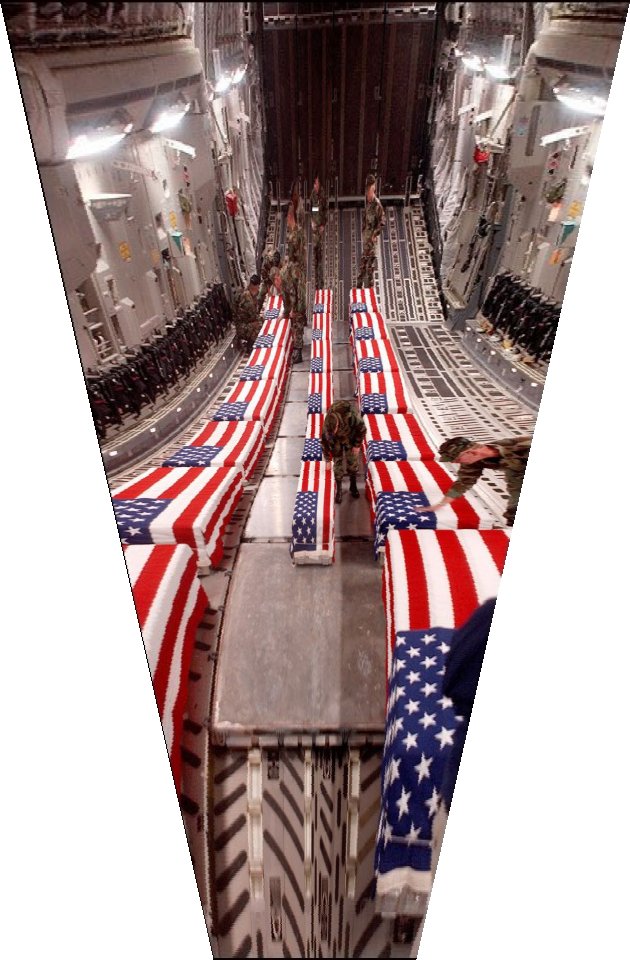
“I’m having to deal with the reality that I saw a lot of bad things. I’m having a tough time dealing with the civilian casualties,” says Stinzo, 31.

“I feel like Americans, although they seem to be informed by the news, it’s not a reality to them. I feel like most of these people in America feel like it’s watching a movie, and when the movie ends, you leave and you’re back at your normal life,” he adds. “I don’t want to tell people I’m an Iraq veteran, because immediately I’m bombarded with questions, especially the question of having to kill somebody. It’s very frustrating, and it makes me very angry inside.”

Matthew Howard, a 25-year-old from Boston who recently served with a Marines tank battalion, also finds it difficult to relate to those back home. Like Stinzo, he is suffering from symptoms of post-traumatic stress disorder, commonly known as PTSD and affecting as many as one in six Iraq vets, according to a recent Defense Department study. In February, the Journal of the American Medical Association found an even more startling statistic – that 35 percent of Iraq veterans have already sought mental health services.

“You know, on TV, how you see the flashbacks and the nightmares? That is actually very real and it has happened. Mine is more like general sadness. My heart breaks every time I turn on the news. My eyes just water up,” says Howard.

In an attempt to deal with the scars war has left on their lives, these veterans and more than a dozen others attended a retreat last weekend at the Zen Center of Los Angeles led by Claude Anshin Thomas, a Vietnam veteran who was awarded the Purple Heart and Distinguished Flying Cross, yet found Zen Buddhist practices the only way to adjust to life after war.

After leaving Vietnam in 1967, Thomas suffered from debilitating PTSD symptoms that caused him to turn to alcohol and drugs, eventually even leaving his wife and son. In the late 1980s, he pursued Zen teachings after attending a retreat with famed monk Thich Nhat Hanh, and in 1995 he became a Zen monk.

As described in his book, At Hell’s Gate: A Soldier’s Journey from War to Peace, PTSD had wracked him with memories of exploding bombs and dead children, leaving him alienated from society and uncomfortable with himself. In fact, he says now, combat veterans are forever changed by the horrors of war, and only through confronting trauma, as he teaches through meditation and other disciplined spiritual practices, can they recover any sense of normalcy.

“There is no going back. It’s like Alice in Wonderland, stepping through the looking-glass. We’re forever affected. We have to learn to adjust to our life. In the process of waking up to how we’ve been affected, the consequences of that are absolutely phenomenal,” he says.

“What I understand is healing is impossible without going through that suffering. What I’m attempting to do is create a safe space where that information will start to become accessible to them,” he adds.

Jeff Key, a 40-year-old Marine living in Hollywood and now attending his second retreat with Thomas, says he was initially a skeptic, but found Zen techniques of calm, deliberate action very helpful in working through the pain.

“I had some reservations that it was going to be proselytizing for Buddhism, but it’s not about that. It’s about meditation and mindful living. Even our meals are done with a measure of reverence. We chew each bite and sit in silence. I eat so many meals standing over my kitchen sink, it’s embarrassing to admit,” says Key, who helped organize the Zen Center retreat as head of the Mehadi Foundation, which he created to help vets with PTSD and related issues. Those practices “helped me deal with feelings of anger and sadness about this war,” he says.

For retreat participant and Vietnam veteran Bill Butler, a 61-year-old from Altadena who was drafted into the Army in 1969, the challenges faced by those returning from Iraq parallel his own experience. “Those things are always with me,” he says of the memories of war. “I don’t have dysfunctional flashbacks, but they come up at odd times.”

Butler, a retired manager with the L.A. County Office of Emergency Management, says the most troubling experiences, which he found he shared with one recent vet, are encounters with the civilian population. Whether searching villages in the jungle or raiding homes in the desert, “We were going in with all of our power and intimidating and using force to disrupt the daily lives of people in their homes. He and I shared a certain sense of guilt over that kind of mission.”

Dealing with feelings of guilt is a major part of healing, says Thomas. He also teaches that those back home whose lifestyles promote conflict are more responsible than soldiers for allowing war to happen.

“The more we have, the less somebody else has, which creates suffering, which feeds that cycle of war, violence – and just because I listen to National Public Radio and Democracy Now! doesn’t mean I’m really doing anything to change the circumstances of war. If I want the world to be different, I have to live differently,” Thomas says.

“That’s where a lot of my anger, resentment, and bitterness came from. With coming back home, I felt so much anger towards these people. Whether it was justified or not. So I just chose to move,” says Howard, who now lives in Canada because of American support for the war and the Bush administration.

For his part, Thomas sees himself not as a leader, but as a facilitator of methods that allow people to engage their own experience.

Another type of immersion- or exposure-style therapy, meanwhile, is being embraced by government officials for treatment of PTSD. The Office of Naval Resources has funded researchers at USC’s Institute of Creative Technology to develop virtual-reality programs that can be used to help victims of PTSD confront the sights, sounds, and even smells of their traumatic experiences. Two such treatment facilities were installed last month at Camp Pendleton and the Naval Medical Hospital in San Diego, according to Skip Rizzo, a psychologist with the institute.

By slowly introducing a patient to a virtual reality situation – starting behind the wheel of a Humvee on a desert road, then adding in smoke, producing the odor of burning rubber, introducing the sound of bullets and helicopters above – “eventually they habituate, or the fear extinguishes. They’re in that environment and nothing bad happens. The emotional response becomes less and less anxiety-provoking,” says Rizzo.

Thomas likens that idea to his own healing practices. “When I talk about healing, I talk about learning to live in a different relationship with how we’ve been affected,” says Thomas, who nonetheless expresses distrust for government programs and intentions. After all, it is government that runs the mechanisms of war. Ultimately, coming to grips with trauma is about self-empowerment, a handicap becoming an asset.

“One of Claude’s big things is that your story needs to be told. I have a new sense of purpose to go home to my family and tell them exactly what I’ve seen,” says Howard. “They need to hear exactly what happened, and I’m ready to do that after this weekend.”


he war is not over for Hollywood resident Eric Stinzo. After coming home from Iraq, the former Marine is one of thousands of new veterans who carry crippling psychological wounds related to their participation in ultra-violence. Worst of all, even those of us who would call men like Stinzo heroes aren’t making their lives any easier.
“I’m having to deal with the reality that I saw a lot of bad things. I’m having a tough time dealing with the civilian casualties,” says Stinzo, 31.

“I feel like Americans, although they seem to be informed by the news, it’s not a reality to them. I feel like most of these people in America feel like it’s watching a movie, and when the movie ends, you leave and you’re back at your normal life,” he adds. “I don’t want to tell people I’m an Iraq veteran, because immediately I’m bombarded with questions, especially the question of having to kill somebody. It’s very frustrating, and it makes me very angry inside.”

Matthe"

Coffin draped with an American flag came down a luggage conveyor


Soldier's coffin at center of furor

(November 30, 2006) — A woman says she saw a soldier's flag-draped coffin put into a cart with passengers' baggage last month at the Greater Rochester International Airport, shocking her and other onlookers.

"It looked awful, just awful," Cynthia Hoag, 56, of Dansville, Livingston County, said Wednesday. "Maybe we made too much out of it, but it was very disturbing to us. If that had been my son, I would have been very upset."

Officials dispute Hoag's story, saying it is implausible. They did not disclose the name of the fallen soldier, but he appears to be Army Sgt. 1st Class Tony Knier of Sabinsville, Pa., who was killed in Iraq on Oct. 21.

A Pennsylvania funeral director confirmed on Wednesday night that he transported Knier's body from the Rochester airport on Oct. 27, the day Hoag was there. Monroe County officials said the coffin was being taken to Pennsylvania.

Knier's mother was appalled when she was told Wednesday night that the incident might have involved the body of her 31-year-old son, a husband and father of three young children. Knier's funeral was Oct. 31 near his home in Wellsboro, Pa.

"If that's what that lady saw, I'm outraged. I'm really upset, because my son died for this country. " said Betty Tidwell, who lives in Tennessee. "He gave all he had to this country. And for them to do that to him, that just upsets the hell out of me."

Hoag wrote an op-ed essay that was published Tuesday in the Democrat and Chronicle, describing what she says she saw.

Based on Hoag's account, Monroe County Executive Maggie Brooks called on the federal government Wednesday to change procedures to prevent a similar incident, saying what happened is an "outrage."

Hoag explained that as she waited at the airport with friends, she saw a soldier in uniform standing at attention near a commercial airplane as the luggage came off. She then saw a coffin draped with an American flag come down a luggage conveyor on the runway.

The coffin was put into a baggage cart with other luggage and driven off with the uniformed soldier in the cart.

"I saw the casket of a fallen soldier, saluted by a lone soldier, and then placed in a baggage cart," she wrote. "Baggage."

Defense Department spokeswoman Cynthia Smith was unaware of the incident late Wednesday but said the witness' description doesn't correlate with military procedure.

Remains from a soldier killed in Iraq are taken to Dover Air Force Base in Delaware, then usually flown to a soldier's home, she said. Military escorts accompany each flight, whether domestic or military. When the coffin reaches the home area, it is met by an honor guard of two people and then transported to a funeral home, she said.

"We do everything to ensure that proper respect is given to the fallen service members and their families," Smith said.

Airport officials said it's a problem that notification of the airport is not required when a soldier's coffin is en route. Airport Director David Damelio said he wasn't aware that the soldier's body had been transported through Rochester until Hoag's letter was published.

"We're not notified unless the military or the family chooses to notify us," he said, adding that the airport often makes special arrangements at the request of soldiers' families.

Yet Damelio said Hoag's story doesn't make sense and said the Defense Department has always shown great care with soldiers' coffins.

Procedurally, a coffin wouldn't come down a luggage belt with other baggage, he said.

Also, a baggage cart isn't large enough to fit a coffin and other luggage, he said.

"It couldn't happen. It's physically impossible," Damelio said.

He said the airport was unable to find video of the incident.

Nonetheless, the witness' description prompted Brooks to urge the Defense Department to change policies on the transportation of the coffins of dead soldiers.

"It is unfathomable to me that our federal government would allow a fallen military hero to be returned home in this manner, and then transport him along with someone's checked luggage," Brooks, a Republican, wrote in a terse letter to the Deputy Defense Secretary Gordon England.

Brooks said the Defense Department should be required to notify an airport when the coffin of a fallen soldier is being transported so that proper arrangements are ensured.

"I am asking you to do whatever is necessary to end this abhorrent practice," Brooks wrote. "Our military personnel and our veterans deserve better."

below: mosiac of fallen American soldiers in the Iraq war

Sunday, November 26, 2006

She Survived Iraq -- Then Shot Herself at Home

She Survived Iraq -- Then Shot Herself at Home

By Greg Mitchell

Published: November 13, 2006 12:10 PM ET

NEW YORK Her name doesn't show on any official list of American military deaths in the Iraq war, by hostile or non-hostile fire, who died in that country or in hospitals in Europe or back home in the USA. But Iraq killed her just as certainly.

She is Jeanne "Linda" Michel, a Navy medic. She came home last month to her husband and three kids (ages 11, 5, and 4), delighted to be back in her suburban home of Clifton Park in upstate New York. Michel, 33, would be discharged from the Navy in a few weeks, finishing her five years of duty.


Two weeks after she got home, she shot and killed herself.

"She had come through a lot and she had always risen to challenges," her husband, Frantz Michel, who has also served in Iraq, lamented last week. Now he asks why the Navy didn't do more to help her.

Michel's story has now been probed by reporter Kate Gurnett in today's Albany Times-Union. It's headlined, "A casualty far from the battlefield."

And yet, in many ways, not far at all.

Why did it happen? "Like thousands of others returning from Iraq, her mental state was fractured," Gurnett explains. "And it went untreated. Within two weeks, Linda Michel would become a private casualty of war. Re-entry into the world of peace can be harder than deployment, experts say. Picking up where you left off doesn't just happen. ...

"Women experience stronger forms of post-traumatic stress disorder and have higher PTSD rates, experts say. In response, the Veterans Affairs Department launched a $6 million study of female veterans.
Seeking treatment -- seen by some as a weakness -- may be even tougher for women, who still feel the need to prove themselves to men in military service."

In fact, this past August, three veterans in New York's Adirondack region committed suicide within three weeks, according to Helena Davis, deputy director of the Mental Health Association in New York.

Michel has served under extremely stressful conditions at Camp Bucca in southern Iraq, a U.S-run prison where guards shot four inmates dead in a 2005 riot -- and an episode of female mudwrestling drew headlines. Michel was treated for depression and prescribed Paxil, but they took her off that medicine when she returned home. Her husband was not informed.

"I just wish the Navy would have done some more follow-up, instead of just letting her come home," Frantz, who is on the division staff of the Army National Guard, told the reporter. "If somebody needs Paxil in a combat zone, then that's not the place for them to be. You either send them to a hospital or you send them home and then make sure that the family members know and that they get follow-up care."

He has pressed the Navy for answers: "Why wasn't she sent to a facility to resolve the issues? Not keep her in Iraq and give her some antidepressant medication and then just send her home. So those are the answers that I don't have. Which makes me a little angry because I know what is supposed to occur."

The Times Union carried another lengthy story on Sunday, by Dennis Yusko, on post-traumatic stress syndome (PTSD) and Iraq veterans. "The number of Iraq and Afghanistan veterans getting treatment for PTSD at VA hospitals and counseling centers increased 87 percent from September 2005 to June 2006 -- to 38,144, according to the U.S. Department of Veterans Affairs," Yusko revealed.

"At least 30 percent of those who fought in Iraq or Afghanistan are now diagnosed with PTSD, up from 16 percent to 18 percent in 2004, said Charlie Kennedy, PTSD program director and lead psychologist at the Stratton Veterans Affairs Medical Center. Of the 400 Capital Region vets in the program, 81 served in Iraq or Afghanistan, Kennedy said, and that number is growing. 'This kind of warfare is devastating,' Kennedy said. 'You don't know who is your friend and who is your enemy.'"

Friday, November 24, 2006

Iraq conflict passes WWII - World - smh.com.au

Iraq conflict passes WWII

Cynthia Banham
November 24, 2006


THEY were America's days of infamy, 60 years apart - Pearl Harbour and September 11. The first led the US into World War II, a conflict it endured for 1348 days; the second was followed by a war that from tomorrow will have lasted even longer.

America's involvement in Iraq will reach that milestone at a time when the clamour for withdrawal has never been louder, and the possibility of achieving it has never seemed so difficult. The decisive end of World War II in 1945 delivers no lessons that could be applied to a very different war in a very different era.

If anything, things seem to be getting worse, the options less appealing. Baghdad is reeling from the deadliest assault on Iraqi civilians since the start of the US invasion in March 2003. At least 200 people died and more than 250 were injured after six car bombs, mortar attacks and missiles battered the Shiite Muslim slum of Sadr City.

Plumes of black smoke and anguished screams rose above a chaotic landscape of flames and charred cars, witnesses said.

Violence later spread to other neighbourhoods in retaliatory attacks across Baghdad, even as politicians and senior religious clerics appealed for calm.

The Iraqi Government locked down the capital with an indefinite curfew and shut the airport to commercial flights.

It is a long way from Mission Accomplished - the banner that decorated a US aircraft carrier on May 1, 2003 as the US President, George Bush, proclaimed the end of "major combat operations". Forty-four months on, Americans still count the cost of the war: more than 2860 US soldiers dead, more than 21,000 injured.

Those figures do not compare with US casualties in World War II, when 406,000 American soldiers died and 671,000 were wounded. But the Iraq campaign has become a symbol of the pitfalls of a new style of conflict - a war against an ill-defined enemy with no end in sight.

American politicians have not failed to note the symbolism of the milestone.

The top Democrat on the Senate Armed Services Committee, Senator Carl Levin, pointed to it as he pushed for a phased withdrawal within four to six months.

"We are 3 years into a conflict which has already lasted longer than the Korean conflict and almost as long as World War II. We should put the responsibility for Iraq's future squarely where it belongs: on the Iraqis."

In Canberra, the Prime Minister, John Howard, acknowledged Iraq was "going through a bad phase" and that nobody was "other than horrified at the continued loss of life". Mr Howard said any change in the role of Australia's troops would depend on "what's involved in any possible British reduction" of its commitment.

"We haven't agreed to anything else and if there are any proposals that we do something differently, well they will have to be assessed on their merits and according to our judgement as to whether it's appropriate."

appealing. Baghdad is reeling from the deadliest assault on Iraqi civilians since the start of the US invasion in March 2003. At least 200 people died and more than 250 were injured after six car"

Saturday, November 18, 2006

VIDEO: Michael Moore's message

VIDEO :Michael Moore's response to Kerry's Comment

A comment posted on You Tube: "His is a reminder for us to get back on topic. Not hold on to one joke that one dumb politician messed up refering to another dumb politician because it sounds like he meant the troops. This war that's going on that is killing young men and women is still a mistake. At least I hope it's a mistake. And it should end, and will end if we stay on topic and vote the bums out!

Friday, November 17, 2006

"And if you don't, you get stuck in Iraq" -Sen. Kerry

Kerry Belittles U.S. Troops


Gene Weingarten, Washington Post Writers Group


WASHINGTON - As a civic-minded American, you probably learned an important lesson from the negativity-soiled election season that just ended. The lesson was clear, wasn't it?

I'm thinking in particular of the fabulous John Kerry incident, where the former presidential candidate appeared to inform a college audience that the American troops in Iraq were slackers, dropouts and idiots. A careful examination of what he said and how he said it reveals that Kerry was not being elitist, unpatriotic or callous. It was far worse. He was doing lousy stand-up.

That's the lesson: Leave humor to the professionals.

Remember the "joke"? Talking about education, Kerry said, "If you make the most of it, you study hard, you do your homework and you make an effort to be smart, you can do well. And if you don't, you get stuck in Iraq." What he meant to say was along the lines of " ... if you don't, you'll end up getting us stuck in a war in Iraq."

Studying the video, you could almost see the flop sweat as Kerry was trying to lurch and stagger his way to the end of that sentence. He looks down at his notes. No help there. Maybe he lost his place. So he looks up, panic in his eyes, and delivers that final phrase -- his punch line, his payload! It landed with a nauseating splat, like a pancreas hitting the operating room floor.

The man is as strait-laced as a whalebone corset, as rigid as Formica. His business is politics. He should never be anywhere near a joke.

Example:

Here is an actual Jerry Seinfeld joke: The problem with mall garages is that everything looks the same. They try to differentiate between levels: different colors, different numbers, different letters. What they need to do is name the levels like, "Your Mother's a Whore." You would remember that. You would go: "No, we're not here. We're in 'My Father's an Abusive Alcoholic.'"

The same Jerry Seinfeld joke, as John Kerry might tell it: The problem with mall garages is that your mother's a whore.

Of course, the instant that Kerry's speech became public, and it was evident that he had been guilty of doofusry but not callousness, everyone backed off, even his political adversaries, in the spirit of decency and fair play. This occurred on the planet Nice, a parallel universe that shares Earth's orbit but is always on the other side of the sun, so we don't know it's there.

Here on Earth, however, Kerry's savage, unprovoked attack on the intelligence and competence of the troops was officially deplored by hundreds of Republicans who had apparently injected turkey-baster-size doses of Botox to keep a straight face.

What is the penalty for not leaving humor to the pros? Death. Kerry is dead! The day before, he was exploring his chances for a 2008 presidential bid. If the speech was a trial balloon, it was filled with cow methane.

Kerry still had a slim chance to recover, but he didn't see it. The only way to be acquitted of the crime of impersonating a humorist is to get a humorist's help for the apology. Alas, no. His was the sort of grudging, truculent non-apology so common in Washington:

"I sincerely regret that my words were misinterpreted to wrongly imply anything negative about those in uniform ..."

Borrr-ing ...

Here's the apology I would have written for him.

"As I stand humbly before you today, a man who resembles a severely constipated mortician ..."

(Pause for laughter.)

"... I wish to apologize for my statement yesterday, which was widely misinterpreted to suggest I thought the American troops in Iraq are stupid. That was funny, when you think about it, since I was being the stupid one. It was like the pot calling the kettle black."

(Looks down at notes. Looks up, panicked.)

"Wait. I'm not calling the troops black. I meant that I am the one who is black. I mean stupid."

(Pause for laughter.)

"No, wait. I am white. And some of the troops are black, but not in a bad way!"

(Pause for laughter.)

"I mean there's nothing wrong with being black! Black is good! I mean ..."

(Takes a drink. Spills it all over self. Slips on water, falls on butt.)

(Thunderous applause.)

Saturday, November 11, 2006

New Approach & "RUMSFELD MAY BE CHARGED WITH WAR CRIMES

Daddy Bush's old team comming in to help Jr. with his BIG problem and Time Magizine reporting Germany want's Rumsfeld and others tried for war crime.

Monday, November 06, 2006

FOX News Correspondent Gets Waterboarded

It's still torture.

Sunday, November 05, 2006

Video: Bush on Torture


The poster wrote: If you want to see the beauty of body language at work, watch this interview. First, Bush is all over Matt Lauer -- check out the pointing and the aggressiveness. Then, when it's clear that Lauer's not buying it, he starts saying that he won't talk about what he's already been talking about.

Friday, November 03, 2006

VIDEO: Mr. Vice President - they have you on film, so don't lie

Cheney: I never linked Iraq with 9/11. Oh really?


From Publishers Weekly

Starred Review. Dubose and Bernstein show in this thorough, rollicking career biography that it's Cheney-not the more publicly criticized Donald Rumsfeld, Karl Rove, Condoleeza Rice or President Bush-who is chiefly responsible for the most unpopular aspects of the Bush regime: an imperial executive office and foreign policy; abandonment of democratic ideals (respect for government checks and balances, the Geneva Convention, the Bill of Rights and the Freedom of Information Act); and questionable corporate-government colusion (the secret energy task force, Halliburton's government contracts in Iraq). Tracing Cheney through three White House adminsitrations, six terms in the House of Representatives, and a tour as Halliburton CEO, the portrait that emerges from these pages is both alarming and compelling; like a J.R. Ewing, Cheney proves to be the kind of fascinating figure you love to hate. As obstacles to Cheney's will-Congress, the Constitution, foreign countries, the press, or other politicians-are sidestepped, ignored, or trammeled, Cheney emerges as a classic Machiavellian; in Cheney's case, it appears that the end which justifies the means is power, pure and simple. Against Cheney, idealistic liberals who believe that an appeal to democratic ideals, the Constitution, or basic decency will work with this administration emerge here as painfully naïve; unfortunately, this realization has only settled in after the damage was already done. Dubose and Bernstein present a sobering and darkly flattering expose of the reclusive power behind the throne, and a grim vision of what his legacy may be

Friday, October 27, 2006

David Letterman and Bill O'Reilly on the Late Show

David Letterman: "The war is not easy for me because I am thoughtful." Oct 27th

*****
If you think like a nut.....


Tuesday, October 24, 2006

Official Apologizes For Saying U.S. Has Shown "Stupidity" In Iraq

State Department Official Apologizes For Saying U.S. Has Shown "Stupidity" In Iraq. Will Department Spokesman Apologize For Lying About It?

A State Department official has apologized for telling Al Jazeera that the U.S. has shown "arrogance" and "stupidity" in Iraq.

"We tried to do our best (in Iraq) but I think there is much room for criticism because, undoubtedly, there was arrogance and there was stupidity from the United States in Iraq," senior U.S. State Department official Alberto Fernandez said to Al Jazeera in Arabic.

Immediately after the comments were made, State Department spokesman Sean McCormack blamed Al Jazeera, saying Fernandez' comments were not translated properly.

But today, Fernandez told CNN that the problem was not Al Jazeera's translation, but that he "seriously misspoke." Strangely, he said that his comments Sunday did not represent his views, or those of the Department.

It's a strange comment. If it didn't represent his views, why did he say them? And now that Fernandez has made his strange apology, will McCormack apologize for lying -- blaming Al Jazeera (the "enemy") rather than accept what Fernandez said? "

Truthdig - Reports - After Pat’s Birthday

After Pat’s Birthday


Pat and Kevin Tillman
Courtesy of the Tillman Family

Pat Tillman (left) and his brother Kevin stand in front of a Chinook helicopter in Saudi Arabia before their tour of duty as Army Rangers in Iraq in 2003.

By Kevin Tillman

Editor’s note: Kevin Tillman joined the Army with his brother Pat in 2002, and they served together in Iraq and Afghanistan. Pat was killed in Afghanistan on April 22, 2004. Kevin, who was discharged in 2005, has written a powerful, must-read document.


It is Pat’s birthday on November 6, and elections are the day after. It gets me thinking about a conversation I had with Pat before we joined the military. He spoke about the risks with signing the papers. How once we committed, we were at the mercy of the American leadership and the American people. How we could be thrown in a direction not of our volition. How fighting as a soldier would leave us without a voice… until we got out.

Much has happened since we handed over our voice:

Somehow we were sent to invade a nation because it was a direct threat to the American people, or to the world, or harbored terrorists, or was involved in the September 11 attacks, or received weapons-grade uranium from Niger, or had mobile weapons labs, or WMD, or had a need to be liberated, or we needed to establish a democracy, or stop an insurgency, or stop a civil war we created that can’t be called a civil war even though it is. Something like that.


Somehow our elected leaders were subverting international law and humanity by setting up secret prisons around the world, secretly kidnapping people, secretly holding them indefinitely, secretly not charging them with anything, secretly torturing them. Somehow that overt policy of torture became the fault of a few “bad apples” in the military.

Somehow back at home, support for the soldiers meant having a five-year-old kindergartener scribble a picture with crayons and send it overseas, or slapping stickers on cars, or lobbying Congress for an extra pad in a helmet. It’s interesting that a soldier on his third or fourth tour should care about a drawing from a five-year-old; or a faded sticker on a car as his friends die around him; or an extra pad in a helmet, as if it will protect him when an IED throws his vehicle 50 feet into the air as his body comes apart and his skin melts to the seat.

Somehow the more soldiers that die, the more legitimate the illegal invasion becomes.

Somehow American leadership, whose only credit is lying to its people and illegally invading a nation, has been allowed to steal the courage, virtue and honor of its soldiers on the ground.

Somehow those afraid to fight an illegal invasion decades ago are allowed to send soldiers to die for an illegal invasion they started.

Somehow faking character, virtue and strength is tolerated.

Somehow profiting from tragedy and horror is tolerated.

Somehow the death of tens, if not hundreds, of thousands of people is tolerated.

Somehow subversion of the Bill of Rights and The Constitution is tolerated.

Somehow suspension of Habeas Corpus is supposed to keep this country safe.

Somehow torture is tolerated.

Somehow lying is tolerated.

Somehow reason is being discarded for faith, dogma, and nonsense.

Somehow American leadership managed to create a more dangerous world.

Somehow a narrative is more important than reality.

Somehow America has become a country that projects everything that it is not and condemns everything that it is.

Somehow the most reasonable, trusted and respected country in the world has become one of the most irrational, belligerent, feared, and distrusted countries in the world.

Somehow being politically informed, diligent, and skeptical has been replaced by apathy through active ignorance.

Somehow the same incompetent, narcissistic, virtueless, vacuous, malicious criminals are still in charge of this country.

Somehow this is tolerated.

Somehow nobody is accountable for this.

In a democracy, the policy of the leaders is the policy of the people. So don’t be shocked when our grandkids bury much of this generation as traitors to the nation, to the world and to humanity. Most likely, they will come to know that “somehow” was nurtured by fear, insecurity and indifference, leaving the country vulnerable to unchecked, unchallenged parasites.

Luckily this country is still a democracy. People still have a voice. People still can take action. It can start after Pat’s birthday.


Brother and Friend of Pat Tillman,

Kevin Tillman

Thursday, October 19, 2006

Iraq For Sale: documentary about profiteering contractors


HOT TOPIC : Iraq for Sale

Adrianna Huffington on her blog:

Iraq for Sale Update: DVD Becoming a Weapon in 06 Election

A growing number of Democratic leaders are using Iraq for Sale to call attention to the GOP's failure to reign in the contractor abuse and fraud that have been the hallmark of the Iraq war privatization fiasco. It's also allowed them to go on the offensive and reframe the national security debate -- showing how the Republicans sacrificed the well-being of our troops and the Iraqi people on the altar of rewarding their corporate backers. Read the rest

Ted Kennedy's take on the movie:

The Iraq war is one of the greatest blunders in American history. The American people already know that the human and financial cost of the war has been far too great. Nearly 2,800 Americans have been killed and we are spending nearly $250 million on each day on the war in Iraq.

Robert Greenwald's new film, Iraq for Sale, shows how the Bush Administration has been outsourcing this war to corporate America - and how that effort has been mismanaged. His film is a convincing indictment of the Administration's decision to give multi-billion dollar sweetheart deals that have lined contractor's pockets while failing to meet the basic needs of our soldiers. All Americans should be asking how the Bush Administration could have allowed contractors to fail to provide our soldiers with safe food and drinking water. Read more

The Boing Boing Review of the Movie

Boing Boing: Iraq For Sale: documentary about profiteering contractors:

Iraq For Sale: documentary about profiteering contractors

I've just watched Robert "Outfoxed" Greenwald's new documentary, "Iraq For Sale," which documents the disgraceful profiteering of private contractors in Iraq, like Halliburton, CACI and Titan.

Greenwald's film talks with military personnel, past employees of military contractors, and the families of contractors who were killed in Iraq. He builds a compelling, damning case that the use of these contractors is putting American soldiers in harm's way, hurting US military effectiveness in Iraq, bilking the US taxpayer out of billions, and endangering the lives of the ex-military personnel who sign on with contractors on the promise of higher wages than those paid by the US military.

From charging the US military $100 to ineptly wash a bag of laundry (and getting officers to reprimand soldiers who do their own laundry in the sink) to overseeing interrogation at Abu Ghraib, these military contractors are wasteful, undertrained, and grotesquely expensive. Greenwald's film features footage of bonfires built to destroy improperly ordered vehicles, computers and other equipment that the contractors purchased at taxpayer expense -- since these contractors are compensated on a "cost-plus" basis, they get paid more for wasting money than saving it.

Another are where they scrimp is on the safety and training of their own personnel. They hire inept translators who give bad intelligence to the military. They send their front-line workers -- such as truckers recruited from the US -- into battle-zones without military escorts or armor. Meanwhile, the "savings" realized by putting untrained people in charge of interrogation at Abu Ghraib (Greenwald shows a single-page "interrogation manual" that consists of little cartoons with a short sentence under each) are not used to provide better equipment for US soldiers -- they sleep in infectious tents, drink untreated toxic water, and eat improperly prepared food, thanks to the likes of Halliburton, whose stock doubles and redoubles every year the Iraq war goes on.

The frustration of the soldiers is palpable and heartbreaking. From those who bemoan that their comrades get sucked into working for the profiteers by the high salaries, only to be killed in action to the soldiers who are required to train contractors to do their jobs, then are relegated to scut-work while all the skilled labor is taken over by the contractors they trained.

Greenwald is encouraging people to host screenings of Iraq For Sale in their homes, inviting over friends and neighbors to see the movie and discuss the film's content. The site has a list of upcoming screenings around the world, hosted by people, clubs, companies and schools.

"Will things go wrong? Sure they willl, it's a war zone. But when they do, we'll fix it, we always have -- for 60 years, for both political parties."
- David J. Lesar, CEO, Halliburton


Tags: Iraq For Sale, profiteering, contractors, Robert Greenwald, documentary, Iraq, Halliburton, CACI, Titan


Wednesday, October 18, 2006

Bill Clinton: The Common Good


"The problem with ideology is, if you got an ideology, you already got your mind made up; you know all the answers. And, that makes evidence irrelevant and argument a waste of time.

So, you tend to govern by assertion and attack.

The problem with that is that discourages thinking and gives you bad results. This new Bob Woodward book, ‘State of Denial' is interes… well-named, but I think it's important to point out that if you are an ideologue, denial is an essential part of your political being. Whichever side. Listen to me. You got to - 'cause, if you are an ideologue, you got your mind made up. So when an inconvenient fact crops up, you have to be in denial. It has to be a less significant fact."

From President Clinton, who gave a speech today hosted by The Center for American Progress at Georgetown University. He's calling it the "Common Good" which articulates the alternative to "compassionate conservative. "In both the civic and faith realms, a commitment to the common good means pursuing policies and community actions that benefit all individuals and balance self-interest with the needs of the entire society."

Democratic State Sen. Candidate Called Up by National Guard


Paul Evans is the real deal. City Councilman in Monmouth, Oregon at age 18, Evans has been twice elected as the city's mayor, served in the Air Force and the Air National Guard and been a teacher at Western Oregon University and Oregon State University. Evans is currently running as a Democrat for the State Senate in Oregon, his campaign representing one of the party's best pick-up opportunities in the chamber this year. And now he has been informed that he will be shipping out for duty in Afghanistan on November 5, as Peter Wong reports for the Salem Statesman Journal.

When Election Day rolls around three weeks from today, Oregon Senate candidate Paul Evans will learn his fate from afar: Afghanistan.

Evans, a veteran of the Air Force and Oregon Air National Guard, will be en route to the nation with the 116th Air Control Squadron.

He is scheduled to leave Nov. 5, 10 days ahead of his original deployment date. His mission will last 60 days -- which means he would be back for the opening of the legislative session on Jan. 8 if he is elected Nov. 7 to the Senate District 10 seat.

[...]

In a written statement, he said, "When my commander said I was needed, there was no question of whether or not I would go. Duty calls."

[...]

He likely is the nation's only candidate who will be on active duty in the Middle East on Election Day.

This is a great story for the Democrats, one that should garner at least some national coverage in addition to the local coverage. Democratic candidate Paul Evans, one of the few people in the Air National Guard able to perform his specific role as an air-battle manager and who has served multiple tours of duty in Iraq, Kuwait and elsewhere, is selflessly giving up an opportunity to campaign in the waning moments of this election to serve his country. Brigadier General Mike Caldwell, deputy director of the Oregon National Guard, had as much to say in a statement released today (via BlueOregon):

Major Evans has unique skills that are critical to the safety of our troops. I'm grateful that he is willing to ship out to Afghanistan, even in the last few days of a close campaign. He understands the true meaning of service. And as it stands right now, we see no reason why Paul cannot get back in time to serve in the Oregon Legislature as a civilian leader.

Let's show Paul Evans that we will support him and help put him over the top in this election even as he does his duty in Afghanistan. Let's show America how Democrats and progressives feel about our troops. BlueOregon has set up an ActBlue fundraising page for Evans and provides information on how to volunteer if you live in the area.

Update [2006-10-17 15:22:27 by Jonathan Singer]: A commenter writes, "'This [will be] a great story for the Democrats' assuming he survives." Very true. I did not intend to be cavalier in writing about this story. It should be mentioned that Evans faces real danger -- a prospect that we should not overlook. Our hopes for his safe return of course come before our financial support on his behalf.

His homepage: http://www.paulevans2006.com/

amazon quicklinker

Favorites linker

google adds