Tuesday, August 26, 2008

Shi ite Prime Minister Maliki wants US out for his ani-Sunni agenda


In the following Opinion article we are informed that as Prime Minister Maliki is about to re-continue his religious based persecution of the Sunni's.

This comes just after he demands for a time table for an actual US pullout:

BAGHDAD -- Iraqi Prime Minister Nouri Maliki said Monday that an agreement on the future of U.S. forces in Iraq must include a firm withdrawal date and that Iraq wants them out of the country by the end of 2011.

It was the first time Maliki explicitly demanded a fixed deadline for the departure of all U.S. troops from Iraq. His words appeared to rule out the presence of any U.S. military advisors, special forces and air support after the withdrawal date.


The answer to the question- can't they all just get along seems clearly- no. History has shown us that these religious groups cannot co-exist without the threat of force (such as Saddam provided, and now we the US provide. In the name of keeping the peace since overthrowing Saddam we have killed and tortured many more than he did in a shorter amount of time.)


Opinion
Baghdad's misguided crackdown on the Sons of Iraq
Prime Minister Maliki's Shiite-dominated government risks security gains by taking on U.S.-backed Sunni forces.
By Shawn Brimley and Colin Kahl
August 26, 2008


There is a gathering storm on Iraq's horizon. Over the last several weeks, its central government has embarked on what appears to be an effort to arrest, drive away or otherwise intimidate tens of thousands of Sunni security volunteers -- the so-called Sons of Iraq -- whose contributions have been crucial to recent security gains. After returning from a trip to Iraq last month at the invitation of Army Gen. David H. Petraeus, the U.S. commander in Iraq, we are convinced that if Iraqi Prime Minister Nouri Maliki and his advisors persist in this sectarian agenda, the country may spiral back into chaos.

Much of Iraq's dramatic security progress can be traced to a series of decisions made by Sunni tribal leaders in late 2006 to turn against Al Qaeda in Iraq and cooperate with American forces in Anbar province. These leaders, outraged by Al Qaeda's brutality against their people, approached the U.S. military with an offer it couldn't refuse: Enter into an alliance with the tribes, and they would turn their weapons against Al Qaeda rather than American troops.

Throughout 2007, U.S. commanders capitalized on this Sunni movement, the so-called Awakening, to create an expanding network of alliances with Sunni tribes and former insurgents that helped turn the tide and drive Al Qaeda in Iraq to near extinction. There are now about 100,000 armed Sons of Iraq, each paid $300 a month by U.S. forces to provide security in local neighborhoods throughout the country. In recognition of the key role the Awakening played in security improvements, President Bush met with several Sunni tribal leaders during his trip to Anbar last September, and Petraeus, who cites the program as a critical factor explaining the decline in violence, has promised to "not walk away from them."


But Iraq's predominantly Shiite central government seems intent on doing precisely that. Maliki and his advisors never really accepted the Sunni Awakening, and they remain convinced that the movement is simply a way for Sunni insurgents to buy time to restart a campaign of violence or to infiltrate the state's security apparatus. In 2007, with Iraq's government weak and its military not yet ready to take the lead in operations, the Maliki government acquiesced to the U.S.-led initiative and grudgingly agreed to integrate 20% of the Sons of Iraq into the Iraqi security forces. Now, a newly confident Maliki government is edging away from this commitment.

During our trip, a common theme among U.S. military commanders, intelligence officers, diplomats and Iraqi political leaders we spoke with was the growing hubris of Maliki and his closest advisors. Recent government successes in Basra, Sadr City and Mosul seem to have convinced Maliki's inner circle that Iraq's army does not need American help as much as it used to. A newly emboldened prime minister is now moving out aggressively against his adversaries, including the Sons of Iraq.

Plans to integrate these Sunni fighters into Iraq's security forces or provide them with civilian employment have been consistently "slow rolled." While Maliki has committed to incorporate 20% of the 100,000 Sons of Iraq members under U.S. contract into Iraq's army or police forces by the end of this year, only a small fraction have actually been hired. When asked if the Iraqi government had created stumbling blocks to integrating the Sons of Iraq, Petraeus said in a recent interview, "That certainly has been the case."

It gets worse. Over the last several weeks, Iraqi army units and special operations forces (which report directly to Maliki) have arrested Sons of Iraq leaders, dismantled checkpoints and otherwise harassed local security volunteers in Diyala province and greater Baghdad. There are reportedly plans to detain hundreds of Sons of Iraq members in the coming weeks. "These people are like cancer, and we must remove them," an Iraqi army general in Abu Ghraib, a Baghdad suburb, told a reporter last week. Another Iraqi commander in Baghdad confided, "We cannot stand them, and we detained many of them recently," before telling that reporter of plans to instigate a major crackdown as early as November.

We talked to a number of tribal and Sons of Iraq leaders during our trip. When asked what would happen if the Maliki government did not keep its word and integrate or otherwise accommodate their members, one leader was blunt: "There will be trouble."

It is obvious where this road might end. The last time tens of thousands of armed Sunni men were humiliated in Iraq -- by disbanding the Baath Party and Iraqi army in May 2003 -- an insurgency began, costing thousands of U.S. lives and throwing Iraq into chaos. Yet Maliki and his advisors risk provoking Iraq's Sunni community into another round of violence.

The rising tensions in Iraq reveal a weakness in U.S. strategy and the Bush administration's approach to the war: the unconditional nature of our support to Maliki's government.

The "surge" strategy in Iraq, as described by President Bush in January 2007, rested on the belief that tamping down violence would provide a window of opportunity that Iraq's leaders would use to pursue political reconciliation. But this has not occurred, despite the dramatic security improvements. Indeed, if the problem in 2006 and 2007 was Maliki's weakness and inability to pursue reconciliation in the midst of a civil war, the issue in 2008 is his overconfidence and unwillingness to entertain any real accommodation with his political adversaries. America's blank check to the Iraqi government feeds this hubris.

U.S. strategy must be reengineered to exploit our diminished but still significant leverage. Despite recent military successes, the Iraqi security forces remain critically dependent on U.S. air power, logistical support, intelligence and training. The United States must make continued security assistance conditional on Maliki carrying through on his commitments to integrate and gainfully employ the Sons of Iraq.

The security gains in Iraq have been remarkable, but U.S. leaders in Washington need to do whatever is necessary to prevent this threatening storm from sweeping away all that has been achieved at great cost and sacrifice.

Shawn Brimley is a fellow at the Center for a New American Security. Colin Kahl is a senior fellow at CNAS and an assistant professor at Georgetown University's Edmund A. Walsh School of Foreign Service.

Video on the Republican Rhetoric on Iraq

Good video showing the Bush Administration Talking Points about Iraq and how they changed. Now more than 1 million Iraqs are dead more than 4 thousand US soldiers.

As Donald Rumsfeld said: There are some people who lie and get away with it.

Saturday, August 23, 2008

Scarry Lessons in pulling out of Iraq from the British


Joel Rayburn, a Major in the U.S. Army and from 2002 to 2005 taught history at the U.S. Military Academy. He now is a strategic analyst at the U.S. Central Command, which oversees all U.S. operations in the Middle East, Central Asia, and the Horn of Africa.

His article, The Last Exit from Iraq, appeared in the journal Foreign Affairs in March/April 2006. In it, he draws historical comparisons between the British involvement in Iraq and the current American intervention.

In light of the posturing of a pullout, I think looking at what Rayburn wrote can give us some lessons.

He starts with:

A number of pundits have recently noted the parallels between the United Kingdom’s experience eight decades ago and the United States’ today. The comparisons, however, have generally centered on the early and middle phases of both occupations. Too few have focused on the ignominious end of the United Kingdom’s reign in Mesopotamia and the lessons those events hold for the United States today. In fact, Washington’s current position bears a strong resemblance to London’s in the late 1920s, when the British were responsible for the tutelage of a fledgling Iraqi state suffering from immature institutions, active insurgencies, and the interference of hostile neighbors. Eventually, this tutelage was undermined by pressure from the British Parliament and the press to withdraw — forces quite similar to those in the United States now calling for a withdrawal from Iraq. Building a better understanding of the United Kingdom’s mistakes — and of the consequences of that country’s ultimate withdrawal from Iraq — could thus help illuminate the present occupation and provide answers to when and how to end it. If the British record teaches anything, it is this: costly and frustrating as the fostering of Iraqi democracy may be, the costs of leaving the job undone would likely be far higher, for both the occupiers and the Iraqis.

And of the British context:

In 1920, a large-scale Shiite insurgency cost the British more than 2,000 casualties, and domestic pressure to withdraw from Iraq began to build. In the revolt’s aftermath, the war hero T. E. Lawrence led a chorus of critics in the press and Parliament denouncing London’s decision to continue the costly occupation. “The people of England,” Lawrence wrote, have been led in Mesopotamia into a trap from which it will be hard to escape with dignity and honour. They have been tricked into it by a steady withholding of information. … Things have been far worse than we have been told, our administration more bloody and inefficient than the public knows. It is a disgrace to our imperial record, and may soon be too inflamed for any ordinary cure. We are to-day not far from a disaster….

“We say we are in Mesopotamia to develop it for the benefit of the world. … How long will we permit millions of pounds, thousands of Imperial troops, and tens of thousands of Arabs to be sacrificed on behalf of colonial administration which can benefit nobody but its administrators?” Although the London Times remained mainly supportive of the government’s policy in Iraq, other leading British papers, most notably the Manchester Guardian, echoed Lawrence’s call to end the occupation.

The result was what historians have called the “Quit Mesopotamia” campaign, which remained an issue in British politics until the end of the British mandate in Iraq in 1932. For more than a decade, a diverse collection of anti-imperialists, pacifists, Labourites, and Lawrence loyalists kept up a steady stream of criticism in the United Kingdom’s opposition press. The Quit Mesopotamia critics effectively tapped into the British sentiment against imperialism, which had become widespread after the end of World War I. The British public’s interest in maintaining a worldwide empire had waned; the working classes, which had sacrificed so much for the war, wanted their government to invest in the stagnant domestic economy, not in costly imperial adventures. Unlike their ally the United States, the United Kingdom experienced no economic boom in the Roaring Twenties, and unemployment steadily rose throughout the decade. British voters registered their disapproval of the Conservatives’ imperialist tendencies by voting the Labour Party of Ramsay MacDonald into power in 1923. Although that Labour government was short-lived (thanks to a scandal), the Conservatives got the message and in 1925 initiated a series of increasingly desperate measures to sell their Iraq policy to the public.

Colonial Secretary Leopold Amery led the rhetorical charge. In speeches in Parliament and before audiences throughout England, Amery blasted critics for their “reckless disregard … of the honour of their country.” Calls by British newspapers to pull out of Iraq only emboldened the country’s enemies, Amery said, and a “policy of scuttle” would expose the British to far greater dangers than those they would encounter while “fulfilling [their] obligations” to the Iraqi people. The London Times weighed in on Amery’s behalf on September 25, 1925, observing that the “cost of premature withdrawal” would probably be a Turkish invasion of Mosul.( In Context, even not pulling out the Turks have attacked Northern Iraq. The political fear rhetoric today is that Iran would overrun Iraq and turn them against us,)

Amery claimed that the situation in Iraq was significantly better than his critics realized. Returning from a fact-finding tour of the mandate in 1925, he said that Iraq’s development was proceeding well enough to promise the British a “substantial return” on their investment in that country. The whole Middle East was undergoing fundamental changes, he declared, and Iraq would soon be a model of development and democracy for the entire region. Besides, he said, Iraq was serving as “a splendid training ground” for the Royal Air Force (RAF), which since 1922 had been charged with defending Iraq and maintaining order there.

These arguments made little impression on the opponents of the occupation. The Labour Party accused the Conservatives of wanting to remain in Iraq for the sake of oil stockholders. “We should never get out of [Iraq] without wrenching something, such as the national honour or the interests of bondholders,” declared the senior Labour Party MP and future prime minister Clement Attlee in Parliament in 1926. “Therefore,” he said, “we had better wrench free at once.”

Nonetheless, Amery’s public defense of the occupation helped the policy withstand parliamentary challenges in 1925 and 1926, and the United Kingdom’s occupation looked set to continue indefinitely. In accepting the League of Nations mandate in 1920, the British government had committed itself to at least 20 years of guardianship of Iraq’s state and society, and when it signed the Anglo-Iraqi Treaty of 1926, London promised to stick around until 1951 (or until an independent Iraq joined the league). Yet starting in 1925, the Conservatives began secretly looking for a way out. In 1927 — just one year after pledging to stay in Iraq for a quarter century — key ministers in Stanley Baldwin’s government proposed a pullout. According to Robert Cecil, a trusted Baldwin adviser, withdrawal from Iraq would be “a complete answer to those of our critics who allege that we are anxious to have a militarist or adventurous foreign policy. That charge has done us a great deal of harm already and may easily be fatal to our existence at the next election.”

Publicly, the Conservatives began to speak about the need to “reduce expenditure” in Iraq. In 1925, Sir Samuel Hoare, head of the Air Ministry and another close Baldwin adviser, acknowledged that “since the war we [have] spent a great deal in the Middle East, and the British taxpayer [has] asked whether the expenditure was worthwhile, and whether it could be reduced.” Returning from a trip to Iraq that year, Hoare announced that once the contested frontier near Mosul was settled with Turkey, the British could reduce their role in Iraq. As a government minister, Hoare could not have made this declaration without Baldwin’s approval; his statement therefore had the effect of an official promise to bring home some British troops. And indeed, the Conservatives soon made the promise a reality: by early 1927, the Baldwin government had pulled most British soldiers out of Iraq, leaving a few RAF squadrons and a battalion of Indian infantry to defend the country alongside a fledgling Iraqi army of only 9,000 men.

He continues:

…in March 1927, the Baldwin government proclaimed the Iraqi army capable of defending the country itself and withdrew the last battalion of British ground troops. Mere months later, southern Iraq came under attack by thousands of Wahhabi Ikhwan (”brothers”). The Ikhwan were a puritanical sect that had brutally conquered the holy cities of Mecca and Medina in 1924. Like today’s insurgents under Abu Musab al-Zarqawi, the Ikhwan were Salafi fighters who invaded Iraq from the desert to terrorize its Shiites (whom the Salafi consider apostates). For the better part of two years, starting in 1927, all that stood between the Ikhwan and the lightly armed Iraqi tribes was a small desert detachment of British-trained Iraqi troops under the leadership of Captain John Glubb, who would later head the Arab Legion in Transjordan. Only with great difficulty did Glubb obtain occasional air support from the overstretched RAF squadrons stationed near Basra and Baghdad.

British officials were slow to grasp the extent of the Ikhwan threat. The British high commissioner in Iraq at the time, Sir Henry Dobbs, declared the Ikhwan defeated in 1928. Acknowledging that the Wahhabi invaders had hurt Iraq’s economy by discouraging foreign investment, he informed the press that “the only grave injury done to Iraq … [has] been inflicted by wild reports manufacturing scare after scare.” In fact, although no official report was ever conducted, it is probable that the Ikhwan managed to kill hundreds of Iraqis. Dobbs’ assessment of the Ikhwan’s strength, meanwhile, was also wrong: the next year, they invaded again, in large numbers. Indeed, the Ikhwan continued to threaten Iraq until they were routed by the army of Ibn Saud in mid-1929.

During this same period, the resurgent Turkey of Mustafa Kemal (better known as Atatürk) threatened Iraq from the north. Kemalist Turkey mounted an unsuccessful invasion of Mosul in 1922 and thereafter continually intrigued against Iraqi rule among the Kurdish tribes in the region. Like Iraq’s Sunni Arabs today, the Kurds of the mandate period represented a communal threat that consumed the attention and resources of the Iraqi state. With Turkish support, the Pesh Merga of the Barzani tribe and its allies were able to sustain an insurgency against the Iraqi government for almost four years. At one point, the Iraqi army was forced to deploy three-quarters of its strength in the Kurdish Sulaimaniya region in an attempt to put down the insurgents. In the spring of 1931, as the formal handover of sovereignty to the Iraqis approached, the British roused themselves to pacify the Kurds for good. For over a month, the RAF bombed Kurdish villages, finally forcing the rebels to capitulate.

The context helps us give an idea why Sunni Muslims are so dominant in present-day Iraq:

When the mandate actually ended in 1932, Iraq’s British-built institutions began, one by one, to collapse. With the occupiers gone, Iraq’s Sunni Arab elite used the army not to defend the state against foreign invaders, but to suppress Iraq’s Assyrians, Kurds, and Shiites. The Iraqi army of the 1930s was the most dangerous kind: it was easily the most powerful institution in the country, too strong to be checked by other groups and free from any real constitutional constraints, but it was also too weak to actually defend Iraq from outsiders. As the British-installed King Faisal lay dying in Switzerland in 1933, Iraqi troops massacred Assyrians in northern Iraq and returned to Baghdad as heroes. Army leaders then used their newfound prestige to meddle in the country’s politics, backing certain factions in parliament in return for the passage of conscription laws that bolstered the army’s strength but turned young Shiite men into a military underclass. By 1936, Iraq’s generals had gathered enough power to carry out a military coup, ending constitutional government and setting a precedent that would recur again and again.

At the same time, Iraqi society, the most ethnically diverse in the Arab world, came fully under the sway of Sunni Arab chauvinists. Typical of this development was the fate of Iraq’s educational system, which fell under the control of Sati al-Husri, a Syrian pan-Arabist who taught that Shiite Islam was heretical. Under his influence, the Iraqi government began to suppress Shiite religious holidays and practices — a policy that sparked large-scale Shiite uprisings in the mid-1930s. By the 1940s, Iraq, one of the least Sunni of all Arab states, had become a bulwark of what historian Elie Kedourie called “the Sunni spirit of domination.”

The coups following 1936 mostly involved the Sunni Arab officer corps. By 1939, Iraq’s military rulers had become openly hostile to the United Kingdom. When war broke out in Europe, Baghdad opened back channels to the Axis powers, and it finally offered up the country to Hitler in 1941. Faced with the prospect of an Axis stronghold on their line of communication to India, the British were forced to invade Iraq once again. As British troops approached Baghdad, Iraqi soldiers and police carried out a final act of official butchery, slaughtering hundreds of Iraqi Jews. There followed a second British occupation of the country that lasted until 1948.

Had the United Kingdom stayed longer the first time around, much of this mayhem could have been avoided. Continued British oversight would have prevented the Iraqi government from falling into the hands of military dictators, and the presence of a British force in the country would likely have restrained the Iraqi army from preying on Iraq’s minority communities. Since the British had opposed Iraqi conscription throughout the 1920s, it is safe to assume they would have continued to do so if the mandate had been extended, thereby removing a significant irritant from the relationships among Iraq’s ethnic and sectarian communities. The typically pragmatic British political advisers would also have been unlikely to allow Sunni Arab supremacists to pervert Iraq’s public educational system.

These restraints could have helped Iraq develop into a more stable society, in which Sunnis, Shiites, Kurds, and other minorities would have somehow found a way to live together peacefully. Instead, these groups spent the next 70 years of Iraq’s independence with daggers drawn, each decade pocked by civil war.

Rayburn concludes by arguing that the US cannot afford to make the same mistakes as appear to have happened in the past -

Washington thus now finds itself facing roughly the same question that London faced between 1925 and 1927: Should it leave Iraq, or continue until its project there has truly fulfilled its aims? In the British case, both sides of the debate — the Quit Mesopotamia critics and the Conservative officials who minimized Iraq’s problems — apparently believed that the United Kingdom could leave Iraq without repercussions, regardless of whether the mandate had actually served its purpose. They came to assume that an independent Iraq would somehow muddle along — and that if it did not, the consequences would not affect the British.

Accordingly, the Conservative government succumbed to the political and media pressure to pull out. After 1925, as British officials continued to pay lip service to the original goals of the mandate, they privately began looking for ways to withdraw early, even though many of them recognized that chaos would ensue. To avoid a similar result today, the U.S. government and its allies must confront what the United Kingdom’s premature withdrawal achieved: namely, disaster both for Iraq and for its occupier. Having left the work of the mandate undone, the British were forced to return and attempt to finish the job nine misery-filled years later. The United States can ill afford to do the same.

Saddam, Kuwait and the US -the lead up to the first Gulf War

To answer the question why did Saddam Hussein attack Kuwait and thus anger the United States, a country formally it's supposed friend (I use the word supposed since Saddam was aware of the double cross know as the Iran Contra scandal) is a key detail in understanding George W. Bush's invasion of Iraq.

1. Saddam believed that Kuwait was actively trying to harm Iraq

Before 1918 Kuwait had been part of the Ottoman province of Basra, and thus in a sense part of Iraq, but Iraq had recognized its independence in 1961. After the end of the Iran-Iraq War (during the course of which Kuwait lent Iraq US$14 billion), Saddam revived Iraq's claim to Kuwait, and fomented disputes over the exact demarcation of the border, access to waterways, the price at which Kuwaiti oil was being sold, and oil-drilling in border areas, to provide a pretext for military action.

Saddam reportedly told the US ambassador:"Kuwait and the U.A.E. were at the front of this policy aimed at lowering Iraq's position and depriving its people of higher economic standards. And you know that our relations with the Emirates and Kuwait had been good. On top of all that, while we were busy at war, the state of Kuwait began to expand at the expense of our territory."

2. Iraq had attempted to negotiate with Kuwait without success.
"As a country, we have the right to prosper. We lost so many opportunities, and the others should value the Iraqi role in their protection. Even this Iraqi [the President points to their interpreter] feels bitter like all other Iraqis. We are not aggressors but we do not accept aggression either. We sent them envoys and handwritten letters. We tried everything. We asked the Servant of the Two Shrines -- King Fahd -- to hold a four-member summit, but he suggested a meeting between the Oil Ministers. We agreed. And as you know, the meeting took place in Jidda. They reached an agreement which did not express what we wanted, but we agreed.

Only two days after the meeting, the Kuwaiti Oil Minister made a statement that contradicted the agreement."


3. The US presented itself as staying out of the border depute.

In meetings with the American Ambassador Saddam was told: I know you need funds. We understand that and our opinion is that you should have the opportunity to rebuild your country. But we have no opinion on the Arab-Arab conflicts, like your border disagreement with Kuwait.

I was in the American Embassy in Kuwait during the late 60's. The instruction we had during this period was that we should express no opinion on this issue and that the issue is not associated with America. James Baker has directed our official spokesmen to emphasize this instruction. We hope you can solve this problem using any suitable methods via Klibi or via President Mubarak. All that we hope is that these issues are solved quickly.
(Ambassador April Catherine Glaspie)

5. Saddam felt that he was already at war with Kuwait.

Some have interpreted the situation prior to Saddam entering Kuwait, as the US leading Saddam to believe that they would not interfere. But, as the transcript of the meeting between the US ambassador and Saddam show, Saddam felt he had no alternative, and that he was already at war.

"I told the Arab Kings and Presidents that some brothers are fighting an economic war against us. And that not all wars use weapons and we regard this kind of war as a military action against us. Because if the capability of our army is lowered then, if Iran renewed the war, it could achieve goals which it could not achieve before. And if we lowered the standard of our defenses, then this could encourage Israel to attack us."


5. Saddam acknowledged that the US might take aggressive action against him.


The United States wants to secure the flow of oil. This understandable and known. But it must not deploy methods which the United States says it disapproves of -- flexing muscles and pressure.

If you use pressure, we will deploy pressure and force. We know that you can harm us although we do not threaten you. But we too can harm you. Everyone can cause harm according to their ability and their size. We cannot come all the way to you in the United States, but individual Arabs may reach you.

You can come to Iraq with aircraft and missiles but do not push us to the point where we cease to care. And when we feel that you want to injure our pride and take away the Iraqis' chance of a high standard of living, then we will cease to care and death will be the choice for us. Then we would not care if you fired 100missiles for each missile we fired. Because without pride life would have no value.

It is not reasonable to ask our people to bleed rivers of blood for eight years then to tell them, "Now you have to accept aggression from Kuwait, the U.A.E., or from the U.S. or from Israel.
"


Below is the full transcript of the meeting between Glaspie and Saddam Hussein

THE NEW YORK TIMES INTERNATIONAL SUNDAY, SEPTEMBER 23, 1990 19

Excerpts From Iraqi Document on Meeting with U.S. Envoy

Special to The New York Times

WASHINGTON, Sept. 22 -- On July 25,President Saddam Hussein of Iraq summoned the United States Ambassador to Baghdad, April Glaspie, to his office in the last high-level contact between the two Governments before the Iraqi invasion of Kuwait on Aug. 2. Here are excerpts from a document described by Iraqi Government officials as a transcript of the meeting, which also included the Iraqi Foreign Minister, Tariq Aziz. A copy was provided to The New York Times by ABC News, which translated from the Arabic. The State Department has declined to comment on its accuracy.

SADDAM HUSSEIN: I have summoned you today to hold comprehensive political discussions with you. This is a message to President Bush. You know that we did not have relations with the U.S. until 1984 and you know the circumstances and reasons which caused them to be severed. The decision to establish relations with the U.S. were taken in 1980 during the two months prior to the war between us and Iran.

When the war started, and to avoid misinterpretation, we postponed the establishment of relations hoping that the war would end soon.

But because the war lasted for a long time, and to emphasize the fact that we are a non-aligned country, it was important to re-establish relations with the U.S. And we choose to do this in 1984.

It is natural to say that the U.S. is not like Britain, for example, with the latter's historic relations with Middle Eastern countries, including Iraq. In addition, there were no relations between Iraq and the U.S. between 1967 and 1984. One can conclude it would be difficult for the U.S. to have a full understanding of many matters in Iraq. When relations were re-established we hoped for a better understanding and for better cooperation because we too do not understand the background of many American decisions. We dealt with each other during the war and we had dealings on various levels. The most important of those levels were with the foreign ministers.

U.S.-Iraq Rifts

We had hoped for a better common understanding and a better chance of cooperation to benefit both our peoples and the rest of the Arab nations.

But these better relations have suffered from various rifts. The worst of these was in 1986, only two years after establishing relations, with what was known as Irangate, which happened during the year that Iran occupied the Fao peninsula.

It was natural then to say that old relations and complexity of interests could absorb many mistakes. But when interests are limited and relations are not that old, then there isn't a deep understanding and mistakes could have a negative effect. Sometimes the effect of an error can be larger than the error itself.

Despite all of that, we accepted the apology, via his envoy, of the American President regarding Irangate, and we wiped the slate clean. And we shouldn't unearth the past except when new events remind us that old mistakes were not just a matter of coincidence.

Our suspicions increased after we liberated the Fao peninsula. The media began to involve itself in our politics. And our suspicions began to surface anew, because we began to question whether the U.S. felt uneasy with the outcome of the war when we liberated our land.

It was clear to us that certain parties in the United States -- and I don't say the President himself -- but certain parties who had links with the intelligence community and with the State Department -- and I don't say the Secretary of State himself -- I say that these parties did not like the fact that we liberated our land. Some parties began to prepare studies entitles: "Who will succeed Saddam Hussein?" They began to contact gulf states to make them fear Iraq, to persuade them not to give Iraq economic aid. And we have evidence of these activities.

Iraqi Policy on Oil

Iraq came out of the war burdened with $40 billion debts, excluding the aid given by Arab states, some of whom consider that too to be a debt although they knew -- and you knew too -- that without Iraq they would not have had these sums and the future of the region would have been entirely different.

We began to face the policy of the drop in the price of oil. Then we saw the United States, which always talks of democracy but which has no time for the other point of view. Then the media campaign against Saddam Hussein was started by the official American media. The United States thought that the situation in Iraq was like Poland, Romania or Czechoslovakia. We were disturbed by this campaign but we were not disturbed too much because we had hoped that, in a few months, those who are decision makers in America would have a chance to find the facts and see whether this media campaign had had any effect on the lives of Iraqis. We had hoped that soon the American authorities would make the correct decision regarding their relations with Iraq. Those with good relations can sometimes afford to disagree.

But when planned and deliberate policy forces the price of oil down without good commercial reasons, then that means another war against Iraq. Because military war kills people by bleeding them, and economic war kills their humanity by depriving them of their chance to have a good standard of living. As you know, we gave rivers of blood in a war that lasted eight years, but we did not lose our humanity. Iraqis have a right to live proudly. We do not accept that anyone could injure Iraqi pride or the Iraqi right to have high standards of living.

Kuwait and the U.A.E. were at the front of this policy aimed at lowering Iraq's position and depriving its people of higher economic standards. And you know that our relations with the Emirates and Kuwait had been good. On top of all that, while we were busy at war, the state of Kuwait began to expand at the expense of our territory.

You may say this is propaganda, but I would direct you to one document, the Military Patrol Line, which is the borderline endorsed by the Arab League in 1961 for military patrols not to cross the Iraq-Kuwait border.

But go and look for yourselves. You will see the Kuwaiti border patrols, the Kuwaiti farms, the Kuwaiti oil installations -- all built as closely as possible to this line to establish that land as Kuwaiti territory.

Conflicting Interests

Since then, the Kuwaiti Government has been stable while the Iraqi Government has undergone many changes. Even after 1968 and for 10 years afterwards, we were too busy with our own problems. First in the north then the 1973 war, and other problems. Then came the war with Iran which started 10 years ago.

We believe that the United States must understand that people who live in luxury and economic security can each an understanding with the United States on what are legitimate joint interests. But the starved and the economically deprived cannot reach the same understanding.

We do not accept threats from anyone because we do not threaten anyone. But we say clearly that we hope that the U.S. will not entertain too many illusions and will seek new friends rather than increase the number of its enemies.

I have read the American statements speaking of friends in the area. Of course, it is the right of everyone to choose their friends. We can have no objections. But you know you are not the ones who protected your friends during the war with Iran. I assure you, had the Iranians overrun the region, the American troops would not have stopped them, except by the use of nuclear weapons.

I do not belittle you. But I hold this view by looking at the geography and nature of American society into account. Yours is a society which cannot accept 10,000 dead in one battle.

You know that Iran agreed to the cease-fire not because the United States had bombed one of the oil platforms after the liberation of the Fao. Is this Iraq's reward for its role in securing the stability of the region and for protecting it from an unknown flood?

Protecting the Oil Flow

So what can it mean when America says it will now protect its friends? It can only mean prejudice against Iraq. This stance plus maneuvers and statements which have been made has encouraged the U.A.E. and Kuwait to disregard Iraqi rights.

I say to you clearly that Iraq's rights, which are mentioned in the memorandum, we will take one by one. That might not happen now or after a month or after one year, but we will take it all. We are not the kind of people who will relinquish their rights. There is no historic right, or legitimacy, or need, for the U.A.E. and Kuwait to deprive us of our rights. If they are needy, we too are needy.

The United States must have a better understanding of the situation and declare who it wants to have relations with and who its enemies are. But it should not make enemies simply because others have different points of view regarding the Arab-Israeli conflict.

We clearly understand America's statement that it wants an easy flow of oil. We understanding American staying that it seeks friendship with the states in the region, and to encourage their joint interests. But we cannot understand the attempt to encourage some parties to hard Iraq's interests.

The United States wants to secure the flow of oil. This understandable and known. But it must not deploy methods which the United States says it disapproves of -- flexing muscles and pressure.

If you use pressure, we will deploy pressure and force. We know that you can harm us although we do not threaten you. But we too can harm you. Everyone can cause harm according to their ability and their size. We cannot come all the way to you in the United States, but individual Arabs may reach you.

War and Friendship

You can come to Iraq with aircraft and missiles but do not push us to the point where we cease to care. And when we feel that you want to injure our pride and take away the Iraqis' chance of a high standard of living, then we will cease to care and death will be the choice for us. Then we would not care if you fired 100missiles for each missile we fired. Because without pride life would have no value.

It is not reasonable to ask our people to bleed rivers of blood for eight years then to tell them, "Now you have to accept aggression from Kuwait, the U.A.E., or from the U.S. or from Israel."

We do not put all these countries in the same boat. First, we are hurt and upset that such disagreement is taking place between us and Kuwait and the U.A.E. The solution must be found within an Arab framework and through direct bilateral relations. We do not place America among the enemies. We pace it where we want our friends to be and we try to be friends. But repeated American statements last year make it apparent that America did not regard us as friends. Well the Americans are free.

When we seek friendship we want pride, liberty and our right to choose.

We want to deal according to our status as we deal with the others according to their statuses.

We consider the others' interests while we look after our own. And we expect the others to consider our interests while they are dealing with their own. What does it mean when the Zionist war minister is summoned to the United States now? What do they mean, these fiery statements coming out of Israel during the past few days and the talk of war being expected now more than at any other time?

* * *

I do not believe that anyone would lose by making friends with Iraq. In my opinion, the American President has not made mistakes regarding the Arabs, although his decision to freeze dialogue with the P.L.O. was wrong. But it appears that this decision was made to appease the Zionist lobby or as a piece of strategy to cool the Zionist anger, before trying again. I hope that our latter conclusion is the correct one. But we will carry on saying it was the wrong decision.

You are appeasing the usurper in so many ways -- economically, politically and militarily as well as in the media. When will the time come when, for every three appeasements to the usurper, you praise the Arabs just once?

APRIL GLASPIE: I thank you, Mr. President, and it is a great pleasure for a diplomat to meet and talk directly with the President. I clearly understand your message. We studied history at school That taught us to say freedom or death. I think you know well that we as a people have our experience with the colonialists.

Mr. President, you mentioned many things during this meeting which I cannot comment on on behalf of my Government. But with your permission, I will comment on two points. You spoke of friendship and I believe it was clear from the letters sent by our President to you on the occasion of your National Day that he emphasizes --

HUSSEIN: He was kind and his expressions met with our regard and respect.

Directive on Relations

GLASPIE: As you know, he directed the United States Administration to reject the suggestion of implementing trade sanctions.

HUSSEIN: There is nothing left for us to buy from America. Only wheat. Because every time we want to buy something, they say it is forbidden. I am afraid that one day you will say, "You are going to make gunpowder out of wheat."

GLASPIE: I have a direct instruction from the President to seek better relations with Iraq.

HUSSEIN: But how? We too have this desire. But matters are running contrary to this desire.

GLASPIE: This is less likely to happen the more we talk. For example, you mentioned the issue of the article published by the American Information Agency and that was sad. And a formal apology was presented.

HUSSEIN: Your stance is generous. We are Arabs. It is enough for us that someone says, "I am sorry. I made a mistake." Then we carry on. But the media campaign continued. And it is full of stories. If the stories were true, no one would get upset. But we understand from its continuation that there is a determination.

GLASPIE: I saw the Diane Sawyer program on ABC. And what happened in that program was cheap and unjust. And this is a real picture of what happens in the American media -- even to American politicians themselves. These are the methods the Western media employs. I am pleased that you add your voice to the diplomats who stand up to the media. Because your appearance in the media, even for five minutes, would help us to make the American people understand Iraq. This would increase mutual understanding. If they American President had control of the media, his job would be much easier.

Mr. President, not only do I want to say that President Bush wanted better and deeper relations with Iraq, but he also wants an Iraqi contribution to peace and prosperity in the Middle East. President Bush is an intelligent man. He is not going to declare an economic war against Iraq.

You are right. It is true what you say that we do not want higher prices for oil. But I would ask you to examine the possibility of not charging too high a price for oil.

HUSSEIN: We do not want too high prices for oil. And I remind you that in 1974 I gave Tariq Aziz the idea for an article he wrote which criticized the policy of keeping oil prices high. It was the first Arab article which expressed this view.

Shifting Price of Oil

TARIQ AZIZ: Our policy in OPEC opposes sudden jumps in oil prices.

HUSSEIN: Twenty-five dollars a barrel is not a high price.

GLASPIE: We have many Americans who would like to see the price go above $25 because they come from oil-producing states.

HUSSEIN: The price at one stage had dropped to $12 a barrel and a reduction in the modest Iraqi budget of $6 billion to $7 billion is a disaster.

GLASPIE: I think I understand this. I have lived here for years. I admire your extraordinary efforts to rebuild your country. I know you need funds. We understand that and our opinion is that you should have the opportunity to rebuild your country. But we have no opinion on the Arab-Arab conflicts, like your border disagreement with Kuwait.

I was in the American Embassy in Kuwait during the late 60's. The instruction we had during this period was that we should express no opinion on this issue and that the issue is not associated with America. James Baker has directed our official spokesmen to emphasize this instruction. We hope you can solve this problem using any suitable methods via Klibi or via President Mubarak. All that we hope is that these issues are solved quickly. With regard to all of this, can I ask you to see how the issue appears to us?

My assessment after 25 years' service in this area is that your objective must have strong backing from your Arab brothers. I now speak of oil But you, Mr. President, have fought through a horrific and painful war. Frankly, we can see only that you have deployed massive troops in the south. Normally that would not be any of our business. But when this happens in the context of what you said on your national day, then when we read the details in the two letters of the Foreign Minister, then when we see the Iraqi point of view that the measures taken by the U.A.E. and Kuwait is, in the final analysis, parallel to military aggression against Iraq, then it would be reasonable for me to be concerned. And for this reason, I received an instruction to ask you, in the spirit of friendship -- not in the spirit of confrontation -- regarding your intentions.

I simply describe the position of my Government. And I do not mean that the situation is a simple situation. But our concern is a simple one.

HUSSEIN: We do not ask people not to be concerned when peace is at issue. This is a noble human feeling which we all feel. It is natural for you as a superpower to be concerned. But what we ask is not to express your concern in a way that would make an aggressor believe that he is getting support for his aggression.

We want to find a just solution which will give us our rights but not deprive others of their rights. But at the same time, we want the others to know that our patience is running out regarding their action, which is harming even the milk our children drink, and the pensions of the widow who lost her husband during the war, and the pensions of the orphans who lost their parents.

As a country, we have the right to prosper. We lost so many opportunities, and the others should value the Iraqi role in their protection. Even this Iraqi [the President points to their interpreter] feels bitter like all other Iraqis. We are not aggressors but we do not accept aggression either. We sent them envoys and handwritten letters. We tried everything. We asked the Servant of the Two Shrines -- King Fahd -- to hold a four-member summit, but he suggested a meeting between the Oil Ministers. We agreed. And as you know, the meeting took place in Jidda. They reached an agreement which did not express what we wanted, but we agreed.

Only two days after the meeting, the Kuwaiti Oil Minister made a statement that contradicted the agreement. We also discussed the issue during the Baghdad summit. I told the Arab Kings and Presidents that some brothers are fighting an economic war against us. And that not all wars use weapons and we regard this kind of war as a military action against us. Because if the capability of our army is lowered then, if Iran renewed the war, it could achieve goals which it could not achieve before. And if we lowered the standard of our defenses, then this could encourage Israel to attack us. I said that before the Arab Kings and Presidents. Only I did not mention Kuwait and U.A.E. by name, because they were my guests.

Before this, I had sent them envoys reminding them that our war had included their defense. Therefore the aid they gave us should not be regarded as a debt. We did not more than the United States would have done against someone who attacked its interests.

I talked about the same thing with a number of other Arab states. I explained the situation t brother King Fahd a few times, by sending envoys and on the telephone. I talked with brother King Hussein and with Sheik Zaid after the conclusion of the summit. I walked with the Sheik to the plane when he was leaving Mosul. He told me, "Just wait until I get home." But after he had reached his destination, the statements that came from there were very bad -- not from him, but from his Minister of Oil.

And after the Jidda agreement, we received some intelligence that they were talking of sticking to the agreement for two months only. Then they would change their policy. Now tell us, if the American President found himself in this situation, what would he do? I said it was very difficult for me to talk about these issues in public. But we must tell the Iraqi people who face economic difficulties who was responsible for that.

Talks with Mubarak

GLASPIE: I spent four beautiful years in Egypt.

HUSSEIN: The Egyptian people are kind and good and ancient. The oil people are supposed to help the Egyptian people, but they are mean beyond belief. It is painful to admit it, but some of them are disliked by Arabs because of their greed.

GLASPIE: Mr. President, it would be helpful if you could give us an assessment of the effort made by your Arab brothers and whether they have achieved anything.

HUSSEIN: On this subject, we agreed with President Mubarak that the Prime Minister of Kuwait would meet with the deputy chairman of the Revolution Command Council in Saudi Arabia, because the Saudis initiated contact with us, aided by President Mubarak's efforts. He just telephoned me a short while ago to say the Kuwaitis have agreed to that suggestion.

GLASPIE: Congratulations.

HUSSEIN: A protocol meeting will be held in Saudi Arabia. Then the meeting will be transferred to Baghdad for deeper discussion directly between Kuwait and Iraq. We hope we will reach some result. We hope that the long-term view and the real interests will overcome Kuwaiti greed.

GLASPIE: May I ask you when you expect Sheik Saad to come to Baghdad?

HUSSEIN: I suppose it would be on Saturday or Monday at the latest. I told brother Mubarak that the agreement should be in Baghdad Saturday or Sunday. You know that brother Mubarak's visits have always been a good omen.

GLASPIE: This is good news. Congratulations.

HUSSEIN: Brother President Mubarak told me they were scared. They said troops were only 20 kilometers north of the Arab League line. I said to him that regardless of what is there, whether they are police, border guards or army, and regardless of how many are there, and what they are doing, assure the Kuwaitis and give them our word that we are not going to do anything until we meet with them. When we meet and when we see that there is hope, then nothing will happen. But if we are unable to find a solution, then it will be natural that Iraq will not accept death, even though wisdom is above everything else. There you have good news.

AZIZ: This is a journalistic exclusive.

GLASPIE: I am planning to go to the United States next Monday. I hope I will meet with President Bush in Washington next week. I thought to postpone my trip because of the difficu

Monday, August 18, 2008

How the lying began in the lead up to the Iraq War


In May, 1991, President George H. W. Bush signed a covert “lethal finding” that authorized the C.I.A. to spend a hundred million dollars to “create the conditions for removal of Saddam Hussein from power.”

The CIA hired an organizantion called the Redon Group. The Redon Group is a leader in the strategic field known as "perception management," manipulating information -- and, by extension, the news media -- to achieve the desired result.

John Rendon encapsulated in a speech to cadets at the U.S. Air Force Academy in 1996. "I am not a national-security strategist or a military tactician," he declared. "I am a politician, a person who uses communication to meet public-policy or corporate-policy objectives. In fact, I am an information warrior and a perception manager."

Rendon assembled a group of anti-Saddam militants, personally gave them their name -- the Iraqi National Congress -- and served as their media guru and "senior adviser" as they set out to engineer an uprising against Saddam. It set up the Iraqi National Congress (INC), an opposition coalition of 19 Iraqi and Kurdish organizations whose main tasks were to "gather information, distribute propaganda and recruit dissidents." Journalist James Bamford reports that Rendon came up with the name for the INC and helped install Ahmad Chalabi as its head.

In addition, ABC reports that Rendon channeled $12 million of covert CIA funding to the INC between 1992 and 1996. Writing in the New Yorker, Seymour Hersh says the Rendon Group was "paid close to a hundred million dollars by the CIA" for its work with the INC.

Francis Brooke was hired by the Rendon Group
.

From an office near Victoria Station, the Rendon Group set out to influence global political opinion against Saddam. Given Saddam’s record of atrocities against his own people, it wasn’t a hard sell. “It was a campaign environment, with a lot of young people, and no set hierarchy,” Brooke recalled. “It was great. We had a real competitive advantage. We knew something about the twenty-four-hour media cycle, and how to manage a media campaign. CNN was new at that point. No one else knew how to do these things, but Rendon was great at issue campaigns.” The group began offering information to British journalists, and many articles subsequently appeared in the London press. Occasionally, he said, the company would be reprimanded by project managers in Washington when too many of those stories were picked up by the American press, thereby transgressing laws that prohibited domestic propaganda. But, for the most part, Brooke said, “It was amazing how well it worked. It was like magic.”

In addition to generating anti-Saddam news stories and creating a traveling “atrocity exhibit,” which documented the human-rights abuses of Saddam’s regime, the Rendon Group was charged with the delicate task of helping to create a viable and unified opposition movement against Saddam. “That is when I first met Dr. Chalabi,” Brooke said.

Chalabi, who had become an international banker and financier, had surfaced almost immediately as the C.I.A.’s favored opposition figure. As Frank Anderson, a former agency official, said, “Chalabi had rare administrative competence.” A secular Shiite who was passionately dedicated to overthrowing Saddam, he spoke excellent English, dressed elegantly, and was well organized and impressively connected. He also displayed a facility for backroom political maneuvering. He wasn’t popular with other exiles, however. According to a former I.N.C. member, in June, 1992, the Iraqi National Congress held one of its first organizational meetings, in Vienna; Chalabi didn’t win enough backing to qualify for a seat on the fifteen-member board. By the time attendees returned from the meeting, however, Chalabi’s name had somehow been added to the list of members. (Chalabi claims that support for him was unanimous.) His management of the group, other exiles complained, was similarly impervious to the democratic will.

The The Redon Group (which was sponsored by the CIA) sponsorship of Chalabi came at an opportune moment. He had recently been convicted, in absentia, by a military court in Jordan for his part in a spectacular bank fraud that imperiled the country’s fragile economy. With the help of the U.S. government, Chalabi was able to recast himself from an accused swindler to a charismatic political leader and a champion of liberal democratic values.
(http://www.newyorker.com/archive/2004/06/07/040607fa_fact1?currentPage=all)

Chalabi was a willing pawn.

The first BIG story that transgressed laws that prohibited domestic propaganda

On December 17th, 2001, in a small room, Adnan Ihsan Saeed al-Haideri, a forty-three-year-old Iraqi who had fled his homeland in Kurdistan, was given a lie detector test.
He insisted insisted repeatedly that he was a civil engineer who had helped Saddam's men to secretly bury tons of biological, chemical and nuclear weapons. The illegal arms, according to al-Haideri, were buried in subterranean wells, hidden in private villas, even stashed beneath the Saddam Hussein Hospital, the largest medical facility in Baghdad.

There was only one problem: It was all a lie. After a review of the sharp peaks and deep valleys on the polygraph chart, the intelligence officer concluded that al-Haideri had made up the entire story, apparently in the hopes of securing a visa.

Al-Haideri, in fact, was the product of the Rendon PR campaign. And they liked the story al-Haideri told. So, in a really bold, and terribally illegle move, they contacted Judith Miller of The New York Times.

Miller, who was close to I. Lewis Libby and other neoconservatives in the Bush administration, had been a trusted outlet for the INC's anti-Saddam propaganda for years. Not long after the CIA polygraph expert slipped the straps and electrodes off al-Haideri and declared him a liar, Miller flew to Bangkok to interview him under the watchful supervision of his INC handlers. Miller later made perfunctory calls to the CIA and Defense Intelligence Agency, but despite her vaunted intelligence sources, she claimed not to know about the results of al-Haideri's lie-detector test. Instead, she reported that unnamed "government experts" called his information "reliable and significant" -- thus adding a veneer of truth to the lies.

Her front-page story, which hit the stands on December 20th, 2001, was exactly the kind of exposure Rendon had been hired to provide. AN IRAQI DEFECTOR TELLS OF WORK ON AT LEAST 20 HIDDEN WEAPONS SITES, declared the headline. "An Iraqi defector who described himself as a civil engineer," Miller wrote, "said he personally worked on renovations of secret facilities for biological, chemical and nuclear weapons in underground wells, private villas and under the Saddam Hussein Hospital in Baghdad as recently as a year ago." If verified, she noted, "his allegations would provide ammunition to officials within the Bush administration who have been arguing that Mr. Hussein should be driven from power partly because of his unwillingness to stop making weapons of mass destruction, despite his pledges to do so."

For months, hawks inside and outside the administration had been pressing for a pre-emptive attack on Iraq. Now, thanks to Miller's story, they could point to "proof" of Saddam's "nuclear threat." The story, reinforced by Moran's on-camera interview with al-Haideri on the giant Australian Broadcasting Corp., was soon being trumpeted by the White House and repeated by newspapers and television networks around the world. It was the first in a long line of hyped and fraudulent stories that the CIA was paying the Redon Group, to make up, that would eventually propel the U.S. into a war with Iraq -- the first war based almost entirely on a covert propaganda campaign targeting the media.

Thursday, March 27, 2008

Reporter talks about Iraq with Jon Stewart of the Daily Show

<br />Jon Stewart and Alex Kingsbury

Jon Stewart has an interesting but short interview with US News and World Report writer Alex Kingsbury about Iraq. (actual video at bottom)

Some key points:

Security is better in some areas. US troops are now acting like cops- he mentions US troops looking for a Benzine drug lab.

Stewart points out that it must be hard to the police and not speak the language - Kingsbury agrees pointing out how still after 5 years very few US troops speak any Arabic.

Kingsbury also tells of streams of human feces running down the street, and how still after 5 years the people only have one hour of power a day.

Kingsbury talks about the troops feeling about US patriotism not being about what side of the lapel you wear your flag on but believe patriotism is really about staying informed.

Wished this interview had gone longer.


Tuesday, March 25, 2008

Cheney video: They volunteered to be sacrificed.

4,000 US military personell killed ... and counting... already 4006....


He thinks and talks remarkably like Hitler who, when asked if he felt badly about the thousands of young soldiers dying at Stalingrad, responded: "Well thats what young soldiers are for" - meaning to be killed and sacrificed. The more that die the more important Cheney feels his contribution to history will be considered.

Cheney video: They volunteered to be sacrificed.

Saturday, March 22, 2008

Obama military adviser : We will be in Iraq for a century -hopefully.


Gen. Tony McPeak a Barack Obama military adviser Gen. Tony McPeak (who yesterday accused Bill Clinton of using McCarthyistic tactics) might be advising Mr. Obama that long term plans in Iraq are the way to go.


From an interview with Gen. McPeak:

Is Iraq the last country we confront in the Middle East?

Who wants to volunteer to get cross-ways with us? We’ll be there a century, hopefully. If it works right.

I’ll tell you one thing we should not hope for (is) a democratic Iraq. When I hear the president talking about democracy, the last thing we should want is an election in Iraq. We’re not very popular. So I don’t think we’ll see any open elections in Iraq for a long time.

Hopefully over time they can be brought along like Japan and Germany — Japan and Germany were relatively easy, I think, and South Korea.

He aslo said: "So maybe we ought to start grading presidential candidates for an IQ. Although it's hard to see why anybody that's very smart would want to run."

**
Maybe the presidential candidates should be checking the messages their advisers are pushing.

Bush personally bullied UN diplomats into supporting Iraq war

Ambassador: Bush personally bullied UN diplomats into supporting Iraq war


Heraldo Muñoz, a personal friend of Secretary of State Condoleezza Rice and Chilean ambassador to the United Nations, details the Bush administration's persuasion tactics in the months leading up to the invasion and occupation of Iraq in his upcoming memoir, the Washington Post reports.


"A Solitary War: A Diplomat's Chronicle of the Iraq War and Its Lessons," to be released in April 2008, outlines bullying tactics exercised by President Bush in attempts to persuade United Nations diplomats to back a 2003 resolution to authorize military force against Iraq. Mocking of unsupportive allies, threats of trade reprisals and attempts to fire U.N. envoys were among actions taken by the Bush administration against those less than cooperative, Muñoz writes.

Ultimately, he continues, America's "rough-and-tumble" strategy backfired, with Bush later reaching out to Chile and Mexico, which he'd earlier spurned for preventing the war resolution, aggressively backed by the United States and Britain, from taking hold.
#

EXCERPTS:

On March 14, 2003, less than one week before the eventual invasion, Chile hosted a meeting of diplomats from the six undecided governments to discuss its proposal. But U.S. ambassador John D. Negroponte and then-Secretary of State Colin L. Powell moved quickly to quash the initiative, warning their governments that the effort was viewed as "an unfriendly act" designed to isolate the United States. The diplomats received calls from their governments ordering them to "leave the meeting immediately," Muñoz writes.

Muñoz said subsequent ties remained tense at the United Nations, where the United States sought support for resolutions authorizing the occupation of Iraq. He said that small countries met privately in a secure room at the German mission that was impervious to eavesdropping. "It reminded me of a submarine or a giant safe," Muñoz said in an interview.

The United States, he added, expressed "its displeasure" to the German government every time they held a meeting in the secure room. "They couldn't listen to what was going on."
#

The entire Washington Post article can be read HERE.

A Soldiers Sad Secret

There is a blog site PostSecret that is is an ongoing community art project where people mail in their secrets anonymously on one side of a homemade postcard.

They were sent this sad secret from a US soldier:


Friday, March 21, 2008

The Daily Show Remembers “Iraq: The First Five Years”


Stewart: “Hard to believe folks — five years. And they said it wouldn’t last. No, seriously, they said it wouldn’t last.”

MR. RUSSERT: [D]o you think the American people are prepared for a long, costly, and bloody battle with significant American casualties?

VICE PRES. CHENEY: Well, I don’t think it’s likely to unfold that way, Tim.

RUMSFELD: It could last six days, six weeks. I doubt six months.

This is how the US government spend it’s budget (a graph)


h/t http://becomeactive.wordpress.com/2007/08/31/bush-wants-50-billion-more-for-iraq-war/

Iraqi's want the US out


Previously unpublished data from an April 2006 University of Michigan survey of Iraqi public opinion which showed that 91.7% of Iraqis did not support the presence of coalition forces in Iraq. Some debate ensued as to whether the question "do you support the presence of coalition forces" was a viable proxy for "do you want the coalition forces to leave."

That data also showed: The growing sense of insecurity affected all three of Iraq's major ethnic and religious groups. The number of Iraqis who "strongly agreed" that life is "unpredictable and dangerous" jumped from 41% to 48% of Shiites, from 67% to 79% of Sunnis, and from 16% to 50% of Kurds. The most recent survey, done in April this year, also asked for "the three main reasons for the U.S. invasion of Iraq." Less than 2% chose "to bring democracy to Iraq" as their first choice. The list was topped by "to control Iraqi oil" (76%), followed by "to build military bases" (41%) and "to help Israel" (32%).


The Washington Post reports today
on two more surveys of Iraqi opinion. First, State Department polling found that "In Baghdad... nearly three-quarters of residents polled said they would feel safer if U.S. and other foreign forces left Iraq, with 65 percent of those asked favoring an immediate pullout." Second, PIPA has released the results of its latest round of polling today, which will show that "71 percent of Iraqis questioned want the Iraqi government to ask foreign forces to depart within a year. By large margins, though, Iraqis believed that the U.S. government would refuse the request, with 77 percent of those polled saying the United States intends keep permanent military bases in the country." Third, the Post mentions that "The director of another Iraqi polling firm, who spoke on condition of anonymity because he feared being killed, said public opinion surveys he conducted last month showed that 80 percent of Iraqis who were questioned favored an immediate withdrawal."

So maybe that's the resolution of the earlier debate: there's 15-20% difference between those who say they do not support the presence of coalition troops and those who say they want the coalition troops to leave. Which leaves the core of the original point untouched: a large majority of Iraqis do, in fact, want American troops out as soon as possible.

The PIPA survey also shows that all Iraqi ethnic groups overwhelmingly oppose al-Qaeda, with 94% overall holding an unfavorable view of the jihadists. Those findings further support a point I've been making for a while now, that the prospect of al-Qaeda taking over Iraq in the wake of an American withdrawal is an unrealistic bogeyman pushed by Bush and Cheney and now being touted by John McCain. This false rhetorict should not guide American decisions its Iraq policy.

Wednesday, March 19, 2008

Bin Laden's Pissed off at Europe


Bin Laden threatens EU over Prophet cartoons


DUBAI (Reuters) - Al Qaeda leader Osama bin Laden threatened the European Union with grave punishment on Wednesday over cartoons of the Prophet Mohammad.
ADVERTISEMENT

In an audio recording posted on the Internet, Bin Laden said the cartoons were part of a "crusade" in which he said the Catholic Pope Benedict was involved.

The cartoons were first published by the Danish daily Jyllands-Posten in September 2005 but a furor erupted only after other papers reprinted them in 2006.

At least 50 people were killed in the protests against the publication of the cartoons, which Muslims say are an affront to Islam. Newspapers which have reprinted the cartoons argue they are defending the right to media freedom.

Bin Laden and Bush both put out messages:

The message by Bin Laden was released on the fifth anniversary of the U.S.-led invasion of Iraq. Bin Laden's message was entitled "The Response Will Be What You See, Not What You Hear," according to the password-protected Ekhlaas Web, which carries messages and statements from al Qaeda-affiliated groups around the world.

President Bush used the fifth anniversary of the start of the war in Iraq on Wednesday to make the case for persevering in a conflict that will in all likelihood have many more anniversaries Bush spoke about Iraq and the war on terror on Wednesday at the Pentagon. Mr. Bush acknowledged in some of his bluntest language yet that the costs of the war, in lives and money, had been higher than he had anticipated — and longer.

Iraq War off target in fight against al Qaeda


Only a very small fraction of the billions of dollars spent daily by the United States military is targeted at capturing bin Laden. Bin Laden is al Qaeda leader, originally blamed for the September 11 attacks on U.S. cities. He is believed to be hiding in remote areas between Pakistan and Afghanistan.

President Bush and his administration continue to spend lavishly on their failed invasion of Iraq, trying to bring stability to the country they destabilized. Bush had used the attacks of Sept. 11th at rationale for attacking Iraq. An exhaustive review of more than 600,000 Iraqi documents that were captured after the 2003 U.S. invasion has found no evidence that Saddam Hussein’s regime had any operational links with Osama bin Laden’s al Qaida terrorist network.

The Pentagon-sponsored study did confirm that Saddam’s regime provided some support to other terrorist groups, particularly in the Middle East, U.S. officials told McClatchy. However, his security services were directed primarily against Iraqi exiles, Shiite Muslims, Kurds and others he considered enemies of his regime - not the United States.

Sunday, March 16, 2008

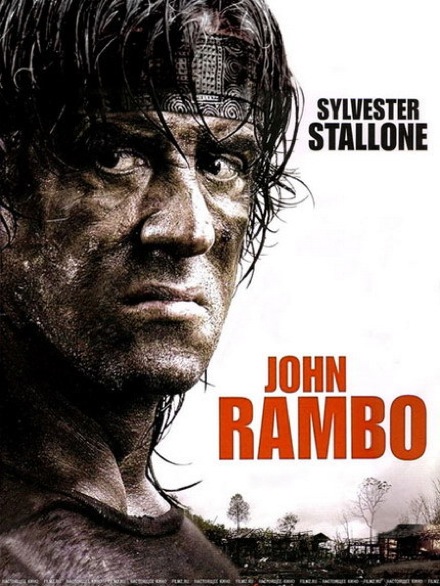
Notes from the New Rambo movie for our troops


"trying to save a life isn't wasting your own.

"You don't kill for your country, you kill for yourself.

Live for nothing... Or die for something... Your call.

John J. Rambo: Are you bringing in any weapons ?
Burnett: Of course not.
John J. Rambo: You're not changin' anything...


---------------------------------------------------

Friday, March 14, 2008

Funeral mass for Iraqi archbishop


Christians from across Iraq have been attending the funeral of the Chaldean Catholic Archbishop of Mosul, Paulos Faraj Rahho.

Surrounded by armed guards, mourners wept and held flowers as the coffin was carried through the village of Kremlis, near Mosul in northern Iraq

$1 million ransom

Kidnappers of a Chaldean Catholic archbishop found dead in the northern Iraqi city of Mosul had demanded a $1 million ransom, a senior police official said on Friday.

The Catholic Chaldean archbishop of Mosul, Paulos Faraj Rahho, was found dead Thursday in a shallow grave in that northern Iraq city. On February 29, Islamist extremists had abducted the 65-year-old prelate while he prayed, in Aramaic, the language of Jesus himself, the Lenten Stations of the Cross at his church.

There could be no starker statement that Christians are targeted for their faith in a ruthlessly intolerant Iraq. Cardinal Delly, the Patriarch of Babylon of the Chaldeans, weeps in Baghdad; he weeps for his martyred friend, and for the bitter fate of Iraq’s ancient Christian Church.


The body of Paulos Faraj Rahho, the Chaldean Catholic archbishop of Mosul, was found in a shallow grave close to the city.

Pope Benedict XVI said he was profoundly moved and saddened, calling the archbishop's death an act of inhuman violence.

Archbishop Rahho was kidnapped after leading prayers at the Church of the Holy Spirit in Mosul on 29 February. Three people who were with him at the time, a driver and two guards, were killed by the gunmen.

According to the SIR Catholic news agency, the kidnappers told Iraqi church officials on Wednesday that Archbishop Rahho was very ill and, later on the same day, that he was dead.

Died at least a week ago

However, Iraqi police say the condition of the archbishop's body suggests that he may have died at least a week ago.

It is not clear whether he was killed, or died of natural causes. Nobody has claimed responsibility for his death.

The archbishop's body was found by church workers who went to the area after being contacted by the kidnappers.

'Horrible crime'

The archbishop, 65, was the latest in a long line of Chaldean clerics to be abducted in Iraq since the US-led invasion in March 2003.

Only last Sunday, Pope Benedict had appealed for the archbishop's release.

A Vatican spokesman, Father Federico Lombardi, said: "The most absurd and unjustified violence continues to afflict the Iraqi people and in particular the small Christian community, whom the Pope holds in his prayers in this time of deep sadness.

"This tragic event underscored once more and with more urgency the duty of all, and in particular of the international community, to bring peace to a country that has been so tormented."


Iraqi Prime Minister Nouri Maliki said those behind the kidnapping would not escape justice.

It was, he said, a "horrible crime" by "a criminal, terrorist gang".


Who are the Chaldeans?

The Chaldeans are the largest sect within Iraq's Christian community, which was estimated at 800,000 before the overthrow of Saddam Hussein.

Many have left their homes after attacks linked to the continuing insurgency.
IRAQ'S CHALDEAN CHRISTIANS
550,000 Chaldeans, forming majority of Iraq's Christians are an Eastern-rite Church with liturgical languag in Syriac, descended from Aramaic. They are autonomous from Rome but recognizes Pope's authority. Their spiritual leader is Patriarch Emmanuel III Delly, based in Baghdad

Thursday, March 13, 2008

US forces accidentally shoot young girl in Kut


Iraq: Child killed by US fire as clashes continue in Kut

US forces in Iraq American troops "accidentally" shot and killed a child on Wednesday in Iraq's Diyala province, the U.S. army said on Thursday. The Americans said soldiers were operating in an area where roadside bombs had been found recently in Diyala.

The soldiers fired a warning shot into a sand berm after they found a "suspicious woman who appeared to be signalling to someone". According to Reuters, the military said a young girl was found on the other side of the berm suffering from a gunshot wound. Soldiers She died on the way to a military hospital.

Diyala has become one of the deadliest provinces in Iraq for U.S. troops. It is home to about 1.4 million people and is mostly a mix of Sunni and Shiites.

The capital, Baquba, is about 35 miles northeast of Baghdad. And it was near there that the leader of al-Qaida in Iraq, Abu Musab al-Zarqawi, was killed by U.S. forces last June.

Description of the area

And former Army Captain Phillip Carter, he was an operations officer for a task force that advised Iraqi police in Baquba from October 2005 to September 2006.

Phillip Carter, to you first. You spent a year there. Describe Diyala province to us. What does it look like? Who are the people who live there?

FORMER CAPT. PHILLIP CARTER, U.S. Army: Judy, we thought of Diyala as Little Iraq. It's a microcosm of the country, which has a mix of Sunnis, Shiites and Kurds in the north and the east.

The geography of the province is diverse. It stretches from the fertile farmlands outside of Baghdad to the deserts along the Iranian border all the way up into mountains in Kurdistan.

And it is a volatile province. It has a little bit of the problems of Baghdad. It touches on the Sunni triangle. And it also has many of the lines of communication leading from Iran into Baghdad, and so it is home to a number of the intrigues that involve Iran and Kurdistan, as well.

JUDY WOODRUFF: Fred Kagan, what would you add to that? How is it different, Diyala, from the rest of Iraq?

FREDERICK KAGAN, American Enterprise Institute: Well, the mix that you have there, I think the captain is absolutely right. It is a Little Iraq. And you have Kurdish infiltration in the north. You have a majority Sunni province. You also have provincial government and security forces that are dominated by Shia, because the Sunnis sat out the local elections. And so you have some tensions there.

And because we have had relatively few forces in Diyala throughout 2006, there's a significant al-Qaida presence in Diyala, which has been causing a lot of problems. And then you've had a flow into Diyala of Sunnis who were displaced in Baghdad over the course of 2006, as well. So it's a very, very rough area, probably one of the toughest in Iraq right now.

Unclear how U.S. authorities in Iraq obtained the 5 ffingers of missing contractors

From the Washington Post:

Five Severed Fingers Identified as Belonging To Guards Held in Iraq
Four Are From Men Missing 16 Months


By Steve Fainaru
Washington Post Foreign Service
Thursday, March 13, 2008; A12

U.S. authorities are in possession of five severed fingers, four of which belong to private security contractors who were abducted in Iraq nearly 16 months ago and remain missing, according to law enforcement sources close to the investigation.

The fingers were delivered last month to U.S. authorities in Iraq but were not accompanied by a ransom demand or other information, according to sources. Fingerprint and DNA analysis determined that they were removed from four of five guards taken hostage during an ambush near the Kuwaiti border on Nov. 16, 2006.

The missing guards, four Americans and an Austrian, worked for Kuwait-based Crescent Security Group. The fifth severed finger was taken from an American contractor seized separately but reportedly held with the other missing men, the sources said.

U.S. authorities have been unable to determine whether the fingers were removed from corpses or while the men were alive, according to the sources, who spoke on condition of anonymity because the investigation is ongoing. The fingers were partially decomposed at the time they were obtained.

"There's no way to accurately depict at this point whether it was prior to or after; scientifically I don't think they've been able to determine that," said a source familiar with the investigation. "It's possible they were removed while they were still alive and possible they were removed after they were dead."

The four Crescent contractors whose fingers have been identified are Jonathon Cote, 25, of Getzville, N.Y.; Paul Reuben, 41, of Buffalo, Minn.; Joshua Munns, 25, of Redding, Calif.; and Bert Nussbaumer, 26, of Vienna, Austria. The fifth finger belonged to Ronald J. Withrow, 40, of Lubbock, Tex., a contractor and computer specialist for JPI Worldwide who was abducted Jan. 5, 2007, near Basra.

John Young, 45, of Lee's Summit, Mo., is also missing, but none of his fingers was among those forwarded to U.S. authorities. Young was the Crescent Security team leader the day of the attack.

The grisly disclosure first appeared in News, an Austrian newsweekly. By late Wednesday, after word of the developments spread, the FBI began contacting families and confirming the reports. But the delay led to widespread confusion among the families.

The families were informed by the FBI last month that DNA and fingerprint evidence of the hostages had been discovered, according to relatives, but no additional information was provided.

Jackie Stewart, the mother of Munns, a former U.S. Marine, said she spoke with a local FBI agent Wednesday morning after the reports of severed fingers began to circulate among the families.

"She told me, 'We have no confirmed reports that any of this is true,' " Stewart said. "She said, 'I just don't think it would be anything that macabre.' "

Stewart, of Richfield, Wash., said she believed that the FBI agent, who is based in Seattle, was misinformed and that the FBI in Washington "was not passing the information down the food chain."

Patrick Reuben, whose twin brother, Paul, was Crescent's medic, said he received a call from his 17-year-old niece Wednesday morning asking him whether her father was dead. Reuben, a Minnesota police officer, called a reporter seeking more information.

"I can't get any information out of the government," he said.

FBI spokesman Richard Kolko declined to comment on complaints that the families were not being kept informed.

"The FBI's Office of Victim Assistance has offered its service to the U.S. families involved in this matter," Kolko said.

It was unclear how U.S. authorities in Iraq obtained the fingers. The fingers were shipped to forensic specialists at Quantico, Va., for fingerprint and DNA analysis. Cote's, Reuben's and Withrow's were identified first. Those of Munns and Nussbaumer were identified later, according to a source.

The Crescent team was ambushed in broad daylight on Iraq's main highway while protecting a supply convoy. Crescent was under a contract to the Italian military, which was withdrawing its troops from the country. The company, which was later expelled from Iraq for weapons violations, came under withering criticism from U.S. officials and security experts for its lax safety measures. On the day of the attack, just seven security contractors were protecting a 37-truck convoy that stretched more than a mile.

From the beginning, the case has baffled U.S. investigators. The hostages have not been seen since a Jan. 3, 2007, video, time-stamped Dec. 21 and Dec. 22 and apparently recorded by their captors, who identified themselves as an Iranian-backed group and called for the withdrawal of U.S. troops from Iraq. There have been no ransom demands.

Crescent's managing partner, Franco Picco, said Wednesday in a telephone interview from Kuwait that he continued to believe the hostages were alive.

"The fact is, what reason would they have to kill them, first and foremost?" he said. "And no one has found any bodies, you know? All the information we have tends us to believe that they are alive."

Staff researcher Julie Tate contributed to this report.

Wednesday, March 12, 2008

Cost of War 3 Trillion as Public Looses interest


Public looses interest in War as violence increases in Iraq and the Middle East commander who disagrees with Bush Administration policy abruptly quits. Meanwhile experts conservatively predict Bush's war will cost the US 3 trillion - much of the cost coming after Bush's departure from office.


US public losing interest in Iraq as news coverage wanes: report

WASHINGTON (AFP) — A sharp fall in US media coverage of the Iraq war has left Americans less interested in and knowledgeable about the conflict, a report by the independent Pew Research Center showed Wednesday.

"The drop in awareness comes as press attention to the war has waned," the report said.

A scant three percent of news stories in February were devoted to the Iraq war, compared with around 15 percent in July last year, and the US public has not perceived the war, which began nearly five years ago, as a top news story since October, the report noted.

Meanwhile, 28 percent of 1,003 adults polled last month for Pew correctly estimated the number of US military fatalities in Iraq at around 4,000, compared with 54 percent who got the figure right seven months ago, the report said.

More than one-third -- 35 percent -- estimated that 3,000 had been killed, 11 percent put the toll at 2,000 deaths, and just under a quarter said the number of fatalities was closer to 5,000.

The Department of Defense confirmed the deaths of 3,974 US military personnel in Iraq as of Monday, according to Pew.

"As news coverage of the war has diminished, so too has public interest in news about Iraq," the report said.

And with the waning interest in news about Iraq, there has been a "significant increase in the number of Americans who believe that military progress is being made in Iraq," it said, citing another poll.

http://afp.google.com/article/ALeqM5h8-0YfL2kZoE1y5a6ZxjET9mk3bg


Iraq Violence Sees Spike

BAGHDAD (AP) — Violence appeared to be on the rise in Iraq after a day that saw at least 42 people die — numbers that cast doubt on the easing of sectarian violence following a surge of U.S. forces to the country last year.

An Iraqi official confirmed the grisliest attack of Tuesday when 16 passengers on a bus in southern Iraq were killed by a roadside bomb. The U.S. military, however, claimed no one died in the attack, which was targeting a passing military convoy. The reason for the discrepancy was not immediately clear.

At least 26 people were killed Tuesday in other violence around the country.

Last Thursday, two massive bombs killed 68 people in Baghdad's Karradah neighborhood, while on March 3, two car bombs killed 24 people in the capital.

Military spokesman Rear Adm. Gregory Smith said Sunday that recent violence should not be taken as evidence of "an increase or a trend of an increase."

http://ap.google.com/article/ALeqM5gkx-3oYeFwuWKCusr2jrojs98w8wD8VBRGHG0


The top US military commander running the wars in both Afghanistan and Iraq quit abruptly yesterday

The Bush administration today moved to downplay divisions within the Pentagon over its Iraq war strategy exposed by the sudden departure of its Middle East commander Admiral William Fallon.Admiral William Fallon resigned yesterday after Esquire magazine described him as a lonely crusader blocking the hawks in the Bush administration from ordering military strikes to shut down Iran's nuclear programme.

The White House today denied that Fallon was forced out because he was pressing the
administration to draw down US troop levels in Iraq and encourage more diplomacy with Iran.

Fallon's exit arrives at a time when the Pentagon is engaged in intense debate over its Iraq war strategy - especially troop levels - in the remaining months of Bush's presidency. General David Petraeus, the commander of US forces in Iraq, is due to present his next report on the progress of the war to Congress.

The army chief of staff, George Casey, Fallon and other senior military officials have been pressing for more rapid withdrawals of US troops in Iraq because they fear long deployments are degrading the military.

In the Esquire article, Fallon had criticised the administration's preoccupation with Iraq, saying "our nation can't afford to be mesmerized by one problem".

However, Bush wants to maintain what was originally described as a temporary "surge" of forces in Iraq. Petraeus, now considered as a possible successor to Fallon, has talked about a "pause" in withdrawals for four to six weeks.

The admiral's departure after just a year in the job brought renewed charges from Democrats in Congress that the White House was stifling dissent from uniformed military professionals.

It also revived speculation that the White House continues to consider military action against Tehran -- months after intelligence agencies reached a consensus that its nuclear programme was on hold.

Today, Hillary Clinton called on the armed services committee to investigate whether Fallon had been pushed out for opposing military action against Iran. John Kerry has echoed her views, and two senior members of Congress had pressed the Pentagon to allow Fallon to testify on the Iraq war before his resignation.

"I am profoundly concerned that Admiral Fallon has decided to take this measure, and I'm hoping that we can hear from him in a more specific way in the future," Democratic senator James Webb said yesterday.

Whether or not Congress summons Fallon to address his departure, he is likely to face the issue publicly in the coming days, said Lawrence Korb, a Reagan-era Pentagon official who now serves at the Centre for American Progress.

"I think you will see him appear before Congress to talk about his views on the whole Middle East and the challenges affecting the US, and the circumstances of his leaving would come up," Korb said.

Fallon will be temporary replaced at US central command by his deputy, Lieutenant General

Before Bush ordered the military "surge" in Iraq last year, one of Fallon's superiors testified before Congress that Dempsey did not think adding more troops would help the US succeed in Iraq


http://www.guardian.co.uk/world/2008/mar/12/usa6


The 3 Trillion Dollar War

With the fifth anniversary of the start of the Iraq war just days away. Ahead of that
anniversary, two prominent US economists have come up with a new estimate on the cost to the economy of the wars in both Iraq and Afghanistan. That figure is $US3 trillion ($3.22 trillion).

At the same time, a parliamentary committee in the UK has estimated that Britain's
expenditure on military operations on the same fronts will almost double this year.
Former World Bank chief economist Joseph Stiglitz and a professor of Public Finance at Harvard University, Linda Bilmes, have written a book with that figure in mind: The Three Trillion Dollar War: The True Cost of the Iraq Conflict.


The authors say the $600 billion spent so far on the war is only the tip of the iceberg.Professor Bilmes told ABC Radio National's Breakfast program yesterday that the authors' estimate took into account a number of long-term indirect costs of the conflict.

"It's the cost of providing medical care to the veterans, the cost of providing disability compensation to the veterans, the cost of replacing the military equipment and weaponry that's been used up," she said.

"And the cost of essentially resetting the military personnel to their pre-war state of readiness, and then there is the cost of paying the interest on the money that we borrowed to fight the war so far, so all those numbers are not included in the top line result."

"We have tried to be very, very conservative. Extremely conservative. We could have called this book the $4 trillion or the $5 trillion war but we tried to be as conservative as possible because, frankly, we didn't want to quibble with anyone about the particular details," she said.

"We were trying to just get a sort of realistic sense of how much it was costing."

http://www.abc.net.au/news/stories/2008/03/12/2187215.htm?section=world

amazon quicklinker

Favorites linker

google adds