washingtonpost.com
A Hawk Questions Himself as His Son Goes to War
By Eliot A. Cohen
Sunday, July 10, 2005; B01
War forces us, or should force us, to ask hard questions of ourselves. As a military historian, a commentator on current events and the father of a young Army officer, these are mine.
You supported the Iraq war when it was launched in 2003. If you had known then what you know now, would you still have been in favor
of it?
As I watched President Bush give his speech at Fort Bragg to rally support for the war the other week, I contemplated this question from a different vantage than my usual professorial perch. Our oldest son now dresses like the impassive soldiers who served as stage props for that event; he too wears crossed rifles, jump wings and a Ranger tab. Before long he will fight in the war that I advocated, and that the president was defending.
So it is not an academic matter when I say that what I took to be the basic rationale for the war still strikes me as sound. Iraq was a policy problem that we could evade in words but not escape in reality. But what I did not know then that I do know now is just how incompetent we would be at carrying out that task. And that's what prevents me from answering this question with an unhesitating yes.
The Bush administration did itself a disservice by resting much of its case for war on Iraq's actual possession of weapons of mass destruction. The true arguments for war reached deeper than that. Long before 2003, weapons inspections in Iraq had broken down, and sanctions, thanks to countries like Russia, China and France, were failing. The regime's character and ambitions, including its desire to resume suspended weapons programs, had not changed. In the meanwhile, the policy of isolation had brought suffering to the Iraqi people and had not stabilized the Gulf. Read Osama bin Laden's fatwas in the late 1990s and see how the massive American presence in Saudi Arabia -- a presence born of the need to keep Saddam Hussein in his cage -- fed the outrage of the jihadis with whom we are in a war that will last a generation or more.
More than this: Decades of American policy had hoped to achieve stability in the Middle East by relying on accommodating thugs and kleptocrats to maintain order. That policy, too, had failed; it was the well-educated children of our client regimes who leveled the Twin Towers, after all.
The administration was and is right in thinking that the overthrow of Saddam's regime could change the pattern of Middle Eastern politics in ways that, by favoring the cause of decent government and basic freedoms, would favor our interests as well. Iraq will not become Switzerland, a progressive and prosperous social democracy, for generations, if ever. But it can become a state that makes room for the various confessions and communities that constitute it, that has reasonably open and free politics, and that chooses a path to a future that could inspire other changes in the Arab Middle East. I still think something like that will happen. The administration believed that the invasion of Iraq would jolt and transform a region bewitched by the malignant dreams that my colleague Fouad Ajami has described so well -- the dark fantasies of Baathists, ultra-nationalists and religious fanatics. And indeed, in the aftermath of the Iraq war the cracks have begun to show -- in Libya, Lebanon, Egypt, and even in Syria and Saudi Arabia.
But a pundit should not recommend a policy without adequate regard for the ability of those in charge to execute it, and here I stumbled. I could not imagine, for example, that the civilian and military high command would treat "Phase IV" -- the post-combat period that has killed far more Americans than the "real" war -- as of secondary importance to the planning of Gen. Tommy Franks's blitzkrieg. I never dreamed that Ambassador Paul Bremer and Gen. Ricardo Sanchez, the two top civilian and military leaders early in the occupation of Iraq -- brave, honorable and committed though they were -- would be so unsuited for their tasks, and that they would serve their full length of duty nonetheless. I did not expect that we would begin the occupation with cockamamie schemes of creating an immobile Iraqi army to defend the country's borders rather than maintain internal order, or that the under-planned, under-prepared and in some respects mis-manned Coalition Provisional Authority would seek to rebuild Iraq with big construction contracts awarded under federal acquisition regulations, rather than with small grants aimed at getting angry, bewildered young Iraqi men off the streets and into jobs.
I did not know, but I might have guessed.
You are a military historian; what does
the history of war have to tell us about the future of Iraq?
History provides perspective and context, not lessons. The failures and squandered opportunities of that first year in Iraq do not look that different from some of the institutional stupidities we saw in Vietnam. What is different here is how quickly -- relatively speaking -- the United States changed its course. It took five years before we became serious about training our Vietnamese allies to take our place. It has taken about a year to get serious about training Iraqis.
The political side of insurgency, which is the side that counts most, never really came to the fore in Vietnam, but it has in Iraq. For the presidents who got us into Vietnam, and for that matter out of it, the war was a distraction from other, more important priorities. For this president, the war is the defining decision of his tenure, and he knows it. Whatever his faults may be, a lack of determination is not one of them. And in war, character -- and above all persistence -- counts for a very great deal.
That's particularly true here because counterinsurgency is inherently a long, long business. Conceivably, the Iraqi insurgency could collapse in a year or so, but that would be highly unusual. More likely Iraq will suffer from chronic violence, which need not prevent the country as a whole from progressing. If the insurgencies in Northern Ireland, Israel/Palestine, Sri Lanka and Kashmir continue, what reason do we have to expect this one to end so soon? Most insurgencies do, however, fail. Moreover, most insurgencies consist of a collection of guerrilla microclimates in which local conditions -- charismatic leaders (or their absence), ethnographic peculiarities, concrete grievances -- determine how much violence will occur and with what effect.
This is an unusually invertebrate insurgency, without a central organization or ideology, a coherent set of objectives or a common positive purpose. The FLN in 5lgeria or the Viet Cong were far more cohesive and directed. The decentralized ad hoc nature of the insurgency makes it harder to figure out, but also less likely to succeed; there is a reason why it is well-organized and disciplined guerrillas who eventually occupy presidential palaces. And with all of its errors and follies, the United States remains an extraordinarily wealthy and formidable foe. By any historical standard, our resources are immense, our technology fabulous, the quality of our people on the ground superb. We have far more power than the Britain of the 19th century or the America of the 1960s. That fact may invite hubris, but it also provides solace.
None of this predetermines the outcome, of course, or foretells the consequences of a muddled success or a blurred failure in Iraq. Historians have the comfort of knowing how past wars played out. But short of clairvoyance, no one can forecast the outcome and the second- or third-order effects of events as they unfold. Five or even 10 years from now, we still may not be able to judge our Iraq venture in a definitive way. Unfortunately, that philosophical detachment is cold consolation in the here and now, as young men and women go off to war.
Your son is an infantry officer, shipping
out soon for Iraq. How do you feel about that?
Pride, of course -- great pride. And fear. And an occasional burning in the gut, a flare of anger at empty pieties and lame excuses, at flip answers and a lack of urgency, at a failure to hold those at the top to the standards of accountability that the military system rightly imposes on subalterns.
It is a flicker of rage that two years into an insurgency, we still expose our troops in Humvees to the blasts of roadside bombs -- knowing that even the armored version of that humble successor to the Jeep is simply not designed for warfare along guerrilla-infested highways, while, at the same time, knowing that plenty of countries manufacture armored cars that are. It is disbelief at a manpower system that, following its prewar routines, ships soldiers off to war for a year or 15 months, giving them two weeks of leave at the end, when our British comrades, more experienced in these matters and wiser in pacing themselves, ship troops out for half that time, and give them an extra month on top of their regular leave after an operational deployment.
It is the sick feeling that churned inside me at least 18 months ago, when a glib and upbeat Pentagon bureaucrat assured me that the opposition in Iraq consisted of "5,000 bitter-enders and criminals," even after we had killed at least that many. It flames up when hearing about the veteran who in theory has a year between Iraq rotations, but in fact, because he transferred between units after returning from one tour, will go back to Iraq half a year later, and who, because of "stop-loss orders" involuntarily extending active duty tours, will find himself in combat nine months after his enlistment runs out. And all this because after 9/11, when so many Americans asked for nothing but an opportunity to serve, we did not expand our Army and Marine Corps when we could, even though we knew we would need more troops.
A variety of emotions wash over me as I reflect on our Iraq war: Disbelief at the length of time it took to call an insurgency by its name. Alarm at our continuing failure to promote at wartime speed the colonels and generals who have a talent for fighting it, while also failing to sweep aside those who do not. Incredulity at seeing decorations pinned on the chests and promotions on the shoulders of senior leaders -- both civilians and military -- who had the helm when things went badly wrong. Disdain for the general who thinks Job One is simply whacking the bad guys and who, ever conscious of public relations, cannot admit that American soldiers have tortured prisoners or, in panic, killed innocent civilians. Contempt for the ghoulish glee of some who think they were right in opposing the war, and for the blithe disregard of the bungles by some who think they were right in favoring it. A desire -- barely controlled -- to slap the highly educated fool who, having no soldier friends or family, once explained to me that mistakes happen in all wars, and that the casualties are not really all that high and that I really shouldn't get exercised about them.
There is a lot of talk these days about shaky public support for the war. That is not really the issue. Nor should cheerleading, as opposed to truth-telling, be our leaders' chief concern. If we fail in Iraq -- and I don't think we will -- it won't be because the American people lack heart, but because leaders and institutions have failed. Rather than fretting about support at home, let them show themselves dedicated to waging and winning a strange kind of war and describing it as it is, candidly and in detail. Then the American people will give them all the support they need. The scholar in me is not surprised when our leaders blunder, although the pundit in me is dismayed when they do. What the father in me expects from our leaders is, simply, the truth -- an end to happy talk and denials of error, and a seriousness equal to that of the men and women our country sends into the fight.
Eliot Cohen is Robert E. Osgood Professor of Strategic Studies at the Paul H. Nitze School of Advanced International Studies, Johns Hopkins University.
Friday, June 10, 2005


Friday, May 27, 2005
U.S. military helicopter shot down in Iraq (again)

U.S. military helicopter shot down in Iraq
5/27/2005 10:30:00 AM GMT
The U.S. military uses the OH-58 Kiowa for surveillance missions
A U.S. military helicopter was shot down near the Iraqi city of Baquoba, the U.S. army said on Friday, adding that two soldiers died in the crash.
The military said that two armed U.S. reconnaissance helicopters were flying in support of combat operations near Baqouba, 60 km northeast of Baghdad, when they were hit by small arms fire.
It added that one copter crashed and the other managed to land safely at a nearby airbase.
"Two Task Force Liberty soldiers were killed when their helicopter crashed near Baquba on May 26," the military statement said.
"Coalition forces responded to the scene and secured the site,” it added.
The Pentagon said that the crashed helicopter was an OH-58 Kiowa helicopter, a one-engined, two-seater craft.
The attack came as about 1,000 U.S. and Iraqi troops continued their offensive against rebels in the western al-Anbar province in the city of Haditha.
Meanwhile, U.S. officials are investigating the killing of three Iraqis who were shot dead by U.S. soldiers after they opened fire at their vehicle in southeastern Baghdad on Thursday, military spokesman Master Sgt. Greg Kaufman said.
Kaufman claimed that U.S. forces shot at the van after its driver failed to respond to their warnings to stop the car.
Iraqi police Sgt. Najim Aboud said two of the slain Iraqis were brothers and that their mother was also in the vehicle.
Friday, May 20, 2005

Friday, April 15, 2005
Rumsfeld’s Mission To Baghdad
By Bill Van Auken (images added)
15 April 2005
The first high-level contact between Washington and the fledgling Iraqi transitional government came Monday, with an emergency flight to Baghdad by US Defense Secretary Donald Rumsfeld.

Over the past few weeks, Washington’s official pronouncements and reports in the US media have been filled with rhetoric about the new Iraqi regime representing an historic transition from dictatorship to democracy. There has, predictably, been no attempt to square this official line with Rumsfeld’s mission to Baghdad, whose purpose is to force the incoming Iraqi administration to leave in place ex-military and police officers from the Saddam Hussein dictatorship who have been recruited by the CIA and Pentagon for the new US-organized Iraqi security forces.
Speaking to reporters en route to his surprise meeting with the Iraqi officials, Rumsfeld indirectly hinted at the nature of his visit, declaring, “It’s important that the new government be attentive to the competence of the people in the ministries and that they avoid unnecessary turbulence.”

He reportedly said he intended to warn the Iraqis against “corruption” and “cronyism.” These words must have evoked guffaws in many quarters, given Rumsfeld’s oversight of multi-billion-dollar contracts to Halliburton and its subsidiary KBR for a reconstruction effort that has provided a huge windfall for the firm previously headed by Vice President Dick Cheney.
Reporting on the talks between the Pentagon chief and newly installed Iraqi Prime Minister Ibrahim Jaafari, Reuters news agency stated, “Rumsfeld expressed particular concern about any clear-out of Iraq’s defense and interior ministries, which are at the heart of efforts to put Iraq’s security forces in charge of battling the country’s Sunni Muslim-led insurgency.”
The main impulse for Rumsfeld’s trip was growing sentiment within the Shiite Islamist parties, which were the primary victors in last January’s election, for a purge of former Baathist military and secret police officers enlisted by Washington in its efforts to suppress resistance to the US occupation.
“Our concerns are to maintain momentum, and that there be no major tinkering with security forces,” a US official in Baghdad told the Financial Times of London. “If you get rid of anyone who ever carried a Baathist card, then you get rid of everyone with experience and training, including some that have proven themselves in the last nine months.”
Rumsfeld’s intervention reveals in a nutshell the utter hypocrisy of Washington’s democratic pretensions. It points to the real aims and methods of the US occupation of Iraq, and the real nature of the relationship between the “sovereign” transitional government and its American overseers.

Rumsfeld’s visit follows by only days the largest demonstrations in Iraqi history, which brought hundreds of thousands of people—predominantly Shia, but also Sunni—into the streets of Baghdad demanding an end to the US occupation and equating George W. Bush and Saddam Hussein.
The demonstration, part of a continuing political campaign mounted by the radical Shia cleric Moqtada al Sadr, has placed significant political pressure on Jaafari, whose Dawa Party seeks to appeal to the same Shia population. At the same time, his key government partner, former Kurdish guerrilla leader and incoming Iraqi president Jalal Talabani, has insisted he does not want the US troops to leave.
For the civilian chief of the US military to fly to Baghdad to issue orders to the new government is a clear signal in itself. Washington views the new transitional regime as little more than a public front for what is, in fact, a transition to a new phase in the occupation. The Pentagon envisions a gradual reduction in US troop levels until American forces are able to withdraw to fortified bases and allow Iraqi puppet forces to carry out day-to-day repression.
Key to this strategy is the use of the ex-members of Saddam Hussein’s repressive apparatus, whose “experience and training” are precisely in the suppression of the same Shia masses who have turned out in such great numbers to demand an end to the US occupation.
In the early days of the US occupation, the head of the American operation, L. Paul Bremer, instituted a sweeping “de-Baathification” program and disbanded the Iraqi army—a move subsequently seen as a major blunder by many in the US security establishment. Within months of the US invasion, however, the CIA began quietly recruiting former officers of Saddam Hussein’s hated Mukhabarat secret police.
In 1991, in the wake of Iraq’s defeat in the first Gulf war, it was the Mukhabarat that organized the suppression of a Shia uprising in the south of Iraq. The bloody crackdown was conducted with the tacit backing of Washington, which allowed the Iraqi military to utilize its combat aircraft to attack the rebels.
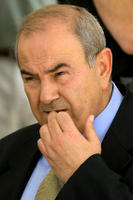 After the dissolution of Bremer’s occupation authority and the installation of long-time CIA asset Iyad Allawi as the prime minister in the provisional government, the recruitment of former Hussein regime members was stepped up. Allawi is himself an ex-Baathist, and built his US- and British-backed exile group, the Iraqi National Accord, around disgruntled Baathist officers and intelligence agents.
It is now reported that up to 70 percent of the officers in the US-organized Iraqi security forces are ex-Baathist officers. An entire commando force of 10,000 members, which is considered the most reliable Iraqi unit, is composed almost entirely of ex-Iraqi military personnel.
Though Washington’s favorite, Allawi’s party received less than 10 percent of the vote in January. The United Iraqi Alliance, the coalition dominated by Shia religious parties, won the election through a campaign that called for an end to the US occupation and a purge of Baathists from the government.
 Since being tapped as prime minister, Jafaari has been forced to back off from the call for a US withdrawal. Now, Rumsfeld has ordered him to shelve plans to root out military and police officers who are associated with massacres, assassinations and torture against the Shia population.
The Shia parties have charged that many of those involved in such crimes are being brought back to carry out similar atrocities. Hostility to the rehiring of Baathist officers boiled over last month following reports that three members of the Badr Corps, a Shia militia that is affiliated with the United Iraqi Alliance, were tortured to death by members of the security forces.
Washington is determined to utilize the ex-Baathists as the command structure for repressing resistance to its occupation. It fears that if they are purged, the new security force will disintegrate.
There is no prospect for the transitional regime headed by Jafaari securing popular support unless it can present itself as independent of a US occupation that is overwhelmingly opposed by the Iraqi people. Nevertheless, the visit by the US defense secretary has made it clear that Washington has no intention of tolerating any real independence, especially when it comes to the central question of its puppet Iraqi security forces.
In the final analysis, the Rumsfeld trip only underscores the colonial character of the US intervention in Iraq and the untenable nature of Washington’s efforts to forge a viable puppet regime. At the same time, the spectacle of the US strong-arming the new Iraqi government into accepting the return of Saddam Hussein’s military and secret police provides a devastating exposure of the propaganda about US bombs and troops spearheading a wave of democratic change in the Arab world.
15 April 2005
The first high-level contact between Washington and the fledgling Iraqi transitional government came Monday, with an emergency flight to Baghdad by US Defense Secretary Donald Rumsfeld.
Over the past few weeks, Washington’s official pronouncements and reports in the US media have been filled with rhetoric about the new Iraqi regime representing an historic transition from dictatorship to democracy. There has, predictably, been no attempt to square this official line with Rumsfeld’s mission to Baghdad, whose purpose is to force the incoming Iraqi administration to leave in place ex-military and police officers from the Saddam Hussein dictatorship who have been recruited by the CIA and Pentagon for the new US-organized Iraqi security forces.
Speaking to reporters en route to his surprise meeting with the Iraqi officials, Rumsfeld indirectly hinted at the nature of his visit, declaring, “It’s important that the new government be attentive to the competence of the people in the ministries and that they avoid unnecessary turbulence.”
He reportedly said he intended to warn the Iraqis against “corruption” and “cronyism.” These words must have evoked guffaws in many quarters, given Rumsfeld’s oversight of multi-billion-dollar contracts to Halliburton and its subsidiary KBR for a reconstruction effort that has provided a huge windfall for the firm previously headed by Vice President Dick Cheney.
Reporting on the talks between the Pentagon chief and newly installed Iraqi Prime Minister Ibrahim Jaafari, Reuters news agency stated, “Rumsfeld expressed particular concern about any clear-out of Iraq’s defense and interior ministries, which are at the heart of efforts to put Iraq’s security forces in charge of battling the country’s Sunni Muslim-led insurgency.”
The main impulse for Rumsfeld’s trip was growing sentiment within the Shiite Islamist parties, which were the primary victors in last January’s election, for a purge of former Baathist military and secret police officers enlisted by Washington in its efforts to suppress resistance to the US occupation.
“Our concerns are to maintain momentum, and that there be no major tinkering with security forces,” a US official in Baghdad told the Financial Times of London. “If you get rid of anyone who ever carried a Baathist card, then you get rid of everyone with experience and training, including some that have proven themselves in the last nine months.”
Rumsfeld’s intervention reveals in a nutshell the utter hypocrisy of Washington’s democratic pretensions. It points to the real aims and methods of the US occupation of Iraq, and the real nature of the relationship between the “sovereign” transitional government and its American overseers.
Rumsfeld’s visit follows by only days the largest demonstrations in Iraqi history, which brought hundreds of thousands of people—predominantly Shia, but also Sunni—into the streets of Baghdad demanding an end to the US occupation and equating George W. Bush and Saddam Hussein.
The demonstration, part of a continuing political campaign mounted by the radical Shia cleric Moqtada al Sadr, has placed significant political pressure on Jaafari, whose Dawa Party seeks to appeal to the same Shia population. At the same time, his key government partner, former Kurdish guerrilla leader and incoming Iraqi president Jalal Talabani, has insisted he does not want the US troops to leave.
For the civilian chief of the US military to fly to Baghdad to issue orders to the new government is a clear signal in itself. Washington views the new transitional regime as little more than a public front for what is, in fact, a transition to a new phase in the occupation. The Pentagon envisions a gradual reduction in US troop levels until American forces are able to withdraw to fortified bases and allow Iraqi puppet forces to carry out day-to-day repression.
Key to this strategy is the use of the ex-members of Saddam Hussein’s repressive apparatus, whose “experience and training” are precisely in the suppression of the same Shia masses who have turned out in such great numbers to demand an end to the US occupation.
In the early days of the US occupation, the head of the American operation, L. Paul Bremer, instituted a sweeping “de-Baathification” program and disbanded the Iraqi army—a move subsequently seen as a major blunder by many in the US security establishment. Within months of the US invasion, however, the CIA began quietly recruiting former officers of Saddam Hussein’s hated Mukhabarat secret police.
In 1991, in the wake of Iraq’s defeat in the first Gulf war, it was the Mukhabarat that organized the suppression of a Shia uprising in the south of Iraq. The bloody crackdown was conducted with the tacit backing of Washington, which allowed the Iraqi military to utilize its combat aircraft to attack the rebels.
 After the dissolution of Bremer’s occupation authority and the installation of long-time CIA asset Iyad Allawi as the prime minister in the provisional government, the recruitment of former Hussein regime members was stepped up. Allawi is himself an ex-Baathist, and built his US- and British-backed exile group, the Iraqi National Accord, around disgruntled Baathist officers and intelligence agents.
It is now reported that up to 70 percent of the officers in the US-organized Iraqi security forces are ex-Baathist officers. An entire commando force of 10,000 members, which is considered the most reliable Iraqi unit, is composed almost entirely of ex-Iraqi military personnel.
Though Washington’s favorite, Allawi’s party received less than 10 percent of the vote in January. The United Iraqi Alliance, the coalition dominated by Shia religious parties, won the election through a campaign that called for an end to the US occupation and a purge of Baathists from the government.
 Since being tapped as prime minister, Jafaari has been forced to back off from the call for a US withdrawal. Now, Rumsfeld has ordered him to shelve plans to root out military and police officers who are associated with massacres, assassinations and torture against the Shia population.
The Shia parties have charged that many of those involved in such crimes are being brought back to carry out similar atrocities. Hostility to the rehiring of Baathist officers boiled over last month following reports that three members of the Badr Corps, a Shia militia that is affiliated with the United Iraqi Alliance, were tortured to death by members of the security forces.
Washington is determined to utilize the ex-Baathists as the command structure for repressing resistance to its occupation. It fears that if they are purged, the new security force will disintegrate.
There is no prospect for the transitional regime headed by Jafaari securing popular support unless it can present itself as independent of a US occupation that is overwhelmingly opposed by the Iraqi people. Nevertheless, the visit by the US defense secretary has made it clear that Washington has no intention of tolerating any real independence, especially when it comes to the central question of its puppet Iraqi security forces.
In the final analysis, the Rumsfeld trip only underscores the colonial character of the US intervention in Iraq and the untenable nature of Washington’s efforts to forge a viable puppet regime. At the same time, the spectacle of the US strong-arming the new Iraqi government into accepting the return of Saddam Hussein’s military and secret police provides a devastating exposure of the propaganda about US bombs and troops spearheading a wave of democratic change in the Arab world.
Monday, April 04, 2005
'Shoot For Fun'
 By Mark Townsend
04 April, 2005The Observer
Emails seen by The Observer reveal that employees of Blackwater Security were recently sent a message stating that 'actually it is "fun" to shoot some people.'
Dated 7 March and bearing the name of Blackwater's president, Gary Jackson, the electronic newsletter adds that terrorists 'need to get creamed, and it's fun, meaning satisfying, to do the shooting of such folk.'
Human rights groups said yesterday that the comments raised fresh questions over the role of civilian contractors operating in Iraq and other world flashpoints.
'We are very concerned about the increased use of security companies, there needs to be more inspection and regulation of these companies,' said a spokesman for Amnesty International.
Blackwater has already been the subject of lobbying efforts to introduce tighter regulations on private military operations in Iraq.
It is one of the fastest growing private security firms in the world, and achieved global prominence last year when four of its men were ambushed by a crowd of Iraqis and their bodies mutilated and dragged around the Iraqi city of Falluja.
The controversial wording of the Blackwater bulletin appears to be an attempt to criticise the 'righteous outcry' that followed a recent statement from a senior US Marine general who, on returning home from Iraq, claimed it was 'fun to shoot some people'. While the views of Lieutenant-General James Mattis drew a frosty response from the Pentagon, others said his observations reflected the harsh realities of war.
Blackwater's entry to the debate appears to suggest that satisfaction can be drawn from combat if 'the bad guys' get what they deserve.
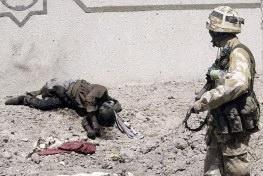
'All of us who have ever waited through an hour and a half movie, or read some 300 pages of a thriller, to the point when the bad guys finally get their comeuppance know this perfectly well,' says the opening address of the six-page bulletin, which The Observer believes to be authentic.
Called Blackwater Tactical Weekly, the newsletter was sent to environmental activist Frank Hewetson as well as the firm's staff. Last year Hewetson was offered a job by Blackwater with a salary of up to £85,000 plus health benefits to work with its 'military crisis operations support team.' Although he declined, Hewetson remains on the firm's database.
There are thought to be as many as 20,000 private enterprise soldiers in Iraq, with the US military an advocate of their use. This system allows governments to save money on paying permanent soldiers, and offers the political bonus that it is unlikely to attract as much media attention as conventional troops.
The Observer made numerous attempts to contact Blackwater's head office in North Carolina, but no calls were returned. There is, however, no evidence that company staff have ever shot people for fun.
The firm is understood to have disciplined and well-trained recruits. A number are thought to be elite soldiers who have retired from military special-operations units. Blackwater also offers extensive psychological counselling programmes to combat potentially traumatic battlefield stress.
Guardian Unlimited © Guardian Newspapers Limited 2005
Monday, March 07, 2005
American Values - American Interest
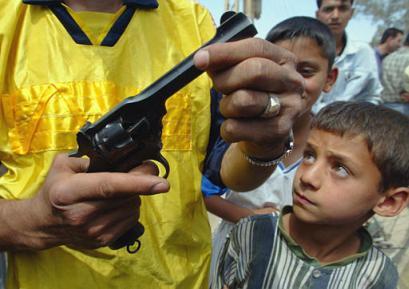
"When freedom takes hold, men and women turn to the peaceful pursuit of a better life. American values, and American interests, lead in the same direction" -President G.W. Bush
Friday, March 04, 2005

Monday, February 21, 2005
Qoutes:
Thought some of you fellas might like to reflect on the words of Mark Twain (Samuel Langhorne Clemens) one of Americas most famous minds from about a century ago:
"Statesmen will invent cheap lies, putting blame upon the nation that is attacked, and every man will be glad of those conscience-soothing falsities, and will diligently study them, and refuse to examine any refutations of them; and thus he will by and by convince himself that the war is just, and will thank God for the better sleep he enjoys after this process of grotesque self-deception." - "Chronicle of Young Satan"
"Man is the only animal that deals in that atrocity of atrocities, War. He is the only one that gathers his brethren about him and goes forth in cold blood and calm pulse to exterminate his kind. He is the only animal that for sordid wages will march out...and help to slaughter strangers of his own species who have done him no harm and with whom he has no quarrel. ..And in the intervals between campaigns he washes the blood off his hands and works for "the universal brotherhood of man"--with his mouth." - What Is Man?
"Statesmen will invent cheap lies, putting blame upon the nation that is attacked, and every man will be glad of those conscience-soothing falsities, and will diligently study them, and refuse to examine any refutations of them; and thus he will by and by convince himself that the war is just, and will thank God for the better sleep he enjoys after this process of grotesque self-deception." - "Chronicle of Young Satan"
***
"Man is the only animal that deals in that atrocity of atrocities, War. He is the only one that gathers his brethren about him and goes forth in cold blood and calm pulse to exterminate his kind. He is the only animal that for sordid wages will march out...and help to slaughter strangers of his own species who have done him no harm and with whom he has no quarrel. ..And in the intervals between campaigns he washes the blood off his hands and works for "the universal brotherhood of man"--with his mouth." - What Is Man?
Saturday, February 12, 2005
Post election thoughts:
Borrowed from: Baghdad Burning
http://riverbendblog.blogspot.com/2005_02_01_riverbendblog_archive.html"
... I'll meet you 'round the bend my friend, where hearts can heal and souls can mend...
Saturday, February 12, 2005
The elections have come and gone.
The day of elections was a day of eerie silence punctuated by a few strong explosions and the hum of helicopters above. We remained at home and watched the situation on tv. E. left for about an hour to see what was happening at the local polling area, which was a secondary school nearby. He said there were maybe 50 people at the school and a lot of them looked like they were involved with the local electoral committee.
The polling station near our house was actually being guarded by SCIRI people (Badir’s Brigade). It was like an voting marathon for all of the news channels- everywhere you turned there was news of the elections. CNN, Euronews, BBC, Jazeera, Arabia, LBC… everyone was talking elections. The Arab news channels were focusing largely on voting abroad while CNN kept showing footage from the southern provinces and the northern ones. I literally had chills going up and down my spine as I watched Abdul Aziz Al Hakeem of Iranian-inclined SCIRI dropping his ballot into a box. Behind him, giving moral support and her vote, was what I can only guess to be his wife. She was shrouded literally from head to foot and only her eyes peeped out of the endless sea of black. She stuffed her ballot in the box with black-gloved hands and submissively followed a very confident Hakeem. E. turned to me with a smile and a wink, “That might be you in a couple of years…” I promptly threw a sofa cushion at him.
Most of our acquaintances (Sunni and Shia) didn’t vote. My cousin, who is Shia, didn’t vote because he felt he didn’t really have ‘representation’ on the lists, as he called it. I laughed when he said that, “But you have your pick of at least 40 different Shia parties!” I teased, winking at his wife. I understood what he meant though. He’s a secular, educated, non-occupation Iraqi before he’s Sunni or Shia- he’s more concerned with having someone who wants to end the occupation than someone Shia.
We’re hearing about various strange happenings at different voting areas. They say that several areas in northern Iraq (some Assyrian and other Christian areas) weren’t allowed to vote. They also say that 300 different ballot boxes from all over the country were disqualified (mainly from Mosul) because a large number of the vote ballots had “Saddam” written on them. In other areas there’s talk of Badir’s Brigade people having bought the ballots to vote, and while the people of Falloojeh weren’t allowed to vote, people say that the identities of Falloojans were temporarily ‘borrowed’ for voting purposes. The stories are endless.
In spite of that, we’re all watching for the results carefully. When the ‘elected’ government takes control, will they set a timetable for American withdrawal? That would be a shocker considering none of the current parties would be able to remain in power without being forcefully backed by America with tanks and troops. We hear American politicians repeatedly saying that America will not withdraw until Iraq can secure itself. When will that happen? Our current National Guard or “Haress il Watani” are fondly called “Haress il Wathani” or “Infidel Guard” by people in the streets. On top of it all, to be one of them is considered such a disgrace by the general population that they have to wear masks so that none of them can be identified by neighbors and friends.
The results won’t really matter when so many people boycotted the elections
No matter what the number say, the reality of the situation is that there are millions of Iraqis who will refuse to submit to an occupation government. After almost two years of occupation, and miserable living conditions, we want our country back. I do have my moments of weakness though, when I wonder who will be allowed to have power. Politicians are talking about a balance that might arise from a Shia, Kurdish alliance and it makes a lot of sense in theory. In theory, the Kurdish leaders are Sunni and secular and the Shia leaders are, well, they’re not exactly secular. If they get along, things should work out evenly. That looks good on blogs and on paper. Reality is quite different. Reality is that the Kurdish leaders are more concerned about their own autonomy and as long as the Kurdish north remains secular, the rest of Iraq can go up in flames.
An example is the situation in Baghdad today. The parties that have power in colleges today are actually the Iranian inclined Shia parties like Da’awa and SCIRI. Student representatives in colleges and universities these days mainly come from the abovementioned parties. They harass Christian and Muslim girls about what they should and shouldn’t wear. They invite students to attend “latmiyas” (mainly Shia religious festivities where the participants cry and beat themselves in sorrow over the killing of the Prophet’s family) and bully the cafeteria or canteen guy into not playing music during Ramadhan and instead showing the aforementioned latmiyas and Shia religious lectures by Ayatollah So-and-So and Sayid Something-or-Another. Last week my cousin needed to visit the current Ministry of Higher Education. After the ministry building was burned and looted, the employees had to be transferred to a much, much smaller building in another part of the city.
My cousin’s wife wanted to have her college degree legalized by the ministry and my cousin wasn’t sure about how to go about doing it. So I volunteered to go along with him because I had some questions of my own. We headed for the building containing the ministry employees (but hardly ever containing the minister). It was small and cramped. Every 8 employees were stuck in the same room. The air was tense and heavy. We were greeted in the reception area by a bearded man who scanned us disapprovingly. “Da’awachi,” my cousin whispered under his breath, indicating the man was from the Da’awa Party. What could he do for us? Who did we want? We wanted to have some documents legalized by the ministry, I said loudly, trying to cover up my nervousness. He looked at me momentarily and then turned to the cousin pointedly. My cousin repeated why we were there and asked for directions. We were told to go to one of the rooms on the same floor and begin there.
“Please dress appropriately next time you come here.” The man said to me. I looked down at what I was wearing- black pants, a beige high-necked sweater and a knee-length black coat. Huh? I blushed furiously. He meant my head should be covered and I should be wearing a skirt. I don’t like being told what to wear and what not to wear by strange men. “I don’t work here- I don’t have to follow a dress code.” I answered coldly. The cousin didn’t like where the conversation was going, he angrily interceded, “We’re only here for an hour and it really isn’t your business.” “It is my business.” Came the answer, “She should have some respect for the people who work here.” And the conversation ended. I looked around for the people I should be respecting. There were three or four women who were apparently ministry employees. Two of them were wearing long skirts, loose sweaters and headscarves and the third had gone all out and was wearing a complete “jubba” or robe-like garb topped with a black head scarf.
My cousin and I turned to enter the room the receptionist had indicated and my eyes were stinging. No one could talk that way before the war and if they did, you didn’t have to listen. You could answer back. Now, you only answer back and make it an issue if you have some sort of death wish or just really, really like trouble. Young females have the option of either just giving in to the pressure and dressing and acting ‘safely’- which means making everything longer and looser and preferably covering some of their head or constantly being defiant to what is becoming endemic in Iraq today.
The problem with defiance is that it doesn’t just involve you personally, it involves anyone with you at that moment- usually a male relative. It means that there might be an exchange of ugly words or a fight and probably, after that, a detention in Abu Ghraib. If it’s like this in Baghdad, I shudder to think what the other cities and provinces must be like. The Allawis and Pachichis of Iraq don’t sense it- their families are safely tucked away in Dubai and Amman, and the Hakeems and Jaffaris of Iraq promote it.
At the end of the day, it’s not about having a Sunni or Shia or Kurd or Arab in power. It’s about having someone who has Iraq’s best interests at heart- not America’s, not Iran’s, not Israel’s… It’s about needing someone who wants peace, prosperity, independence and above and beyond all, unity.
Remeber this interview (Part 1)

Saddam Interview Airs In IraqFeb. 27, 2003
The historic interview between CBS News Anchor Dan Rather and Saddam Hussein aired Thursday on Iraqi television.
As CBS News Correspondent Mark Phillips reports, there was no choice whether to watch it as it was broadcast on all Iraqi four channels. For the residents of Iraq, though, it was a novel experience.
According to most Iraqis, Saddam is never seen by them to be asked direct questions. But there was little doubt expressed about how their president did. Their reaction is even stronger on what they think of the White House rejection of Saddam's challenge to President Bush for a televised debate.
"I think he is a coward. That's all," says Quasem Aziz Habib, a university student.
The interview also drew controversy at the White House. The Bush administration had sought to have a senior official rebut Saddam's statements in the interview on 60 Minutes II, but no agreement could be made in time with the network.
CBS News had said it would accept Mr. Bush, Vice President Dick Cheney or Secretary of State Colin Powell on the show, but the White House only offered officials the network deemed inappropriate for the broadcast.
--------------------------------------------------------------------------------
The 60 Minutes II Interview In his first interview with an American reporter in more than a decade, Saddam Hussein remained defiant, even though his country is surrounded by one of the most lethal fighting forces ever assembled. Defiant - even in the face of an impending war that seems certain to end his rule and, quite possibly, his life.
Dan Rather met him on Monday, in the oldest and largest presidential palace, at a time when the U.N. arms inspectors have accused him of having prohibited missiles. And at a moment when President Bush has said time has run out, that the only thing Saddam can do to prevent war is to disarm immediately. Anything short of that, the president says, is a game.
At this moment, the chief weapons inspector Hans Blix is preparing what could be his final report to the U.N. In a matter of weeks, with or without international support, the American and British forces could begin an all-out assault on Baghdad.
 [In Washington, White House spokesman Ari Fleischer dismissed the Saddam interview as "60 minutes of lies, deceptions and propaganda." Fleischer said the interview included one notable lie by Saddam -- that Iraq's Al Samoud 2 missiles don't exceed U.N. limits. Fleischer said that U.N. weapons inspectors have declared the weapon's range to be greater than the allowed 90 miles.]
***
Rather: Mr. President, do you expect to be attacked by an American-led invasion?
 Translator for Saddam Hussein: We hope that the attack will not take place. But we are bracing ourselves to meet such an attack. To face it. You’ve been here for a few days, you see how people live. They live normally, they get married, they visit each other, but at the same time they hear the news. The officials in America keep talking about attacking Iraq. And it’s normal that the people prepare themselves for such a possibility. At the same time they are praying to Allah to stop the Americans from going through with it and to spare the Iraqis from the harm that those on the bandwagon of evil want to inflict upon them.
Rather: Are you afraid of being killed or captured?

Translator for Saddam Hussein: Whatever Allah decides, we are believers. We believe in what he decides. There is no value for any life, without faith. When we were young, ordinary people in Iraq, before, the Iraqi people had suffered a lot of deprivation and backwardness. We decided to place ourselves to the service of our people. Bear with me. My answers are long.
Rather: Mr. President, I have all night.
Translator for Saddam Hussein: We did not ask the question whether we were going to live or die. It's morally unacceptable to ask such a question. Nothing is going to change the will of God. The believer still believes that what God decides is acceptable.
Narration: But we reminded President Hussein that he has more earthly concerns –- more than missiles that U.N. inspectors say have a longer range than permitted threatening Iraq’s neighbors and capable of attacking American troops in Kuwait.
Rather: Mr. President -- do you intend to destroy the Al Samoud missiles that the United Nations prohibits? Will you destroy those missiles?
Translator for Saddam Hussein: (pause) (nat) We have committed ourselves to Resolution. It is on this basis that we have conducted ourselves, and it is on this basis that we will continue to behave. As you know, we are allowed to produce land to land rockets with a range of up to kilometers, and we are committed to that.
Rather: I want to make sure that I understand, Mr. President. So, you do not intend to destroy these missiles?
Translator for Saddam Hussein: Which missiles are you talking about? We do not have missiles that go beyond the prescribed ranges, by the U.N.
Rather: I mean, the missiles that Hans Blix says that he wants a commitment from you that they will be destroyed.
 <---(Hans Blix) Translator for Saddam Hussein: No violation has been made by Iraq to anything decided by the United Nations. If the intention is to rewrite those resolutions, then we will be entering a new framework. A framework in which the United States will be made to forsake its own position and take a new road towards harming Iraq. In the interview, Saddam Hussein gave no indication he will capitulate to an ultimatum from Chief Weapons inspector Blix -- to begin destroying the missiles by this weekend. Indeed he hinted he will not. Saddam also rejected Bush Administration allegations that besides the missiles delivery system he still has weapons of mass destruction. Translator for Saddam Hussein: I think America and the United States and the world also knows that Iraq no longer has the weapons. And I believe the mobilization that's been done was in fact done partly to cover the huge lie that was being waged against Iraq, about chemical, biological, and nuclear weapons. That is why, when you talk about such missiles, these missiles have been destroyed. There are no missiles that are contrary to the prescription of the United Nations in Iraq. They are no longer there.
Narration: The Bush Administration says Saddam Hussein is just trying to fool the world one more time about his missiles and his weapons of mass destruction. And he faces a new U.N. resolution accusing him of failing to prove he has disarmed. A resolution which, if passed, would in effect authorize war.
Rather: Will the new proposed United Nations resolution, the one that's just out this week -- will this make any difference at all in your position?
Translator for Saddam Hussein: The basic position, there is no change. We have not pursued any weapons of mass destruction. So, what do they want to issue new resolutions about now?
Rather: So basically, no change in your position.
Translator for Saddam Hussein: The basic stand of our position is clear. We do not compromise our independence or our dignity or our freedom. At the same time we will continue to commit ourselves to what has been decided by the United Nations. If the new resolutions infringe upon our dignity then our position towards such a resolution will be in line with our previous positions.
Rather: Mr. President, have you been offered asylum anywhere? And would you, under any circumstances, consider going into exile, to save your people death and destruction?
Translator for Saddam Hussein: I can understand the motive behind your question. This is a very American style. And it may not be liked by some. But I can understand. However, I will answer your question.
Rather: Thank you.
Translator for Saddam Hussein: I was born here in Iraq and I was born as a genuine believer. I am proud to have been born fearing God, and I have taught my children the value of history and the extreme importance of iman, of our heritage, that we must maintain the honor of nationalism, and pan-Arabism. The importance of that is essential to the nation and to the Arab nation.

And now, I am also teaching this to my grandchildren. And-- I have always talked to the Iraqi people in this sense, since the days of our underground-- freedom-fighting. We do not change our position. Our position is basic. We have been born in Iraq. This is part of a glorious nation. A great Arab nation. And we have lived here. That is why, talking about asylum, whoever decides to forsake his nation is not true to the principles. We will die here in Iraq. We will die in this country and we will maintain our honor. The honor that is-- required of our people. I believe that whoever asks Saddam to-- or, offers Saddam asylum in his own country, is in fact a person without morals because he will be directing an insult to the Iraqi people. The Iraqi people who have chosen Saddam Hussein, unanimously, to continue to lead the people of Iraq
Narration: The Iraqi President told us that the first Bush administration threatened it would bomb Iraq back to a pre-industrial age and then attacked his country with thousands of warplanes and helicopters and missiles.
Saddam Hussein: Colleges were destroyed and bridges were destroyed and palaces. They destroyed buildings, factories, they killed people and elderly. But they did not push Iraq back into the pre-industrial age.

Narration: Saddam said his country stood up to the challenge from one Bush administration in and, if forced to, will stand up to this new Bush Administration as well.
Saddam Hussein: We hope that war will not take place but if war is forced upon us, then Iraq will continue to be here. This country with a history of over years. This country, the cradle of the first
 civilizations of humanity, will not finish just like that even though a huge power may want it to be like that. No
 body, nobody should accept that Iraq will finish in such a way.
Rather: Mr. President, Americans are very much concerned about anyone's connections to Osama bin Laden. Do you have, have you had, any connections to al Qaeda and Osama bin Laden?
Translator for Saddam Hussein: Is this the basis of the anxiety in the minds of U.S. officials? Or is it the basis of anxiety in the minds of the people of the United States?
Rather: Mr. President, I believe I can report accurately, that it's a major concern in the minds of the people in the United States.
Saddam Hussein: We have never had any relationship with Mr. Osama bin Laden. And Iraq has never had any relationship with al Qaeda. And I think that Mr. bin Laden himself has recently, in one of his speeches, given-- such an answer, that we have no relation with him.
Rather: Do you or do you not agree in principle, with the attack?
Translator for Saddam Hussein: Let me tell you absolutely clearly. We believe in humanity. We believe, in accordance with what Allah, the God Almighty, has taught us. In the same way that God has taught humanity as a whole. That there must be a law governing humanity, and governing relations in humanity. That there should not be an aggressor, while others are silent about the aggression. There should not be a killer, while those who watch and applaud the killing.
Rather: Not so long ago, you were clearly hailed by Arabs from Palestinians to Jordanians throughout the Arab world as the quote Arab Avenger. Are you still relevant on the Arab street? Or has Osama bin Laden made you with other Arabs irrelevant? If you can understand the question. Thank you.
Translator for Saddam Hussein: This is not our goal. What we want is not a personal issue. What we want is what Allah wants and what our nation wants. We want our nation to be happy, not to be spoken of as heroes. The most basic thing to be said about Saddam is that he is a true son of his nation… and to say he did his best for his people and his nation.
Rather: And he does or does not agree that Osama bin Laden is now-- the champion of the Arab streets?
Translator for Saddam Hussein: You, how do you see it? Mr. Rather is an intelligent person. I believe that he wants to get to the truth and not merely provoke or to try to get someone to say something that might be held against him. The most essential thing is to stop the aggression against our nation and the Iraqi people. You see how the Palestinians are killed on their land, and their homes are demolished and their properties are destroyed and no one is trying to take away their handcuffs, to free them. So if you in America consider Osama bin Laden a hero, we are not jealous of him. And if the Arabs consider him a hero, we are not jealous of him. Jealousy is for women. And men are not supposed to be jealous of one another
Saturday, February 05, 2005
Friday, January 21, 2005

Wednesday, January 19, 2005
Maybe Bush should abdicate the Presidency

Iraq is George Bush's Vietnam: US Senator Kennedy
WASHINGTON (AFP) - America's ongoing military entanglement in Iraq has become President George Bush's Vietnam, US Senator Edward Kennedy, a leading member of the opposition Democratic party, said.
The harsh words refer to the US role and ultimate defeat in the 1964-1975 Vietnam war.
Iraq is "clearly is George Bush's Vietnam," said Kennedy, speaking on CBS's "Face The Nation" program.
Kennedy then blasted Bush's claim in an interview in Sunday's Washington Post that his Iraq policy was endorsed by the US public because of his November 2004 re-election victory.
"I think that's ridiculous," said Kennedy. He quickly referred to the 1964 elections, when Democrat Lyndon Johnson, who had increased US military involvement in Vietnam, defeated Republican Barry Goldwater by an overwhelming majority.
Johnson then had to "basically abdicate the presidency" when he announced in March 1968 that he would not seek re-election, largely due to the drain on time, resources and his popularity resulting from failures in Vietnam.
According to Kennedy, Iraq "is a disaster because it's the a result of blunder after blunder after blunder. And it is George Bush's Vietnam," he insisted.
It has "absolutely been a mistake that we went into Iraq, instead of following (September 11 mastermind) Osama bin Laden," said Kennedy.
Monday, January 17, 2005
Terror cop: Qaeda 'heavily damaged'
WASHINGTON - Al Qaeda is "heavily damaged," constantly on the run and so financially strapped that it is having trouble making payments to the families of its dead fighters, the Daily News has learned.
The terror group remains determined, however, to attack the U.S.
"What we see, and I'm including information we've seen as recently as this month, is that the remnants of the organization are not diverted from their goals of attacking us," a senior counterterrorism official told The News.
Al Qaeda Central also can no longer field "committees," teams of terrorists focused solely on operations, fund-raising, propaganda or acquiring a nuclear weapon.
Money woes also are plaguing the once-powerful terror group.
"They have financial problems, including even their ability to take care of families of Al Qaeda fighters who have gone down," the official said.
A report last week by a CIA think tank predicted that by 2025, Islamic extremists unaffiliated with Al Qaeda will dominate global terrorism
Sunday, January 16, 2005
I was extremely emotional because (even) Saddam didn’t do this to us
A former inmate at Iraq’s Abu Ghraib prison forced by U.S. guards to masturbate in public and piled onto a pyramid of naked men said on Tuesday even Iraqi dictator Saddam Hussein did not do such things.
The inmate testified at the court martial of reservist soldier Charles Graner, accused ringleader of guards who engaged in the abuse, which prompted outrage when pictures of the sexual humiliation were published around the world.
“I couldn’t believe in the beginning that this could happen, but I wished I could kill myself because no one was there to stop it,” Hussein Mutar, who was sent to Abu Ghraib accused of car theft, said in videotaped testimony.
“They were torturing us as though it was theater for them,” he said, as the prosecution wound up its case against Graner on assault, dereliction of duty and other charges that could bring him up to 17 1/2 years in prison.
An obviously ill-at ease Mutar added: “I was extremely emotional because (even) Saddam didn’t do this to us.”- My Way News
Saturday, January 15, 2005
U.S. reportedly damaged Ancient Babylon
Museum claims military caused 'substantial damage'
LONDON - U.S.-led forces, using Iraq’s ancient city of Babylon as a military base, have caused “substantial damage” to one of the world’s most renowned archaeological treasures, a British Museum report said.
The report, quoted in Saturday’s Guardian newspaper, said U.S. and Polish military vehicles had crushed 2,600-year-old pavements in the city, a cradle of civilization and home to one of the seven wonders of the ancient world. Archaeological fragments were used to fill sand bags, it added.
John Curtis, keeper of the museum’s Ancient and Near East department, invited to visit Babylon by Iraqi antiquities experts, also said he had found cracks and gaps made by people who had apparently tried to gouge out the decorated bricks forming the famous dragons of the city’s Ishtar Gate.
“This is tantamount to establishing a military camp around the Great Pyramid in Egypt or around Stonehenge in Britain,” Curtis said in the report.
Friday, January 14, 2005
Special Forces May Train Assassins, Kidnappers in Iraq
Special Forces May Train Assassins, Kidnappers in Iraq
The Pentagon may put Special-Forces-led assassination or kidnapping teams in Iraq
WEB EXCLUSIVE
By Michael Hirsh and John Barry
Newsweek
Updated: 7:59 p.m. CT Jan 14, 2005
Jan. 8 - What to do about the deepening quagmire of Iraq? The Pentagon’s latest approach is being called "the Salvador option"—and the fact that it is being discussed at all is a measure of just how worried Donald Rumsfeld really is. "What everyone agrees is that we can’t just go on as we are," one senior military officer told NEWSWEEK. "We have to find a way to take the offensive against the insurgents. Right now, we are playing defense. And we are losing." Last November’s operation in Fallujah, most analysts agree, succeeded less in breaking "the back" of the insurgency—as Marine Gen. John Sattler optimistically declared at the time—than in spreading it out.
Now, NEWSWEEK has learned, the Pentagon is intensively debating an option that dates back to a still-secret strategy in the Reagan administration’s battle against the leftist guerrilla insurgency in El Salvador in the early 1980s. Then, faced with a losing war against Salvadoran rebels, the U.S. government funded or supported "nationalist" forces that allegedly included so-called death squads directed to hunt down and kill rebel leaders and sympathizers. Eventually the insurgency was quelled, and many U.S. conservatives consider the policy to have been a success—despite the deaths of innocent civilians and the subsequent Iran-Contra arms-for-hostages scandal. (Among the current administration officials who dealt with Central America back then is John Negroponte, who is today the U.S. ambassador to Iraq. Under Reagan, he was ambassador to Honduras. There is no evidence, however, that Negroponte knew anything about the Salvadoran death squads or the Iran-Contra scandal at the time. The Iraq ambassador, in a phone call to NEWSWEEK on Jan. 10, said he was not involved in military strategy in Iraq. He called the insertion of his name into this report "utterly gratuitous.")
Following that model, one Pentagon proposal would send Special Forces teams to advise, support and possibly train Iraqi squads, most likely hand-picked Kurdish Peshmerga fighters and Shiite militiamen, to target Sunni insurgents and their sympathizers, even across the border into Syria, according to military insiders familiar with the discussions. It remains unclear, however, whether this would be a policy of assassination or so-called "snatch" operations, in which the targets are sent to secret facilities for interrogation. The current thinking is that while U.S. Special Forces would lead operations in, say, Syria, activities inside Iraq itself would be carried out by Iraqi paramilitaries, officials tell NEWSWEEK.
Also being debated is which agency within the U.S. government—the Defense department or CIA—would take responsibility for such an operation. Rumsfeld’s Pentagon has aggressively sought to build up its own intelligence-gathering and clandestine capability with an operation run by Defense Undersecretary Stephen Cambone. But since the Abu Ghraib interrogations scandal, some military officials are ultra-wary of any operations that could run afoul of the ethics codified in the Uniform Code of Military Justice. That, they argue, is the reason why such covert operations have always been run by the CIA and authorized by a special presidential finding. (In "covert" activity, U.S. personnel operate under cover and the U.S. government will not confirm that it instigated or ordered them into action if they are captured or killed.)
Meanwhile, intensive discussions are taking place inside the Senate Intelligence Committee over the Defense department’s efforts to expand the involvement of U.S. Special Forces personnel in intelligence-gathering missions. Historically, Special Forces’ intelligence gathering has been limited to objectives directly related to upcoming military operations—"preparation of the battlefield," in military lingo. But, according to intelligence and defense officials, some Pentagon civilians for years have sought to expand the use of Special Forces for other intelligence missions.
Pentagon civilians and some Special Forces personnel believe CIA civilian managers have traditionally been too conservative in planning and executing the kind of undercover missions that Special Forces soldiers believe they can effectively conduct. CIA traditionalists are believed to be adamantly opposed to ceding any authority to the Pentagon. Until now, Pentagon proposals for a capability to send soldiers out on intelligence missions without direct CIA approval or participation have been shot down. But counter-terrorist strike squads, even operating covertly, could be deemed to fall within the Defense department’s orbit.
The interim government of Prime Minister Ayad Allawi is said to be among the most forthright proponents of the Salvador option. Maj. Gen.Muhammad Abdallah al-Shahwani, director of Iraq’s National Intelligence Service, may have been laying the groundwork for the idea with a series of interviews during the past ten days. Shahwani told the London-based Arabic daily Al-Sharq al-Awsat that the insurgent leadership—he named three former senior figures in the Saddam regime, including Saddam Hussein’s half-brother—were essentially safe across the border in a Syrian sanctuary. "We are certain that they are in Syria and move easily between Syrian and Iraqi territories," he said, adding that efforts to extradite them "have not borne fruit so far."
Shahwani also said that the U.S. occupation has failed to crack the problem of broad support for the insurgency. The insurgents, he said, "are mostly in the Sunni areas where the population there, almost 200,000, is sympathetic to them." He said most Iraqi people do not actively support the insurgents or provide them with material or logistical help, but at the same time they won’t turn them in. One military source involved in the Pentagon debate agrees that this is the crux of the problem, and he suggests that new offensive operations are needed that would create a fear of aiding the insurgency. "The Sunni population is paying no price for the support it is giving to the terrorists," he said. "From their point of view, it is cost-free. We have to change that equation."
Pentagon sources emphasize there has been no decision yet to launch the Salvador option. Last week, Rumsfeld decided to send a retired four-star general, Gary Luck, to Iraq on an open-ended mission to review the entire military strategy there. But with the U.S. Army strained to the breaking point, military strategists note that a dramatic new approach might be needed—perhaps one as potentially explosive as the Salvador option.
With Mark Hosenball
EDITOR'S NOTE: This report, initially published on Jan. 8, was updated on Jan. 10 to include Negroponte's comments to NEWSWEEK.
And at a news conference on Jan. 11, Defense Secretary Donald Rumsfeld said the idea of a Salvador option was "nonsense" and denied that U.S. Special Forces were going into Syria. But when asked whether such a policy was under consideration, he replied, "Why would I even talk about something like that?"
URL: http://www.msnbc.msn.com/id/6802629/site/newsweek/
Iraq New Terror Breeding Ground; War Created Haven, CIA Advisers Report
By Dana Priest / Washington Post
Iraq has replaced Afghanistan as the training ground for the next generation of "professionalized" terrorists, according to a report released yesterday by the National Intelligence Council, the CIA director's think tank.
President Bush has frequently described the Iraq war as an integral part of U.S. efforts to combat terrorism. But the council's report suggests the conflict has also helped terrorists by creating a haven for them in the chaos of war.
"At the moment," NIC Chairman Robert L. Hutchings said, Iraq "is a magnet for international terrorist activity."
According to the NIC report, Iraq has joined the list of conflicts -- including the Israeli-Palestinian stalemate, and independence movements in Chechnya, Kashmir, Mindanao in the Philippines, and southern Thailand -- that have deepened solidarity among Muslims and helped spread radical Islamic ideology.
At the same time, the report says that by 2020, al Qaeda "will be superseded" by other Islamic extremist groups that will merge with local separatist movements. Most terrorism experts say this is already well underway. The NIC says this kind of ever-morphing decentralized movement is much more difficult to uncover and defeat.
Thursday, January 13, 2005
The Department of Defense announced deaths -----------IN ONE WEEK
Sgt. Thomas E. Houser, 22, of Council Bluffs, Iowa, died Jan. 3 as result of enemy action in Al Anbar Province, Iraq. He was assigned to 2nd Force Reconnaissance Company, II Marine Expeditionary Force, Camp Lejeune, N.C.
Staff Sgt. Robert K. McGee, 38, of Martinsville, Va., died June 30, in Manila, Republic of the Philippines, of non-combat related injuries. McGee was assigned to the 2nd Battalion, 1st Special Forces Group, Fort Lewis, Wash. Operation Iraqi Freedom
Sgt. 1st Class Otie J. McVey, 53, of Oak Hill, W.V., was medically evacuated from Baghdad, Iraq, on Sept. 23 for treatment of a non-combat related illness. He died Nov. 7 in Beaver, W.V. McVey was assigned to the Army Reserve’s 706th Transportation Company, Kenton, Ohio.
Sgt. Foster Pinkston, 47, of Warrenton, Ga., died Sept. 16, in Eisenhower Army Medical Center in Augusta, Ga., from a non-combat related illness. Pinkston was assigned to the Army National Guard’s 878th Engineer Battalion, Augusta, Ga.
Pvt. Cory R. Depew, 21, of Beech Grove, Ind., died Jan. 4 in Mosul, Iraq, when his Stryker military vehicle was struck by a rocket-propelled grenade. Depew was assigned to the 2nd Squadron, 14th Cavalry Regiment, 1st Brigade, 25th Infantry Division (Stryker Brigade Combat Team), Fort Lewis, Wash.
Lance Cpl. Julio C. CisnerosAlvarez, 22, of Pharr, Texas, died Jan. 6 as result of hostile action in Al Anbar Province, Iraq. He was assigned to 1st Battalion, 7th Marine Regiment, 1st Marine Division, I Marine Expeditionary Force, Twentynine Palms, Calif.
Sgt. Bennie J. Washington, 25, of Atlanta, Ga., died Jan. 4 in Brooke Army Medical Center, San Antonio, Texas, of injuries sustained Oct. 14 in Ar Ramadi, Iraq, when his military vehicle was struck by a rocket-propelled grenade. Washington was assigned to the 44th Engineer Battalion, 2nd Infantry Division, Camp Howze, Korea.
Sgt. Zachariah S. Davis, 25, of Twentynine Palms, Calif., died Jan. 6 as result of hostile action in Al Anbar Province, Iraq. He was assigned to 3rd Light Armored Reconnaissance Battalion, 1st Marine Division, I Marine Expeditionary Force, Twentynine Palms, Calif.
The Department of Defense announced the death of three soldiers . They died Jan. 4 in Taji, Iraq, when an improvised explosive devise detonated near their military vehicle. Killed were:
Spc. Jimmy D. Buie, 44, of Floral, Ark. Buie was assigned to the Army National Guard’s 3rd Battalion, 153rd Infantry Regiment, 39th Infantry Brigade Combat Team, Fordyce, Ark.
Spc. Jeremy W. McHalffey, 28, of Mabelvale, Ark. McHalffey was assigned to the Army National Guard’s 39th Infantry Brigade, Little Rock, Ark.
Spc. Joshua S. Marcum, 33, of Evening Shade, Ark. Marcum was assigned to the Army National Guard’s 3rd Battalion, 153rd Infantry Regiment, 39th Infantry Brigade Combat Team, Camden, Ark.
Pfc. Curtis L. Wooten III, 20, of Spanaway, Wash., died Jan. 4 in Balad, Iraq, when an improvised explosive device detonated near his military vehicle. Wooten was assigned to the 1st Battalion, 77th Armor Regiment, 1st Infantry Division, Schweinfurt, Germany.
The Department of Defense announced the death of six Soldiers . They died January 6 in Baghdad, Iraq, when an improvised explosive device struck their Bradley fighting vehicle. All six were assigned to the Army National Guard’s 256th Infantry Brigade (Mechanized), Lafayette, La. A seventh Soldier was also killed in the incident but the information will be released separately based upon next of kin notification policies. Killed were:
Sgt. 1st Class Kurt J. Comeaux, 34, of Raceland, La., was assigned to the Army National Guard’s 256th Infantry Brigade (Mechanized), Lafayette, La.
Sgt. Christopher J. Babin, 27, of Houma, La., was assigned to the Army National Guard’s 256th Infantry Brigade (Mechanized), Lafayette, La.
Spc. Bradley J. Bergeron, 25, of Houma, La., was assigned to the Army National Guard’s 256th Infantry Brigade (Mechanized), Lafayette, La.
Spc. Huey P. L. Fassbender, 24, of LaPlace, La., was assigned to the Army National Guard’s 256th Infantry Brigade (Mechanized), Lafayette, La.
Spc. Armand L. Frickey, 20, Houma, La., was assigned to the Army National Guard’s 256th Infantry Brigade (Mechanized), Lafayette, La. Spc. Warren A. Murphy, 29, of Marrero, La., was assigned to the Army National Guard’s 256th Infantry Brigade (Mechanized), Lafayette, La.
Pfc. Kenneth G. Vonronn, 20, of Bloomingburg, N.Y., died January 6 in Baghdad, Iraq, with six of his fellow Soldiers when an improvised explosive device struck their Bradley fighting vehicle. Vonronn was assigned to the Army National Guard’s Headquarters and Headquarters Company, 1st Battalion, 69th Infantry Regiment, 42nd Infantry Division, New York, N.Y.
Pfc. Daniel F. Guastaferro, 27, of Las Vegas, Nev., died January 7 in Ar Ramadi, Iraq, when his military vehicle left the road and went into a canal. Guastaferro was assigned to the 1st Battalion, 503rd Infantry Regiment, 2nd Brigade Combat Team, Camp Casey, Korea.
Spc. Dwayne J. McFarlane Jr., 20, of Cass Lake, Minn., died Jan. 9 in Baghdad, Iraq, when his dismounted patrol was hit by an improvised explosive device. McFarlane was assigned to the 2nd Battalion, 15th Field Artillery Regiment, 10th Mountain Division (Light Infantry), from Fort Drum, N.Y.
Cpl. Joseph E. Fite, 23, of Round Rock, Texas, died Jan. 9 as a result of hostile action in Al Anbar Province, Iraq. He was assigned to the Marine Forces Reserve’s 1st Battalion, 23rd Marine Regiment, 4th Marine Division, Austin, Texas.
On January 11th 2005 Department of Defense announced the death of two soldiers who were supporting Operation Iraqi Freedom. They died Jan. 10 in Baghdad, Iraq, when an improvised explosive device hit their military vehicle. Both soldiers were assigned to the Army National Guard's 3rd Battalion, 156th Infantry Regiment, 256th Infantry Brigade, Lake Charles, La. Killed were:
Staff Sgt. William F. Manuel, 34, of Kinder, La.
Sgt. Robert W. Sweeney III, 22, of Pineville, La.
The correct target was nearby, the military said.
BAGHDAD, Iraq (CNN) -- At least five people were killed when a coalition F-16 bombed the wrong target south of Mosul, Iraq, the U.S. military said Saturday.
U.S.-led multinational forces were searching for an insurgent cell leader and targeted a house, which was struck by a 500-pound bomb, the military said in a statement.
U.S.-led multinational forces were searching for an insurgent cell leader and targeted a house, which was struck by a 500-pound bomb, the military said in a statement.
Subscribe to:
Posts (Atom)


 Posts


